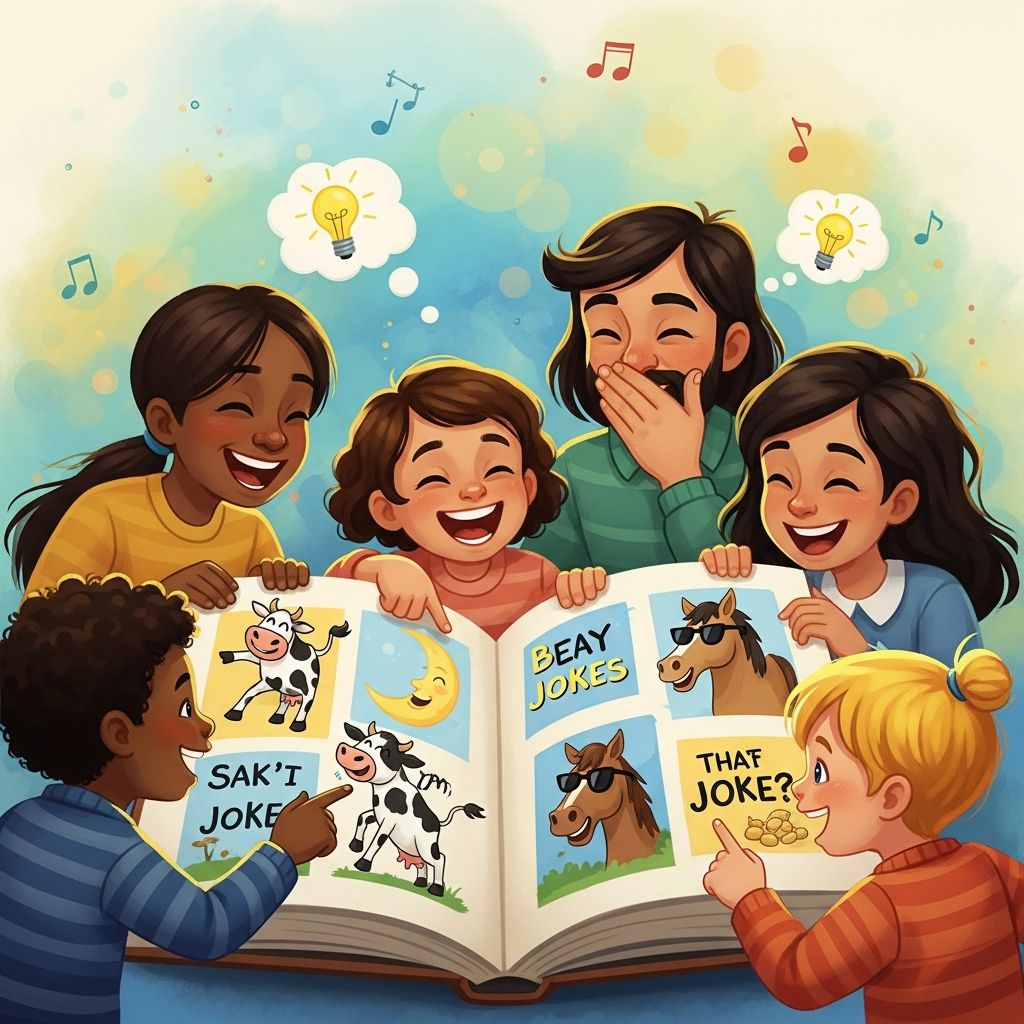
Bad puns and cheesy one-liners are more than background noise at the dinner table. They are tiny, low-pressure moments where kids and adults learn to play with language, enjoy each other’s company, and turn an ordinary day into something worth remembering.
Laughing On Purpose: Why Corny Jokes Work
Simple, goofy jokes are safe, predictable, and easy to understand, which makes them perfect for kids who are still learning how humor works. They rarely rely on sarcasm or embarrassment, so everyone can laugh without anyone becoming the punchline.
Adults secretly benefit too: repeating a terrible joke becomes an inside tradition, a shared code that says “we belong together” every time someone delivers the same old groaner with a totally serious face.
How Jokes Grow Young Brains
When kids hear a joke, their brains do several things at once: they process the literal meaning, notice the twist, and then “re-solve” the sentence to find the hidden second meaning. That mental flip is a powerful workout for flexible thinking.
Over time, these tiny mental puzzles help kids understand wordplay, double meanings, and timing, which feeds into reading skills, social awareness, and problem solving.
Mini Skills Hidden Inside a Simple Joke
- Language play: Kids learn that words can sound the same but mean different things, or carry more than one idea at once.
- Inference: To “get it,” they must fill in what the speaker did not say out loud.
- Memory and pattern: Kids begin to notice that many jokes follow a familiar setup–twist–punchline rhythm.
Family Bonding Through Shared Laughter
Inside jokes are like tiny private clubs that only your family can join. When everyone bursts out laughing at a line that would make no sense to strangers, kids feel a deep sense of recognition and belonging.
Even running gags—like a pun that appears every car ride—become emotional bookmarks that kids remember years later as moments of warmth, not just wordplay.
Everyday Moments That Are Perfect For Jokes
- On the way to school, to ease nerves about a test or presentation.
- At the dinner table, to pull attention away from screens and toward each other.
- Before bedtime, as a gentle, predictable signal that the day is ending safely and calmly.
Types of Jokes Kids Tend To Love
Not all jokes land equally well with every age group. Young kids usually like repetition and obvious twists, while older kids enjoy clever misdirection, absurd images, and layered wordplay.
Mixing different joke styles keeps things fresh, gives kids chances to succeed at different levels, and helps them slowly stretch toward more complex humor.
| Joke Style | Typical Pattern | Great For Ages | Why It Works |
|---|---|---|---|
| Riddles | Question plus surprising but logical answer | 5–10 | Lets kids feel smart when they guess or remember the punchline. |
| Puns | Same sound, different meaning | 7–12 | Rewards kids for noticing details in spelling and pronunciation. |
| Absurd jokes | Very silly or impossible situations | 4–9 | Matches the wild imagination stage where anything can happen. |
| Call-and-response jokes | Predictable cue, playful answer | 3–7 | Kids enjoy shouting the answer and taking charge of the humor. |
| Storylet jokes | Tiny stories leading to a quick twist | 8–13 | Gives older kids space to play with timing and voice. |
Guidelines For Choosing Age-Appropriate Humor
Good family jokes are simple, clean, and kind. If the punchline depends on mocking a group, using harsh labels, or humiliating someone, it is better left out of a kid-centered space.
Instead, center jokes on silly misunderstandings, exaggerated problems, or inanimate objects doing unexpected things—these keep the tone light without anyone getting hurt.
A Quick Checklist Before You Tell That Joke
- Would this joke make sense to a child who has never heard sarcasm?
- Is anyone in the room being targeted, teased, or singled out?
- Is the joke still funny if you imagine your child repeating it at school?
Boosting Kids’ Confidence With Comedy
When a child tells a joke and people genuinely laugh, that small response sends a loud message: “You are interesting and worth listening to.” Over time, this can nudge shy or quiet kids toward speaking up more often.
Learning to read an audience—who laughed, who missed the joke, who needs it repeated—also teaches social awareness and empathy in a low-stakes way.
Ways To Help Shy Kids Shine
- Practice punchlines at home so kids feel ready before sharing them with others.
- Offer gentle feedback on speaking clearly, pausing, and making eye contact.
- Celebrate the effort even when a joke falls flat, and model laughing at your own misfires.
Building A Household Joke Habit
Jokes do not need to be rare, special-occasion material. With a little structure, they can become a steady rhythm in family life, much like reading aloud or sharing a daily high-and-low check-in.
Think of jokes as a portable ritual: they fit in the car, the grocery line, the lunch box, or the walk to the bus stop with almost no preparation.
Simple Ways To Add More Laughter
- Start a “joke of the day” at breakfast and let different family members take turns choosing.
- Keep a small notebook or digital note of favorite favorites so kids can reread and memorize them.
- Create themed weeks—animal jokes, space jokes, food jokes—to keep everyone hunting for new material.
From Listener To Joke-Maker
At some point, kids move from repeating jokes to inventing their own, even if early attempts sound like nonsense. This experimentation is a sign that they are beginning to understand the “rules” of humor well enough to bend them.
Encouraging this stage means valuing creativity over polish: the goal is not to produce a perfect punchline, but to reward the effort to see the world from a playful angle.
Helping Kids Write Their Own Jokes
- Invite them to pick an everyday object and imagine what would happen if it could talk.
- Play a word-swap game: take a familiar phrase and replace one word with something unexpected.
- Challenge older kids to create a three-line story that ends in a pun or surprising answer.
Using Humor To Ease Tough Moments
Lighthearted jokes can gently break tension during stressful times, such as before medical appointments, new school days, or long trips. A well-timed pun reminds kids that even uncomfortable moments do not last forever.
That said, humor should never be used to dismiss real fear or sadness. The most helpful jokes acknowledge feelings first, then offer silliness as a handhold rather than a distraction.
Balancing Comfort And Comedy
- Begin by naming what is hard: “This shot is scary,” or “You look really nervous.”
- Ask for permission before joking: “Want a silly distraction or just a hug?”
- Use gentle, low-effort jokes, not wild clowning, when kids feel overwhelmed.
House Rules For Kind, Inclusive Humor
Clear, simple boundaries help everyone in the family enjoy humor without wondering where the line is. A few shared rules also make it easier for siblings to call in, rather than call out, when a joke crosses into meanness.
Because kids often repeat what they hear, modeling respectful humor at home shapes how they joke with peers and how they respond when someone uses “funny” as a cover for unkindness.
Sample Family Humor Guidelines
- We do not joke about bodies, abilities, or things people cannot change.
- We stop immediately if someone says a joke hurt their feelings.
- We aim jokes at situations or objects, not at people in the room.
FAQs About Kids, Jokes, And Family Laughter
Are “cringey” jokes actually good for kids?
Yes. Groan-worthy jokes are predictable enough for kids to follow, yet surprising enough to reward attention, which makes them ideal for practicing timing, language play, and shared laughter without confusion or embarrassment.
How many jokes are too many?
There is no fixed number, but context matters. If jokes begin to derail important conversations, interrupt others, or become a way of avoiding real feelings, it is worth setting gentle limits and saving humor for more relaxed moments.
What if my child does not “get” jokes yet?
Understanding humor arrives in stages. Some kids need more time with very simple, concrete jokes before moving into puns or riddles, and that is normal; focus on enjoying the shared moment more than testing their reaction.
Is it okay if kids tell jokes I do not find funny?
Absolutely. Children are experimenting, and early jokes often sound repetitive or random to adults. Responding with encouragement, while modeling the kind of humor you value, helps them refine their style without feeling shut down.
How can I remember enough jokes to keep things fun?
A small personal collection—either handwritten or digital—is usually enough for regular use. Over time, kids will memorize favorites, remix them, and invent new ones, turning your household into its own renewable source of comedy.
Cheesy jokes will never win awards for originality, but they can do something more important: build a family culture where it is safe to be silly, safe to experiment, and safe to share a laugh even on the hardest days.