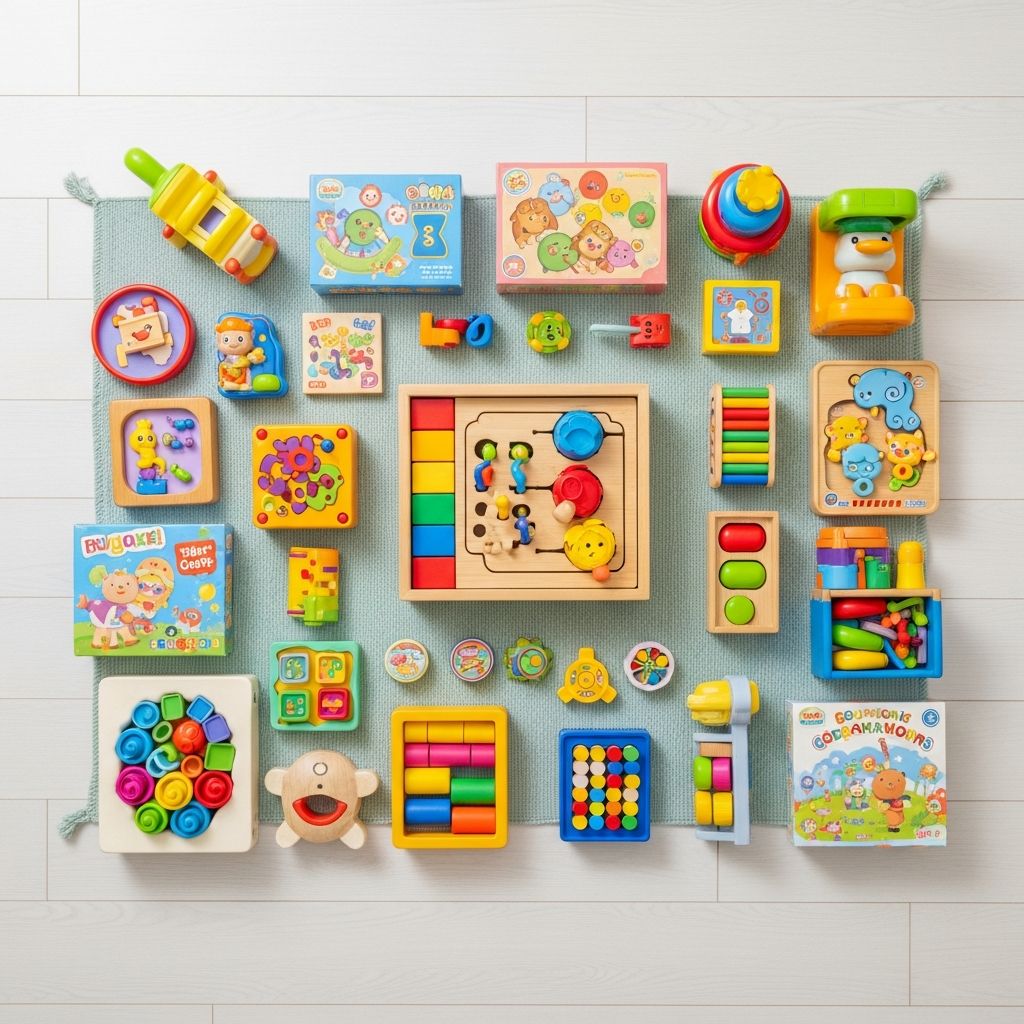
At age three, children are curious, energetic, and eager to explore everything around them. The right toys and games can transform that natural curiosity into powerful learning experiences, supporting language, thinking skills, physical coordination, and emotional growth.
Why Educational Toys Matter at Age Three
Three-year-olds are moving from toddlerhood into the preschool stage, which means they are ready for slightly more complex challenges but still learn best through play. Educational toys at this age should feel fun first while quietly building skills like problem-solving, early math and literacy, self-control, and cooperation.
When parents choose toys that match a child’s developmental level, playtime can strengthen brain connections, support language development, and help children practice new skills repeatedly without pressure. The goal is not to rush academics but to offer open-ended, hands-on activities that invite exploration.
Key Skills to Support With Toys
Before looking at specific categories of toys, it helps to know which skills are growing rapidly around age three. This makes it easier to choose play materials that really fit your child’s needs.
- Language and communication: Understanding and using more words, forming longer sentences, following simple directions, and asking lots of questions.
- Cognitive and problem-solving skills: Sorting, matching, early counting, recognizing simple patterns, and trying different solutions when something does not work.
- Fine motor skills: Using hands and fingers with greater control for building, drawing, rotating puzzle pieces, and manipulating small objects.
- Gross motor skills: Running, jumping, climbing, throwing, catching, and balancing with increasing coordination.
- Social-emotional development: Taking turns, beginning to share, copying adult behaviors, and exploring big feelings through pretend play.
Important Safety and Buying Considerations
Safety should always come before features or appearance when buying toys for three-year-olds. Look for sturdy construction, non-toxic materials, and toys that are large enough to avoid choking risk, especially if there are younger siblings in the home.
- Check that toys are labeled for ages 3+ and that there are no easily detachable tiny parts.
- Choose washable, easy-to-clean items, especially for sensory play or anything that may go in a child’s mouth.
- Prefer open-ended toys that can be used in many ways over single-purpose gadgets that children quickly outgrow.
- Limit noisy or flashing electronic toys that do everything for the child; instead, look for toys that require the child to think, talk, move, or create.
Language and Early Literacy Toys
Language development is a major focus for three-year-olds, so toys that invite talking, listening, and storytelling are especially valuable. These toys should encourage children to use new words, follow narratives, and connect stories to their own experiences.
Picture Books and Storytelling Sets
Sturdy picture books with clear, engaging images and simple plots are essential learning tools, even if they are not traditional “toys.” Parents can extend reading time with storytelling sets, such as puppets or felt boards, that allow children to act out characters and events.
- Choose books with repetitive phrases so children can “read” along and join in.
- Use puppets or simple dolls to retell familiar stories and to invent completely new ones.
- Ask open-ended questions like “What do you think will happen next?” or “How does this character feel?” during story play.
Alphabet and Word Games
At age three, the goal is exposure to letters and sounds, not formal reading instruction. Alphabet puzzles, magnetic letters on the fridge, or simple matching games that pair pictures with starting letters can make early literacy fun and low-pressure.
- Use large, chunky alphabet puzzles with both upper- and lowercase letters.
- Play simple games like finding the first letter of the child’s name on signs, puzzles, or blocks.
- Incorporate songs and rhymes to help connect sounds with letters naturally.
Building, Construction, and STEM Toys
Building toys encourage three-year-olds to experiment, predict outcomes, and practice fine motor control. They are also a playful introduction to early STEM ideas like balance, symmetry, cause and effect, and basic engineering.
Blocks and Stacking Toys
Wooden blocks, foam blocks, or large interlocking bricks allow children to build towers, roads, and entire imaginary worlds. These activities strengthen hand-eye coordination and also introduce basic math concepts such as size, shape, height, and number.
- Provide a mix of shapes (rectangles, cylinders, arches) so children can experiment with different kinds of structures.
- Ask questions like “How can we make this tower stronger?” to encourage problem-solving.
- Encourage cleanup by sorting blocks by size or color, turning tidying into another learning task.
Simple STEM Activity Sets
Age-appropriate STEM toys for three-year-olds might include large-piece gear sets, basic magnetic tiles, or water play tables with ramps and funnels. These toys invite children to test cause and effect by changing how pieces connect or how water flows.
- Introduce one new feature at a time, such as adding a ramp to a marble-style track and talking about why the balls go faster.
- Use words like “under,” “over,” “next to,” and “through” to build spatial vocabulary during play.
- Allow children to make mistakes, like building a track that does not work, and then help them troubleshoot without giving the solution immediately.
Puzzles and Problem-Solving Games
Puzzles and simple board games promote patience, attention, and flexible thinking. At three, children are ready for slightly more complex challenges than simple shape sorters but still benefit from clear, concrete goals.
Chunky Puzzles and Peg Boards
Wooden puzzles with large knobs or pegs are ideal for small hands, helping children practice matching shapes and pictures. Simple jigsaw puzzles with 4–12 pieces can introduce the idea of combining parts to make a whole.
- Start with puzzles that have clear outlines on the board to guide where each piece belongs.
- Offer gentle hints rather than completing the puzzle for the child.
- Store puzzles with missing pieces separately so children can succeed without frustration.
First Board Games and Memory Games
Cooperative or very simple competitive board games teach turn-taking, following directions, and coping with winning and losing. Matching or memory card games further develop visual discrimination and concentration.
- Choose games with few rules and short playtimes to fit young attention spans.
- Model good sportsmanship by celebrating effort, not just the outcome.
- Use everyday objects (like pairs of socks or pictures cut from magazines) to create your own basic matching games.
Pretend Play and Social-Emotional Learning
Pretend play becomes richer and more complex around age three, making it a powerful way to support social and emotional skills. Through role-play, children practice empathy, problem-solving, and communication as they act out real-life situations and imaginary adventures.
Dress-Up Clothes and Role-Play Sets
A simple collection of dress-up clothes, hats, and pretend tools lets children explore different roles such as doctor, chef, firefighter, or parent. These activities allow them to process experiences and feelings from daily life in a safe, playful way.
- Offer open-ended items like scarves, bags, and fabric pieces that can become anything in a child’s imagination.
- Follow your child’s lead in pretend scenarios instead of directing the entire story.
- Use role-play to talk about kindness, sharing, and problem-solving with peers.
Dollhouses, Figures, and Playsets
Dolls, animal figures, and small playsets give children characters and settings to build their own stories. Acting out daily routines like bedtime, mealtime, or a trip to the doctor’s office can make real-life situations less stressful and more predictable.
- Choose sturdy figures that are easy to hold and free from tiny removable accessories.
- Encourage your child to narrate what the characters are doing and feeling.
- Occasionally introduce gentle social challenges into the story, such as sharing toys or solving a disagreement.
Art, Music, and Creative Expression
Creative activities help three-year-olds develop fine motor control, sensory awareness, and emotional expression. Children at this age do not need structured art projects with perfect outcomes; instead, they thrive on open-ended exploration.
Art Supplies and Craft Kits
Washable markers, crayons, chunky paintbrushes, large sheets of paper, and non-toxic modeling clay or dough are ideal tools for creative play. The emphasis should be on the process of drawing, painting, or sculpting rather than on making a specific finished product.
- Set up a small art station with paper, crayons, and a smock that children can access independently.
- Introduce simple concepts like lines, shapes, and colors while your child draws.
- Display artwork at your child’s eye level to show that their creations are valued.
Musical Instruments and Movement
Simple instruments like shakers, drums, xylophones, and tambourines invite children to explore rhythm, volume, and sound patterns. Combining music with movement—dancing, marching, or acting out songs—supports coordination and body awareness.
- Play a “stop and go” game with music to practice listening skills and impulse control.
- Use songs to support routines, such as clean-up songs or hand-washing songs.
- Encourage your child to create their own songs or rhythms with household objects.
Active Play and Gross Motor Toys
Three-year-olds need plenty of movement to build strength, coordination, and confidence. Large-muscle play also helps with self-regulation because physical activity can release energy and reduce stress.
Ride-On Toys and Balance Equipment
Balance bikes, low scooters, and ride-on toys are excellent for practicing steering, balancing, and judging distance. Simple balance beams or stepping stones can be used indoors or outdoors to set up obstacle courses.
- Always use appropriate safety gear, such as helmets, for outdoor ride-on toys.
- Start on flat, open surfaces where children can practice moving without obstacles.
- Turn balancing activities into imaginative games, such as pretending the floor is lava.
Balls, Tunnels, and Climbing Toys
Soft balls for rolling, throwing, and kicking build hand-eye and foot-eye coordination. Play tunnels and low climbing structures encourage children to crawl, climb, and explore spatial concepts like over, under, and through.
- Play simple games of catch, starting with rolling the ball back and forth and gradually moving to gentle throws.
- Use tunnels and cushions to create safe indoor obstacle courses on rainy days.
- Supervise climbing to ensure safety while still allowing children to take reasonable risks.
Sensory Play and Exploration
Sensory play lets three-year-olds explore different textures, temperatures, sounds, and movements. These experiences can be both calming and stimulating, helping children learn to regulate their senses and emotions.
Sand, Water, and Sensory Bins
Simple tubs filled with sand, water, or safe materials like dry rice or pasta invite scooping, pouring, and measuring. These activities support early math concepts (more/less, full/empty) and hand strength while also providing soothing, repetitive motion.
- Always supervise closely, especially with small materials, and adapt the filler to your child’s age and safety needs.
- Add scoops, cups, funnels, and small toys to extend play possibilities.
- Set clear rules about keeping materials inside the bin and washing hands afterward.
Soft Sensory Toys and Fidgets
Squishy balls, textured fabrics, and simple fidget toys offer different tactile experiences that can help some children feel calmer and more focused. Rotating a small selection of sensory toys keeps them interesting without overwhelming the child.
- Introduce one sensory toy at a time and observe how your child responds.
- Use sensory tools during transitions that are often stressful, like getting ready to leave the house.
- Store sensory toys in a dedicated basket so children know where to find calming objects when they need them.
Simple Toy Comparison Table
The table below summarizes major categories of educational toys for three-year-olds and highlights their primary benefits. Use it as a quick reference when choosing new items or rotating toys at home.
| Toy Category | Main Skills Supported | Example Activities |
|---|---|---|
| Language & Literacy Toys | Vocabulary, listening, storytelling, early letter awareness | Reading picture books, acting out stories with puppets, alphabet matching games |
| Building & STEM Toys | Problem-solving, spatial reasoning, fine motor, basic physics concepts | Building towers, creating tracks, experimenting with ramps and gears |
| Puzzles & Board Games | Attention, memory, visual perception, turn-taking | Completing chunky puzzles, playing simple matching or cooperative games |
| Pretend Play Sets | Social skills, empathy, emotional expression, imagination | Role-playing doctor visits, cooking, or family routines with dolls and figures |
| Art & Music Toys | Creativity, fine motor, rhythm, self-expression | Drawing, finger painting, playing drums or shakers, dancing to music |
| Gross Motor Toys | Balance, coordination, strength, body awareness | Riding balance bikes, jumping, crawling through tunnels, ball play |
| Sensory Toys | Sensory integration, self-regulation, tactile exploration | Playing with sand or water bins, squeezing soft fidgets, exploring textured materials |
Practical Tips for Using Educational Toys
Even the best toys work best when paired with responsive, engaged adults. A few simple strategies can help you get more learning value from the toys you already own without constantly buying new ones.
- Rotate toys every week or two so that a small number are available at once, reducing clutter and renewing interest.
- Play alongside your child, modeling language and problem-solving, then gradually let them take the lead.
- Connect toy play to real-world experiences, such as counting toy cars before counting parking spots outside.
- Follow your child’s interests—trains, animals, cooking, or anything else—as a guide for choosing new toys and games.
Frequently Asked Questions (FAQs)
1. How many educational toys does a 3-year-old really need?
Children do not need a large number of toys to learn effectively. A small, well-chosen collection of open-ended toys—blocks, art supplies, pretend play items, and a few puzzles or games—is usually more beneficial than an overflowing playroom.
2. Are electronic learning toys good for 3-year-olds?
Some electronic toys can be useful when they encourage active participation, such as pressing buttons to hear letter sounds and then repeating them. However, toys that mainly flash lights or play music without involving the child’s choice or creativity offer limited educational value compared with simple, hands-on toys.
3. How long should my 3-year-old be able to play with a toy?
Attention spans vary widely, but many three-year-olds can stay engaged with a favorite activity for 10–15 minutes, sometimes longer if the task is challenging but still manageable. Rotating toys and following your child’s interests helps extend focused play over time.
4. What if my child prefers household objects over toys?
Everyday objects like pots, spoons, cardboard boxes, and pillows are excellent learning materials and encourage creativity. As long as the items are safe and supervised, using household objects in play is just as educational—sometimes more so—than using formal toys.
5. How can I tell if a toy is truly educational?
A good rule of thumb is to ask whether the toy encourages your child to think, move, talk, or create in different ways. Toys that can be used in multiple ways, grow with your child, and invite problem-solving or imagination are typically more educational than toys that only perform one automated trick.