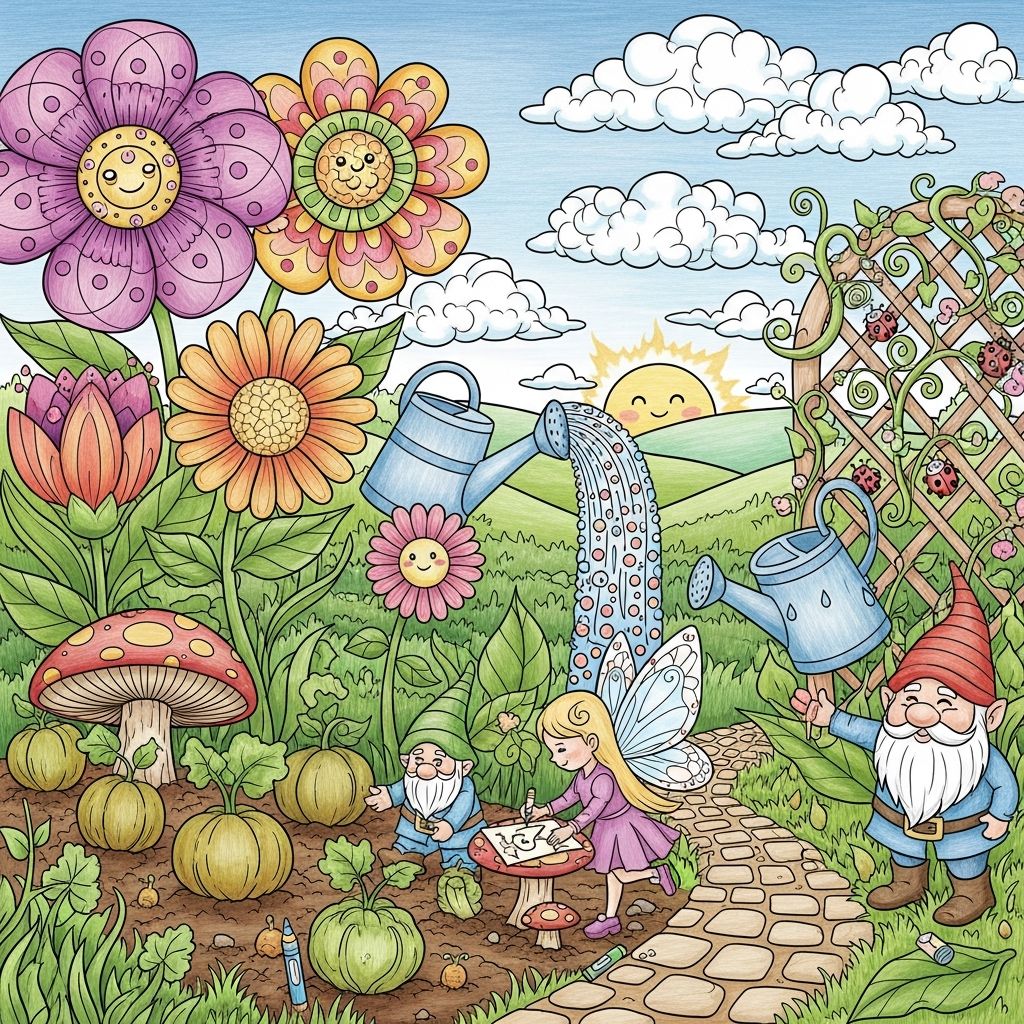
Garden coloring pages are more than quick print-and-go activities; they can become tiny windows into the world of nature, creativity, and calm. By pairing simple line drawings of flowers, vegetables, insects, and garden scenes with thoughtful guidance, adults can turn coloring time into a rich learning and bonding experience.
Why Garden Coloring Pages Are So Engaging
Children naturally gravitate toward colorful flowers, busy bees, and wiggly worms, which makes garden scenes especially captivating. These pictures feel familiar and comforting, yet still offer plenty of small details that invite attention and curiosity.
- They connect everyday experiences (like walks in the park or planting a seed) with creative play.
- They offer endless color choices, from realistic greens and browns to imaginative rainbow gardens.
- They appeal to a wide age range, working equally well for preschoolers and older kids.
Because gardens change with the seasons, you can refresh coloring activities throughout the year and keep children interested in new plants, weather, and outdoor changes.
Benefits for Kids: More Than Just Pretty Pictures
When children color garden scenes, they are quietly practicing several important skills. The activity looks simple from the outside, but it supports development across emotional, cognitive, and physical areas.
Fine Motor and Pre-Writing Skills
Holding and controlling crayons, markers, or colored pencils strengthens hand muscles and builds coordination. Small leaf edges and petal shapes encourage careful, deliberate strokes, which is ideal preparation for handwriting.
- Tracing around stems and petals helps children practice following lines.
- Coloring small details improves finger strength and dexterity.
- Switching colors teaches grip adjustment and better hand control.
Calm, Focus, and Emotional Regulation
Coloring has a natural, soothing rhythm that can help children unwind after school or busy activities. Focusing on one flower or plant at a time encourages slower breathing and less rushing.
- It can serve as a gentle transition between active play and quiet time.
- Repeating shapes like rows of petals provides a comforting sense of order.
- Choosing colors offers a safe way for kids to express mood and preferences.
Early Science and Nature Learning
Garden pages naturally introduce early science ideas without feeling like a lesson. Children notice patterns in leaves, shapes of vegetables, and the roles of insects in pollination.
- They learn that plants have roots, stems, leaves, and flowers.
- They see how insects and birds interact with plants.
- They can compare familiar foods (like carrots or tomatoes) in the garden to what appears on their plates.
Types of Garden Pages for Different Ages
Not every page suits every child. Matching the level of detail and theme to a child’s age can prevent frustration and keep coloring fun.
Simple Garden Scenes for Young Children
For toddlers and preschoolers, look for large shapes and limited detail. Big flowers, chunky leaves, and smiling suns give them space to color without worrying about going outside the lines.
- Pages with just a few flowers and a simple sky.
- Basic vegetables like carrots and pumpkins drawn with thick outlines.
- Happy insects such as ladybugs and butterflies with clear, bold shapes.
Detailed Botanical Pages for Older Kids
Elementary-aged children and tweens often enjoy more realistic and intricate designs. They can handle tiny details and may want to experiment with shading or layering colors.
- Pages featuring complex flower beds, vines, and trellises.
- Scenes with gardening tools, potted plants, and garden paths.
- Botanical-style images of specific plants with many leaves and petals.
Ideas to Make Garden Coloring More Creative
Coloring does not have to stop at filling in lines. With a few small twists, each page can become a mini art project or imaginative story starter.
Color Challenges and Prompts
- Color families: Ask children to choose one color family (like blues or reds) and create a monochrome garden.
- Seasonal gardens: Invite them to color the same scene as a spring, summer, autumn, or winter garden.
- Mystery colors: Have them close their eyes and pick three crayons, then design a garden using only those shades.
Adding Personal Details and Backgrounds
- Encourage kids to draw a family member, pet, or themselves into the garden.
- Invite them to add weather details like rainbows, clouds, or raindrops.
- Suggest that they create a hidden creature, such as a tiny snail or fairy, somewhere in the scene.
Turning Coloring Pages into Simple Crafts
After a page is finished, it can become the base for a wide variety of low-cost craft projects. This gives the artwork a second life and helps children feel proud of their creations.
- Homemade cards: Cut out flowers or sections of the garden and glue them onto folded cardstock for birthday or thank-you cards.
- Bookmarks: Trim a strip from a colored garden scene, laminate it (or cover it with tape), and punch a hole for a ribbon.
- Collage posters: Combine portions of several different pages on a larger sheet to create a “dream garden” poster.
- Room decor: Frame a favorite page or hang a series of garden pictures along a string with clothespins.
Using Garden Coloring Pages for Learning
With a few small additions, these activities easily align with early learning goals in literacy, math, and science. This makes garden pages useful for both homes and classrooms.
Early Literacy Connections
- Write plant names (like rose, tulip, or lettuce) near the images and read them together.
- Ask children to describe their garden using color words and simple sentences.
- Create a short story about the garden and dictate or write it under the picture.
Simple Math and Sorting Ideas
- Count the number of flowers, leaves, or insects on the page.
- Compare how many plants are tall versus short, or how many are in pots versus in the ground.
- Group colors used and talk about more than, less than, or equal amounts.
Suggested Garden Coloring Themes
Choosing a theme for the day or week makes it easier to plan related books, songs, or activities. Below is a quick overview of themes you might use when selecting pages or bundles of printables.
| Theme | Focus Elements | Great For |
|---|---|---|
| Flower Garden | Roses, tulips, daisies, sunflowers | Color mixing, talking about petals and pollination |
| Vegetable Patch | Carrots, tomatoes, pumpkins, lettuce | Food discussions, healthy eating, harvest time |
| Butterflies & Bees | Butterflies, bees, caterpillars, blossoms | Life cycles, insects, and garden helpers |
| Fairy or Secret Garden | Fairy houses, mushrooms, tiny doors, sparkles | Imaginative play, storytelling, creative writing |
| Community Garden | Raised beds, people gardening together, tools | Teamwork, responsibility, and community themes |
Practical Tips for Parents and Teachers
A few preparation steps can make garden coloring time smoother and more enjoyable for everyone. These small changes often prevent mess, arguments, and frustration.
- Offer limited color choices: Set out a curated selection rather than the entire box to keep kids from feeling overwhelmed.
- Use clipboards or trays: These create a defined workspace and help keep pages from sliding around.
- Mix tools: Provide crayons for large areas and fine markers or colored pencils for small details.
- Display finished work: Creating a “gallery” wall shows children that their effort matters.
Encouraging Creativity Without Pressure
Some children worry about coloring “wrong,” especially if they see very neat or realistic examples. Reassure them that gardens can be as imaginative as they like.
- Celebrate unusual color choices, like blue grass or rainbow petals.
- Avoid taking the crayons to correct their work, and instead ask open-ended questions about their choices.
- Remind them that there are many kinds of plants in the world, and some look surprising.
Ideas for Group Activities
Garden coloring pages work beautifully for playdates, classrooms, clubs, and holiday gatherings. They fill time calmly yet still allow for conversation and cooperation.
- Shared mural: Tape several pages together and let each child color one section to create a giant paper garden.
- Color-and-tell circle: After coloring, invite kids to share one detail about their garden.
- Garden stations: Set up different tables with themes such as flowers, vegetables, or insects so children can rotate through.
Frequently Asked Questions
How old should children be to enjoy garden coloring pages?
Very young toddlers may start with large, simple shapes, while older preschoolers and elementary-aged children can handle more detailed pages. The key is matching the complexity of the design to the child’s stage rather than focusing on a specific age.
What materials work best for garden coloring?
Crayons are sturdy and easy to grip for younger children, while older kids often like the control of colored pencils or fine-tipped markers. If the page will be used for a craft, slightly thicker paper or cardstock holds up better to glue and cutting.
Can these pages support school learning?
Yes, garden coloring fits nicely into topics about plants, seasons, food, and insects. Teachers can easily attach brief writing prompts, counting activities, or simple science facts to extend the learning.
How can I keep coloring sessions from becoming messy?
Provide a small container for each child’s coloring tools and use placemats or trays to define workspaces. Having wipes or a damp cloth nearby for quick cleanups helps everyone stay relaxed and focused on the fun.
What if my child loses interest quickly?
Short sessions are perfectly fine. Try switching to a different garden theme, offering a new kind of coloring tool, or turning a nearly finished page into a craft so that your child sees a complete project without long periods of sitting.
Bringing Nature Indoors Through Art
Garden-themed coloring pages offer an easy, low-cost way to keep children thinking about nature, even on rainy days or during colder months. By combining creativity with gentle learning, they invite kids to explore how plants grow, how insects help, and how colors shape the world around them.
With a little planning and encouragement, each finished page can become more than a sheet of paper—it can be a story, a science conversation, a handmade gift, or a cherished piece of kid-made decor that brightens your home or classroom.