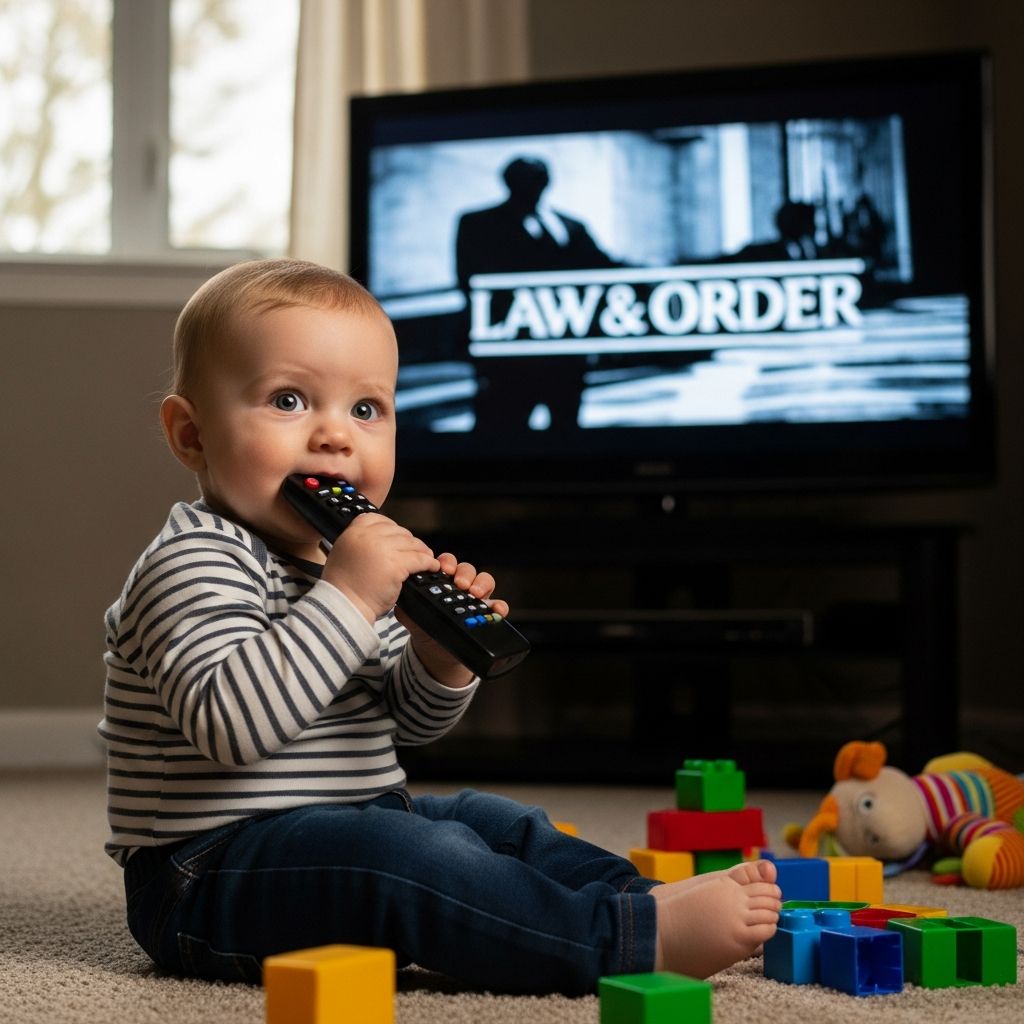
A short video of a baby who lights up for the dramatic Law & Order intro but barely reacts to Miss Rachel or Cocomelon is instantly funny, but it also raises thoughtful questions about how babies respond to sound, music, and screens.
The Viral Moment: Baby vs. TV Intros
In the original clip, a parent cycles through different shows to see what catches the baby’s attention. Kids’ favorite Miss Rachel comes on, but the baby looks mostly unimpressed. Cocomelon flashes across the screen, and there’s still no big reaction. Then, the familiar, dramatic notes of the Law & Order theme start, and the baby suddenly lights up, turning toward the screen and clearly recognizing the sound.
This contrast between the calm response to children’s programming and the excited reaction to a crime show intro makes the video feel both adorable and slightly absurd. It taps into a common parenting experience: realizing that children often develop strong, quirky preferences that adults never saw coming.
Why the ‘Law & Order’ Theme Stands Out
The Law & Order intro is famous for being bold, rhythmic, and instantly recognizable. Its dramatic notes, strong beats, and simple melodic pattern make it easy to notice, even from another room. For a baby who is just starting to organize the world through sound, this kind of clear, repetitive audio cue can feel especially compelling.
Compared with many children’s songs, which often use higher-pitched voices and softer transitions, the Law & Order theme has a strong structure that may be easier for a developing brain to latch onto. The music grabs attention quickly, which is exactly what happens in the viral clip.
Babies, Sound, and Early Preferences
Long before they understand plot, babies are deeply tuned in to patterns of sound. They listen for rhythm, repetition, and contrast: loud versus soft, low versus high, fast versus slow. A show intro that uses clear rhythm and bold tones can stand out just as much as — or even more than — a colorful cartoon.
Babies also begin to form associations very early. If a parent often turns on a particular show while feeding, rocking, or cuddling, the baby can start to link that sound with calm, comfort, or excitement. A baby who hears the same intro frequently may anticipate what comes next and react with visible joy.
Miss Rachel, Cocomelon, and the Baby’s Non-Reaction
Miss Rachel and Cocomelon are popular because they speak directly to early developmental needs: simple language, repetition, bright visuals, and familiar songs. Many babies become instantly absorbed when these shows come on. However, as the viral video illustrates, not every child reacts in the same way every time. A baby might be tired, full, overstimulated, or simply not in the mood for that particular show.
The baby’s neutral response to these kids’ programs does not mean they are ineffective or unhelpful. It mainly highlights the reality that each child’s sensory preferences are unique. What captivates one baby might leave another completely uninterested, at least in that moment.
Parent Reactions: Humor, Relatability, and a Bit of Worry
Parents watching the clip tend to react with laughter and recognition. Many have similar stories: babies who love theme songs from sports, news programs, commercials, or other shows clearly not designed for kids. There is a sense of camaraderie in realizing that these odd preferences are more common than people admit.
At the same time, some caregivers quietly wonder whether it is a problem that a baby reacts so strongly to an adult show’s intro. The underlying worry is usually about exposure to adult content, not the brief sound clip itself. That concern opens the door to an important discussion about how and when babies should encounter screens at all.
Is It Safe for Babies to Hear Adult Show Intros?
A short burst of music from an adult TV show, by itself, is not harmful to a baby. The main issues arise when babies are regularly exposed to complex, fast-paced visuals, violent storylines, or loud, chaotic audio tracks for extended periods. Those elements can be confusing or overstimulating for developing brains.
In practice, a baby reacting happily to a familiar intro is usually just responding to sound patterns, not absorbing adult themes. The key is what comes next: if the show stays on in the background for long stretches, the baby may experience more screen exposure than recommended for this age.
Guidelines on Baby Screen Time
Health and child-development organizations typically recommend very limited or no passive screen time for babies under 18 months, with the main exception being video chats with loved ones. The goal is to support real-world exploration: faces, voices, touch, and physical play. These experiences build the foundations for language, emotional regulation, and motor skills.
For older babies and toddlers, short, intentional screen sessions using age-appropriate content can be reasonable, especially when a caregiver watches along and talks about what is happening. Lengthy, unsupervised screen exposure, on the other hand, tends to reduce opportunities for interaction, and that is where developmental concerns can appear.
When Your Baby Loves the Wrong Show
Many parents discover that their baby seems more excited by their own favorite show than by children’s programming. It might be a crime drama intro, a sports jingle, a reality TV theme, or the sound of a news program. This usually reflects the show’s audio style, not the baby’s interest in adult topics.
If the intro itself becomes a playful ritual — for instance, dancing, cuddling, or bouncing when the music starts — parents can enjoy that moment while still being mindful about what happens afterward. Turning off the screen or switching to kid-friendly content after the intro ends is one simple way to protect the baby from unsuitable material while enjoying the shared routine.
How to Use Sound Without Relying on Screens
Parents who notice that their baby is fascinated by a particular theme song can use that information in creative, screen-free ways. For example, the tune or rhythm can inspire clapping games, gentle bouncing, or silly vocal patterns that mimic the beats. This kind of responsive play supports bonding and rhythm awareness without needing the television on.
Caregivers can also create their own mini “intros” for daily routines, such as diaper changes, bath time, or bedtime. A short, repeated melody sung by a parent can feel just as special — and far more personal — than a TV theme. Over time, these homemade rituals become powerful signals of safety and predictability.
Table: Baby Reactions to Different Types of Shows
| Type of content | Typical features | Possible baby reaction | Parenting takeaway |
|---|---|---|---|
| Kids’ educational shows (e.g., Miss Rachel) | Slow pace, clear speech, simple visuals | May watch calmly, imitate sounds, or lose interest quickly | Best used briefly and interactively, not as constant background. |
| Musical cartoons (e.g., Cocomelon) | Bright colors, rapid cuts, constant music | May become excited or overstimulated and hard to disengage | Limit duration and watch for signs of overload. |
| Adult show intros (e.g., crime dramas) | Strong beats, distinctive melodies, dramatic sound design | May show sudden recognition and delight at the theme song | Enjoy the audio briefly, then switch off or change to kid-safe content. |
| Everyday household sounds | Vacuum, blender, doorbell, phone ring | Can cause fascination or fear depending on volume and tone | Introduce gradually and stay close to reassure and label sounds. |
Reading Your Baby’s Cues
Whether the sound is a TV theme or a lullaby, the most important information comes from the baby’s body language. A baby who smiles, coos, kicks, and leans toward the sound is clearly engaged. A baby who stiffens, looks away, cries, or fusses is signaling that the sound or environment is too much.
Responding quickly to those cues by turning down the volume, picking the baby up, or changing activities teaches them that their signals matter. Over time, this responsiveness helps build emotional security and trust, which matter far more than any particular show or song.
Turning a Funny Clip into a Learning Moment
The charm of the Law & Order baby video lies in its contrast: a tiny child reacting like a seasoned fan to a serious show’s intro. Parents can enjoy the humor while also using it as a reminder to think intentionally about media. The question is not “Is my baby allowed to like this sound?” but “How do we shape our home environment around their growing curiosity?”
By setting gentle limits, choosing age-appropriate content for longer viewing, and leaning on real-world play over screens, caregivers give babies room to explore safely. The theme song becomes just one of many fun, harmless quirks in a much richer sensory world.
Practical Tips for Parents of Little TV Fans
- Use adult show intros as a brief, supervised ritual, then turn off or switch content.
- Prioritize face-to-face play, talking, and singing over passive screen time.
- Notice which sounds your baby loves and recreate similar rhythms in your own songs and games.
- Keep adult shows with intense visuals or themes off when babies are awake and watching.
- Remember that preferences at this age are about sensory qualities, not storylines.
FAQs About Babies, TV Intros, and Screen Time
1. Is it bad if my baby loves an adult show’s theme song?
No. Enjoying a theme song usually means your baby is responding to rhythm and repetition, not to the show’s mature themes. The important part is limiting exposure to the show itself and keeping overall screen time within healthy boundaries for their age.
2. Why doesn’t my baby react to kids’ shows like other babies do?
Every baby’s sensory profile is different. Some children are captivated by bright colors and nursery rhymes, while others care more about certain tones, patterns, or even everyday noises. A mild or inconsistent reaction to popular kids’ shows is typically normal and not a sign of any problem on its own.
3. How much screen time is okay for a baby?
Many experts recommend avoiding passive screen time for babies under 18 months, aside from video calls. For older babies and toddlers, short, intentional sessions with age-appropriate content, watched together with a caregiver, are generally more supportive of healthy development than long periods of unsupervised viewing.
4. Should I play the theme song on my phone just to make my baby happy?
Using a favorite sound occasionally to soothe or entertain your baby is fine, especially if it helps with transitions like diaper changes or car rides. To protect their developing attention and vision, consider using audio alone or keeping the screen out of sight rather than relying on video every time.
5. What if my baby seems overstimulated by certain shows or sounds?
If your baby turns away, cries, flails, or seems unsettled when a show or sound plays, treat that as a signal to pause, lower the volume, or switch activities. Gentler music, soft talking, or quiet play can help them reset. Trusting and responding to those cues is more important than sticking with any specific program.