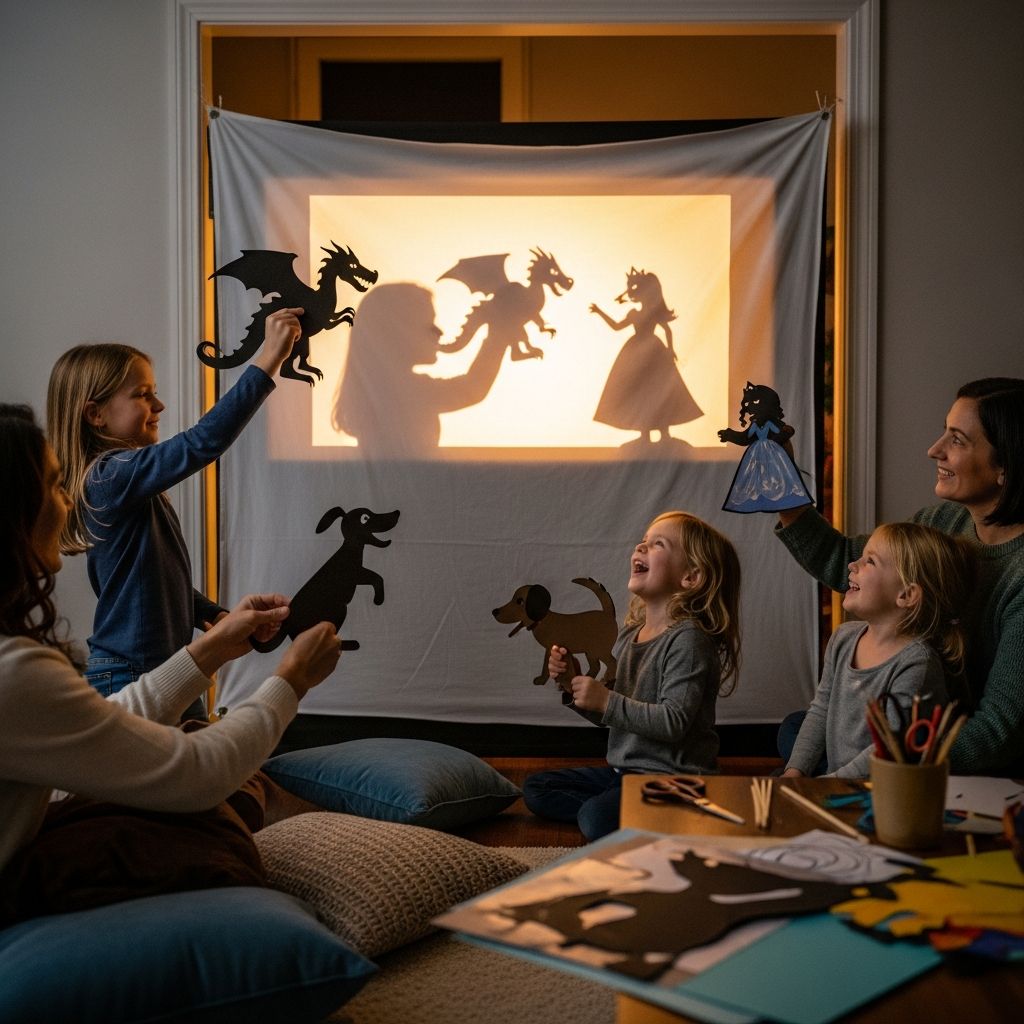
Shadow puppet theater is an imaginative form of storytelling that uses light, silhouettes, and simple homemade puppets to turn any blank wall into a magical stage.
What Is Shadow Puppet Theater?
Shadow puppet theater, often called shadow play, is a type of performance where flat puppets are held between a light source and a translucent screen so that only their shadows are seen by the audience.
The puppeteer moves the figures to act out stories, while voices, dialogue, and sound effects help bring the characters and scenes to life.
Key Features of Shadow Play
- Flat, cut-out figures (usually made from paper, card, or thin leather) that cast clear silhouettes.
- A bright light positioned behind the puppets and in front of the puppeteer.
- A translucent screen or surface for the shadows to appear on, such as white cloth, parchment, or thin paper.
- A storyteller or puppeteer who moves the puppets and speaks or narrates the story.
A Brief History of Shadow Puppetry
Shadow puppet theater is considered one of the oldest forms of puppetry, with roots going back thousands of years in Asia.
Historical evidence suggests that shadow plays emerged in China and later developed in regions such as India, Indonesia, Turkey, and Greece before spreading into Europe.
Historical Highlights
| Region | Traditional Name / Style | Key Characteristics |
|---|---|---|
| China | Chinese shadow play | Uses intricately carved, semi-transparent leather puppets often inspired by folk tales and opera themes. |
| Indonesia (Java & Bali) | Wayang kulit | Religious and epic stories, especially from the Ramayana and Mahabharata, with stylized puppets and ritual elements. |
| Turkey & Greece | Karagöz and related forms | Comic scenes based on everyday life, satire, and physical humor. |
| Western Europe | “Chinese shadows” | Popular in salons and small theaters in the 18th–19th centuries, often linked to the fashion for paper silhouettes. |
As shadow theater moved across cultures, artists adapted local myths, religious stories, and folk tales to the medium, proving how flexible and universal this simple form of visual storytelling can be.
Why Shadow Puppet Theater Is Great for Kids
Shadow puppet theater blends art, drama, and storytelling, making it an ideal activity for children at home, in classrooms, or in community groups.
Because the materials are simple and inexpensive, kids can experiment freely and focus on creativity rather than perfection.
Educational Benefits
- Language and literacy: Children practice vocabulary, sequencing, and narrative structure as they write or retell stories for their show.
- Art and design: Cutting, drawing, and decorating puppets helps develop fine motor skills and visual design sense.
- Science and math: Experimenting with light, distance, and scale offers hands-on experience with basic physics and spatial reasoning.
- Social and emotional skills: Working together on scripts and performances teaches cooperation, empathy, and confidence in public speaking.
Basic Materials You Need
Many shadow puppet theaters can be made almost entirely from recycled or household materials, making the activity both affordable and eco-friendly.
Below is a typical starter list that works well for families and teachers setting up their first DIY shadow theater.
Essential Supplies
- Sturdy cardboard or foam board for the frame of the theater.
- White paper, tracing paper, or thin fabric (like a white sheet) for the screen.
- Black cardstock, construction paper, or recycled packaging for the puppets.
- Wooden skewers, straws, or thin sticks to use as puppet handles.
- Scissors and craft knives (with adult supervision) for cutting shapes.
- Tape, glue, or staples to attach puppets to handles and fasten the screen.
- A bright light source, such as a desk lamp, flashlight, or clip-on lamp.
- Optional: colored cellophane, tissue paper, or translucent plastic pieces to create colored shadow effects.
How Light and Shadows Work in Puppet Theater
Shadow puppet theater depends on the simple physics of light traveling in straight lines and being blocked by opaque objects.
When a puppet stands between the light and the screen, it stops some of the light and creates a shadow silhouette that the audience can see clearly.
Simple Shadow Effects Kids Can Explore
- Size changes: Moving a puppet closer to the light makes the shadow bigger, while moving it closer to the screen makes it smaller and sharper.
- Movement and speed: Sliding puppets slowly across the screen creates smooth, dream-like motion; quick movements can show excitement or surprise.
- Layering: Placing one puppet in front of another gives the illusion of depth and overlapping action.
- Color and transparency: Using translucent materials like colored plastic or thin dyed leather lets some light through, creating tinted or textured shadows.
Step-by-Step: Making a Simple Shadow Puppet Theater
Building a basic theater gives kids a dedicated “stage” and helps contain the light so the shadows stay bright and clear.
The following steps can be adapted for any age group, from young children with adult help to older students working more independently.
1. Build the Theater Frame
- Cut a large rectangular opening in the middle of a cardboard box or foam board to create the window for your screen.
- Leave a strong border around the opening so the frame stays rigid and can stand on a table or floor.
- Decorate the front with paint, markers, or paper to look like a stage, complete with curtains or a proscenium arch if desired.
2. Attach the Screen
- Cut a piece of white paper, parchment, or thin fabric slightly larger than the opening.
- Stretch it tightly across the back of the opening to avoid wrinkles that might distort the shadows.
- Tape or glue the screen securely along all edges so it does not sag when moved.
3. Position the Light
- Place a bright lamp or flashlight behind the screen, about 30–60 cm (1–2 feet) away, and slightly lower than the center of the screen.
- Turn off or dim other lights in the room so the screen becomes the brightest area.
- Test the setup by holding your hand or a simple puppet between the light and screen and adjusting until the shadow is sharp and clear.
4. Make Simple Puppets
- Draw simple shapes (people, animals, trees, houses, etc.) on black cardstock or thick paper.
- Cut out the shapes carefully; add cut-out holes for eyes, mouths, or decorative patterns to create interesting silhouettes.
- Attach a stick, skewer, or straw to the back of each puppet with tape or glue so it can be held and moved easily.
- Optionally, add jointed arms or legs using small paper fasteners so the puppet can bend and move more expressively.
Planning and Performing a Shadow Puppet Show
Once the theater and puppets are ready, the next step is to create a story and decide how to present it to an audience.
Planning the performance encourages children to think about characters, plot, and pacing while also organizing who does what behind the screen.
Story Ideas for Kids
- Retell favorite fairy tales or folk tales using simple, iconic puppets.
- Create original stories about animals, space adventures, or everyday family life.
- Adapt scenes from history or science topics studied in class to reinforce learning.
- Use shadow sketches to illustrate poems, songs, or lullabies without reproducing words directly.
Roles Behind the Screen
- Puppeteers: Control specific characters or objects and practice smooth, coordinated movement.
- Narrator: Reads or recites the story, gives character voices, and keeps the show moving.
- Sound effects & music: Use simple instruments, recorded sounds, or body percussion to match the action.
- Director or stage manager: Helps cue entrances, organize props, and manage transitions between scenes.
Classroom and Home Activity Ideas
Shadow puppet theater fits naturally into units on storytelling, light and shadow, world cultures, or performing arts in both home and school settings.
Teachers and parents can scaffold the activity by starting with very simple shows and gradually introducing more complex puppets and techniques.
Quick Project Ideas
- Five-minute fables: Students create one puppet each and act out a short fable or moral story in small groups.
- Science shadows: Use puppets shaped like planets, animals, or machines to demonstrate concepts such as eclipses, food chains, or simple machines.
- Cultural festival: Assign each group a region (China, Indonesia, Turkey, etc.) and have them design a shadow play inspired by traditional tales from that culture.
- Silent cinema: Encourage children to perform a show with no spoken words, relying only on movement, shadow, and music.
Safety and Practical Tips
Because shadow plays use light and sometimes sharp cutting tools, a few simple safety rules keep the activity safe and enjoyable for all ages.
Adults should supervise young children when using scissors, craft knives, or hot light sources and adjust the project complexity to match the group’s age.
Best Practices
- Use LED or cool-touch lamps when possible to reduce the risk of burns.
- Secure cables and lamps so they cannot be easily knocked over during an enthusiastic performance.
- Store scissors, blades, and sharp skewers out of reach of very young children when not in use.
- Encourage breaks between rehearsals and shows so children’s eyes can rest from looking at bright screens.
Frequently Asked Questions
1. What age is shadow puppet theater best for?
Shadow puppet theater can be adapted for nearly any age: toddlers can enjoy watching simple silhouettes, while older children and teens can design complex stories and puppets.
2. Do we need special equipment?
No specialized equipment is required; a cardboard frame, simple screen, basic light, and home-made paper puppets are enough to create an engaging show.
3. How long should a kids’ shadow play last?
For young audiences, a show lasting 5–10 minutes is usually ideal, while older children can handle a series of short scenes totaling 15–20 minutes.
4. Can shadow puppetry be used to teach curriculum topics?
Shadow plays can reinforce reading, writing, science, social studies, and arts content by turning lessons into dramatized stories that students help design and perform.
5. How can we store puppets and the theater?
Flat puppets can be kept in labeled envelopes or folders by theme, and the cardboard theater can be folded or stored upright in a closet between uses.
Final Thoughts
Shadow puppet theater offers a low-cost, high-imagination way for children and adults to collaborate on storytelling, performance, and visual art.
With only light, simple materials, and a bit of preparation, families and educators can create unforgettable shows that spark curiosity about history, culture, science, and the power of narrative.