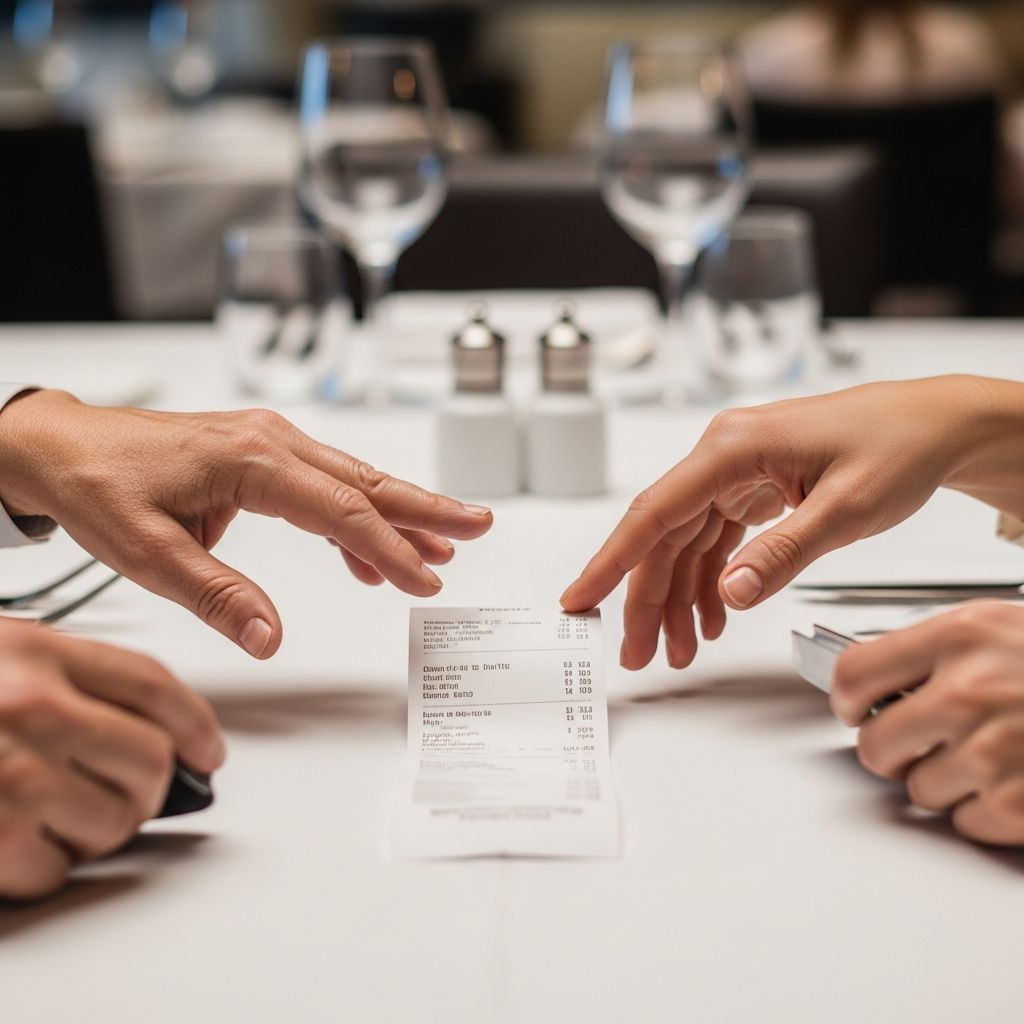
Family dinners carry a unique blend of nostalgia, connection, and occasional tension, especially when adult children join their parents at the table. One persistent question arises every time the meal ends: who reaches for the check? This dilemma reflects deeper layers of independence, gratitude, tradition, and financial pride, influencing how generations interact over shared plates.
Generational Shifts in Family Financial Roles
Historically, parents have shouldered the cost of family outings as a symbol of provision and care. This pattern often persists into adulthood, with moms and dads viewing meal payments as an extension of their nurturing role. However, as children establish careers, homes, and families of their own, expectations evolve. Adult offspring frequently seek opportunities to reciprocate, signaling their maturity and appreciation for years of support.
Surveys and anecdotal evidence reveal a divide. Many grown children report insisting on paying to affirm their financial stability, while parents resist, clinging to the familiar dynamic of being the providers. This tug-of-war can stem from cultural norms where elders maintain authority through gestures like covering tabs, or from personal pride in self-sufficiency.
- Parents’ Perspective: Paying reinforces their role as family anchors, even if budgets strain.
- Adult Children’s View: Contributing honors past sacrifices and demonstrates self-reliance.
- Blended Families: When step-relatives or in-laws join, dynamics complicate further, often defaulting to the hosting parent’s lead.
Etiquette Essentials for Graceful Bill Handling
Proper manners provide a roadmap through this minefield. Etiquette authorities emphasize that the polite move for adult children is always to offer payment first—sincerely, without pretense. This gesture respects parental generosity while asserting one’s position as an equal contributor.
If parents decline, a brief protest followed by gracious acceptance keeps harmony intact. Insisting too forcefully risks offending, as it may imply doubt in their ability or desire to provide. Exceptions apply when parents face genuine financial limits; in such cases, children should gently propose affordable alternatives like casual brunches or home gatherings.
| Situation | Recommended Action | Why It Works |
|---|---|---|
| Standard family dinner | Child offers; parent pays if insisting | Maintains respect and tradition |
| Child’s celebration (e.g., promotion) | Child covers fully | Marks personal milestone |
| Parents on fixed income | Child pays or suggests budget options | Protects family finances |
| Group with grandchildren | Pre-discuss or split equitably | Avoids public awkwardness |
Psychological Underpinnings of the Payment Struggle
At its core, the bill dispute uncovers emotional undercurrents. Parents may perceive a child’s offer as a challenge to their identity as providers, evoking fears of aging or irrelevance. For adult children, paying represents breaking free from dependency, a rite of passage affirming adulthood.
Psychologists note this mirrors broader life transitions. Empty-nesters grapple with role shifts, while millennials and Gen Z navigate economic pressures like student debt and housing costs, making their contributions feel especially meaningful. Open conversations about feelings—perhaps over coffee rather than amid dessert—can demystify these tensions, fostering mutual understanding.
Practical Strategies to Navigate Awkward Moments
Forethought prevents faux pas. Proactively suggest venues matching everyone’s budget, or establish house rules like alternating payments. Creative tactics include pre-paying via apps when possible, or framing offers around gratitude: “This one’s on me to thank you for all those school-night suppers.”
For larger gatherings, dividing the bill proportionally—based on income or party size—offers fairness. Apps like Splitwise streamline this, reducing end-of-meal haggling. When traveling together, clarify expectations upfront to sidestep surprises.
- Plan ahead: Choose mid-range spots to equalize comfort levels.
- Offer authentically: Say, “I’d love to treat tonight,” with eye contact.
- Know when to yield: After one or two polite back-and-forths, concede smilingly.
- Follow up: Send a thank-you text or small gift to extend appreciation.
- Adapt for occasions: Let the celebrant or host lead on special nights.
Financial Realities Shaping Modern Family Dinners
Economic landscapes influence choices profoundly. Inflation, rising living costs, and wage stagnation mean even affluent families weigh outings carefully. Parents on retirement pensions might stretch for dinners, while adult children balance mortgages and childcare.
Data from financial advisors highlights hybrid approaches: some families maintain a “dinner fund” for shared meals, others rotate based on who initiated. Transparency about budgets prevents overextension, prioritizing relationships over extravagance.
Cultural Variations in Global Family Dining Norms
Practices differ worldwide. In collectivist Asian cultures, elders often pay as a sign of respect and hierarchy. Latin American families emphasize communal sharing, with bills sometimes split informally. Western individualism pushes younger generations toward equity, reflecting egalitarian values.
Immigrant families blend traditions, creating unique hybrids. Understanding these nuances enriches multigenerational meals, turning potential conflicts into celebrations of heritage.
Real-Life Stories: Lessons from the Trenches
Consider a scenario where siblings orchestrate a sneaky payment, only to spark parental ire—highlighting how stealth undermines trust. Contrast this with a daughter who honors her folks with concert swag instead of contesting the tab, earning heartfelt thanks.
Forums buzz with tales: one parent relishes letting working kids pay, breaking old cycles; another stubbornly covers, preserving pride. These narratives underscore that flexibility and communication trump rigid rules.
Frequently Asked Questions
What if parents always insist on paying despite tight finances?
Politely decline pricey invites and counter with low-key options like picnics or potlucks to safeguard their security without confrontation.
Should in-laws follow the same etiquette?
Yes—mirror the biological parents’ lead, but offer inclusively to build rapport across family branches.
How to handle group dinners with multiple generations?
Propose splitting beforehand or use apps for transparency; focus on joy over exact shares.
Is it rude to let parents pay every time?
Not if you offer genuinely first—etiquette values the gesture over the outcome.
What about special occasions like holidays?
Tailor to tradition: host covers, or collaborate for a group treat emphasizing festivity.
Building Stronger Bonds Beyond the Bill
Ultimately, dinners thrive when payment fades to background noise. Prioritize presence—deep conversations, laughter, shared stories—over ledger-keeping. Rituals like annual “gratitude feasts” where everyone contributes a course sidestep disputes entirely.
Evolving norms signal healthy growth: parents beaming at self-sufficient kids, offspring cherishing ongoing support. By blending respect, reciprocity, and realism, families transform routine meals into enduring touchstones.
(Word count: 1678)
References
- The Thankless Gesture of Trying to Buy Your Parents Dinner — MEL Magazine. 2019-08-15. https://melmagazine.com/en-us/story/buying-parents-dinner
- Going out to dinner with your adult children — 2Peas Refugees Forum. 2015-03-06. https://2peasrefugees.boards.net/thread/19022/out-dinner-adult-children
- Emily Post’s Etiquette on Family Gatherings — The Emily Post Institute. 2023-05-10. https://emilypost.com
- Generational Wealth Transfer Report — Federal Reserve Board. 2024-06-01. https://www.federalreserve.gov
- Family Dynamics in Adulthood — American Psychological Association. 2022-11-20. https://www.apa.org