Understanding Toddler Snacking Fundamentals
Snacking represents a critical component of a toddler’s daily nutritional intake, functioning as more than just a between-meal treat. Rather than viewing snacks as optional additions to meals, parents should recognize them as essential opportunities to deliver concentrated nutrition that supports rapid growth and cognitive development. During the toddler years, children experience significant developmental milestones that require consistent energy and nutrient replenishment throughout the day.
Toddlers typically require between 1,000 and 1,400 calories daily, distributed across three structured meals and two to three snack opportunities. This frequent eating pattern reflects the relatively small stomach capacity of young children and their elevated metabolic demands. By strategically timing snacks, parents can maintain stable blood sugar levels, support sustained focus during play and learning activities, and prevent the overeating that sometimes occurs when children become excessively hungry before meals.
The Mini-Meal Approach to Snacking
Rather than offering isolated crackers, cookies, or processed snack foods, the most effective snacking strategy involves creating “mini-meals” that mirror the nutritional composition of full meals. This approach ensures that each snack contributes meaningfully to a toddler’s daily nutrient requirements rather than merely filling gaps with empty calories.
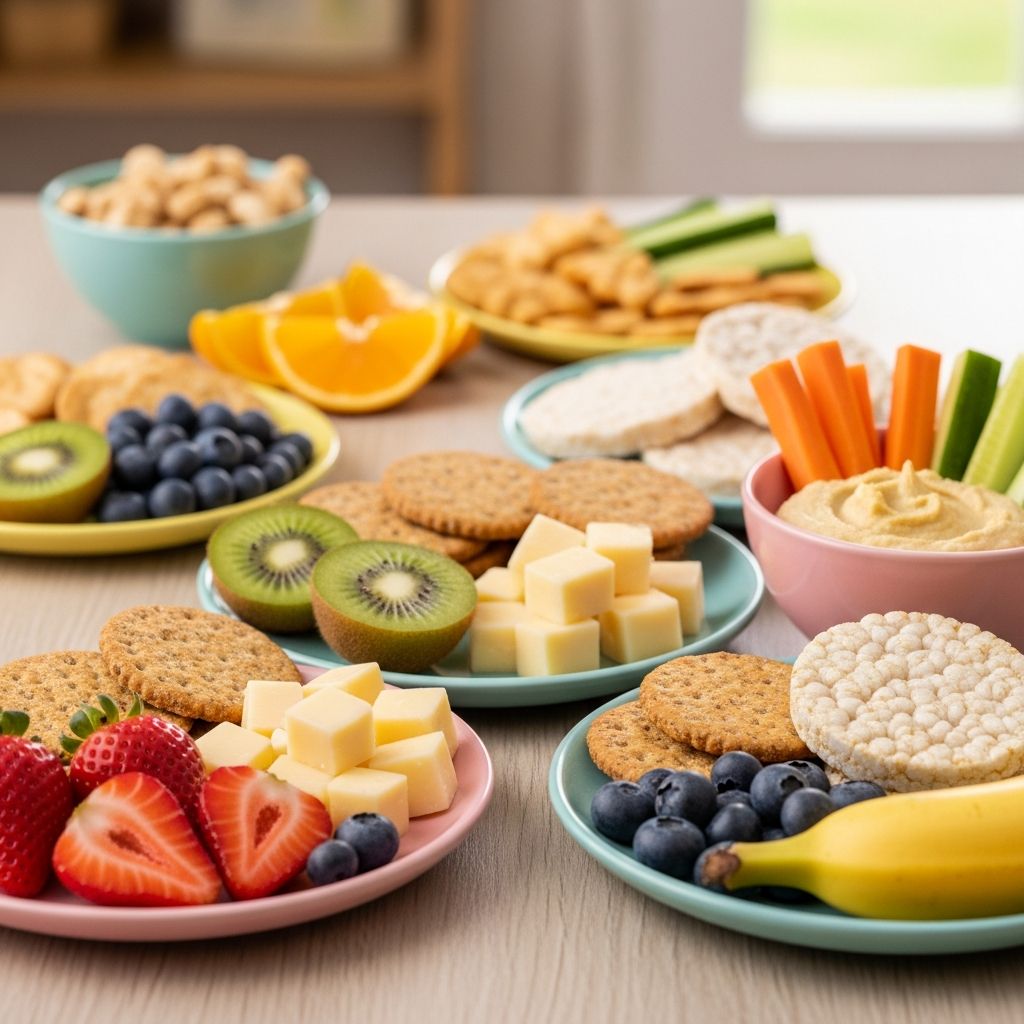
A well-constructed mini-meal snack incorporates three foundational components: a protein source (including dairy options), a fruit or vegetable component, and a grain or starchy carbohydrate. This combination provides sustained energy through balanced macronutrients while delivering vitamins, minerals, and fiber essential for growth and development.
Consider these mini-meal snacking examples that successfully balance nutrition:
- Plain yogurt combined with diced, defrosted frozen berries and a small piece of whole grain toast
- Hummus paired with cucumber sticks, cheese cubes, and whole grain crackers
- Thinly spread seed butter on whole wheat bread accompanied by sliced apple
- Cottage cheese mixed with rinsed canned peaches served with an English muffin
- Cooked quinoa combined with diced chicken and steamed broccoli florets
Building Blocks of Balanced Nutrition
Each macronutrient category plays a distinct role in supporting toddler development. Protein sources facilitate muscle growth and tissue repair, while healthy fats are particularly crucial for brain development and nutrient absorption. Carbohydrates provide the energy necessary for the constant movement and exploration characteristic of toddlerhood.
For toddlers aged one to three years, the recommended macronutrient distribution includes approximately 30-40% of calories from fat, 5-10% from protein, and 45-65% from carbohydrates. Snacks should reflect this balanced distribution rather than skewing toward any single macronutrient.
Protein and Dairy Components
Protein foods and dairy products provide essential amino acids and minerals including calcium, vitamin D, and iron. Suitable protein sources for toddler snacks include plain yogurt, cottage cheese, shredded or diced cheese, eggs (scrambled or hard-boiled), and legumes such as cooked beans, lentils, and chickpeas.
Nut and seed butters, when appropriately prepared, offer concentrated protein and healthy fats. These should be spread thinly on bread or mixed into other foods rather than offered by the spoonful, as this prevents choking hazards in children under four years old.
Fruit and Vegetable Integration
Fruits and vegetables deliver vitamins, minerals, and fiber while training young palates to appreciate diverse flavors and textures. The presentation method significantly influences toddler acceptance and safety. Fruits should be offered fresh, frozen (defrosted and cut appropriately), or canned (thoroughly rinsed) in preparations that prevent choking risks.
Safe fruit preparations include thinly sliced apples and pears, grapes and grape tomatoes cut lengthwise, berries that are smashed or halved, orange and grapefruit sections cut into manageable pieces, and sliced bananas cut lengthwise rather than in rounds.
Vegetables require proper cooking to achieve the soft texture necessary for safe toddler consumption. Steamed carrots, green beans, cauliflower, and broccoli should be cooked until fork-tender. Yams, sweet potatoes, peas, and leafy greens can be diced or pureed to accommodate toddler eating abilities.
Grains and Carbohydrate Sources
Whole grain options should predominate in a toddler’s snacking repertoire. Look for bread products, cereals, and pasta that list “whole wheat flour” or “whole grain” as the first ingredient. Whole grains provide sustained energy through their fiber content while delivering B vitamins essential for energy metabolism.
Suitable grain-based snacks include whole wheat bread, whole grain crackers, cooked rice, quinoa, corn tortillas, and no- or low-sugar whole grain cereals. When offering cereals as snacks, consider soaking them in milk to soften them and increase the snack’s nutritional density through dairy inclusion.
Safety Considerations in Snack Preparation
Choking prevention represents a paramount concern when preparing snacks for children under four years old. Certain foods carry inherently higher choking risks due to their size, shape, or texture. Whole nuts, whole grapes, large berries, hard raw vegetables, hard candies, popcorn, and spoonfuls of nut butter should be avoided until children reach age four.
Foods that require modification include any item larger than a pea that cannot be easily dissolved in saliva. All fresh fruits and vegetables should be cut into small pieces. Grapes and grape tomatoes should be quartered lengthwise rather than left whole. Berries and small fruits should be mashed or halved. Apples and pears should be thinly sliced and peeled when offering to younger toddlers.
Hard, round, and slippery foods demand particular attention. Cook vegetables thoroughly to eliminate hardness. Remove seeds and pits from all fruits. Never offer hard candies, popcorn, whole nuts, or whole marshmallows. Test food temperature and consistency before serving to ensure appropriateness for your child’s developmental stage.
Managing Sugar and Sodium Intake
The American Heart Association and pediatric nutrition experts recommend limiting added sugars to no more than 5% of daily caloric intake for toddlers. Many commercially prepared toddler snacks contain hidden sugars under various names including maltodextrin, high-fructose corn syrup, and evaporated cane juice. Reading ingredient labels carefully helps parents identify and avoid these additions.
Natural sugars found in whole fruits represent an appropriate choice when paired with protein and fiber to slow sugar absorption and prevent blood sugar spikes. When offering naturally sweet foods like dates, raisins, and dried fruits, ensure they are pitted and cut into small pieces to prevent choking while providing sustained energy through their dense nutrient profile.
Sodium requirements for toddlers are minimal—approximately 700-1,000 milligrams daily. Salty crackers, chips, and processed snack foods should be reserved for occasional consumption rather than regular snacking. Focus instead on whole foods prepared without added salt, allowing toddlers’ natural taste preferences to develop without early salt habituation.
Sample Balanced Snack Framework
Creating snacks from a structured framework ensures consistency in nutritional value. The following table illustrates how different foods combine across categories to form complete mini-meals:
| Protein Source | Fruit/Vegetable | Grain/Carbohydrate |
|---|---|---|
| Plain yogurt | Blueberries (smashed) | Whole grain toast |
| Hummus | Cucumber sticks | Whole grain crackers |
| Cheese cubes | Sliced apple | Whole wheat bread |
| Hard-boiled egg (diced) | Steamed broccoli | Whole grain crackers |
| Cottage cheese | Diced peaches | Whole grain muffin |
| Peanut butter (thin spread) | Sliced strawberries | Whole wheat toast |
Mercury and Fish Considerations
While fish provides excellent protein and omega-3 fatty acids crucial for brain development, mercury content in certain varieties requires careful attention. Chunk light (skipjack) tuna, which contains lower mercury levels than albacore varieties, can be incorporated into toddler snacks approximately once per month. Fatty fish varieties such as salmon and sardines, which are generally lower in mercury, represent safer options for more frequent consumption.
Establishing Healthy Snacking Patterns
Portion control during snack time supports appropriate appetite regulation and prevents excessive fullness that interferes with meal consumption. Starting with small portions—such as three quartered strawberries and one-eighth of a quesadilla—allows toddlers to self-regulate their intake. If children finish small initial portions and request more, they are communicating genuine hunger. If they do not finish small portions, they are indicating fullness, and parents should respect this signal.
Establishing consistent snack times supports predictable hunger patterns and prevents constant food requests throughout the day. Most toddlers benefit from snacks scheduled mid-morning and mid-afternoon, with some children requiring additional snacking based on activity level and individual metabolism.
Avoiding Processed Snack Traps
Children often develop associations between “snack time” and processed, highly palatable foods if parents regularly offer crackers, cookies, chips, and sweetened items. Counteracting this tendency requires consistently offering whole foods in appetizing presentations that compete with processed alternatives in terms of appeal and convenience.
Preparation strategies that increase accessibility include pre-cutting vegetables and fruits, washing berries and grapes, boiling eggs in advance, and portioning cheese cubes into small containers. When healthy snacking options are as convenient as processed alternatives, families naturally gravitate toward more nutritious choices.
Consulting Healthcare Providers
Every toddler demonstrates unique nutritional needs based on individual growth patterns, activity levels, and any dietary restrictions. Parents should consult with pediatricians or registered dietitian nutritionists before making significant dietary changes, particularly when addressing concerns about growth, picky eating, or suspected food allergies. Healthcare providers can offer personalized guidance reflecting their understanding of individual developmental trajectories and any relevant health considerations.
Frequently Asked Questions
How many snacks should toddlers eat daily?
Most toddlers benefit from two to three scheduled snacks daily, distributed evenly throughout the day between meals. The exact number depends on individual appetite patterns, activity level, and meal timing.
Can toddlers eat dairy-free snacks?
Yes. Non-dairy milk alternatives, fortified soy products, legume-based proteins, and other plant-based options can provide necessary nutrients. Ensure adequate calcium and vitamin D through fortified alternatives or other calcium-rich foods.
What should I do if my toddler refuses healthy snacks?
Repeated exposure to diverse foods without pressure helps develop acceptance over time. Present foods in appealing forms, involve children in selection and preparation, and model enthusiastic consumption of healthy options.
Are packaged snack bars appropriate for toddlers?
Most commercial snack bars contain added sugars and processing. Whole food snacks offer superior nutrition. If using packaged options occasionally, select those with minimal added sugar and recognizable ingredients.
How can I prevent snacking from interfering with meal appetite?
Schedule snacks at consistent times between meals, approximately 2-3 hours before regular meal times. Offer water rather than milk or juice outside of snack times, and provide snack portions that support rather than exceed hunger at mealtime.
References
- Nutrition Guide for Toddlers — Nemours KidsHealth. Accessed 2026-01-16. https://kidshealth.org/en/parents/toddler-food.html
- Building Balanced Snacks to Feed to Toddlers — American Academy of Pediatrics HealthyChildren.org. Accessed 2026-01-16. https://www.healthychildren.org/English/ages-stages/toddler/nutrition/Pages/Selecting-Snacks-for-Toddlers.aspx
- Dinners & Snack Ideas for Toddlers from a Pediatric Dietitian — Little Bellies. 2024. https://littlebellies.com/learn-play/nourishing-your-toddler-a-pediatric-dietitians-guide-to-dinners-and-snack-ideas/
- What to Feed Toddlers 12-24 Months — Healthy Eating Research. 2021. https://healthyeatingresearch.org/wp-content/uploads/2021/08/What-to-feed-12-24-month-olds.pdf
- Nutrition Information for Toddlers — U.S. Department of Agriculture MyPlate. 2024. https://www.myplate.gov/life-stages/toddlers