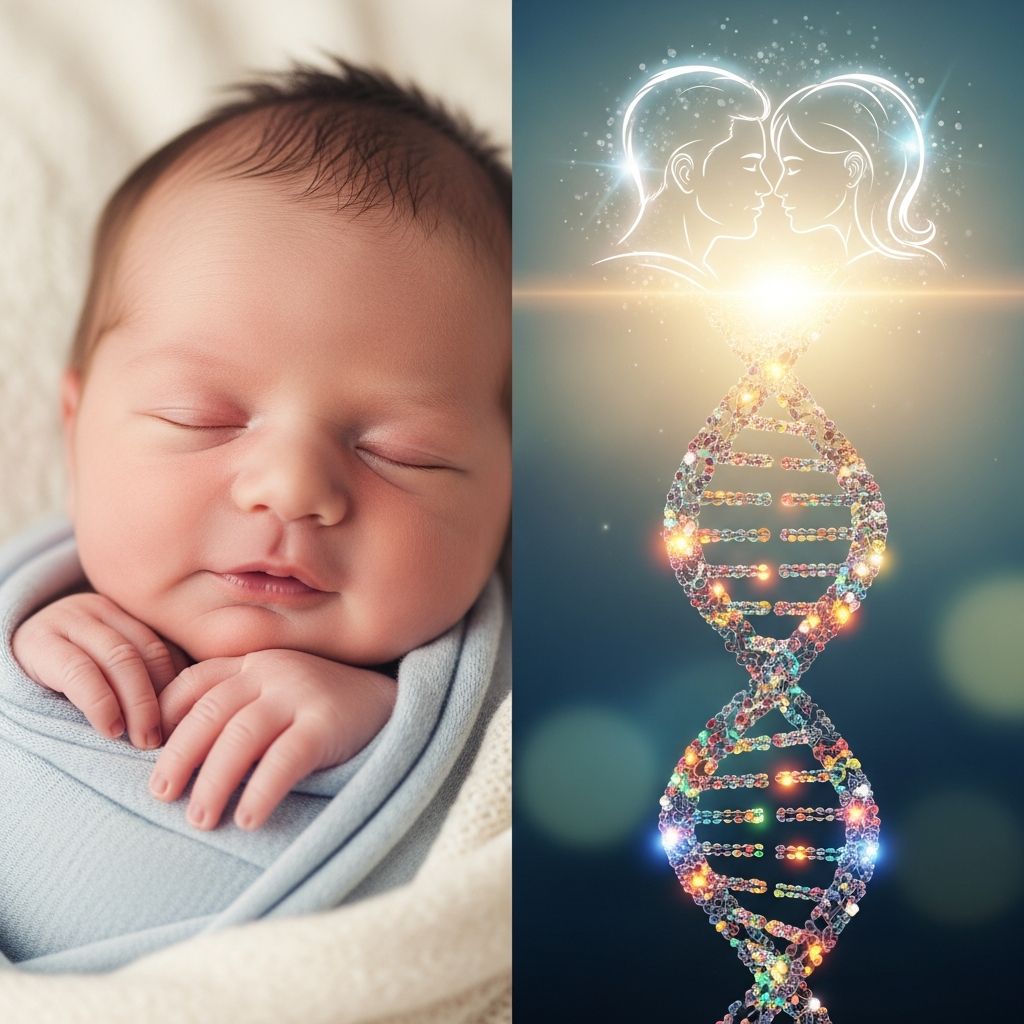
Expecting parents naturally wonder what their baby will look like, imagining tiny noses, eye color, hair type, and skin tone long before birth. While no one can predict an exact face, science offers helpful clues about how genetics and pregnancy factors influence a newborn’s appearance.
What Really Shapes a Baby’s Appearance?
Your baby’s looks begin with genetics but are refined by growth in the womb and the way birth unfolds. Think of it as a combination of inherited traits and short-term newborn quirks that gradually settle during the first weeks and months of life.
- Genes determine long-term traits like eye color potential, natural hair texture, and facial structure.
- Pregnancy and birth influence temporary details such as head shape, swelling, and skin markings that usually fade or change.
- Time allows your baby’s features to mature, making the newborn stage only an early version of their eventual appearance.
How Genetics Influence Your Baby’s Looks
Every baby receives half of their genetic material from each biological parent, creating a unique blend of visible traits. Some features are strongly influenced by a single gene pattern, while others are shaped by many genes working together.
Common Inherited Traits
- Eye color range and likelihood (for example, brown usually being genetically stronger than blue).
- Hair color family (dark, medium, or light) and natural texture (straight, wavy, curly, or coily).
- General facial framework, including jawline, cheek fullness, and nose shape.
- Overall body build tendencies, such as naturally more petite or more robust frames over time.
Because many genes contribute to a single trait, siblings with the same parents can still look quite different from one another. Grandparents and extended relatives may also influence the mix, so family photos often offer useful clues instead of guarantees.
Eye Color: Why Many Babies’ Eyes Change
One of the most common questions is whether a baby will have blue, brown, green, or hazel eyes. Many newborns, especially of European ancestry, arrive with blue-gray or slate-colored eyes that deepen or shift over the first year.
How Eye Color Develops
- Melanin (pigment) in the iris increases over time, gradually darkening the eyes.
- Babies with two brown-eyed parents are more likely to develop brown or darker eyes, but lighter shades are still possible.
- Eye color can continue to adjust subtly for up to about three years, although major shifts usually occur in the first 6–12 months.
Typical Eye Color Progression Table
| Age Range | What Parents Commonly Notice |
|---|---|
| Birth to 2 months | Eyes often appear blue-gray, dark gray, or very dark brown; color may look different in various lighting. |
| 2 to 6 months | Eyes gradually darken or shift tone as more pigment develops. |
| 6 to 12 months | Most babies’ eyes settle into a more stable color, though small changes can still occur. |
| 1 to 3 years | Subtle refinement of shade is possible, especially in green or hazel eyes. |
Hair Color, Hair Texture, and Baby Hair Myths
Newborn hair can be surprising. Some babies are born with thick hair, others with only a soft fuzz, and a few are completely bald. The hair seen at birth is often not the same hair type the child will have later in childhood.
What to Expect from Newborn Hair
- Hair at birth may be darker, lighter, or a different texture than your baby’s eventual hair.
- Many babies shed some or most of their newborn hair in the first few months before new growth appears.
- Final hair texture and color usually become clearer between toddlerhood and early childhood.
Common Misconceptions About Baby Hair
- Shaving a baby’s head does not permanently thicken the hair; it only makes new growth feel blunt as it comes in.
- Sleeping position can cause temporary flat spots or thin patches but does not change the natural pattern of growth.
- Parents’ hair color at birth may differ from their adult color, so baby photos of the whole family provide better clues than current appearance alone.
Skin Color, Birthmarks, and Newborn Skin Changes
Skin tone in newborns often looks different in the first hours and days than it will later, especially as circulation and oxygen levels stabilize after birth. Babies may appear redder, purpler, or more blotchy initially, then gradually settle into a more consistent tone.
Skin Tone and Family Background
- Genetic background strongly guides eventual skin color, but the final shade can take weeks or months to fully emerge.
- Babies from mixed-heritage families may display a range of tones within the same household, each unique and normal.
- Sun exposure and general health can subtly influence how skin tone looks over time, even though the genetic base remains the same.
Common Newborn Skin Features
- Blotchy or mottled areas that come and go as the baby adapts to temperature changes.
- Peeling skin in the first weeks, especially on hands and feet, as the outer layer sheds.
- Temporary rashes or tiny white bumps that often disappear without treatment.
Newborn Head Shape and Facial Swelling
Birth is a physical process, and the way a baby is delivered can affect their immediate appearance. Many babies look a bit squished or swollen at first, then quickly change in the first few days.
Why Newborn Heads Look the Way They Do
- Babies born vaginally may have elongated or cone-shaped heads because the skull bones temporarily overlap to pass through the birth canal.
- Babies born via cesarean delivery may have rounder heads initially but can still show some swelling.
- Soft spots, called fontanelles, are normal gaps between skull bones that allow for birth and brain growth.
Facial Features Right After Birth
- Eyelids, lips, and cheeks may appear puffy due to the pressure and fluid shifts of birth.
- Flattened noses or slightly asymmetrical faces are common and usually balance out as swelling decreases.
- Most swelling improves noticeably within the first week, revealing more of your baby’s long-term face.
Height, Weight, and Body Proportions
While parents often compare birth weights and lengths, newborn body proportions are different from older babies and children. Newborns typically have large heads relative to their bodies, short limbs, and round bellies, all of which gradually change with growth.
Understanding Newborn Proportions
- The head is a significant portion of the baby’s total length and will look large compared with the rest of the body.
- Arms and legs may seem thin or curled from their position in the womb, then gradually stretch out over time.
- Weight can fluctuate in the first days, with many babies losing a little before gaining steadily.
Growth Over the First Months
As your baby gains weight and length, the face fills out, limbs straighten, and muscle tone improves. These changes can make your baby’s overall appearance look quite different at three or six months compared with the day of birth.
How Much Will My Baby Resemble Me?
Families often search a newborn’s face for familiar traits, hoping to spot “Dad’s eyes” or “Grandma’s smile.” Some babies resemble one parent strongly at birth, while others look like a mix or change resemblance as they grow.
Why Resemblance Changes Over Time
- As swelling fades and features mature, certain family traits become more obvious.
- Weight gain, hair growth, and teeth eruption can all shift the way a face looks.
- Different expressions and mannerisms may remind you of various relatives, adding to the sense of family likeness.
Using Baby Face Predictors and Photo Tools
Online baby-face generators and prediction tools are popular because they are fun, but they cannot truly calculate a future face. At best, they use basic patterns and blended images to create playful guesses.
How to Treat These Tools
- Enjoy them as entertainment rather than a medical or scientific forecast.
- Remember that real genetic variation is far more complex than any app can simulate.
- Use them to start conversations and daydream, not to set expectations about your child’s exact appearance.
Normal Newborn Quirks That Surprise Parents
Many newborn features can seem surprising or concerning at first but are usually harmless and temporary. Knowing what is common can offer reassurance and help you decide when to contact a healthcare professional.
Examples of Common, Temporary Traits
- Fine hair on the body (lanugo) that gradually sheds.
- Swollen genitals or breast tissue due to exposure to pregnancy hormones.
- Crossed eyes or wandering eye movements as the baby’s eye muscles strengthen.
- Soft, downy hair or flaky skin that slowly changes with age and gentle care.
When to Talk to a Healthcare Professional
Although most newborn appearance differences are normal, it is important to contact a healthcare professional with any concerns. Care teams are used to questions and can distinguish typical variations from signs that need closer attention.
- Seek advice if you notice pronounced asymmetry, persistent discoloration, or swelling that worsens instead of improving.
- Ask about any birthmarks, moles, or patches of skin that change quickly or look unusual.
- Bring up questions about head shape, eye alignment, or muscle tone at well-baby visits for reassurance and guidance.
Frequently Asked Questions (FAQs)
1. Can anyone accurately predict exactly what my baby will look like?
No one can predict an exact face, but family genetics offer reasonable clues about general features such as likely hair color range, eye color tendencies, and facial shape. Any tool or guess should still be treated as an approximation, not a guarantee.
2. Why does my newborn look so different from older babies?
Newborns are adjusting to life outside the womb, so they may be puffy, wrinkled, or temporarily misshapen from birth. As swelling fades and growth begins, your baby’s appearance quickly becomes closer to what you see in typical baby photos.
3. Will my baby’s nose and ears stay the same size and shape?
While the basic structure is influenced by genetics, noses and ears continue to grow and change shape throughout childhood. A nose that looks flat or wide at birth may appear more defined as the face grows.
4. Do all babies lose their newborn hair?
Many babies shed some or all of their newborn hair within the first few months, but the amount and timing vary widely. New hair growth often comes in with a different color or texture, making the child’s look evolve again.
5. How long does it take before my baby’s true eye color appears?
Some babies show their long-term eye color fairly quickly, while others take many months. In general, a more stable color usually emerges by around one year, with only subtle changes happening after that.
6. Should I worry if my baby does not look like either parent?
It is common for newborns to resemble extended family members or display a combination of traits that do not closely match either parent at first. Over time, resemblance often becomes clearer as features mature, but every child’s appearance is uniquely their own.