Diaper changes will happen several times a day in the first year, so having a dedicated, safe, and comfortable place to do them can make daily life with a baby feel calmer and more organized. This guide walks through everything you need to know about choosing a baby changing table that fits your space, budget, and routine.
Why a Dedicated Changing Area Helps
Not every family buys a separate changing table, but almost every caregiver benefits from a clearly defined changing area. Whether it is a standalone unit or a dresser with a topper, the goal is safety, comfort, and easy access to essentials.
- It reduces back strain by keeping baby at a comfortable height instead of bending over a bed or sofa.
- It keeps diapers, wipes, creams, and spare clothes in one place, so you are not scrambling during messy changes.
- It creates a predictable routine that can help calm a fussy baby during diaper changes.
Key Types of Changing Setups
There are several ways to create a safe changing zone. Understanding the main categories will help you narrow down what makes sense for your home and lifestyle.
1. Standalone Changing Table
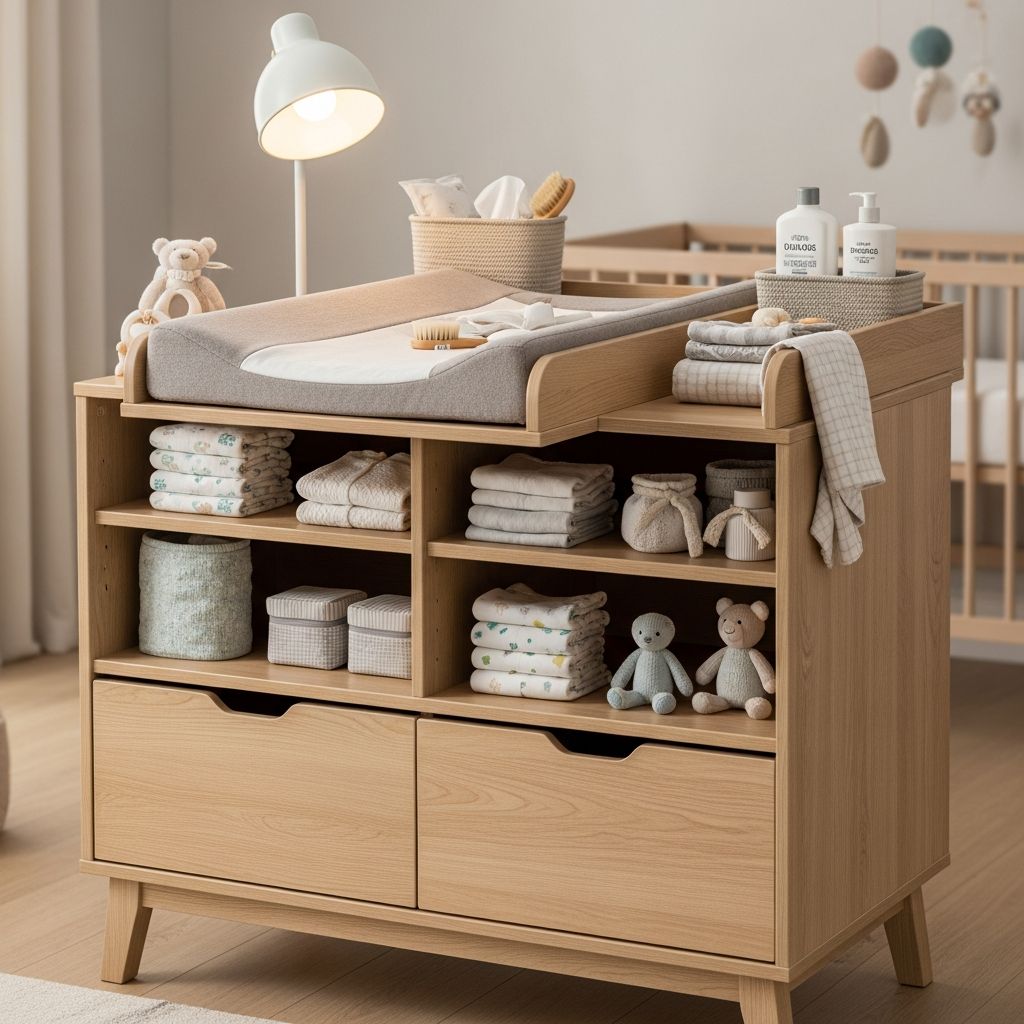
A standalone changing table is a dedicated piece of nursery furniture designed specifically for diaper changes.
- Usually includes an upper changing surface with guard rails and lower shelves or cubbies for storage.
- Great if you have the floor space and want everything in one clearly defined station.
2. Dresser with Changing Topper
A regular dresser paired with a changing pad or removable topper is a popular choice for nurseries where long-term use is a priority.
- The dresser serves as clothing storage for years, while the pad or topper can be removed once your child is out of diapers.
- Offers deeper drawers than many open-shelf changing tables, which helps hide clutter.
3. Wall-Mounted or Fold-Down Stations
Wall-mounted changing stations fold up when not in use, making them ideal for tight spaces or multi-use rooms.
- Perfect for small apartments, bathrooms, or shared spaces where a full piece of furniture is not practical.
- Must be properly anchored into studs or appropriate wall support for safety.
4. Portable and On-the-Go Solutions
Portable changing stations are compact and move around the house easily.
- Options include lightweight folding tables, bassinet–changing-table combos, and cushioned pads you can use on beds or counters.
- These are useful as secondary changing spots in living rooms or for caregivers who travel frequently.
Safety Features You Should Not Compromise On
Safety is the most important factor in choosing any changing table. Babies quickly learn to wiggle, kick, and roll, so the table must help you keep them secure.
- Sturdy construction: The table should not wobble when you push on it. Avoid designs that feel top-heavy.
- Guard rails: Raised sides around the changing surface create a physical barrier that helps reduce the chance of rolling off.
- Secure pad attachment: If the changing pad is separate, it should be strapped or screwed down according to the manufacturer’s instructions.
- Safety strap: A single or two-point strap helps keep baby centered, but it is a backup, not a replacement for supervision.
- Rounded edges: Smooth or rounded corners can help reduce bumps and bruises for both baby and adults.
- Weight limit and age guidance: Check the stated maximum weight and follow it; many tables are recommended up to a certain weight or until baby can stand steadily.
Recommended Dimensions and Ergonomics
Comfort for the caregiver matters more than many new parents realize. An awkwardly low or high changing table can make frequent diaper changes tiring.
| Feature | Typical Range | What to Consider |
|---|---|---|
| Height from floor | 85–100 cm (about 33–39 in) | Aim for a surface around your hip level to reduce back bending. |
| Width of changing area | 40–50 cm (about 16–20 in) | Needs to be wide enough for baby plus some wiggle room. |
| Length of changing area | 75–85 cm (about 30–34 in) | Longer pads can grow with baby through toddlerhood. |
| Overall footprint | Varies widely | Measure your space and allow room to stand and open drawers. |
When testing height, imagine doing a diaper change and see whether you can stand upright without hunching your shoulders or bending deeply at the waist. If you are significantly taller or shorter than average, a slightly custom height may be worthwhile.
Storage: What Do You Really Need?
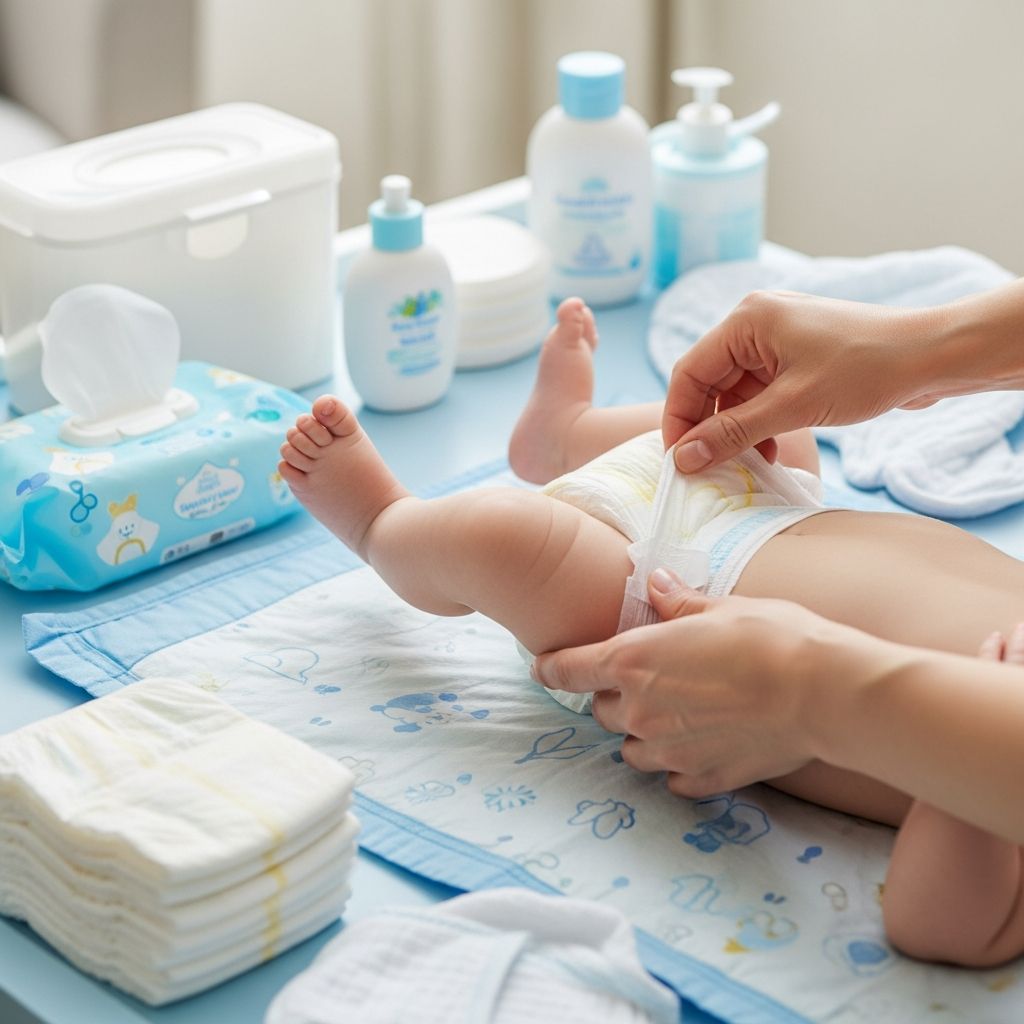
During diaper changes, reaching for supplies with one hand while keeping the other on baby is much easier if everything is organized logically. Think about what you grab most often and where it should live.
- Open shelves: Make it easy to see when you are running low on diapers and wipes, but can look cluttered without baskets or bins.
- Drawers: Hide visual mess and protect supplies from dust, but require one extra hand motion to open.
- Side caddies or organizers: Provide quick-access spots for creams, wipes, and thermometers near the surface.
- Hamper space: Integrating a laundry basket or bin under the table simplifies post-change cleanup.
Sample Essential Changing Station Checklist
- Diapers in at least two sizes (current and the next size up).
- Fragrance-free wipes and a backup pack or box.
- Diaper cream or ointment plus cotton pads or reusable cloths.
- Spare onesies, pajamas, and socks within arm’s reach.
- Plastic bags or a diaper pail for dirty diapers.
- Hand sanitizer or easy access to a sink for handwashing.
Materials and Build Quality
The materials used in your changing table affect durability, appearance, and ease of cleaning. For many families, a mix of style and practicality works best.
- Solid wood: Often the most durable and stable option, with a classic furniture look. Heavier but long-lasting.
- Engineered wood or MDF: Usually more affordable and available in many styles; look for well-reviewed construction and finishes.
- Metal frames: Slimmer profiles that can feel more modern; check that joints and welds feel robust.
- Plastic components: Common in portable or foldable tables and easier to wipe down, though they may not be as long-lasting as solid wood.
Regardless of material, check that finishes are smooth, screws are tight, and any paint or coating is baby-safe and free from noticeable strong chemical odors after airing out.
Changing Pads and Covers
The pad is where your baby will actually lie, so comfort and cleanability matter. Some tables come with a pad, while others require you to buy one separately.
- Contoured shape: A pad with slightly raised, curved sides helps keep baby centered during changes.
- Water-resistant or waterproof cover: Makes wiping up messes quick and prevents moisture from soaking into the foam.
- Removable fabric covers: Soft cotton or bamboo covers feel gentle on skin and can be tossed in the wash.
- Non-slip backing or attachment straps: Help keep the pad from sliding around on top of a dresser or table.
Space Planning: Where Will It Go?
Before committing to a specific model, map out exactly where the changing station will live. Measure more than just the footprint of the furniture.
- Ensure you have room to stand comfortably and move around, even if another adult is in the room.
- Check that doors, drawers, and nearby closet doors can fully open without hitting the table.
- Consider lighting; having a soft lamp or dimmable overhead light near the table helps with nighttime changes.
- Think about outlets if you plan to plug in a wipe warmer, sound machine, or nightlight nearby.
Budget and Value Considerations
Changing tables are available at many price points, but a higher price does not always guarantee a better fit for your family. Look beyond looks and focus on daily use.
- Entry-level options: Simple open-shelf designs with a basic pad. Great for tight budgets or secondary changing areas.
- Mid-range options: Often include better-quality hardware, more storage, and nicer finishes.
- Higher-end options: May convert to regular dressers, feature eco-conscious materials, and coordinate with full nursery furniture collections.
When comparing prices, factor in whether the pad is included, if you need extra covers, and how long you realistically expect to use the piece.
Longevity and Multi-Use Ideas
Many parents want nursery furniture that can adapt as their child grows. Some changing tables are designed with this in mind, while others can be repurposed creatively.
- Dressers with removable toppers naturally convert to standard bedroom storage.
- Open-shelf tables can become toy storage, bookcases, craft stations, or entryway organizers once diaper days are over.
- Neutral colors and simple designs blend more easily into other rooms later on.
Daily Use Tips for a Smooth Routine
Even the best changing table will not be helpful if it is not set up thoughtfully. Small tweaks can make diaper changes faster and less stressful.
- Keep the most-used items on the top shelf or in the top drawer, directly under the changing surface.
- Use bins or drawer dividers to separate diapers, wipes, creams, and clothing by type and size.
- Restock supplies at the same time each day so you are never caught without diapers or wipes.
- Store a small toy or soft book at the station to occupy baby during longer changes.
Essential Safety Habits During Diaper Changes
Furniture safety features are important, but safe habits matter just as much. A few consistent rules protect babies even on the most secure setups.
- Always keep at least one hand on baby when reaching for supplies.
- Prepare everything you need before placing baby on the table whenever possible.
- Never leave baby unattended on an elevated surface, even for a few seconds.
- Use the safety strap as directed, while still maintaining close supervision.
- Follow the manufacturer’s guidelines for maximum weight and age, and stop using the table once baby exceeds them or can easily climb away.
Frequently Asked Questions
Do I actually need a changing table?
No, a changing table is not a strict necessity, but a designated changing area is extremely helpful. Many families use a dresser with a changing pad or a portable pad on a stable surface instead of a dedicated piece of furniture.
How long will I use a changing table?
Most parents use a changing table regularly for about 18 to 24 months, although it depends on the child’s size and activity level. Some continue to use the surface for dressing toddlers or quick clothing changes after the diaper stage.
Is it safe to buy a used changing table?
It can be, as long as you carefully check for structural stability, missing parts, and product recalls. Plan to replace any old, worn, or non-wipeable pads with new ones and make sure you can securely attach the pad to the table.
Should the changing table be anchored to the wall?
Anchoring is strongly recommended for any tall or top-heavy furniture, especially in homes with older siblings who might climb. Many new models include wall straps for this purpose, and they are worth using.
What features are worth splurging on?
Features that usually justify extra cost include a comfortable, easy-to-clean pad, solid construction that feels stable, and enough storage to keep everything you need within reach. Designs that convert to long-term furniture can also offer better value over time.
Quick Buying Checklist
Use this short checklist while shopping in-store or online to make sure your top pick is truly practical:
- Height feels comfortable for the main caregivers.
- Table does not wobble and has a stable base.
- Guard rails and safety strap are included or easily added.
- Pad is contoured and can be wiped clean or covered with washable covers.
- Enough storage for diapers, wipes, creams, clothes, and a small trash solution.
- Fits your space measurements with room to walk and open drawers or doors.
- Can be repurposed or used as regular furniture later, if that matters to you.
By combining attention to safety, comfort, storage, and long-term value, you can choose a baby changing table—or create a changing area—that supports your family’s needs throughout the diaper years and beyond.