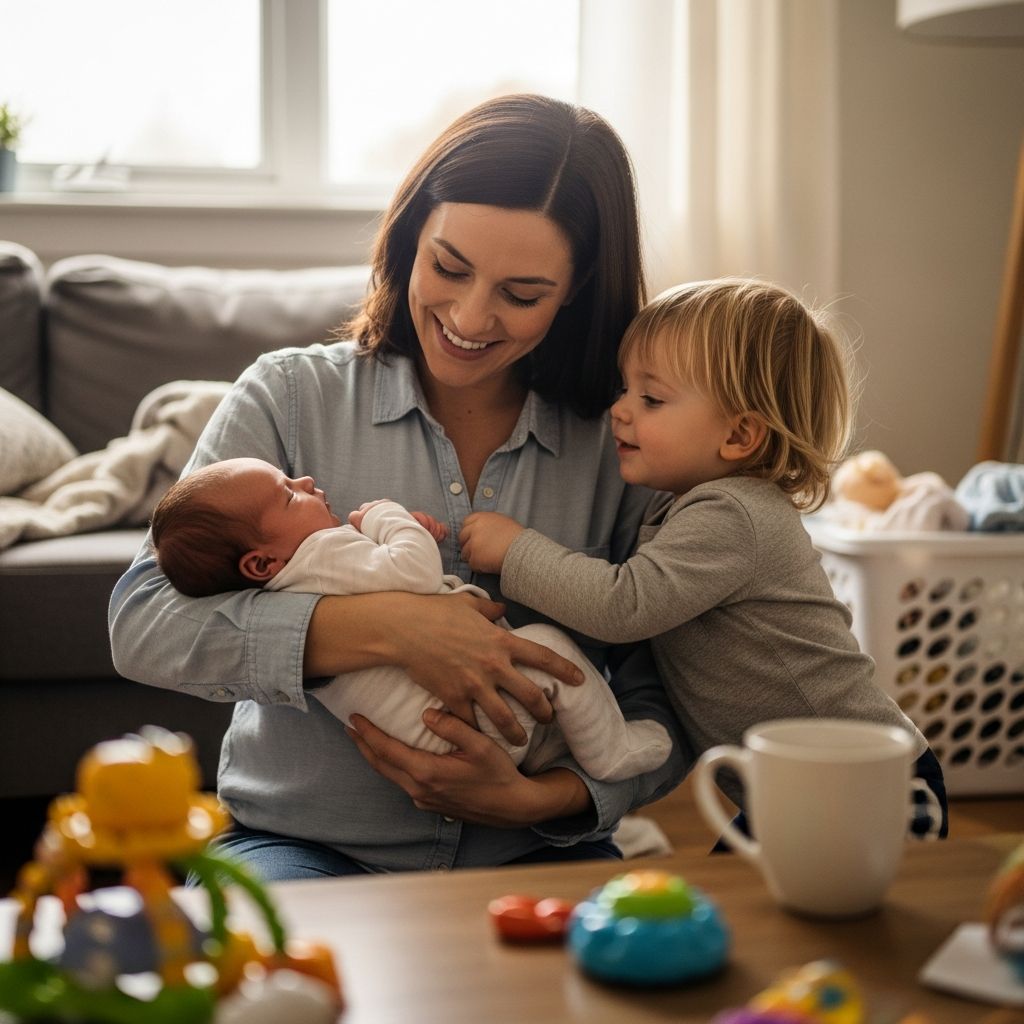
Transitioning from one child to two brings an intense wave of adjustment for many mothers. The days feel endless, with constant demands pulling in multiple directions, yet this phase passes swiftly, revealing profound rewards in family life.
Understanding the Initial Overwhelm
The first months with a second child often involve sleep deprivation, logistical hurdles, and emotional ups and downs. Mothers report feeling stretched thin, balancing the needs of an infant alongside a toddler’s growing independence. This period tests patience but builds resilience.
Common challenges include less individualized time for each child, which can stir guilt, and heightened fatigue impacting daily routines. Despite these, the human capacity for adaptation shines through, with improvements emerging before fully noticed.
- Sleep disruptions from nighttime feedings and sibling wake-ups.
- Dividing attention between children’s distinct developmental stages.
- Managing household tasks with reduced personal time.
Building Sibling Connections from Day One
Siblings offer each other built-in companionship, starting young. An older child learns empathy by observing a newborn’s needs, while the baby benefits from the energy of an active sibling. These early interactions lay groundwork for lifelong support networks.
Research highlights how shared home environments foster social learning. Children practice negotiation and cooperation naturally, skills honed through daily play and conflict resolution.
| Age Pairing | Benefits for Older Child | Benefits for Younger Child |
|---|---|---|
| Toddler + Newborn | Develops patience and sharing | Exposure to play and language |
| Preschooler + Infant | Boosts leadership skills | Models positive behaviors |
| School-age + Toddler | Encourages responsibility | Gains constant playmate |
Fostering Independence in Your Children
With two kids, parental attention naturally spreads, prompting older children to tackle tasks solo. A toddler waiting for help with a toy might solve it independently, building self-reliance earlier than in single-child homes.
This dynamic extends to emotional growth. Children learn to self-soothe during brief waits, enhancing problem-solving abilities. Parents often observe accelerated maturity, as kids adapt to shared resources like toys and parental hugs.
Your Evolution as a Parent
Raising multiple children accelerates personal development. Mothers refine multitasking, prioritize effectively, and cultivate deeper empathy. The contrast in children’s personalities—one outgoing, the other reserved—broadens appreciation for diverse traits.
Studies link multi-child parenting to heightened life satisfaction and adaptive traits like extroversion, as caregivers navigate varied needs. This growth spills into stronger partnerships, with shared parenting duties fostering teamwork.
Parents of multiple children often report greater overall fulfillment, balancing challenges with unique joys from observing sibling interplay.
Strengthening Family Bonds in a Two-Parent Setup
In households with two involved parents, children thrive amid modeled healthy relationships. Shared meals, open dialogues, and joint activities create security. Parental unity in rule-setting and conflict navigation teaches resilience.
Economic stability from dual incomes supports enriched experiences, from healthcare access to extracurriculars. Community resources like parks amplify these benefits, promoting physical and social health.
Practical Strategies for Daily Harmony
Streamline routines to ease the load: batch-prepare meals, designate play zones for independent fun, and carve couple time amid chaos. Intentional moments—like family story hours—reinforce connections without overwhelming schedules.
- Establish consistent nap overlaps for personal breaks.
- Rotate one-on-one time weekly with each child.
- Leverage siblings for mutual entertainment.
- Seek external support networks for respite.
Emotional Well-Being for Moms
Self-compassion is key during adjustment. Acknowledge progress, however small, like smoother bedtimes or longer solo play stretches. Lower stress through mindfulness or short walks, preserving energy for joyful interactions.
Positive co-parenting reduces burden; fathers’ involvement in childcare notably cuts maternal stress, per research. External family support further balances work-family demands.
Long-Term Rewards of a Multi-Child Family
Beyond infancy, siblings become allies through school years and adulthood. They share milestones, offer advice during tough times, and create a safety net post-parental years. Financial and emotional resources compound, aiding each member’s path.
Children in such families often excel academically and socially, observing cooperative models. Parental growth manifests in confident, adaptable child-rearing philosophies.
Frequently Asked Questions
Is it normal to feel overwhelmed with two young kids?
Yes, the transition amplifies demands, but most moms adapt within months, finding rhythm in routines.
How do siblings help develop social skills?
Daily interactions teach sharing, empathy, and negotiation naturally, under parental guidance.
Does having two parents make a difference?
Stable two-parent homes provide emotional security, better resources, and modeled relationships, benefiting child outcomes.
Will my older child become more independent?
Often yes, as shared attention encourages self-reliance and responsibility.
What if I’m a single mom of two?
Build support networks; many thrive with community aid and intentional strategies.
How soon does it get easier?
Improvements appear gradually, often by 3-6 months, accelerating with routines.
Embrace the journey— the chaos softens into cherished memories, with your family emerging stronger and more connected.
References
- Benefits of Having More Than One Child — Babywise Mom. 2023-01-15. https://www.babywisemom.com/benefits-more-than-one-child/
- Parenting Multiples — Children’s Minnesota. 2024-05-20. https://www.childrensmn.org/educationmaterials/parents/article/7761/parenting-multiples/
- The Impact of Two Parent Households on Family Well-being — Riaz Counseling. 2023-11-10. https://www.riazcounseling.com/blog-posts/the-impact-of-two-parent-households-on-family-well-being
- Is the Predisposition to Have More Children Beneficial — PMC (NCBI). 2022-07-12. https://pmc.ncbi.nlm.nih.gov/articles/PMC9266142/
- Understanding the Joys and Challenges of Raising Multiple Kids — Lemon8 (The Rossi Family). 2024-02-28. https://www.lemon8-app.com/@therossifamily/7437788376654316088?region=us