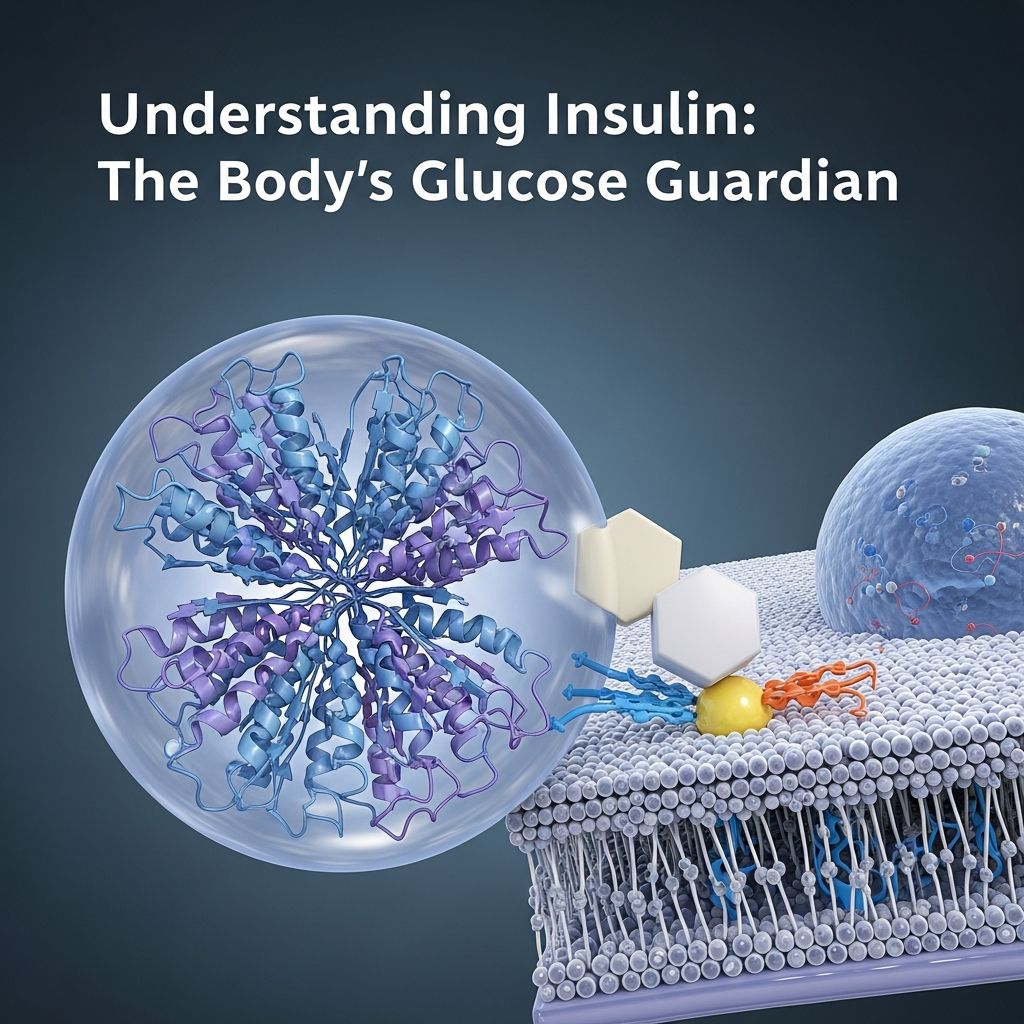
Insulin serves as a vital hormone that orchestrates how the body handles glucose, the primary energy source derived from food. Produced in the pancreas, it ensures cells receive the fuel they need while preventing dangerous spikes in blood sugar levels.
How the Pancreas Produces This Essential Hormone
The pancreas, located behind the stomach, contains specialized clusters called islets of Langerhans. Within these islets, beta cells synthesize insulin in response to rising blood glucose. When you eat, carbohydrates break down into glucose, entering the bloodstream and prompting beta cells to release insulin.
Production begins with preproinsulin, which transforms into proinsulin and then mature insulin through enzymatic cleavage. This process stores insulin in vesicles until needed, ready for quick deployment when glucose levels climb.
- Beta cells monitor blood nutrients like glucose, amino acids, and fatty acids.
- High glucose triggers insulin secretion in two phases: a rapid first burst and a sustained second release.
- Transcription factors such as PDX1, NeuroD1, and MafA regulate gene expression for insulin synthesis.
This precise mechanism maintains energy balance, crucial for growing children whose active lifestyles demand steady fuel.
Insulin’s Primary Job: Managing Blood Glucose
After meals, blood glucose rises, signaling insulin release. Insulin binds to receptors on cell surfaces, particularly in muscle, fat, and liver tissues, acting like a key that unlocks doors for glucose entry.
In muscle and fat cells, insulin promotes the translocation of GLUT4 transporters to the cell membrane, facilitating glucose uptake via facilitated diffusion. This lowers blood sugar efficiently.
| Tissue | Insulin’s Action | Outcome |
|---|---|---|
| Muscle | GLUT4 insertion | Glucose used for energy |
| Fat (Adipose) | GLUT4 insertion | Glucose stored as fat |
| Liver | Glycogen synthesis | Excess glucose stored |
In the liver, insulin stimulates glycogenesis, converting glucose to glycogen via enzymes like glycogen synthase, while inhibiting gluconeogenesis and glycogenolysis.
Beyond Sugar: Insulin’s Influence on Fats and Proteins
Insulin is anabolic, promoting storage and growth. In lipid metabolism, it boosts lipogenesis by upregulating enzymes that convert glucose to fatty acids in adipocytes. It also inhibits hormone-sensitive lipase, reducing fat breakdown and lowering free fatty acids in blood.
For proteins, insulin enhances amino acid uptake and synthesis in muscles, countering breakdown during fasting. This supports tissue repair and growth, especially important in children.
- Promotes triglyceride formation from excess glucose.
- Suppresses lipolysis to preserve fat stores.
- Stimulates protein building in various tissues.
Overall, insulin shifts the body from catabolism (breaking down reserves) to anabolism (building and storing).
The Insulin-Glucagon Balance: Keeping Levels Steady
Insulin works with glucagon, produced by alpha cells in the pancreas. When glucose is high, insulin dominates, lowering it; when low, glucagon raises it by promoting glycogen breakdown and gluconeogenesis.
Gut hormones like GLP-1 amplify insulin release after eating, known as the incretin effect, enhancing response to oral glucose over intravenous.
This dynamic duo ensures blood glucose stays within 70-140 mg/dL, vital for brain function and organ health.
When Insulin Falters: Insulin Resistance and Diabetes
In type 1 diabetes, autoimmune destruction of beta cells halts insulin production, requiring injections. Type 2 involves insulin resistance, where cells ignore the signal, often linked to obesity.
Symptoms include excessive thirst, fatigue, and blurred vision. Early management with lifestyle changes or medications prevents complications like neuropathy.
Comparing Diabetes Types
| Type | Insulin Issue | Treatment |
|---|---|---|
| Type 1 | No production | Insulin therapy |
| Type 2 | Resistance | Lifestyle, oral meds, insulin |
Parents should monitor family history and promote healthy habits to mitigate risks.
Insulin Therapy: Modern Management Tools
For diabetes, synthetic insulin mimics natural forms: rapid-acting for meals, long-acting for basal needs. Delivery via pumps or pens offers precision.
Monitoring blood glucose guides dosing, preventing hypo- or hyperglycemia. Education empowers families to thrive.
- Rapid-acting: Starts in 15 min, peaks 1-2 hrs.
- Long-acting: Steady 24-hr coverage.
- Pumps: Continuous subcutaneous infusion.
Daily Life with Insulin: Tips for Families
Children on insulin need balanced meals, exercise, and sick-day plans. Carb counting matches insulin to intake. Schools must accommodate with trained staff.
Encourage open talks to reduce stigma, fostering resilience. Regular check-ups track A1C levels, reflecting 3-month glucose averages.
Frequently Asked Questions (FAQs)
What triggers insulin release in the body?
High blood glucose from meals signals beta cells to secrete insulin, with gut peptides like GLP-1 boosting the response.
Can diet affect insulin sensitivity?
Yes, balanced diets rich in fiber and low in processed sugars improve sensitivity, reducing type 2 diabetes risk.
How quickly does injected insulin work?
Rapid-acting types begin in 10-20 minutes, ideal for mealtime coverage.
Is insulin only for diabetics?
No, everyone produces it naturally, but those with diabetes need supplemental forms.
What happens if blood sugar stays high?
Chronic hyperglycemia damages vessels, nerves, and organs, underscoring insulin’s importance.
Supporting Your Child’s Metabolic Health
Teach kids about balanced eating: pair carbs with proteins and fats for steady glucose. Activity enhances insulin action, building healthy habits early.
Monitor for signs like unexplained weight loss or frequent urination. Partner with pediatric endocrinologists for tailored advice.
Advances like continuous glucose monitors (CGMs) and closed-loop systems revolutionize care, promising better control.
By grasping insulin’s role, parents equip themselves to nurture thriving, energetic children. Knowledge bridges to proactive health management.
References
- Biochemistry, Insulin Metabolic Effects — StatPearls – NCBI Bookshelf. 2023-07-24. https://www.ncbi.nlm.nih.gov/books/NBK525983/
- Insulin — Wikipedia. 2026-01-10. https://en.wikipedia.org/wiki/Insulin
- Insulin | Hormones — Society for Endocrinology. 2023. https://www.yourhormones.info/hormones/insulin/
- The Role of Insulin in the Human Body — YouTube (Animation). 2015-10-20. https://www.youtube.com/watch?v=5zM-j1V2ruQ
- About Insulin Resistance and Type 2 Diabetes — Centers for Disease Control and Prevention (CDC). 2024-09-01. https://www.cdc.gov/diabetes/about/insulin-resistance-type-2-diabetes.html
- Insulin’s Role in the Human Body — News-Medical.net. 2024. https://www.news-medical.net/health/Insulins-role-in-the-human-body.aspx
- Understanding insulin — International Diabetes Federation (IDF). 2023. https://idf.org/about-diabetes/diabetes-management/insulin/
- Diabetes treatment: Using insulin to manage blood sugar — Mayo Clinic. 2024-11-15. https://www.mayoclinic.org/diseases-conditions/diabetes/in-depth/diabetes-treatment/art-20044084