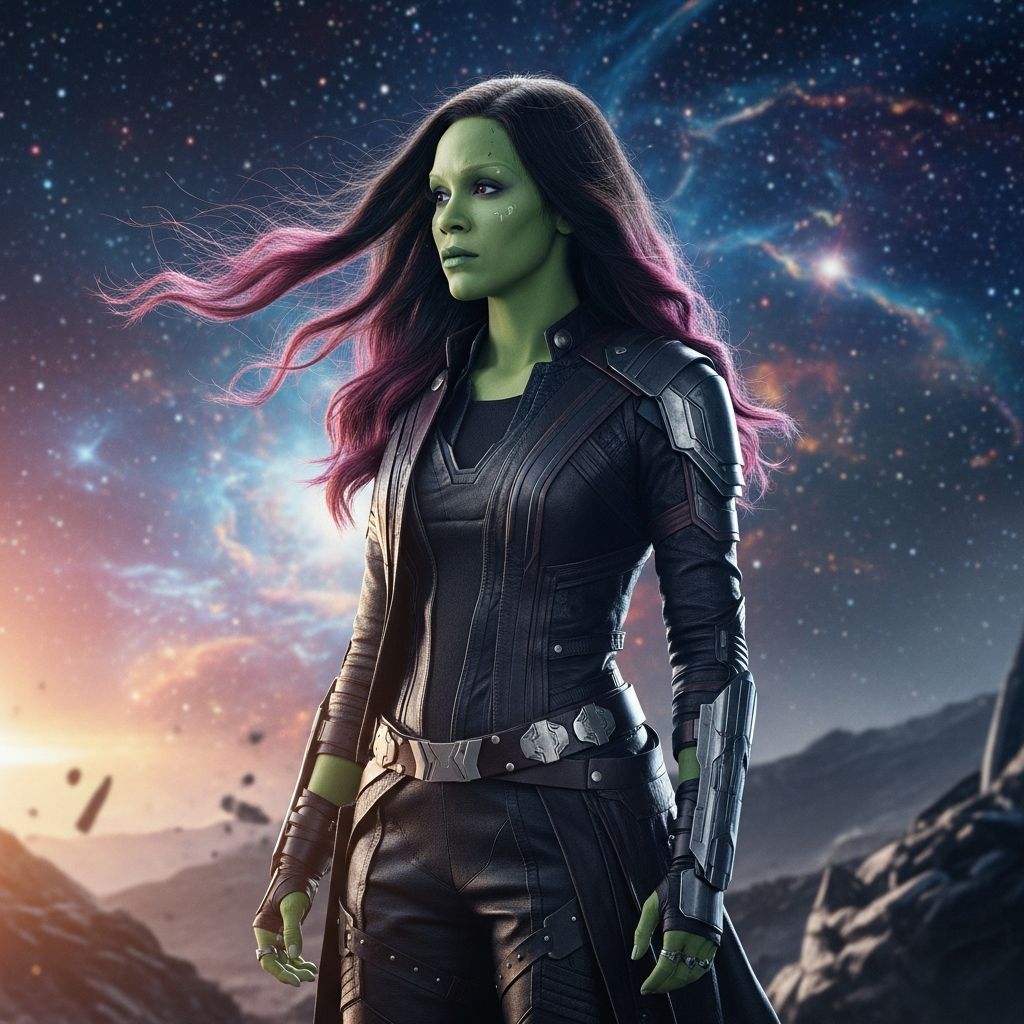
Gamora’s Disappearing Act After Endgame: The Big MCU Mystery
Among all the emotional goodbyes and spectacular battles in Avengers: Endgame, one question has continued to puzzle Marvel fans: what exactly happened to Gamora once the dust from Tony Stark’s final snap settled?
The film confirms that the original Gamora from Avengers: Infinity War is dead, yet a version of her from 2014 fights against Thanos in Endgame and then vanishes without explanation. This gap left audiences debating whether she died again, slipped away quietly, or was always destined to rejoin the Guardians of the Galaxy later on.
This article unpacks Gamora’s complex fate, what the filmmakers have said, how other MCU entries clarify the mystery, and why her story matters so much to the future of the Guardians.
From Assassin to Guardian: A Quick Gamora Timeline
To understand Gamora’s fate after Endgame, it helps to map out her journey across the Marvel Cinematic Universe (MCU).
- Child of Thanos: Gamora is abducted as a child, raised and weaponized by Thanos as his “favorite daughter,” and turned into a lethal assassin.
- Breaking free: In Guardians of the Galaxy, she betrays Thanos, joins the Guardians, and builds complicated bonds with Star-Lord, Rocket, Drax, Groot, and her sister Nebula.
- Redemption and love: Across Guardians of the Galaxy Vol. 2 and Infinity War, she confronts Thanos, reconciles with Nebula, and falls in love with Peter Quill.
- Sacrifice on Vormir: In Infinity War, Thanos kills Gamora on Vormir to obtain the Soul Stone, establishing that her death is part of a “soul for a soul” exchange that cannot be reversed by the Infinity Stones.
- 2014 variant Gamora: Endgame’s time-heist brings a past version of Gamora from 2014 into the present. This Gamora has never joined the Guardians and is still allied with Thanos when she first appears.
By the time of Endgame’s final battle, there are two distinct Gamoras in MCU history: the original, permanently dead Gamora from Infinity War, and the time-displaced 2014 Gamora who switches sides and fights alongside the heroes.
Infinity War: The Finality of the First Gamora’s Death
Gamora’s death in Avengers: Infinity War is central to the logic of the Infinity Stones. On Vormir, Red Skull explains that to obtain the Soul Stone, Thanos must sacrifice someone he truly loves, in what he calls a “soul for a soul” exchange.
Later in Endgame, Bruce Banner (Hulk) reveals that he tried—and failed—to bring back Natasha Romanoff when he performed his own snap with the Stones. This strongly implies:
- Deaths tied to the Soul Stone sacrifice (like Gamora and Natasha) are different in kind from dusted victims.
- Those sacrificed on Vormir cannot be resurrected by using the Infinity Stones again.
This is why the MCU treats the original Gamora’s death as permanent. The Gamora seen after Endgame is not a resurrection of the woman who died on Vormir; she is a younger variant pulled from an earlier point in the timeline.
Endgame’s 2014 Gamora: How Time Travel Complicates Everything
The time-heist in Endgame sends several Avengers back to 2014, where they unintentionally alert that era’s Thanos and his lieutenants, including Gamora and Nebula. Thanos then jumps forward into the main MCU timeline with his army, bringing 2014 Gamora with him.
During the climactic battle:
- 2014 Gamora learns, through Nebula, the horrifying details of her future—her eventual betrayal of Thanos and her gruesome death on Vormir.
- Confronted with this truth, she switches sides and fights against Thanos alongside the Avengers and the modern-day Nebula.
- She has no prior relationship with Star-Lord or the Guardians, so their emotional history exists only for them, not for her.
When Tony Stark uses the Stones to snap away Thanos and his forces, the movie shows the Mad Titan and his army turning to dust—but does not clearly show Gamora’s fate. Star-Lord searches for her on his ship’s display afterward and comes up empty, leaving the audience with a deliberate question mark.
Did Tony’s Snap Kill 2014 Gamora?
Endgame itself never states on-screen whether Tony’s snap erased 2014 Gamora. However, later comments from the creative team and follow-up MCU entries strongly indicate that she survived.
Key clues include:
- Writers’ statements: Endgame’s screenwriters Christopher Markus and Stephen McFeely later confirmed that the 2014 Gamora was not intended to be among those dusted by Tony’s snap, saying that she slipped away after the battle.
- Deleted scene evidence: A deleted scene released with Endgame’s home media shows the heroes taking a knee to honor Tony Stark, while Gamora quietly walks away from the battlefield instead of joining them—implying she is alive and choosing to leave.
- Later MCU storytelling: Guardians of the Galaxy Vol. 3 explicitly deals with a living 2014 Gamora who has been operating separately since Endgame.
Based on this combination of in-universe clues and out-of-universe confirmation, the best-supported reading is:
Tony Stark’s snap removed Thanos and his loyal forces, but spared 2014 Gamora, who was no longer fighting on Thanos’s side.
How Guardians of the Galaxy Vol. 3 Fills in the Gaps
James Gunn’s Guardians of the Galaxy Vol. 3 finally addresses the fallout of Gamora’s disappearance. While the film is primarily about the Guardians’ emotional journeys, it also provides a partial in-universe explanation for how a Thanos-era Gamora can still exist after Endgame.
Within the story:
- Peter Quill is clearly confused and traumatized by Gamora’s return as a version of her who does not remember their relationship.
- Quill speculates about the strange rules of Vormir and the Infinity Stones, suggesting that the mystic conditions around the Soul Stone might have played a role in sparing this variant Gamora from Tony’s snap.
- The film leans into the idea that time travel and the cosmic nature of the Stones create loopholes and exceptions, rather than providing a strict scientific explanation.
Star-Lord’s theory, while not definitively confirmed in dialogue, aligns with what we know from Endgame: the Soul Stone’s rules are special, and variant timelines and destroyed Stones may alter how those rules apply.
Gamora’s Souls and Stones: Why Her Case Is Unique
Gamora’s situation is one of the clearest examples of how the MCU uses the Infinity Stones to bend, but not entirely break, its own rules.
| Gamora Version | How She Dies or Survives | Can She Return? | Key Reason |
|---|---|---|---|
| Original (Infinity War) | Sacrificed on Vormir for the Soul Stone | No | “Soul for a soul” death is irreversible with the Stones |
| 2014 Variant (Endgame) | Alive after Tony’s snap | Yes, continues in later MCU stories | Time-displaced variant not killed by the Soul Stone ritual |
The distinction between these two versions allows Marvel to preserve the emotional weight of Gamora’s Infinity War death while still keeping a version of her in play for future stories.
Why Gamora Leaves After the Battle
Even if 2014 Gamora survives Endgame, why does she walk away instead of joining the Guardians immediately? Several character-based reasons make this choice feel consistent with who she is.
- No shared history: For Peter and the others, Gamora is family. For the 2014 variant, they are strangers claiming an emotional connection she does not feel.
- Existential shock: In the space of a short time, she learns that she will eventually betray Thanos, fall in love, and be killed by the very man who raised her. Processing that kind of revelation would push almost anyone to seek distance.
- Instinct for survival: This version of Gamora has spent her life surviving under Thanos. Once his army vanishes, disappearing into the wider galaxy is a logical survival move.
- Continuity with later films: By the time of Guardians Vol. 3, Gamora is operating with another group and must gradually forge her own path, not simply step into the old one left behind by her dead counterpart.
Her departure preserves both the tragedy of the original Gamora and the integrity of the 2014 variant as her own person, not just a convenient reset button.
What Gamora’s Fate Means for the Guardians’ Future
Gamora’s altered storyline reshapes the emotional dynamic of the Guardians of the Galaxy in several ways.
- A broken love story: Peter Quill now carries memories of a relationship that the woman standing in front of him never experienced. This creates a powerful, ongoing source of grief and unresolved longing.
- Second chances with limits: The team gets Gamora back, but not their Gamora. The MCU uses her to explore the idea that you cannot truly restore what has been lost, only build something new with what remains.
- Nebula’s arc: Nebula, who has fought so hard to become a better person, now faces a version of her sister who has not gone through the same healing process. This adds depth to Nebula’s journey of patience and redemption.
- Found family redefined: The Guardians must decide whether they love Gamora as a specific person with shared memories, or as a member of their chosen family even when she no longer remembers choosing them.
Creative Intent: Why the Filmmakers Kept It Ambiguous
The initial ambiguity around Gamora’s fate in Endgame appears to be a deliberate creative choice for several reasons:
- Room for future stories: By not spelling out whether she lived or died, the Russo brothers and the writers preserved flexibility for James Gunn’s Guardians films to decide how, or if, to use her.
- Emotional emphasis on Tony: The finale is focused on Tony Stark’s sacrifice and the immediate grief of the heroes. Showing Gamora walking away might have distracted from that moment, which is why it remained a deleted scene rather than part of the theatrical cut.
- Fan speculation: Leaving big questions unanswered fuels discussion, theories, and long-term engagement with the story—something Marvel often uses to sustain interest between releases.
Key Takeaways About Gamora’s Fate
- The original Gamora who died in Infinity War is permanently dead due to the Soul Stone’s “soul for a soul” rule.
- Endgame’s 2014 Gamora is a time-displaced variant who switches sides and fights Thanos in the final battle.
- Evidence from the writers, a deleted scene, and later MCU entries strongly indicates she survived Tony’s snap and left the battlefield on her own terms.
- Guardians of the Galaxy Vol. 3 confirms that a living 2014 Gamora continues to exist and explores the consequences of her altered history.
- Her story allows Marvel to preserve the emotional weight of her death while still using a version of Gamora to explore grief, identity, and second chances.
Frequently Asked Questions (FAQs)
Q: Is Gamora dead or alive after Avengers: Endgame?
A: The original Gamora who died on Vormir in Infinity War remains dead, but the 2014 variant introduced in Endgame is alive and continues to appear in later MCU stories.
Q: Did Tony Stark’s snap erase Gamora along with Thanos’ army?
A: According to the film’s writers and a deleted scene, Tony’s snap removed Thanos and his loyal forces but did not dust 2014 Gamora. She survives and quietly leaves the battlefield.
Q: Why couldn’t the Avengers bring back the original Gamora with the Infinity Stones?
A: Bruce Banner explains that deaths tied to obtaining the Soul Stone cannot be undone. Just as Natasha could not be resurrected, Gamora’s Soul Stone sacrifice is considered permanent.
Q: How can there be a living Gamora if the Soul Stone’s sacrifice is irreversible?
A: The living Gamora is not a resurrection of the one who died; she is a younger version from 2014 brought forward through time travel. Her existence does not reverse or negate the original sacrifice.
Q: Will Gamora ever regain her memories of Peter Quill and the Guardians?
A: As of the latest MCU stories, there is no canonical indication that the 2014 Gamora will recover the original Gamora’s memories. Any future relationship with the Guardians would have to be built from scratch, not restored from the past.
References
- Gamora’s True Fate Officially Revealed by Avengers: Endgame Writers — MovieWeb. 2019-07-20. https://movieweb.com/gamora-survived-avengers-endgame/
- Guardians of the Galaxy 3 Explains Endgame Plot Hole — Screen Rant. 2023-05-11. https://screenrant.com/guardians-of-the-galaxy-3-explains-endgame-plot-hole/
- ‘Avengers: Endgame’ Directors Address Gamora’s Fate — Fatherly. 2019-05-02. https://www.fatherly.com/news/avengers-endgame-directors-gamora-fate
- Avengers: Endgame and the Gamora Problem — Den of Geek. 2019-04-28. https://www.denofgeek.com/movies/avengers-endgame-gamora-alive-dead-mystery/
- Avengers: Endgame deleted scene reveals fate of major character — The Independent. 2019-08-13. https://www.independent.co.uk/arts-entertainment/films/news/avengers-endgame-deleted-scenes-characters-deaths-gamora-starlord-final-scene-a9023301.html