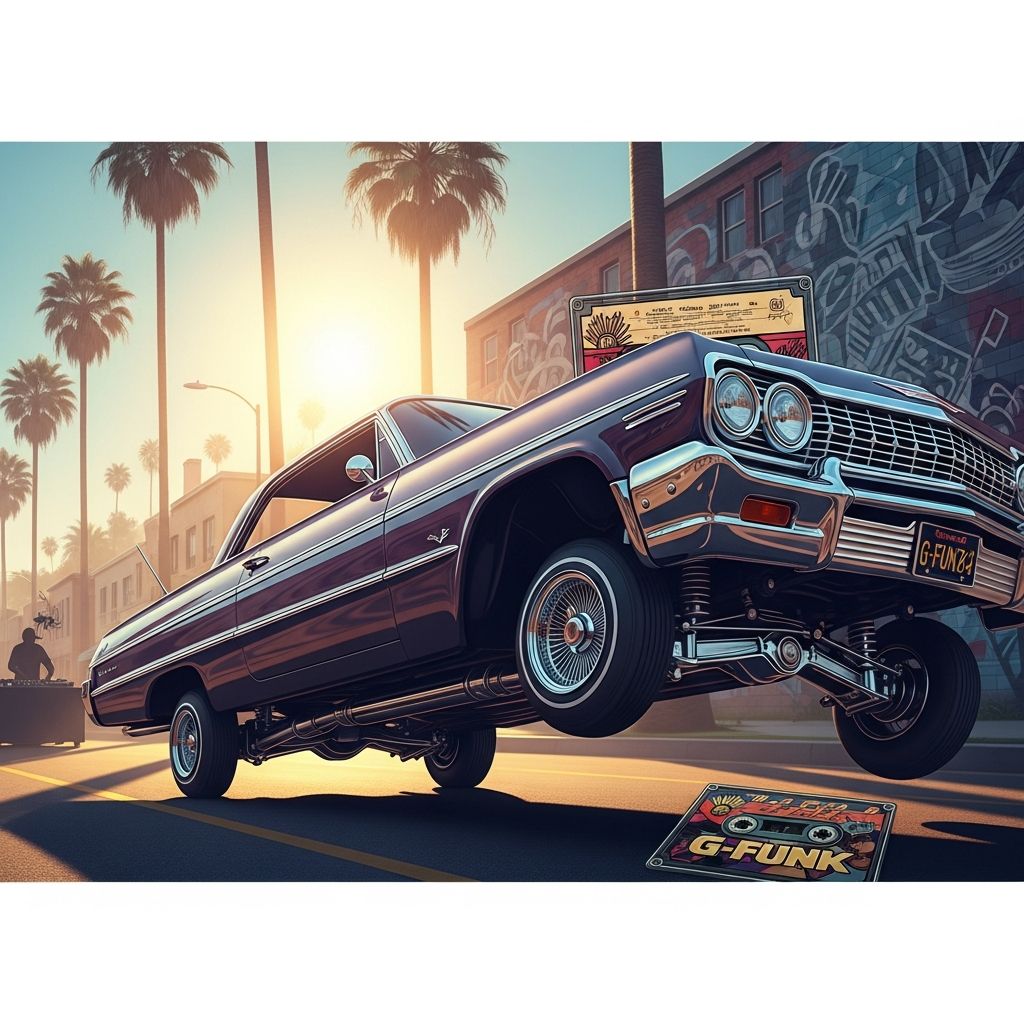
Long before streaming numbers and viral dances measured success, a soft-spoken producer from Long Beach helped shift hip-hop from cold menace to sun-drenched cool. Warren G’s G-Funk era did not just add melody to rap; it reshaped how West Coast stories could sound, feel, and travel worldwide.
The Moment Hip-Hop Exhaled
Early 90s hip-hop carried a heavy pulse: stark drums, tense samples, and lyrics that felt like breaking news from the block. Then something unexpected arrived from the West Coast—smooth bass lines, singing synthesizers, and hooks you could hum even if you missed every bar. G-Funk made space for head-nodding instead of just jaw-clenching.
In the middle of this shift stood Warren G, a producer and rapper who favored groove over aggression. His records felt like late-night drives down Pacific Coast Highway, narrating the same danger but from the passenger seat of a lowrider with the windows half down.
What Made G-Funk So Different?
G-Funk, short for gangsta funk, blended the raw storytelling of gangsta rap with the lush textures of 70s funk and soul. Instead of frantic drum loops, it leaned on slow-rolling tempos, syrupy bass lines, and bright keyboard melodies floating above the beat.
- Heavy use of vintage funk grooves, often replayed or reinterpreted rather than simply chopped.
- High-pitched synthesizer leads that felt like a second voice singing over the rapper.
- Laid-back drum patterns that encouraged cruising more than slam dancing.
- Hooks built from harmonies and sung phrases, not just repeated chants.
Where East Coast tracks often sounded like narrow alleyways, G-Funk sounded like open boulevards: wide, warm, and deceptively relaxed even when the lyrics described chaos.
From Long Beach Rooms To Global Radio
Warren G’s origin story is not just about one breakout single; it is about years of soaking up sounds in crowded rooms, passing tapes around, and learning how to turn neighborhood rhythms into universal language. Before the world knew his name, he was part of a group that quietly sharpened a new West Coast aesthetic: conversational flows over rolling funk.
As he gravitated toward production, Warren G built beats that conveyed vulnerability and tension without shouting. When his breakthrough single finally reached airwaves, listeners who had never stepped foot in California suddenly felt like they had just watched a movie set there—complete with danger, humor, and a surprising sense of calm.
How Warren G’s Sound Worked: Under The Hood
To understand Warren G’s contribution, it helps to think like a studio engineer for a moment. His approach was less about stuffing every frequency with noise and more about leaving air in the track. Each instrument had room to breathe, which made his records feel intimate even when they blasted from club speakers.
| Element | G-Funk Treatment | Emotional Effect |
|---|---|---|
| Bass | Rounded, melodic lines that move like a second melody, not just low-end thumps. | Creates warmth and a rolling sense of motion, perfect for driving. |
| Synth Leads | High, whistling tones that trace simple, memorable phrases over the beat. | Adds brightness and nostalgia, like a radio hook you half remember. |
| Drums | Unhurried patterns with crisp snares and roomy kicks, rarely cluttered. | Makes the track swing gently instead of attacking the listener. |
| Vocals | Conversational raps, often paired with smooth, harmonized hooks. | Turns gritty stories into something strangely comforting and replayable. |
| Atmosphere | Subtle background keys, occasional talk-box textures, faint crowd or street noise. | Pulls the listener into a cinematic West Coast environment. |
The secret weapon was restraint. Warren G rarely overloaded his productions; the quiet spaces in the mix let every snare crack, every keyboard glide, and every vocal nuance land with more impact.
Storytelling In Slow Motion
Part of what made Warren G’s era memorable is how his music treated narrative. Instead of frantic, fragmented vignettes, his songs played out like fully formed scenes. There was usually a clear beginning, middle, and end, told in plain language that felt overheard, not over-written.
This narrative clarity paired with laid-back production made complex realities easier to process. Subjects like street conflict, loyalty, and survival were still front and center, but the relaxed tempo gave listeners time to absorb them, replay them, and sing along to the hook without feeling overwhelmed.
Balancing Darkness And Light
The most fascinating tension in Warren G’s work comes from how sunny it often sounds compared to what he is describing. A casual listener might catch the groove first and miss the danger in the verses until the second or third replay.
- Bright chords and melodic lines sit next to stories about conflict and risk.
- Relaxed vocal delivery contrasts with tight, high-stakes situations in the lyrics.
- Chant-worthy hooks make heavy subject matter strangely communal.
This contrast did more than sell singles. It captured the duality of 90s West Coast life: blue skies and palm trees above, pressure and uncertainty on the ground. That emotional complexity is one reason the G-Funk era still resonates decades later.
West Coast Identity In Sound
Warren G’s G-Funk era also served as a kind of sonic postcard. The music encoded details of geography and lifestyle: the slow swing suggested traffic on wide streets, the shimmering keys felt like heat rising from asphalt, and the harmonies echoed both gospel roots and backyard barbecues.
In this way, his records functioned as cultural exports. Fans who had never been west of their own hometown’s city limits formed mental pictures of Long Beach, Los Angeles, and surrounding neighborhoods simply by absorbing the soundscapes.
The Quiet Power Of A Non-Shouting Star
Compared with some of his peers, Warren G projected a different kind of presence. He was not the loudest, most controversial, or most theatrically combative figure in the room. Instead, his appeal rested in relatability and precision.
He often came across less like a mythic antihero and more like a sharply observant friend describing what he saw around him. That tone helped his music travel beyond hardcore rap circles to listeners who might have been intimidated by more confrontational artists but still wanted stories with stakes.
G-Funk’s Ripple Effect On Hip-Hop
Warren G’s success arrived in a moment when West Coast hip-hop was already booming, yet his contributions nudged the genre in specific directions. After his breakout, it became more acceptable—even expected—for hard-edged rappers to embrace soft chords and sing-along refrains without losing credibility.
Years later, traces of that blueprint can be heard in artists who blend melodic choruses with detailed street narratives and who treat mood as seriously as rhyme schemes. Even when the production no longer sounds like classic G-Funk, the idea that rap can be both smooth and serious at once owes a debt to this period.
Beyond One Song: The Larger Catalog
Popular memory often centers on one towering single, but the G-Funk era around Warren G is deeper than a single radio staple. Albums and collaborations from that time reveal a consistent aesthetic: patient tempos, careful beat selection, and a focus on cohesive sonic worlds rather than random track lists.
Listening beyond the most famous cut reveals how he treated sequencing, transitions, and guest features almost like scenes in a film. Hooks, ad-libs, and skits worked together to sustain the same late-night, half-sober, fully alert mood across entire projects.
Why The G-Funk Era Still Feels Fresh
The staying power of this music rests on a simple truth: people do not just remember what a song said, they remember how it made them feel. Warren G’s records are inseparable from mood—nostalgia, tension, relief, and a peculiar sense of calm in the middle of chaos.
In an age when playlists jump from genre to genre, those tracks still slide in comfortably between contemporary releases because their priorities—strong groove, emotional clarity, and replayable hooks—remain timeless.
Lessons From Warren G’s Approach
For modern artists and producers, the G-Funk era around Warren G offers more than just a sonic palette to imitate. It also models a method for turning personal environments into enduring art without resorting to gimmicks.
- Trust in space: Leaving room in the mix can make every sound more powerful than piling on extra layers.
- Lead with feeling: A great groove or chord progression can invite listeners into hard stories they might otherwise avoid.
- Embrace contradictions: Pairing smooth music with stark reality can create unforgettable tension.
- Stay conversational: Relatable delivery can carry complex experiences farther than constant vocal fireworks.
Warren G’s legacy is proof that measured choices, not just loud personalities, can shape entire eras.
FAQs About Warren G And The G-Funk Era
What is G-Funk in simple terms?
G-Funk is a style of hip-hop that blends funk-inspired bass lines and melodies with rap lyrics about real-life struggles, usually at a relaxed tempo that feels perfect for cruising.
How did Warren G stand out from other West Coast artists?
Warren G stood out by favoring subtlety over shock, crafting spacious, melodic beats and using a calm, conversational delivery that made intense stories easier to absorb.
Why is the G-Funk era considered important?
The G-Funk era is important because it broadened what hip-hop could sound like, showing that mellow, harmony-rich tracks could still carry raw, street-level narratives and dominate mainstream charts.
Is G-Funk still influential today?
Yes. Many modern rappers and producers borrow its emphasis on mood, melody, and storytelling, even when they update the instrumentation for today’s sound.