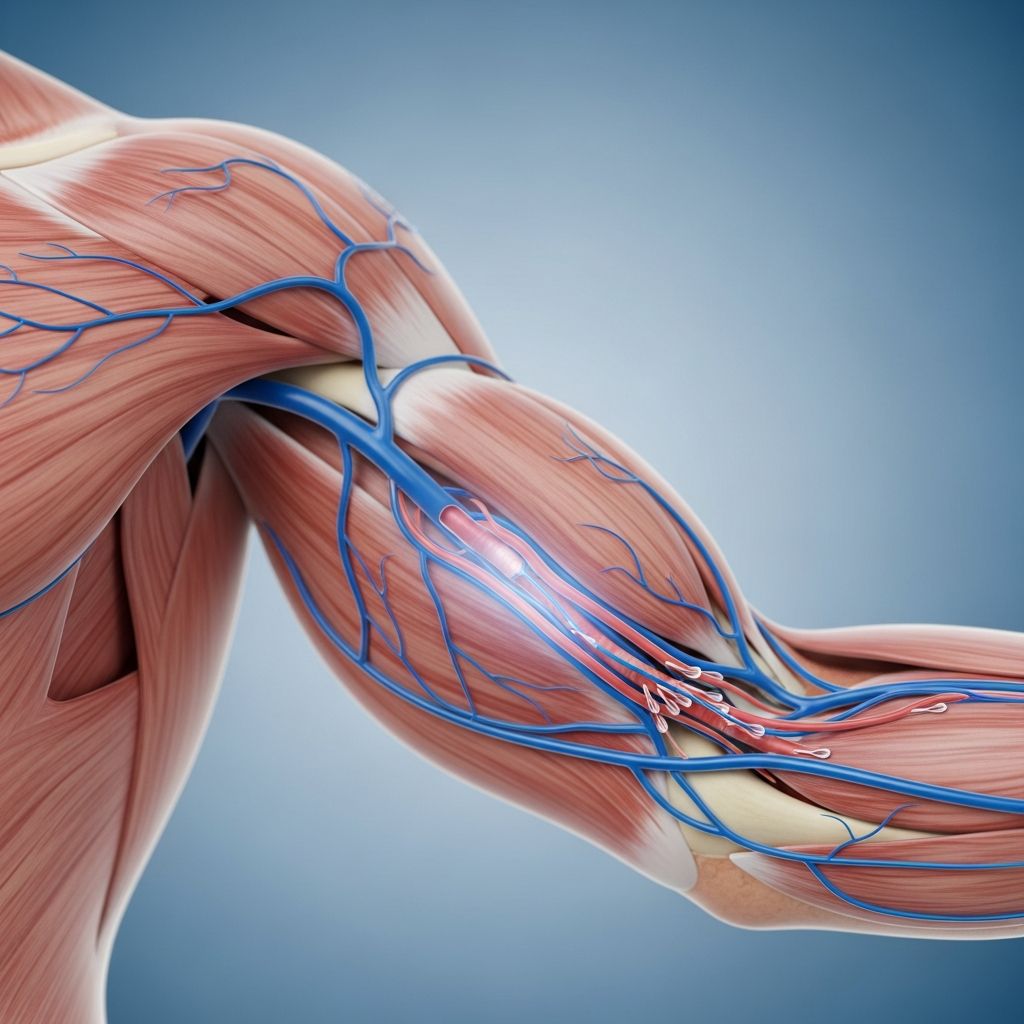
Veins play a crucial role in the body’s circulatory system by transporting oxygen-depleted blood back to the heart from all tissues and organs. Unlike arteries, which carry oxygen-rich blood away from the heart under high pressure, veins operate under lower pressure and rely on a sophisticated system of valves and muscle assistance to ensure efficient return flow, especially against gravity in the lower body.
The Basic Anatomy of Veins
Veins consist of three primary layers that provide structure and flexibility. The outermost layer, known as the tunica externa or adventitia, is composed of tough connective tissue that offers support and anchorage to surrounding structures. The middle layer, tunica media, contains smooth muscle fibers and elastic tissues that allow veins to constrict or expand as needed. The innermost layer, tunica intima, is a thin endothelial lining in direct contact with blood, facilitating smooth flow and preventing clotting.
Unlike arteries, veins have thinner walls and larger diameters, enabling them to hold more blood—up to 60-70% of the body’s total blood volume at rest. This capacity acts as a reservoir, adjusting blood distribution during activity or stress.
How Veins Function in Blood Return
Veins collect blood from capillaries, the tiny exchange sites where oxygen and nutrients are delivered to tissues, and waste is removed. Small venules first gather this blood, then merge into progressively larger veins that converge into major trunks like the superior and inferior vena cava, which deliver blood to the right atrium of the heart.
The venous system’s efficiency depends on one-way venous valves, flap-like structures that prevent backflow. These valves open to allow blood toward the heart and close to block reverse flow due to gravity or low pressure. Approximately 95% of valves are in small veins under 300 micrometers, dividing blood into segments for segmented propulsion.
Muscle pumps aid this process: skeletal muscles contract during movement, compressing veins and squeezing blood forward. Breathing also helps by creating thoracic pressure changes that suck blood upward. Daily, veins handle about 7,000 liters of blood flow.
Deep Dive into Leg Veins
Leg veins are vital for returning blood from the lower extremities, facing the greatest gravitational challenge—about 1.5 meters uphill to the heart. They divide into deep and superficial systems, connected by perforator veins.
- Deep Veins: Carry 90-95% of leg blood, located within muscle compartments for protection and pump efficiency. Key ones include posterior tibial, anterior tibial, peroneal (fibular), popliteal (behind knee), and femoral (thigh).
- Superficial Veins: Lie under skin, handling 10-15% of flow. Major ones are great saphenous (inner leg from foot to groin) and small saphenous (outer leg to knee).
- Perforators: Link superficial to deep veins, ensuring balanced flow under normal conditions.
In the thigh, femoral veins and branches like deep femoral, medial, and lateral circumflex handle upper leg drainage. Around the knee, popliteal veins collect from tibial branches.
Venous Circulation from Legs to Heart
Blood from leg capillaries enters venules, then deep and superficial veins. Calf muscles act as a “second heart,” propelling blood with each step. Valves ensure unidirectional flow: from tibial/peroneal veins upward to popliteal, femoral, iliac, and finally inferior vena cava.
Upper body veins, like those in arms (cephalic, basilic, brachial merging to axillary/subclavian), drain to superior vena cava. Pulmonary veins are unique, carrying oxygenated blood from lungs to left heart.
| Vein Type | Location | Key Function | Major Examples |
|---|---|---|---|
| Deep Leg | Muscle interiors | Main blood return (90%+) | Femoral, popliteal, tibial |
| Superficial Leg | Subcutaneous | Secondary drainage | Great/small saphenous |
| Major Trunks | Trunk/Abdomen | Central return | Inferior/superior vena cava |
Common Venous Disorders and Signs
Valve damage from injury, inflammation, age, genetics, pregnancy, or prolonged standing impairs flow, causing blood to pool in superficial veins. This overloads the system, leading to dilation and symptoms.
- Varicose Veins: Twisted, bulging superficial veins, often in legs, due to weak walls/valves. Symptoms: aching, swelling, itching, visible ropes.
- Spider Veins: Smaller, web-like clusters near skin surface, cosmetic but sometimes painful.
- Chronic Venous Insufficiency (CVI): Advanced pooling causing skin changes, ulcers. Endothelium damage first.
- Deep Vein Thrombosis (DVT): Clots in deep veins, risky for embolism; signs include leg pain/swelling.
Risk factors for kids/families: obesity, inactivity, family history, sports injuries. Early signs like leg fatigue after play warrant checkups.
Prevention Strategies for Healthy Veins
Maintaining venous health involves lifestyle habits that support valve function and muscle pumps.
- Stay Active: Encourage walking, swimming, biking—30 minutes daily activates calf pumps.
- Elevate Legs: After activity, raise legs above heart level 15-20 minutes to aid drainage.
- Maintain Weight: Excess pounds strain veins; balanced diet helps.
- Avoid Prolonged Sitting/Standing: Take breaks, flex ankles if seated long (e.g., car trips).
- Wear Compression: Graduated stockings for high-risk activities/sports.
- Hydrate & Diet: High-fiber, low-salt foods prevent constipation/hypertension stressing veins.
For children, promote play over screens; monitor growing pains that might signal issues.
Vein Health in Children and Families
Kids’ veins are resilient but vulnerable during growth spurts, sports, or obesity. Active play builds strong muscle pumps. Parents should watch for unexplained swelling, skin discoloration, or family patterns. Routine checkups catch early CVI or DVT risks, especially post-injury.
Pregnant moms face higher risks from uterine pressure on pelvic veins; elevation and movement help. Teaching families vein-friendly habits fosters lifelong circulation health.
Frequently Asked Questions (FAQs)
What causes varicose veins in young people?
Genetics, rapid growth, sports trauma, or obesity weaken valves early; activity prevents most cases.
How do veins differ from arteries?
Veins return deoxygenated blood with thin walls/valves; arteries pump oxygenated blood with thick, muscular walls.
Can exercise reverse vein problems?
Exercise strengthens pumps to manage mild issues but doesn’t fix damaged valves; consult doctors for advanced cases.
Are leg vein issues hereditary?
Yes, weak vein walls/valves often run in families; proactive habits mitigate risks.
When should parents see a doctor for child’s leg swelling?
If persistent, painful, one-sided, or with redness/heat—could indicate clot or insufficiency.
Veins ensure every tissue gets refreshed blood while removing waste, powering daily life. Understanding their mechanics empowers parents to safeguard family vascular wellness proactively.
References
- A Diagram of Leg Veins: Leg Vein Anatomy — Legacy Vein Clinic. 2023. https://legacyclinic.com/blog/a-diagram-of-leg-veins-leg-vein-anatomy/
- Vein structure & venous valves in the legs — Medi.de. 2024. https://www.medi.de/en/diagnosis-treatment/venous-disorders/anatomy-veins/
- Vein — Wikipedia (citing primary sources). 2025-01-10. https://en.wikipedia.org/wiki/Vein
- The Anatomy of a Vein — Nuvela Veins. 2023. https://www.nuvelaveins.com/blog/the-anatomy-of-a-vein/
- Anatomy, Blood Vessels — StatPearls, NCBI Bookshelf. 2024-06-01. https://www.ncbi.nlm.nih.gov/books/NBK470401/
- Blood Vessels: Types, Function & Anatomy — Cleveland Clinic. 2024. https://my.clevelandclinic.org/health/body/21640-blood-vessels