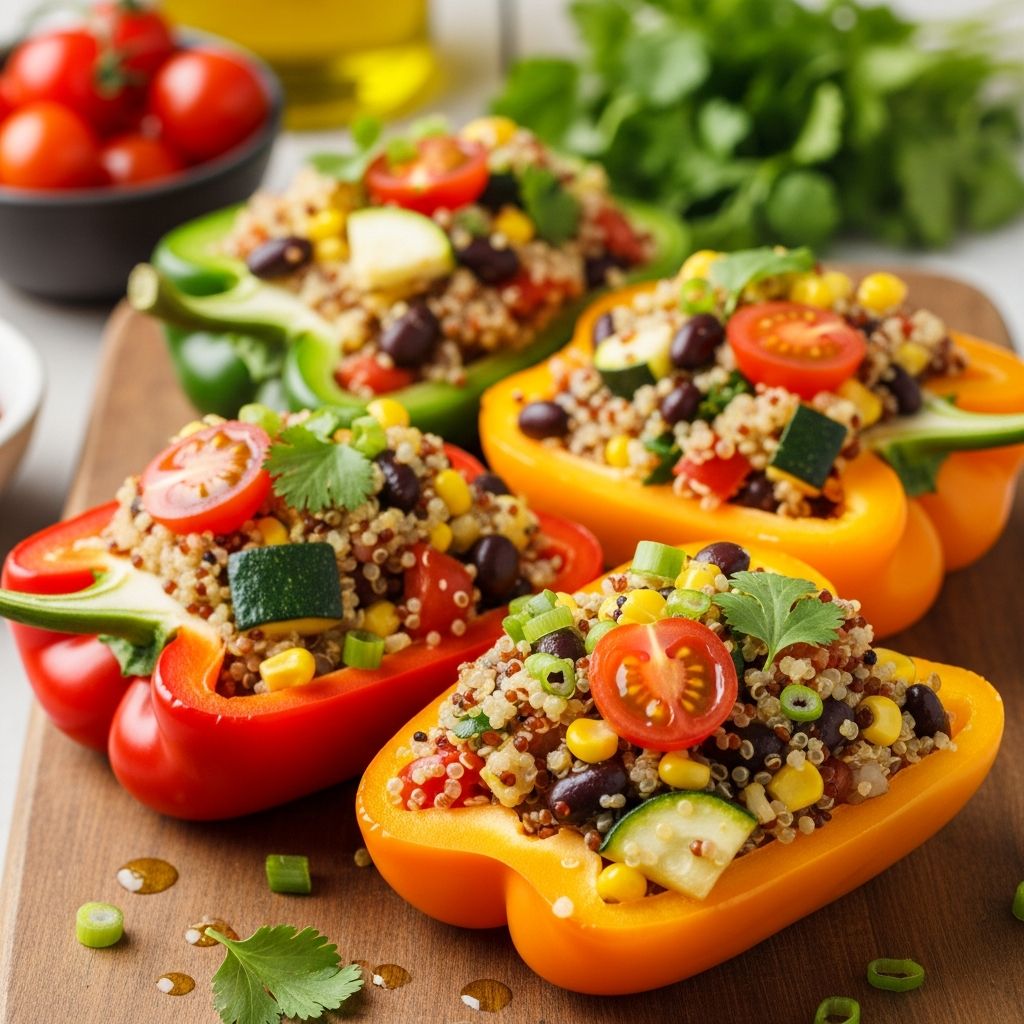
Stuffed peppers are one of those rare dinners that feel cozy and homey, yet look special enough for guests. This version leans fully into colorful vegetables, beans, and whole grains, so you end up with a satisfying vegetarian main course that also happens to be naturally gluten-free.
Why Stuffed Peppers Belong in Your Weekly Rotation
When schedules get hectic, it is tempting to fall back on the same few simple meals. Stuffed peppers are an easy way to break that routine without sacrificing convenience. Once the peppers are in the oven, most of the work is done, and any leftovers reheat beautifully.
This recipe is designed to be flexible. You can use different grains, swap in your favorite beans, or sneak in extra vegetables based on what is in your fridge. The basic method stays the same, but the flavors can change week to week so the dish never feels repetitive.
- Vegetarian and naturally gluten-free when made with gluten-free grains.
- Customizable filling that welcomes extra vegetables, herbs, and spices.
- Prep-friendly: components can be made ahead and baked later.
Key Ingredients and Smart Substitutions
The heart of this dish is a balance of tender bell peppers, a hearty grain, and a satisfying protein source, all tied together with vegetables, aromatics, and seasonings. The ingredient list below is a template rather than a fixed rulebook.
Bell Peppers
Any color of bell pepper will work here, but each brings a different character to the final dish. Red, orange, and yellow peppers tend to be milder and sweeter, while green peppers offer a more pronounced, slightly bitter flavor that pairs well with robust spices.
- Choose peppers that can stand upright when trimmed, with flat-ish bottoms.
- Aim for medium to large peppers for a generous main-course portion.
- Look for firm skins with no soft spots or wrinkles.
Grain Component
The grain in the filling adds body and helps absorb flavors from the vegetables and seasonings. Using cooked grains keeps the baking time manageable and ensures the peppers do not dry out while the filling finishes cooking.
Excellent gluten-free grain options include:
- Cooked quinoa for a light, slightly nutty bite.
- Cooked brown rice for a more traditional, hearty texture.
- Cooked millet or buckwheat for something a bit more rustic.
If you need to shorten prep time, use leftover grains from a previous meal or a pre-cooked packet from the store, checking labels to confirm they are certified gluten-free where needed.
Protein: Beans, Lentils, or Crumbled Tofu
To turn stuffed peppers into a true main course, layering in plant-based protein is essential. Beans, lentils, or tofu work well and absorb seasoning readily.
- Black beans or pinto beans for a Southwestern spin.
- Chickpeas for a Mediterranean-style filling.
- Cooked green or brown lentils for a heartier, almost meat-like texture.
- Firm tofu, drained and crumbled, for a neutral base that takes on seasoning easily.
Vegetables and Aromatics
The vegetable mix gives the filling color, moisture, and nutrition. Onions and garlic provide a fragrant foundation, while softer vegetables cook quickly and meld into the grains and beans.
- Diced onion or shallot.
- Minced garlic.
- Diced zucchini, carrots, or mushrooms.
- Tomato (fresh or canned) to add juiciness and slight acidity.
- Optional extras: spinach, kale, corn, or peas.
Seasonings, Herbs, and Optional Cheese
Seasonings turn a basic grain-and-bean mixture into something crave-worthy. You can steer the flavor in a few different directions based on what you like or what you are craving that day.
- Ground cumin and smoked paprika for warmth and depth.
- Dried oregano and basil for Italian-style peppers.
- Chili powder and a pinch of cayenne for gentle heat.
- Fresh herbs such as cilantro, parsley, or basil added at the end for brightness.
- Optional cheese: shredded cheddar, mozzarella, feta, or a dairy-free alternative.
Step-by-Step Method: From Peppers to Plated Dinner
The process is straightforward: pre-bake the peppers to soften them, build the filling on the stovetop, then combine both and finish in the oven. While the filling simmers, the peppers are already on their way to being tender, which keeps the total time manageable.
1. Prepare and Pre-Bake the Peppers
- Preheat your oven to a moderate temperature (around 190–200°C / 375–400°F).
- Slice the tops off the peppers or cut them in half lengthwise, depending on whether you want pepper “cups” or “boats”.
- Remove seeds and membranes, then lightly brush the insides with olive oil and sprinkle with salt.
- Arrange the peppers cut-side up in a baking dish, cover loosely with foil, and bake for 15–20 minutes until they begin to soften but still hold their shape.
2. Build the Flavorful Filling
- Warm a bit of olive oil in a skillet over medium heat.
- Add chopped onion and cook until softened and lightly golden.
- Stir in garlic and any firm vegetables such as carrots or mushrooms, cooking until they begin to soften.
- Add tomatoes, spices, salt, and pepper, simmering until the mixture thickens slightly.
- Fold in the cooked grains and beans or lentils, stirring until everything is well combined and heated through.
- Taste and adjust seasoning with more salt, pepper, or spices as needed. Off the heat, stir in fresh herbs and cheese, if using.
3. Stuff and Bake
- Remove the partially baked peppers from the oven and carefully spoon the hot filling into each one, packing it down gently.
- Top with extra cheese or a drizzle of olive oil for extra richness, if desired.
- Return the dish to the oven, uncovered, and bake for 15–20 minutes more, until the peppers are tender and the tops are lightly browned.
- Let the peppers rest for at least 5 minutes before serving to allow the filling to set slightly.
Sample Ingredient Proportions
The table below gives a starting point for quantities. You can adjust up or down based on the number of people you are feeding or how large your peppers are.
| Component | Suggested Amount | Notes |
|---|---|---|
| Bell peppers | 4 large | Red, yellow, orange, or green; halved or tops removed |
| Cooked grains | 1.5–2 cups | Quinoa, brown rice, or other gluten-free grain |
| Cooked beans or lentils | 1.5 cups | Approximately one standard can, drained and rinsed |
| Mixed vegetables | 2–3 cups diced | Onions, carrots, zucchini, mushrooms, spinach, etc. |
| Cheese (optional) | 0.75–1 cup shredded | Use dairy-free cheese or omit for a vegan version |
| Seasonings & herbs | 2–3 teaspoons total | Combination of dried spices plus a handful of fresh herbs |
Flavor Variations to Keep Things Interesting
Once you are comfortable with the core method, you can shift the character of the dish just by changing your seasonings and a few key ingredients. Below are some ideas to inspire you to riff on the basic recipe.
Mediterranean-Inspired Peppers
- Use chickpeas as the main protein.
- Choose quinoa or brown rice with diced zucchini, tomatoes, and spinach.
- Season with oregano, basil, garlic, and a squeeze of lemon.
- Finish with crumbled feta or a dairy-free alternative.
Southwestern-Style Peppers
- Use black beans or pinto beans.
- Add corn kernels, bell pepper scraps, and a bit of jalapeño if you like heat.
- Season with chili powder, cumin, smoked paprika, and lime juice.
- Top with cheddar or a plant-based cheese and garnish with avocado and cilantro.
Hearty Mushroom & Lentil Peppers
- Combine cooked green or brown lentils with sautéed mushrooms and onions.
- Use a robust grain such as brown rice or buckwheat.
- Season with thyme, rosemary, and tamari or gluten-free soy sauce for umami depth.
- Finish with grated parmesan-style cheese or nutritional yeast for a savory note.
Fully Vegan Option
To make the dish completely vegan, use a plant-based cheese or skip cheese altogether. A drizzle of good olive oil, a spoonful of dairy-free pesto, or a sprinkle of toasted nuts or seeds over the finished peppers can add richness and texture without dairy.
Serving Suggestions and Make-Ahead Tips
Stuffed peppers are filling on their own, but pairing them with simple sides can turn them into a well-rounded, dinner-party-ready spread. They also lend themselves well to advance prep, which is useful for busy weeknights or entertaining.
Simple Sides That Work Well
- Mixed green salad with a tangy vinaigrette to balance the richness of the filling.
- Roasted vegetables such as broccoli, cauliflower, or green beans.
- Plain yogurt or a dairy-free yogurt sauce flavored with lemon, garlic, and herbs.
- A slice of gluten-free bread or a small side of extra grains for bigger appetites.
How to Prep Ahead
- Cook the grains and beans up to two days in advance and store them in the refrigerator.
- Chop vegetables the night before and keep them in a sealed container.
- Assemble the filling earlier in the day, then stuff and bake the peppers right before dinner.
- For maximum convenience, fully bake the peppers, cool, and refrigerate. Reheat them in a moderate oven, covered, until warmed through.
Storage, Freezing, and Reheating
Stuffed peppers are one of those meals that almost taste better the next day, as the flavors have more time to mingle. Proper storage and gentle reheating will help them keep their texture and flavor.
- Refrigeration: Cool completely, then store in an airtight container for up to 3–4 days.
- Freezing: Wrap each pepper individually, then place them in a freezer-safe container. Freeze for up to 2–3 months.
- Reheating from fridge: Warm in a covered dish in the oven at a moderate temperature until hot in the center, or use the microwave in shorter bursts.
- Reheating from frozen: Thaw overnight in the refrigerator before reheating, or bake from frozen at a lower temperature, covered, until heated through.
Frequently Asked Questions
Are these stuffed peppers truly gluten-free?
Yes, as long as you choose a naturally gluten-free grain such as quinoa, brown rice, or certified gluten-free millet, and confirm that any packaged ingredients (like canned beans, broth, or sauces) are labeled gluten-free. Traditional breadcrumbs are not used in this method, so it is easy to keep the entire dish suitable for those avoiding gluten.
Can I make this recipe completely vegan?
Absolutely. The base recipe is already vegetarian, and the only non-vegan element is the optional cheese. Simply use a dairy-free cheese alternative, nutritional yeast, or skip cheese altogether and finish the peppers with a drizzle of good olive oil or a spoonful of dairy-free yogurt sauce.
How do I prevent the peppers from becoming soggy?
Pre-baking the peppers briefly helps them soften without overcooking, and using a filling that is moist but not watery is important. If your filling seems very wet, cook it a bit longer on the stovetop to evaporate excess liquid before stuffing, and avoid tightly covering the baking dish during the final bake so steam can escape.
What if my peppers do not stand upright?
If your peppers tend to tip over, lightly trim a thin slice from the bottom to create a flatter base, being careful not to cut through the pepper entirely. Alternatively, pack crumpled foil or sliced onions into the bottom of the baking dish to create small “nests” that stabilize each pepper while it bakes.
Can I use raw grains in the filling?
Using raw grains is not recommended in this particular method because the peppers may overcook before the grains are fully tender. Starting with pre-cooked grains allows the filling and peppers to reach the perfect texture at the same time and makes it easier to adjust the seasoning.
Bring Color and Comfort to the Table
Vegetarian stuffed peppers are a practical way to combine grains, beans, and seasonal vegetables into one cheerful dish. With just a few pantry ingredients, you can adapt the flavors to match your preferences and whatever you happen to have on hand.
Whether you are cooking for a vegetarian household, navigating gluten-free needs, or simply looking for a new meatless dinner idea, this flexible recipe can quickly become a go-to option. Experiment with different fillings, herbs, and toppings, and enjoy how these bright peppers make weeknight meals feel just a bit more special.