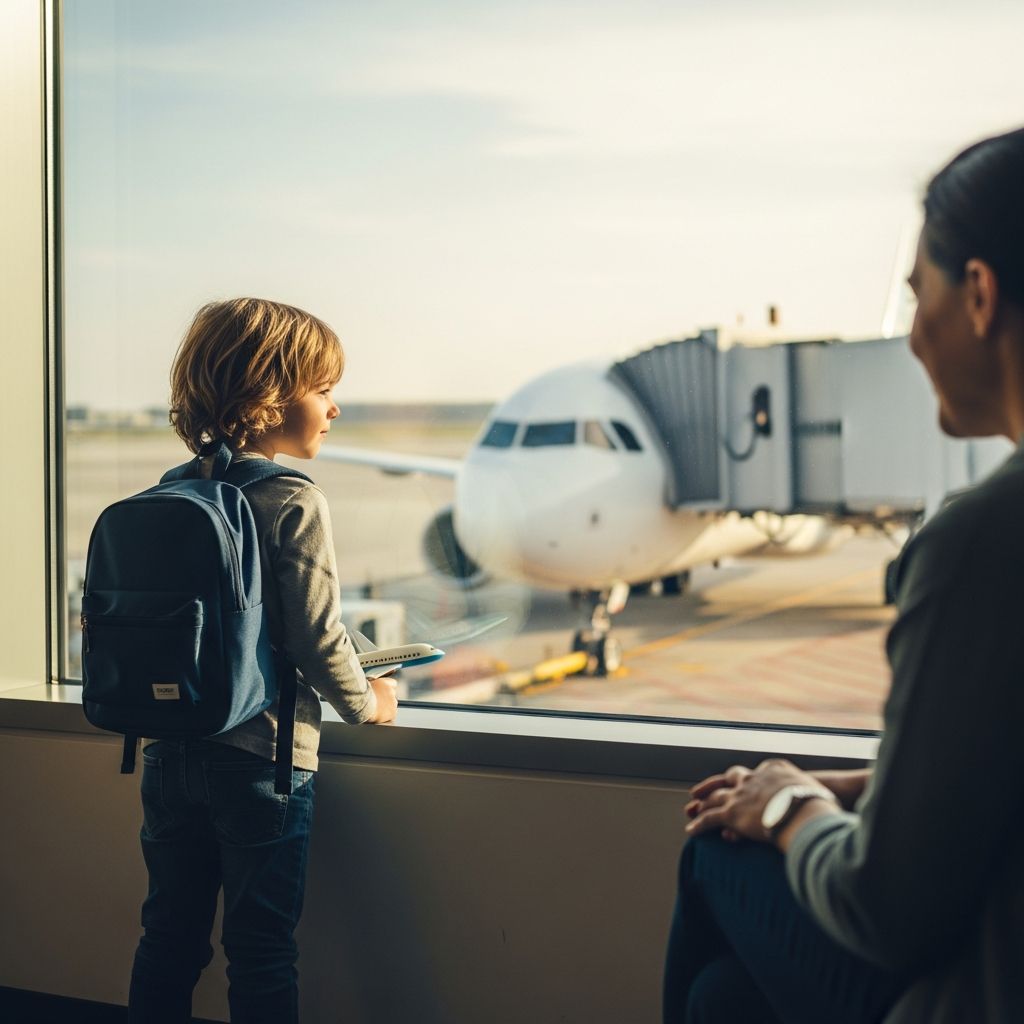
Unaccompanied minors face unique challenges during air travel, especially when flights are delayed. Proper preparation helps children aged 5-17 navigate airports, manage wait times, and reach their destination safely. This guide draws on airline policies and official recommendations to outline key steps for parents.
Understanding Airline Rules for Young Travelers
Airlines have specific protocols for children flying alone, typically applying to kids between 5 and 14 years old, with optional services up to 17. These services include supervision from check-in to handover at the destination. Fees range from $50 to $150 per leg, depending on the carrier. Always verify the airline’s age requirements and whether they allow connections for minors.
For instance, nonstop flights are recommended to minimize risks during disruptions. If connections are necessary, ensure layover times are generous to account for delays. Parents must provide identification for both drop-off and pickup adults, along with flight itineraries.
Choosing the Right Flight for Minimal Disruptions
Select flights strategically to reduce delay impacts. Opt for mid-morning or early afternoon departures when airline staff are most alert and airports less crowded. Avoid red-eye flights, as fatigue can affect both child and crew attentiveness.
- Book direct routes to eliminate connection stress.
- Check historical delay data for routes using tools like the Bureau of Transportation Statistics.
- Confirm unaccompanied minor (UM) service availability at booking; some airlines restrict UM on certain flights.
Printed itineraries with flight numbers, times, and gate info are crucial, even digitally savvy kids should have backups.
Packing Essentials for Extended Airport Waits
A well-packed carry-on is a child’s lifeline during delays. Focus on items that entertain, nourish, and comfort without violating TSA rules.
| Category | Recommended Items | Why It Helps During Delays |
|---|---|---|
| Entertainment | Tablet/phone with charger, headphones, downloaded games/movies, books, puzzles | Keeps boredom at bay for hours of waiting. |
| Food & Hydration | Non-liquid snacks (granola bars, nuts, fruit), empty water bottle | Maintains energy; fill bottle post-security. |
| Comfort | Travel pillow, blanket, change of clothes, comfort item from home | Eases discomfort in chilly terminals. |
| Essentials | Printed itinerary, emergency contacts, ID copy, medications | Enables quick help-seeking. |
Include a debit/credit card for purchases, as cash is often not accepted inflight. A cell phone with key numbers listed is vital for communication.
Pre-Flight Discussions: Building Confidence
Talk through scenarios with your child. Explain what to do if delayed: stay seated, notify uniformed staff, avoid strangers. Role-play asking for help and using the airport map app.
Discuss emotions: “It’s okay to feel scared; airline staff are there to help.” Teach phrases like, “I’m an unaccompanied minor; my flight is delayed.” Ensure they know not to leave the gate area without escort.
Airport Arrival and Check-In Protocols
Arrive 2-3 hours early for domestic flights, more for international. At check-in, complete UM forms, receive a wristband for tracking, and get a gate pass for the accompanying adult.
- Present parent’s ID, child’s details, and receiving adult’s info.
- Proceed through security together; kids under 13 often skip shoe removal.
- Escort to gate; parent stays until plane departs.
At destination, the receiver must show ID and wait at the gate 45 minutes early.
Navigating Delays and Disruptions
Delays happen—weather, mechanical issues, or congestion. Instruct your child to:
- Stay at the gate with airline personnel.
- Text/call you with updates.
- Use snacks/entertainment while waiting.
- Ask staff about new timings or gate changes.
For overnight delays, airlines may provide hotel supervision for UMs. Have a backup plan with local contacts. Printed emergency numbers ensure access if devices fail.
Emotional and Mental Preparation Techniques
Children process delays differently. Use breathing exercises: inhale for 4 counts, hold 4, exhale 4. Pack fidget toys for anxiety relief. Remind them of past successes, like school trips.
Post-flight debriefs build resilience: “What went well? What to improve?” This turns travel into an empowering adventure.
Technology and Communication Tools
Apps like FlightAware track real-time status. Share location with parents via Find My iPhone. Preload airline apps for gate alerts.
A backup charger prevents dead batteries during long waits. Teach polite phone etiquette for staff interactions.
International Solo Travel Considerations
For global trips, secure consent letters notarized for border control. Check U.S. State Department requirements. Pack passports securely; inform child of customs processes.
Common Pitfalls and How to Avoid Them
- Oversight: Forgetting printed docs—always have backups.
- Timing: Cutting arrival close—add buffer time.
- Connections: Tight layovers—choose generous ones.
- Pickup: Receiver late—coordinate precisely with ID ready.
Frequently Asked Questions
What age qualifies for unaccompanied minor service?
Typically 5-14 mandatory, optional to 17; varies by airline.
Can UMs fly on connecting flights?
Some airlines allow for older kids with sufficient layover; prefer nonstop.
What if my child’s flight is canceled?
Airline rebooks with supervision; have backup contacts ready.
Do I need to stay at the airport until takeoff?
Yes, parents cannot leave until the plane is airborne.
What snacks are TSA-approved?
Solid foods yes; liquids under 3.4oz in bag. Empty bottles okay.
Final Checklist for Stress-Free Solo Travel
Review this before heading out:
- UM service booked and paid.
- Carry-on packed with essentials.
- Itinerary and contacts printed/digital.
- Child briefed on procedures.
- Receiver confirmed with ID.
With these steps, delays become manageable hurdles, fostering independence safely.
References
- When Kids Fly Alone — U.S. Department of Transportation. 2023. https://www.transportation.gov/sites/dot.gov/files/docs/Kids_Fly_Alone.pdf
- Unaccompanied Minors — United Airlines. 2025. https://www.united.com/en/us/fly/travel/accessibility-and-assistance/unaccompanied-minors.html
- Unaccompanied Minors Program — Delta Air Lines. 2025. https://www.delta.com/us/en/children-infant-travel/unaccompanied-minor-program
- Unaccompanied Minors Traveling (Ages 5-11) — Southwest Airlines. 2025. https://support.southwest.com/helpcenter/s/article/unaccompanied-minors-flying-alone
- Pro Tips for Flying as an Unaccompanied Minor — Big Brave Nomad. 2023. https://www.bigbravenomad.com/blog/tips-for-flying-as-an-unaccompanied-minor-child