Many children go through a phase where the world feels like it could end at any moment. Sometimes it looks like fear of zombies, robot uprisings, alien invasions, or vague “end of the world” scenarios they picked up from movies, older kids, or headlines. However strange the fear sounds to adults, the anxiety behind it is real — and, handled well, it can become a powerful opportunity to teach resilience, critical thinking, and real-life safety skills.
Why Weird Apocalypses Feel So Real to Kids
Children’s brains are still learning to tell the difference between imagination and reality. A story about zombies or a dramatic news clip can feel just as immediate as something happening outside the window. Their sense of time is still developing too, so “someday” can feel exactly like “right now.”
On top of this, kids are often aware that grownups don’t control everything. They see storms, pandemics, blackouts, or arguments on the news and may quietly imagine much worse. When a child talks about zombies, they may be expressing a deeper question: “Can bad things happen that nobody can stop?”
First Response: Don’t Laugh, Don’t Panic
The first moments after a child shares a big fear set the tone for everything that comes next. A joking or dismissive response can teach them that their inner world is not safe to share. An anxious, overreactive response can confirm that their fear really is too big to handle.
A more helpful approach is calm curiosity. Treat the fear as important, not ridiculous. You are not just responding to zombies — you are responding to your child’s trust in you.
- Stay physically close: Sit beside them, make gentle eye contact, and slow your breathing.
- Lower your voice slightly instead of getting louder or more animated.
- Use simple, steady phrases like “Tell me more” or “That sounds really scary” before you explain anything.
Listening Beneath the Zombie Story
Children rarely lead with their most precise concern. “I’m scared of zombies” can actually mean “I’m scared you won’t be able to protect me,” or “I saw something violent and don’t know how to process it,” or “The adults around me seem worried and I don’t know why.” Your job is to gently uncover the deeper layer.
Think of yourself as a friendly detective, using open-ended questions and gentle reflection to understand what your child is really trying to say.
Questions That Invite Honest Answers
- “What’s the part that feels the scariest to you?”
- “When do you think about this the most — bedtime, school, when you see something on TV?”
- “What do you imagine might happen?”
- “What would you want me to do if zombies did show up in your story?”
These kinds of questions help your child move from a fuzzy wave of dread to more specific, nameable worries. Once a fear is specific, you can address it much more effectively.
Validating Feelings Without Feeding the Fear
Many adults swing between two extremes: either cheerfully dismissing fears (“That’s silly, that will never happen!”) or accidentally amplifying them by diving into lots of explanations and what-ifs. The middle path is validation: clearly acknowledging the feeling while gently grounding the child in reality.
Validation doesn’t mean agreeing that zombies exist. It means agreeing that fear hurts, surprises, and confuses — and that this matters to you. Once a child feels understood, they are much more open to facts and problem-solving.
Simple Validation Phrases
- “It makes sense that you feel nervous if you saw that.”
- “Your brain is really good at making pictures, and sometimes those pictures feel too real.”
- “You don’t have to handle that feeling alone. We can work on it together.”
How Much Truth Is Enough? Tailoring Facts to Age
Every child needs some basic reassurance that the zombie apocalypse is not a real thing. How you deliver that reassurance should depend on developmental stage. Oversharing details about disease, disasters, or violence can burden a younger child with more imagery than they can process. Under-sharing with an older kid may make them feel patronized.
| Age range | What they often fear | Helpful response style |
|---|---|---|
| 3–6 years | Monsters, zombies under the bed, cartoons that feel real | Very simple language, clear statement that zombies are pretend, focus on safety routines and comforting rituals. |
| 7–10 years | Movies, video games, news clips, “the world ending” | Short explanations about fiction vs reality, gentle introduction to basic emergency plans, more chances to ask questions. |
| 11–14 years | Climate, pandemics, war, social collapse, conspiracies | Honest but measured discussion of real risks, emphasis on what people and communities do to stay safe, opportunities to help and contribute. |
Using Imagination as a Safety Training Tool
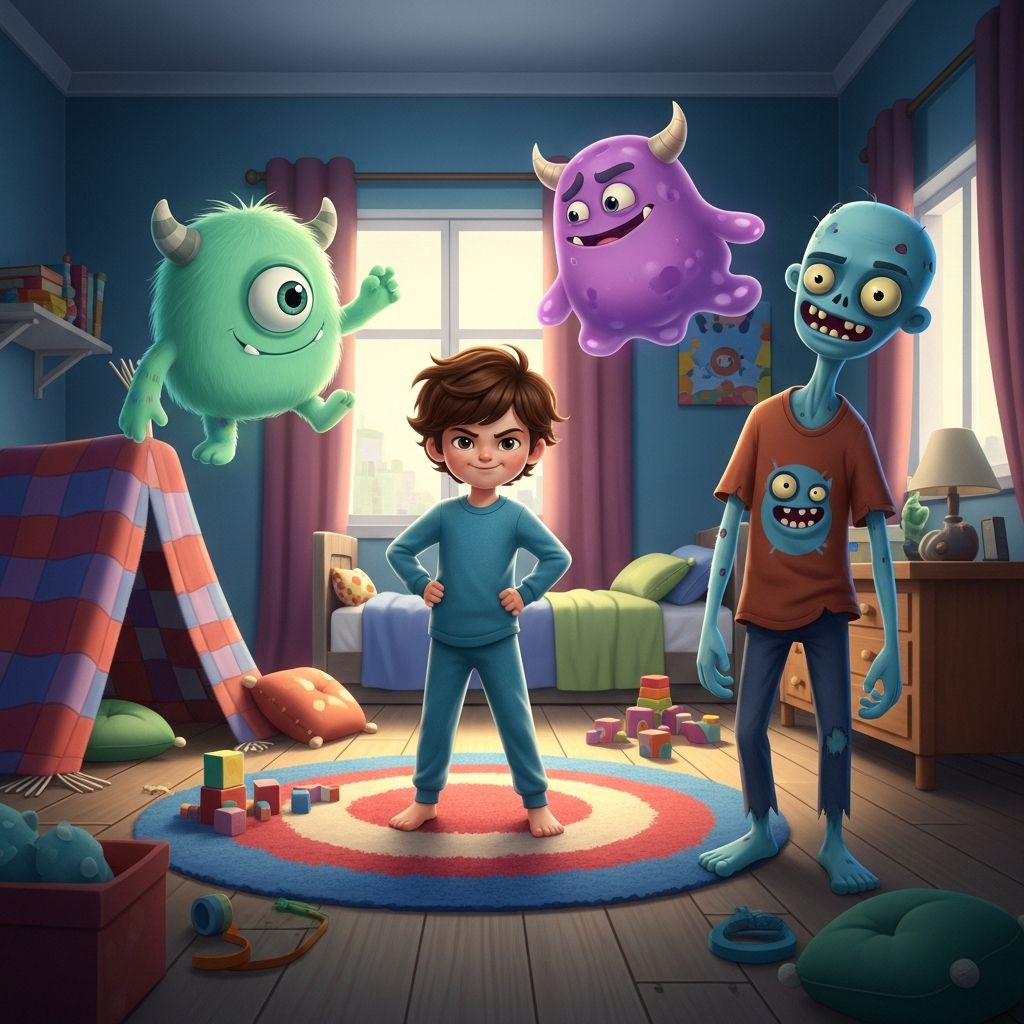
If the fear is built from imagination, imagination can also be the way through it. Instead of shutting down every zombie reference, you can gently redirect it. Reframe the scenario as a game where your child is not a helpless victim but a clever problem-solver building real-world skills.
This works especially well because many kids are already drawn to stories of survival and adventure. By treating those themes as practice exercises rather than doom prophecies, you help them feel capable and engaged rather than overwhelmed.
Ideas for Turning Scary Stories Into Play
- Safety scavenger hunt: Challenge your child to “gear up” for a pretend emergency by finding flashlights, water, bandages, and blankets around the house, then return everything when finished.
- Escape route maze: Draw a simple map of your home and invite your child to trace two different paths to get from their room to the front door if they ever needed to leave quickly.
- Zombie-proof fort: Build a blanket fort that doubles as a “storm shelter” or “quiet safe place” where you also practice calming breathing and reading.
- Hero training levels: Give each new skill a “level up” name: Level 1 is knowing address and parents’ phone numbers, Level 2 is knowing where the first aid kit is, and so on.
From Apocalyptic Panic to Practical Preparedness
Fears about the world ending are often a clumsy way of asking, “If something bad happens, will we know what to do?” Helping kids cope is not only about soothing them in the moment; it is also about giving them real tools and plans that address the underlying worry.
A simple, family-centered preparedness routine can transform vague dread into a sense of competence. The goal is not to feed a bunker mentality but to show that preparedness is just another form of caring for one another.
Concrete Skills That Lower Anxiety
- Knowing full names, address, and at least one emergency contact number.
- Learning when and how to call local emergency services, with clear guidance that it is only for real emergencies.
- Understanding where the family meets up if separated (for example, “the big tree in the park” or “grandma’s house”).
- Recognizing safe adults at school, in the neighborhood, or in public spaces.
- Practicing simple self-calming skills when things feel scary or confusing.
Designing a Family “What-If” Plan Without Creating More Fear
Children watch adults closely to decide how worried they should be. If you create an emergency plan with a sense of doom and urgency, they will absorb that tone. If you approach it like setting up a first aid kit or learning to swim — a normal part of life — they will generally follow your lead.
Think of your plan as a short family story: “If this happens, we do this.” The more you practice it in small, playful doses, the more natural it will feel if a real situation ever arises.
Elements of a Calm, Kid-Friendly Plan
- Home escape routes: Two ways out of bedrooms and the main living area, practiced occasionally as a quick “race” rather than a lecture.
- Meeting spot: One nearby outdoor location everyone can picture clearly, such as a specific tree or bench.
- Contact tree: A short list of people you would try to reach in order, described in simple terms: “If you can’t find us, you go to Mrs. Lopez next door.”
- Job cards: Very simple roles for older kids, like “grab the flashlight” or “hold the dog’s leash” so they feel helpful, not helpless.
Protecting Young Minds From Overload
In many households, the real zombie virus is relentless information. Streaming shows, trailers, and algorithm-driven video clips can expose children to intense scenes long before they are ready. Even when they seem to be ignoring the TV in the background, their brains are taking in more than adults realize.
Helping kids with apocalyptic fears often means adjusting the family environment as much as coaching the child. This is not about creating denial; it is about filtering content to match children’s emotional age, not only their chronological age.
Practical Media Boundaries
- Keep rolling news channels and graphic shows off when younger children are present in the room.
- Watch new scary or complex material together the first time, so you can pause and explain or turn it off if needed.
- Encourage kids to tell you when friends show them frightening clips on phones or tablets, without fear of getting in trouble.
- Balance every dark, intense story with lighter narratives where problems are solved through kindness, cooperation, and creativity.
Teaching the Brain to Calm Down: Simple Coping Skills
Even with the best boundaries and explanations, kids will sometimes wake up from a nightmare about zombies at 2 a.m. or feel a wave of panic after seeing a dramatic headline. In those moments, knowing how to soothe their own bodies is just as important as hearing comforting words.
Think of coping skills as a small internal toolkit you can help them assemble. Practicing these tools when they are calm makes them more available when fear hits.
Kid-Friendly Tools for Calming Fear
- Dragon breath: Inhale slowly through the nose to a count of four, then exhale through the mouth as if gently blowing out candles or dragon smoke.
- 5–4–3–2–1 game: Name five things you can see, four you can feel, three you can hear, two you can smell, and one you can taste to bring attention back to the present.
- Safe-image switch: Help your child “change the channel” in their mind by picturing a favorite place, character, or memory whenever the zombie image appears.
- Comfort object ritual: A particular stuffed animal, pillow, or blanket that gets a specific reassuring phrase or gesture when fears show up.
When Your Own Fears Get in the Way
Parents are not robots. Many adults carry their own worries about climate, social unrest, or potential disasters. Children pick up on this energy even when nothing is said out loud. If your child’s apocalyptic worries hit too close to home, it can be tempting to either shut them down quickly or join them in overthinking every scenario.
The most effective support often begins with your own self-regulation. Noticing your reactions, giving yourself space to breathe, and having another adult you can talk to makes it easier to be the calm presence your child needs.
Steps for Staying Grounded Yourself
- Pause before responding if you feel a surge of anxiety or irritation.
- Remind yourself that your child’s fear is an opportunity, not a verdict on your parenting.
- Limit your own exposure to constant negative news, especially late at night.
- Consider talking with a therapist or counselor if world events or worst-case scenarios dominate your own thinking.
Signs It Is Time to Seek Extra Help
Many children move through monster or apocalypse phases with good support at home, but some need more. A short season of scary questions is normal; persistent, life-limiting fear is not something you or your child should have to shoulder alone.
Professional support does not mean you have failed. It means you are willing to bring in more tools and perspectives to support a developing brain that is temporarily stuck on danger mode.
Red Flags That Deserve Attention
- Nightmares or sleep refusal several times a week for more than a month.
- Refusing to go to school, leave the house, or be in certain rooms because of zombie or apocalypse fears.
- Persistent physical complaints like stomachaches or headaches tied to scary thoughts.
- Obsessive checking behaviors, such as repeatedly locking doors or scanning for threats.
- Talk about not wanting to live if the world is so dangerous or doomed.
FAQs: Common Questions From Parents
Is it okay to joke about zombies to lighten the mood?
Humor can be very useful, but timing matters. If your child is in the middle of crying or clearly distressed, joking can feel like you are not taking them seriously. Start with validation and comfort. Once they are calmer and have felt heard, small, gentle jokes about silly, clumsy zombies or absurd scenarios can help shrink the fear down to a manageable size.
Should I ban all scary shows and stories?
Total bans can sometimes make forbidden content even more appealing, especially as kids get older and spend time with peers who have different rules. A more sustainable approach is selective, age-appropriate viewing, watching together when possible, and talking openly afterward about what was real, what was exaggerated, and how the characters handled problems.
What do I say when my child asks if the world is going to end?
A balanced answer acknowledges genuine uncertainty without catastrophizing. You might say that no one knows exactly what will happen very far in the future, but people all over the world spend their lives working to keep others safe, improve communities, and protect the planet. Emphasizing action and cooperation helps children feel less trapped by fear and more connected to a larger story of problem-solving.
What if my teenager insists that I’m sugarcoating things?
Older kids often test out worst-case thinking as part of growing up. Instead of arguing that everything is fine, invite them into more nuanced discussions. Ask what sources they are using, explore probabilities together, and talk about real ways people prepare and respond to crises. Shifting from “we are doomed” to “these are hard problems and here is what people are trying” respects their intellect while still offering hope.
Can zombie or apocalypse play ever be healthy?
Yes, as long as it does not dominate their life or clearly escalate distress. Pretend battles, survival games, and end-of-the-world stories can give kids a rehearsal space for courage, teamwork, and creative problem-solving. If the mood is mostly energetic and playful, and they can easily shift to other types of play, it is usually a sign that they are processing fear rather than drowning in it.
Raising Brave Kids in a Noisy, Uncertain World
Zombie apocalypses make for dramatic movie plots, but the real story unfolding in your home is quieter and more important: a child learning whether big feelings and big questions are safe to share. Each time you respond to their fears with calm attention, honest reassurance, and practical guidance, you help wire their brain for resilience instead of panic.
The goal is not to promise that nothing bad will ever happen. The goal is to show your child that scary thoughts do not have to be the boss of their life — and that, whatever the world throws your way, you will face it together with open eyes, steady hands, and a little bit of imaginative courage.