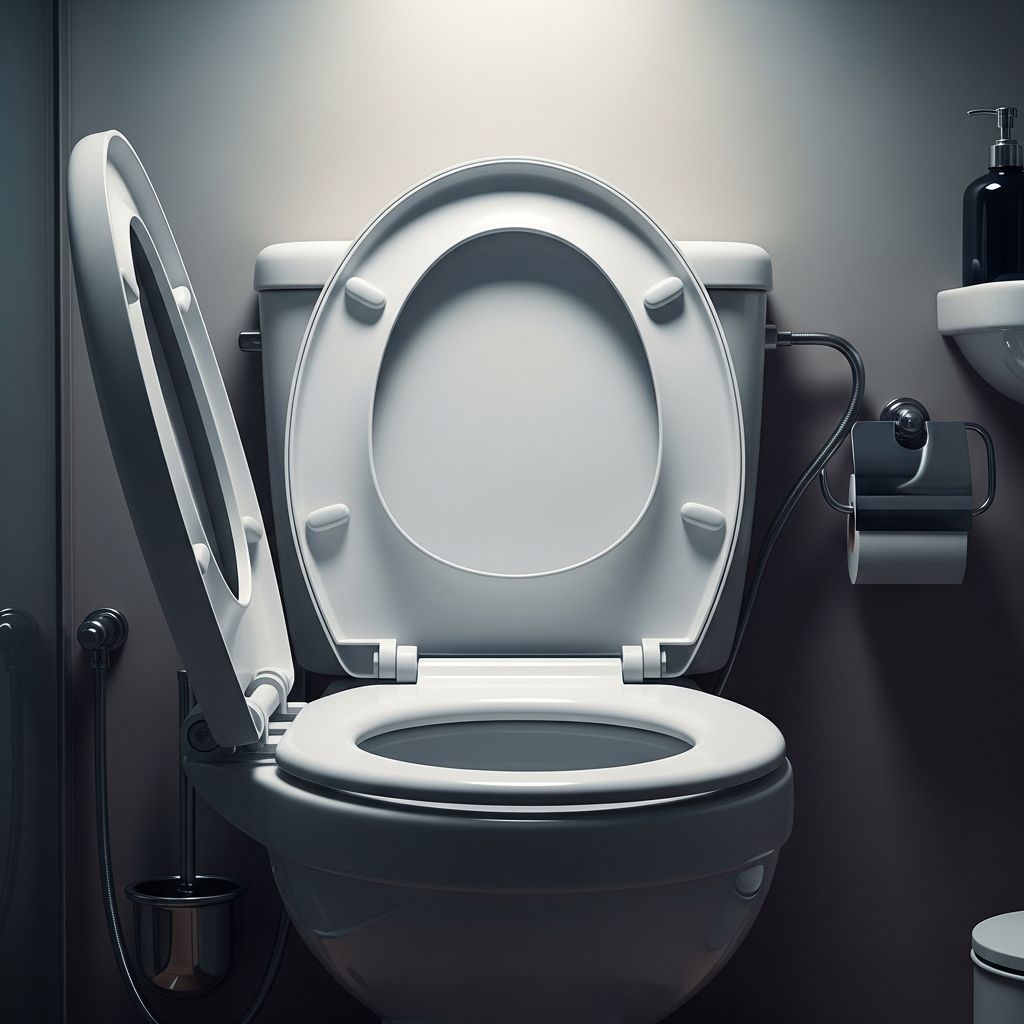
If a stranger heard the passion people bring to the toilet seat up vs. down debate, they might assume the entire fate of civilization hinges on a piece of plastic and a hinge. Yet this tiny household detail sparks outsized annoyance, eye-rolls, and, in some homes, real resentment.
This article unpacks why such a small action triggers big feelings, what science and logic actually say about toilet seat position, and how couples, families, and roommates can agree on a simple, fair bathroom rule that restores peace.
Why the Toilet Seat Debate Refuses to Die
The toilet seat question is less about plumbing and more about psychology, habits, and expectations. People bring their sense of fairness, their hygiene standards, and even their ideas about gender roles into a five-second interaction with a piece of bathroom hardware.
In many homes, the script is familiar: one person leaves the seat up, another discovers it in the dark or in a rush, gets annoyed, and suddenly a minor irritation becomes a symbol of feeling ignored, disrespected, or taken for granted.
- What looks like laziness to one person may feel like efficiency to another.
- What seems like “no big deal” to lift or lower a seat can feel like daily proof that someone else assumes you will do the extra work.
- The more often it happens, the more it feels like a pattern—not just a one-off mistake.
What Each Side Is Actually Arguing For
Although the debate is usually framed as “seat up” vs. “seat down,” the real conflict is about whose convenience and comfort counts by default. Understanding the underlying logic on both sides makes it easier to negotiate a rule that doesn’t feel lopsided.
The Case for Leaving the Seat Down
People who prefer the seat left down often describe this as the “default” or “resting” position of the toilet. For them, lifting the seat is a temporary adjustment, while leaving it down keeps the bathroom looking finished, tidy, and ready for anyone.
- Ease for sitters: Most people, regardless of gender, sit when using the toilet at least part of the time. A down seat means fewer surprises and less fumbling.
- Perception of respect: Taking a second to lower the seat is seen as a small signal of consideration and thoughtfulness.
- Bathroom aesthetics: A closed or lowered seat simply looks neater, especially in smaller bathrooms where the toilet is always in view.
The Case for Leaving the Seat Up
Those who argue for leaving the seat up at least some of the time tend to focus on effort and efficiency. If someone typically stands to urinate, a raised seat is less fuss and, from their perspective, a logical starting point.
- Minimal steps: If the seat is already up, there is one less motion before and after using the toilet.
- Symmetry in effort: Some argue it is unfair to insist the seat always be left down, forcing one group to move it every single time while the other does nothing.
- “Use it, leave it” logic: There is a belief that each person should return the seat to whatever position they personally prefer, not to a shared default.
Science, Hygiene, and the Mysterious Toilet Plume
Personal preference is one thing, but hygiene is where the debate shifts from feelings to facts. When toilets flush, droplets and microscopic particles can be propelled into the air, a phenomenon often called the “toilet plume.” These particles can land on nearby surfaces like sinks, counters, and toothbrushes.
While household toilets are not usually the main culprits in everyday illness, it is still rational to want to reduce how far germs can travel. The position of the seat and lid matters here, especially in small bathrooms where everything is within easy “splash” range.
- Flushing with the lid down can significantly reduce how far droplets and particles spread.
- Lowering both the seat and the lid before flushing adds a basic barrier between the bowl and the rest of the room.
- Even if the risk is modest, taking an extra second to close the lid is an easy low-effort hygiene upgrade.
Fairness, Math, and Who Moves the Seat More
Beyond hygiene and aesthetics, some researchers have taken the toilet seat debate into the realm of math and economics. They have tried to calculate which household rule minimizes the total number of seat movements, treating each lift or lower as a small “cost” of time and effort.
These analyses usually consider how many people use the bathroom, how many are likely to sit versus stand for different types of bathroom visits, and how often each person goes. Then they compare various rules, such as always leaving the seat down, always leaving it in whatever position it was just used, or always leaving it up.
| Rule | What It Means | Who Moves the Seat Most | Perceived Pros | Perceived Cons |
|---|---|---|---|---|
| Always Down | Seat ends down after every use, lid optional. | People who stand to pee. | Predictable, looks tidy, fewer surprises for sitters. | One group does most of the lifting work. |
| Always Up | Seat ends up after every use. | People who sit. | Convenient for those who stand; easy habit. | Unpleasant and sometimes unsafe for sitters, especially at night. |
| Leave as Used | Seat stays in the last user’s position. | Varies with household makeup. | Each person changes the seat when they need to. | Creates unpredictability; someone is often caught off guard. |
| Lid Down, Seat Flexible | Lid always closed; seat can be up or down under the lid. | Everyone shares some work. | Better hygiene, neater look, built-in compromise. | Requires an extra motion from every user. |
Interestingly, some models find that the common “always seat down” rule is not the most efficient in terms of minimizing total seat movements, especially in households with more people who stand to urinate than people who sit. However, the difference in effort is small in real life, usually measured in a few extra seconds a day.
In other words: the amount of energy spent on arguing about the seat position vastly outweighs the extra energy spent moving it a few more times per day under almost any rule.
Why Feelings About the Seat Run So Deep
What makes a raised toilet seat feel like a personal insult rather than a minor oversight? The answer lies in what people interpret the habit to mean. Human beings are wired to look for patterns and assign motives, especially in close relationships.
Over time, a partner or roommate may not just see a raised seat; they see a story about whose time matters, whose comfort is prioritized, and who is expected to do invisible emotional and physical labor around the house.
- A person who often cleans the bathroom may feel that leaving the seat up shows a lack of appreciation for that work.
- Someone who regularly falls into a cold bowl at night may conclude that their safety and comfort are not being considered.
- A partner who feels nagged about the seat may interpret comments as criticism of their character, not just their habit.
The Simple Rule That Ends Most Arguments
Given the mix of hygiene, fairness, effort, and feelings, one rule tends to satisfy the greatest number of concerns in the greatest number of households: seat down, lid down, every time. This rule treats the toilet as something that should be “closed” when not actively in use.
Under this approach, it almost doesn’t matter whether the last person sat or stood. Everyone does a small share of the work, bathrooms look neater, and there is a built-in hygiene benefit from closing the lid before flushing.
- Predictability: Everyone knows what to expect when they walk in, which removes a lot of the irritation.
- Shared responsibility: Each user closes the lid and, if needed, adjusts the seat for themselves. No one group shoulders all of the adjustments.
- Hygiene boost: Closing the lid helps contain droplets generated by flushing, especially useful in shared bathrooms.
How to Introduce a New Bathroom Rule Without a Fight
Changing a habit, even something as simple as what you do after flushing, works best when people feel heard rather than blamed. Treat the toilet seat as a shared household system, not a personal flaw.
A calm conversation at a neutral time—definitely not in the middle of an annoyed outburst—is the best setting to negotiate a new rule.
Practical Steps to Get Everyone On Board
- Start with your goal: “I’d like our bathroom to feel cleaner and more comfortable for everyone.” That is less confrontational than “You never put the seat down.”
- Explain your experience. For instance, mention if you have nearly fallen in the bowl, are grossed out by an open toilet, or worry about germs spreading to toothbrushes.
- Ask for their perspective. The other person may see the habit as harmless or simply never have thought about it.
- Propose a simple rule, such as “seat and lid down for everyone,” and ask if that feels fair. Be open to small adjustments.
- Keep the tone light. Humor goes a long way with a topic that, at the end of the day, is about a bathroom, not a moral failing.
Tips to Make the New Habit Stick
Humans are creatures of habit. If you want the new rule to last longer than a week, design the bathroom and routines to make the desired behavior the easiest option, not the hardest.
- Use visual cues: A small, tasteful sign or sticker near the toilet can be a gentle reminder, especially in guest bathrooms.
- Upgrade the hardware: Soft-close seats with smooth hinges make it easier and quieter to close both seat and lid.
- Link it to another habit: Decide that you always close the lid before you touch the flush handle, turning it into a single, fluid motion.
- Reinforce positive behavior: A quick “thanks for remembering the lid” can help the habit feel appreciated instead of policed.
Special Situations: Kids, Guests, and Shared Bathrooms
Not every bathroom is governed by a romantic partnership. Shared homes, kids, and frequent guests require slightly different strategies, but the core idea of a predictable, agreed-upon default still applies.
Homes With Young Children
Safety becomes a bigger factor with toddlers and small children. An open toilet can be a drowning hazard, a source of unsanitary play, or an irresistible spot for dropped toys.
- Adopt a strict “lid down, maybe even latch locked” approach in homes with very young kids.
- Use childproof toilet locks if necessary, especially in bathrooms children can access unsupervised.
- Teach older kids the same rule adults follow so they do not accidentally undo your safety precautions.
Roommates and Shared Housing
With roommates, there may be less emotional baggage but more different habits. People come from families with wildly different bathroom norms, and no one wants to feel like the house parent.
- Include bathroom expectations in a brief house meeting or written roommate agreement.
- Pick one simple rule—commonly lid down, seat down—and post it where everyone can see it.
- Remember that consistency matters more than perfection; occasional slip-ups do not require dramatic confrontations.
Guest-Friendly Bathrooms
Guests will not always follow your rules, but you can set the stage. Most visitors will infer the “right” behavior from what they see when they enter the bathroom.
- Before guests arrive, close the lid, tidy the room, and store toothbrushes away from the toilet.
- Make trash bins, hand soap, and towels easy to find so guests do not feel awkward or intrusive.
- Accept that guests may default to their own habits; one evening of mixed lid positions is not worth stressing over.
Frequently Asked Questions About Toilet Seat Etiquette
Is there a universally “correct” way to leave the toilet seat?
No single rule works for every household. The most effective approach is to choose a consistent default that fits the people who use that bathroom and addresses hygiene, safety, and fairness as much as possible. In many homes, that ends up being “seat and lid down” simply because it balances those priorities well.
Is leaving the lid up really that unhygienic?
Flushing with the lid up can allow droplets and tiny particles from the bowl to disperse into the surrounding air, where they may land on surfaces. While this does not instantly turn the bathroom into a hazard zone, closing the lid is a simple, low-effort precaution if you want to reduce that spread.
Is it sexist to expect one group to always move the seat?
Many people feel that when one group is always expected to adjust the seat and the other is not, it sends a message about whose effort and comfort matter more. A shared rule, where everyone does a small part—such as always closing the lid—can diffuse the sense of imbalance and prevent the issue from becoming a stand-in for larger frustrations.
What if my partner refuses to change their habit?
If a partner flatly refuses a very small courtesy that clearly matters to you, the real problem may not be the toilet seat itself. In that case, it can help to step back and talk about mutual respect, compromise, and how each of you responds when the other makes a reasonable request. The bathroom just happens to be where the deeper issue shows up.
How much energy is this debate really worth?
Almost never as much as people spend on it. The physical act of lifting or lowering a seat takes seconds; the emotional fallout from constant bickering can last for hours or days. In most cases, choosing a simple, shared rule and sticking to it will save far more energy than “winning” the argument ever could.
Turning a Small Habit Into a Daily Act of Consideration
The toilet seat debate will probably never disappear completely from popular culture, but it does not have to dominate your home life. Treating the toilet seat as a shared responsibility rather than a personal battleground reframes the entire issue.
Each time someone takes the extra second to lower the seat and close the lid, they are not just moving a piece of plastic. They are sending a tiny, everyday signal: “I know someone else will use this after me, and I care enough to make it a little better for them.” For most households, that quiet message of respect is worth far more than any theoretical efficiency gained by leaving the seat up.