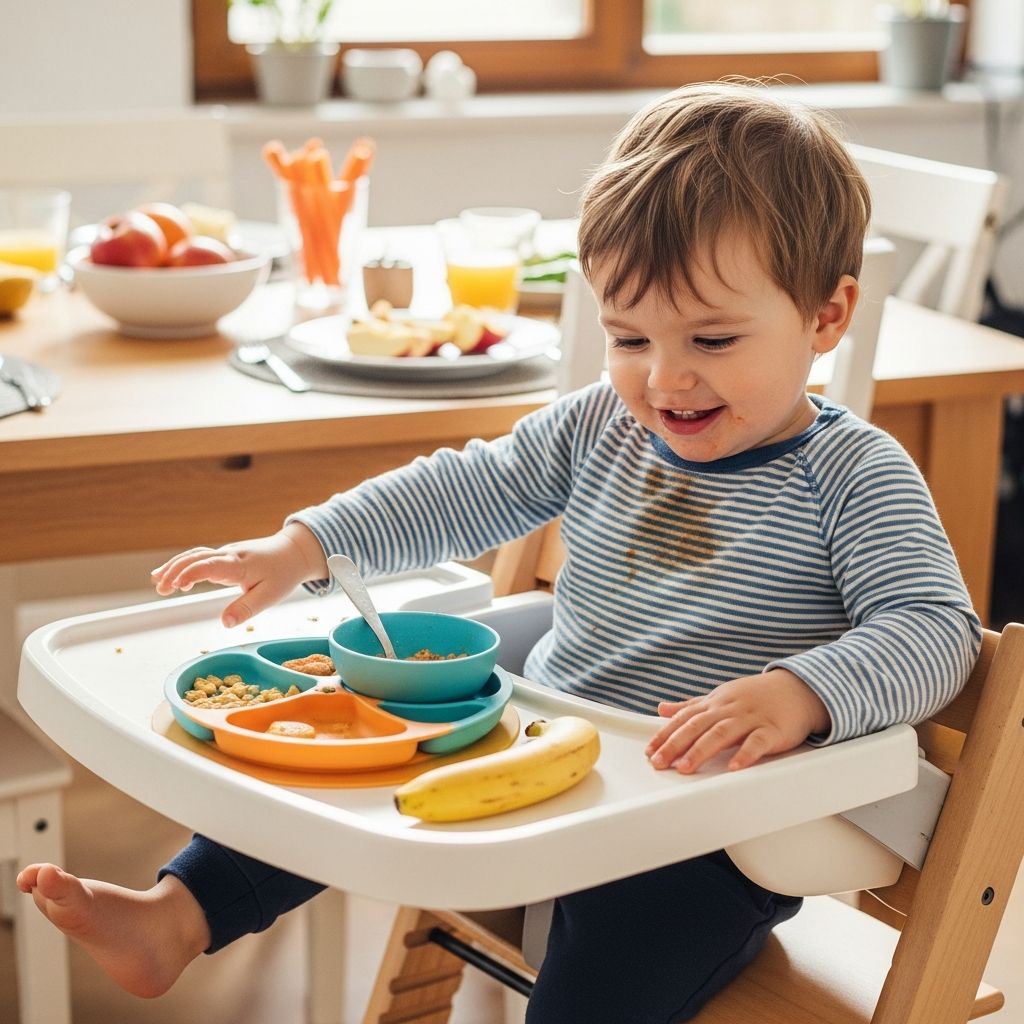
One day your toddler is happily munching away in the high chair; the next day he is stiff as a board, screaming, arching, and refusing to sit down at all. High-chair battles are a common, exhausting phase—and they are also a powerful window into your toddler’s growing independence and need for control. With a bit of understanding and some creative adjustments, you can keep mealtimes safe, calm, and connected without turning dinner into a daily showdown.
Why Toddlers Suddenly Refuse the High Chair
High-chair refusal almost never comes out of nowhere. Toddlers rarely have the words to say what’s wrong, so they use their bodies and behavior to communicate discomfort, frustration, or a desire for more independence. Understanding what might be behind the protest is the first step in solving it.
Common Reasons Behind High-Chair Battles
Your child’s refusal might be caused by one reason or several layered together. Looking closely at timing, environment, and your toddler’s body language can help you decode the real message.
- Independence surge: Toddlers want to do things “by myself,” including sitting like everyone else at the table.
- Feeling trapped: Straps and trays can feel restrictive, especially to a child newly in love with climbing and exploring.
- Discomfort: Hard seats, dangling feet, or a poorly adjusted chair can make it genuinely uncomfortable to sit still.
- Developmental leap: Big changes in motor skills, language, or thinking can make a child more sensitive and reactive at mealtimes.
- Emotional associations: If previous meals involved pressure to eat, tension, or rushing, the high chair may feel like a stressful place.
Signs Your Toddler Is Communicating a Need
Instead of seeing resistance as simple disobedience, it helps to frame it as communication in action. Your toddler may be telling you something important about readiness, comfort, or routine.
- Arching the back or going rigid before you reach the chair.
- Clawing at the straps, twisting out, or immediately trying to climb down.
- Settling easily on a parent’s lap or in a regular chair but not in the high chair.
- Calming down when the tray is removed or when seated closer to the table.
Staying Safe While Respecting Independence
Mealtime safety—especially preventing falls and choking—has to remain non-negotiable, even while making room for your toddler’s growing independence. The goal is to find a setup that protects your child and gives him a sense of control.
Core Safety Principles at the Table
Whatever seating you use, a few basic safety rules should guide your choices. These help reduce the risk of falls and encourage safe eating habits as your toddler becomes more mobile and curious.
- Always stay within reach and sight of your child while eating.
- Avoid letting your toddler wander with food; eating should happen while seated.
- Offer age-appropriate textures and cut food into safe, manageable pieces.
- Keep climbing hazards (like unstable chairs) away from where your child eats.
Comparing Popular Toddler Seating Options
Moving away from the traditional high chair does not mean lowering your safety standards. A variety of seating arrangements can support both safety and autonomy, depending on your child’s age, size, and temperament.
| Option | Pros | Potential Drawbacks | Best For |
|---|---|---|---|
| Traditional high chair | Very stable; easy to clean; keeps child contained and at caregiver’s height. | Can feel confining; tray may separate child from the table; often disliked after a certain age. | Young toddlers just starting solids or those who still tolerate the setup well. |
| Strapped booster on dining chair | Brings child right up to the table; saves space; often feels more “grown up.” | Some toddlers still dislike straps; requires a sturdy chair and proper installation. | Toddlers who want to be at the family table but still need containment. |
| Non-strapped booster or under-chair raiser | Allows more freedom of movement; feels more like an adult chair; still improves height. | Child may stand or wiggle more; needs close supervision to prevent falls. | Older or calmer toddlers who sit reasonably well with clear boundaries. |
| Child-sized table and chairs | Matches toddler’s scale; encourages independence and responsibility; great for snacks. | Less convenient for family-style meals; still requires supervision to avoid roaming while eating. | Children who like a sense of ownership over their own space, especially at snack time. |
| Adult chair with cushion or phone book | Cost-effective; easy to set up quickly; makes child feel included. | Not designed for toddlers; can be slippery; no built-in safety features. | Short-term or occasional solution when other gear is unavailable. |
Practical Ways to Ease High-Chair Resistance
Once you understand what might be fueling your toddler’s protests, you can experiment with small changes that reduce tension. Sometimes just a minor update in routine or setup can make a big difference.
Make the Seat Comfortable and Inviting
An uncomfortable chair is a short-lived chair, no matter how committed you are to keeping your toddler strapped in. Comfort signals the body to relax, which makes focusing on eating much easier.
- Add a non-slip cushion or soft insert if the seat is hard or cold.
- Ensure your child’s feet are supported on a footrest or stable box; dangling legs can be tiring.
- Check straps for fit—too tight is irritating, too loose feels insecure.
- Keep the eating area uncluttered but pleasant, perhaps with a favorite placemat or color.
Bring Your Toddler to the Table
Many children simply want to feel like true members of the family rather than observers sitting on the sidelines. Eating together at the same height and surface can dramatically change the mood.
- Push the high chair right up to the table and skip the tray if your model allows it.
- Use a booster on a regular chair so your toddler shares the same table space as everyone else.
- Serve food on similar plates and cups to the rest of the family, adjusting only for safety.
Creating a Calm Mealtime Routine
A predictable rhythm around meals helps toddlers know what to expect and what is expected of them. When the process is consistent, there is less room for power struggles and more room for cooperation.
Simple Pre-Meal Rituals
Short, repeated rituals signal to your toddler that mealtime is starting and that sitting to eat is part of the routine, not a surprise request. These rituals also give a sense of control by letting your child participate meaningfully.
- Announce mealtime a few minutes ahead instead of suddenly scooping your child up.
- Invite your toddler to help set the table by placing napkins, spoons, or their cup.
- Use the same phrase each time, such as “It’s time to sit for dinner now,” to create consistency.
- Offer a brief transition activity, like washing hands together or choosing a seat.
Structuring the Mealtime Window
Toddlers are not meant to sit still for long stretches, so expecting a lengthy meal often leads to restlessness and conflict. A realistic time frame and a clear beginning and end protect everyone’s sanity.
- Aim for focused meals of about 10–20 minutes, depending on age and temperament.
- Let your child know that when they leave the table, the meal is over until the next snack.
- Keep screens off so attention stays on eating and interacting, not on distractions.
Balancing Boundaries and Flexibility
Consistent boundaries are important, but rigidity can backfire when working with toddlers. The art lies in holding firm on safety and basic rules while being flexible about how those rules are met.
Non-Negotiables vs. Negotiables
Defining what is non-negotiable for your family helps you respond to protests calmly instead of improvising new rules mid-tantrum. At the same time, leaving some room for choice allows your toddler to feel capable and respected.
- Non-negotiable: Food is eaten while seated; a grown-up supervises; no standing on chairs.
- Negotiable: Which chair to sit in (from two or three options); which placemat or cup to use; whether a stuffed animal joins them at the table.
- Offer choices you can truly accept, not ones you hope they won’t pick.
Responding Calmly to Refusal
When your toddler refuses to sit, your reaction teaches just as much as your words. The goal is to communicate, “You are safe, and there are clear limits,” without turning the interaction into a high-drama performance.
- Describe what is happening in neutral language: “You don’t want to sit right now.”
- Restate the boundary: “We eat while we’re sitting. When you’re ready to sit, your food will be here.”
- Avoid extended lectures; keep it brief and consistent each time.
- If your child leaves the table, calmly remove the plate after a few minutes and move on.
Supporting Emotional Needs at Mealtime
Behind many high-chair battles sits a swirling mix of big toddler feelings. Mealtimes can be loaded with expectations, sensory experiences, and social pressure, all at once. Approaching this time with emotional attunement can transform the atmosphere.
Connection Before Correction
A child who feels connected and seen is more likely to cooperate. A few moments of focused attention before and during meals can reduce the urge to fight every request.
- Spend a minute at your child’s eye level before dinner starts, talking or cuddling.
- Use mealtime to share simple stories about your day and invite your toddler to “tell” theirs.
- Acknowledge feelings: “You really wish you could run around instead of sitting. It’s hard to stay at the table.”
Letting Go of Perfection
Not every meal will be peaceful, and not every strategy will work right away. Progress often looks like small improvements over time rather than a perfect, screen-worthy dinner scene.
- Expect some wiggling and mess; these are normal parts of toddler development.
- Focus on the overall pattern for the week, not each individual meal.
- Celebrate tiny wins: a few extra minutes seated, a calmer transition, fewer power struggles.
Frequently Asked Questions
Is it okay to stop using the high chair altogether?
Yes, many families transition away from the high chair earlier than expected once their toddler shows clear dislike for it and is physically ready for other seating. The key is to maintain safety by choosing a stable alternative and keeping the rule that all eating happens while seated.
What if my toddler only eats on my lap?
While laps can be comforting, they are not a sustainable long-term solution. Try a gradual shift: sit close together, perhaps with your chair right next to your child’s, and offer reassurance while gently but consistently holding the boundary that food stays at their own seat.
Should I skip a meal if my child refuses to sit?
It is not necessary to withhold food as punishment. Instead, make the meal available for a reasonable window while your child has the chance to join you in their seat. If they choose not to participate, you can calmly end the meal and offer the next snack at the usual time.
How long should I expect this phase to last?
Every child is different, but with steady routines and calm, clear boundaries, the most intense resistance usually softens over weeks to a few months. Developing self-regulation and table manners is a long process, so patience and consistency matter more than quick fixes.
When should I be concerned enough to seek advice from a professional?
If your toddler consistently refuses to sit or eat, shows strong distress beyond typical tantrums, or you notice concerns with growth, chewing, swallowing, or motor skills, it can be helpful to talk with a pediatrician or feeding specialist. Trust your instincts if something feels off beyond simple independence-seeking behavior.
Mealtime with a toddler will never be perfectly tidy or completely calm, but it does not have to feel like a battleground. By tuning in to what your child is communicating, staying flexible about the chair itself, and holding firm on safety and basic routines, you can build a family table that feels secure, respectful, and even enjoyable for everyone.