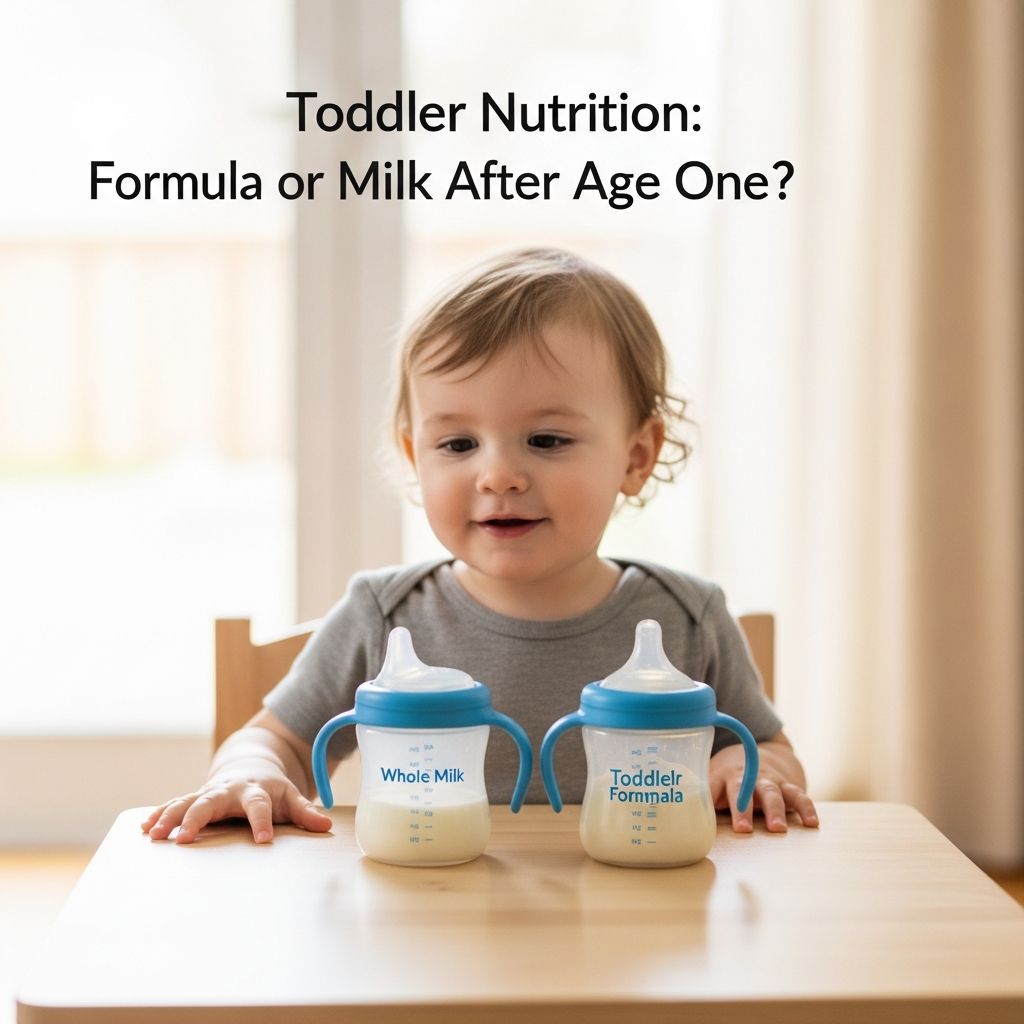
After a baby’s first birthday, parents face a key decision: continue with formula or switch to whole milk. While infant formula is strictly regulated for newborns, products labeled for toddlers lack the same oversight and may not offer superior nutrition compared to cow’s milk paired with a balanced diet.
Understanding the Shift in Toddler Feeding Needs
From birth to 12 months, breast milk or infant formula provides complete nutrition, meeting all caloric and nutrient demands. Beyond age one, toddlers enter a phase of rapid growth requiring diverse foods. The American Academy of Pediatrics (AAP) recommends transitioning to whole cow’s milk at this stage, as it supports bone health with calcium and vitamin D while being more affordable and accessible.
Whole milk contains about 8 grams of protein per cup, essential fats for brain development, and key vitamins like A and D. Unlike breast milk, which adapts dynamically, or infant formula’s fixed profile, cow’s milk offers consistent nutrition without added sugars often found in toddler drinks.
Nutritional Breakdown: Key Components Compared
To evaluate options, consider core nutrients. Breast milk and infant formula excel in the first year due to bioavailable iron (up to 50% absorption in breast milk vs. 7-12% in formula) and immune factors. For toddlers, priorities shift to sustained energy and skeletal support.
| Nutrient (per 8 oz serving) | Whole Cow’s Milk | Toddler Formula (average) | Infant Formula |
|---|---|---|---|
| Calories | 150 | 140-200 | 160-170 |
| Protein (g) | 8 | 4-7 | 3-4 |
| Fat (g) | 8 | 6-8 | 8-9 |
| Calcium (mg) | 300 | 200-400 | 100-120 |
| Vitamin D (IU) | 100-120 | 100-400 | 40-100 |
| Iron (mg) | 0.1 | 1-7 | 1.8 |
Data synthesized from FDA-regulated standards and typical products; toddler formulas vary widely as they are unregulated. Whole milk provides higher natural protein and calcium, ideal for growing bones, while formulas may add iron unnecessarily since toddlers get it from solids.
Pros and Cons of Whole Milk for Toddlers
- Pros: Cost-effective at $3-5 per gallon versus $1.50+ per can of formula; promotes satiety with natural fats; supports dental health when sipped from cups, reducing cavity risk from prolonged bottles.
- Cons: Potential for mild allergies (affects 2-3% of children); lower iron, so pair with iron-rich foods like meats and fortified cereals; limit to 16-24 oz daily to avoid displacing solids.
Pediatricians emphasize whole milk’s role until age two for fat-soluble vitamins aiding myelin development, then low-fat options post-two.
Examining Toddler Formulas: Marketing vs. Reality
Toddler formulas, often called ‘transition’ or ‘growing-up’ milks, target ages 12-36 months. Made from skim milk powder, oils, and sweeteners, they promise enhanced nutrition but fall short. The AAP states they are ‘unnecessary and nutritionally incomplete,’ potentially higher in sugar than cow’s milk.
Unlike FDA-reviewed infant formulas with DHA/ARA for brain health, toddler versions add these synthetically but without proven superiority over a varied diet. Costs soar: $400-600 monthly for specialty types, versus pennies per ounce of milk. Marketing implies necessity post-weaning, misleading parents despite no regulatory standards.
Digestion and Health Outcomes in Toddlers
Breastfed infants digest milk effortlessly due to lipases and softer curds, consuming fewer calories (85 kcal/kg/day) than formula-fed (100 kcal/kg). Toddlers on whole milk experience similar benefits: faster gastric emptying reduces reflux, and softer stools minimize constipation compared to formula’s firmer residues.
Long-term, breast milk’s antibodies lower infection risks (e.g., otitis media, diarrhea). For toddlers, cow’s milk supports immunity via probiotics in yogurt variants, but excess formula sugars may disrupt gut flora. Studies show formula-fed babies have higher obesity risk from overfeeding cues absent in breastfeeding.
Practical Transition Strategies from Formula to Milk
- Gradual Introduction: Mix formula and milk 75:25, increasing milk over 7-10 days to ease digestion.
- Monitor Tolerance: Watch for rash, fussiness, or bloody stools indicating lactose issues; consult a doctor for hydrolyzed options if needed.
- Balanced Intake: Aim for 2-3 cups milk daily alongside fruits, veggies, proteins; avoid juice to prevent obesity.
- Age-Specific Tips: Use open cups by 18 months; wean from bottles by 12-15 months to support speech.
If allergies persist, pediatric hypoallergenic formulas exist, but most outgrow cow’s milk intolerance.
Cost Analysis: Budgeting for Toddler Nutrition
Annual formula expenses reach $1,800-$3,000, excluding gear. Whole milk costs $200-400 yearly. Savings fund fresh produce, enhancing overall nutrition. Public programs like WIC support milk access for eligible families.
Special Cases: When Formulas Might Still Be Needed
For premature toddlers or growth falterers, fortified formulas aid catch-up. Severe allergies warrant amino-acid bases. Always prioritize pediatric guidance over ads.
Frequently Asked Questions
What age should toddlers switch from formula to milk?
After 12 months, introduce whole cow’s milk unless medically advised otherwise.
Is toddler formula better than cow’s milk nutritionally?
No, it’s not more nutritious and often contains added sugars; a varied diet suffices.
How much milk does a 1-2 year old need daily?
16-24 ounces, not exceeding to ensure solid food intake.
Can plant-based milks replace cow’s milk?
Only fortified soy; others lack protein/fat—consult a doctor.
What if my toddler refuses milk?
Offer yogurt, cheese; prioritize diet diversity over milk fixation.
References
- Formula vs. Breast Milk: Which is Best for Your Baby and Why — Americord Blood. 2023. https://www.americordblood.com/articles/formula-vs-breast-milk-which-is-best-for-your-baby-and-why
- Comparing Infant Formulas with Human Milk — National Center for Biotechnology Information (NCBI), NIH. 2004 (authoritative reference on nutrient absorption). https://www.ncbi.nlm.nih.gov/books/NBK215837/
- New guidance on toddler formula reinforces doctors’ advice — Medical University of South Carolina (MUSC). 2023-10-25. https://www.musc.edu/content-hub/News/2023/10/25/New-guidance-on-toddler-formula-reinforces-doctors-advice
- Skip the Toddler Formula: Why Cow’s Milk Is the Better Option — University of Utah Health. 2023-12. https://healthcare.utah.edu/healthfeed/2023/12/skip-toddler-formula-why-cows-milk-better-option
- Infant Formula and Toddler Drink Comparison Chart — Enfamil Canada. 2023. https://www.enfamil.ca/pages/infant-formula-and-toddler-drink-comparison-chart
- AAP: Most Toddlers Don’t Need Toddler Formula — American Academy of Pediatrics (AAP), HealthyChildren.org. 2023. https://www.healthychildren.org/English/news/Pages/why-most-toddlers-dont-need-toddler-formula.aspx
- Breaking down toddler formulas and the confusion associated with naming/labeling — Contemporary Pediatrics. 2023. https://www.contemporarypediatrics.com/view/breaking-down-toddler-formulas-and-the-confusion-associated-with-naming-labeling