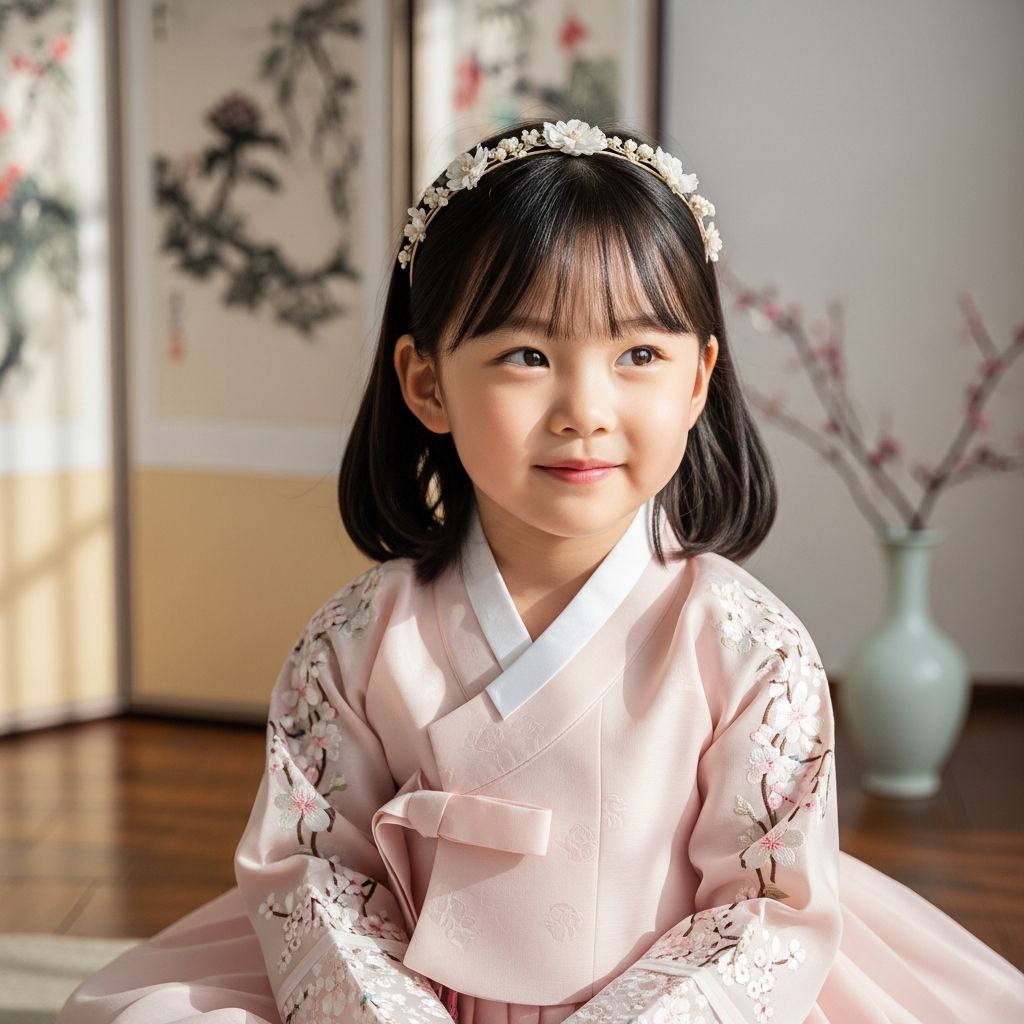
Korean girl names blend graceful sounds with deep symbolism, often expressing wishes for a child’s character, happiness, and future. While every family’s story is different, learning how Korean names work can help you pick something that feels both meaningful and memorable.
How Korean Names Are Structured
Most Korean names traditionally have three syllables when written in full: a one-syllable family name followed by a two-syllable given name. For example, in a full name, the order is typically family name first, then the personal name. Modern parents, especially abroad, sometimes reverse the order in Western contexts, but the underlying structure remains similar.
- Family name: Usually one syllable and shared by all members of the family line.
- Given name: Usually two syllables, often written with Chinese characters (hanja) or purely in the Korean alphabet (Hangul).
- Meaning: Each syllable typically carries its own meaning, which combine into a poetic or symbolic idea.
This structure allows parents to create names that feel both personal and connected to tradition, whether they lean classic or modern.
Hanja, Hangul, and Meaning
Many Korean given names are built from hanja, Chinese characters that each carry a specific meaning and sound. Two different families can pronounce a name the same way but choose different hanja, so the meaning can vary even when the spoken name sounds identical. For example, one syllable might mean “grace,” “wisdom,” or “brightness” depending on which character is selected.
Some parents now prefer purely Hangul names that are not tied to hanja at all. These can be inspired by nature, emotions, or everyday words, like “sky” or “butterfly,” giving a gentle, modern feel while staying rooted in the Korean language itself.
Common Themes in Korean Girl Names
Although each name is unique, many Korean girl names fall into recurring themes that reflect cultural values and hopes. Understanding these themes can help you focus on the feeling you want the name to express.
- Virtues and character: Names tied to kindness, wisdom, honor, or integrity.
- Beauty and grace: Names that highlight inner or outer beauty, elegance, and charm.
- Nature and seasons: Names inspired by the sky, stars, flowers, spring, or the ocean.
- Prosperity and good fortune: Names that hint at abundance, success, or auspicious beginnings.
Choosing a theme first can make the naming process feel less overwhelming and more intentional.
Popular Virtue-Inspired Names
Many families gravitate toward names that describe the kind of person they hope their daughter will become. Virtue-based names feel timeless and can work well in almost any setting.
| Style / Vibe | Example Name Idea | General Concept |
|---|---|---|
| Gentle and thoughtful | Names combining syllables for “wisdom” and “kindness” | Suggest a calm, insightful personality |
| Bright and ambitious | Names blending “intellect” with “success” | Express hope for achievement and strong character |
| Graceful and refined | Names featuring syllables that mean “elegance” or “refinement” | Highlight poise, confidence, and dignity |
Virtue-themed names can be especially meaningful if you pair them with family values or a story you want to pass down.
Names Inspired by Beauty and Light
Many Korean girl names carry images of jewels, radiance, or delicate beauty. These names don’t simply comment on appearance; they often describe a bright spirit, inner glow, or preciousness to the family.
- Names that evoke jewels may hint at rarity, value, and treasured status.
- Names linked to light can symbolize hope, clarity, or a guiding presence in the family.
- Names that suggest delicacy can still pair with syllables that mean strength or resilience, balancing softness with power.
If you like poetic, almost lyrical names, this theme offers a wide range of elegant possibilities.
Nature and Season-Themed Names
Nature plays a special role in many Korean girl names, bringing to mind skies, flowers, seasons, and landscapes. These elements often symbolize emotions or life stages rather than just literal objects.
| Nature Motif | What It Suggests | Example Direction |
|---|---|---|
| Sky & stars | Freedom, vast potential, dreamy personality | Names meaning “sky,” “star,” or “starlight” |
| Flowers & gardens | Growth, gentleness, artistry | Names related to “blossom,” “garden,” or “fragrance” |
| Seasons | New beginnings, warmth, or reflection | Names hinting at “spring,” “summer,” or “autumn light” |
| Water & ocean | Calm, depth, adaptability | Names inspired by “sea,” “waves,” or “clear water” |
Nature-based names can also connect your child to a special memory, such as a season when they were born or a place that matters to your family.
Modern vs. Traditional Vibes
Korean girl names range from classic, retro-sounding choices to sleek, modern options. Traditional names may feel grounded and recognizable to older generations, whereas modern names often have softer sounds and may be more common among younger children and in popular media.
- Traditional-leaning names: Often draw from older, widely used hanja combinations and may reference virtue, long life, or filial piety.
- Contemporary names: Sometimes use trendier syllable pairings or nature/abstract concepts that feel fresh and minimal.
- Balanced choices: Pair a classic syllable with a newer one to bridge generations.
When deciding between modern and traditional, consider how the name will sound at different life stages, from childhood to adulthood.
Short, Cute, and Trendy Options
If you prefer names that are easy to pronounce and remember across languages, short and cute Korean girl names can be a great match. These often feature soft vowel endings and simple consonant clusters, making them approachable for non-Korean speakers too.
- One- or two-syllable nicknames can double as full names, giving a casual, friendly feel.
- Names inspired by sweetness, warmth, or playfulness often sound especially youthful.
- Even cute names can hide deeper meanings when written with thoughtful hanja combinations.
Consider how the name will look on school paperwork, resumes, and social media; short forms can work beautifully in all of these settings.
Strong, Confident Name Ideas
Not every name has to sound delicate. Some Korean girl names highlight strength, resilience, and leadership. These names often incorporate hanja associated with brightness, victory, or firmness of character.
| Feeling | Common Elements | Use Case |
|---|---|---|
| Leadership | Syllables meaning “great,” “rising,” or “victory” | Parents who want a bold, future-focused name |
| Resilience | Characters for “strength,” “iron,” or “steadfastness” | Names that quietly imply inner power |
| Ambition | Words linked to “success,” “achievement,” or “glory” | Ideal for a character or baby meant to “aim high” |
Strong names can still sound melodic and feminine, especially when paired with softer second syllables that reference grace or beauty.
Unisex and Gender-Neutral Korean Names
Many Korean names are unisex, especially those drawn from nature or abstract concepts like sky, virtue, or brightness. Parents who love flexible names or who want to avoid strictly gendered choices often find great options here.
- Unisex names are good for siblings who share a similar style while still being distinct individuals.
- They can work well for writers creating characters whose gender expression is fluid or complex.
- These names often feel modern, even if they have classic roots.
Because meaning can shift with hanja selection, the same spoken name may lean more traditionally feminine or neutral depending on the characters you choose.
Choosing a Name for International Use
If your child will grow up in a multilingual environment, it helps to think about how the name will be heard and written in different languages. Some Korean girl names translate smoothly into Roman letters and are easy for English speakers to pronounce, while others may be more challenging.
- Look for names without clusters that are hard to say in your local language.
- Check that the name does not resemble a confusing or negative word in other major languages your child will encounter.
- Decide on a preferred spelling early so it stays consistent on documents and online profiles.
Families sometimes pair a Korean given name with a Western middle name, or vice versa, to create a bridge between cultures while preserving heritage.
Tips for Selecting the Perfect Korean Girl Name
Naming a child, character, or persona is both exciting and emotional. Taking a step-by-step approach can reduce stress and make the process more meaningful.
- Define your priorities. Decide whether meaning, sound, family tradition, or uniqueness matters most.
- Pick a theme. Virtue, nature, strength, beauty, or a mixture can help narrow your list.
- Say names out loud. Test how they sound with your family name and common nicknames.
- Check hanja meanings. If you plan to use hanja, confirm that each character’s meaning aligns with your values.
- Consider long-term use. Imagine the name on a business card, university diploma, or author bio, not just on a baby announcement.
It can also help to sit with your top few options for a while, using them in conversation or writing them down to see which one truly feels right.
FAQ: Korean Girl Names
Are all Korean girl names written with hanja?
No. Many traditional names rely on hanja characters, but modern parents sometimes choose names that exist only in Hangul or are based on everyday Korean words. These Hangul names still carry meaning but are not tied to Chinese characters.
Can two girls have the same spoken name but different meanings?
Yes. Because multiple hanja can share the same pronunciation, two people can share a name phonetically but have different written characters, and therefore different meanings, behind their names.
Do Korean names always follow the family-name-first order?
In Korean cultural and official contexts, the family name generally comes first. However, when adapting names for Western documents or casual use abroad, some families choose to reverse the order to align with local naming customs.
Is it okay for non-Koreans to choose a Korean name?
Many non-Koreans adopt Korean names out of appreciation for the language and culture, especially if they study Korean or have close ties to the country. It is important to choose respectfully, understand the meaning, and, if possible, consult with a fluent speaker to avoid awkward or unintended combinations.
How can writers pick authentic Korean girl names for characters?
Writers should consider the character’s age, background, and family to choose an era-appropriate name. It is wise to cross-check meanings, avoid overused celebrity names unless intentional, and, ideally, ask Korean speakers to review the choice for cultural accuracy and naturalness.
Bringing It All Together
Choosing a Korean girl name is about more than finding a pretty sound; it is an invitation to wrap your hopes, memories, and values into a few carefully chosen syllables. Whether you are honoring heritage, building a fictional world, or simply drawn to the music of the Korean language, understanding structure, themes, and meaning will help you find a name that feels truly special.
Take your time, explore different combinations, and remember that the story you tell about the name can become just as important as the name itself. In the end, the right choice is the one that connects deeply with you and the future you imagine for the girl who will carry it.