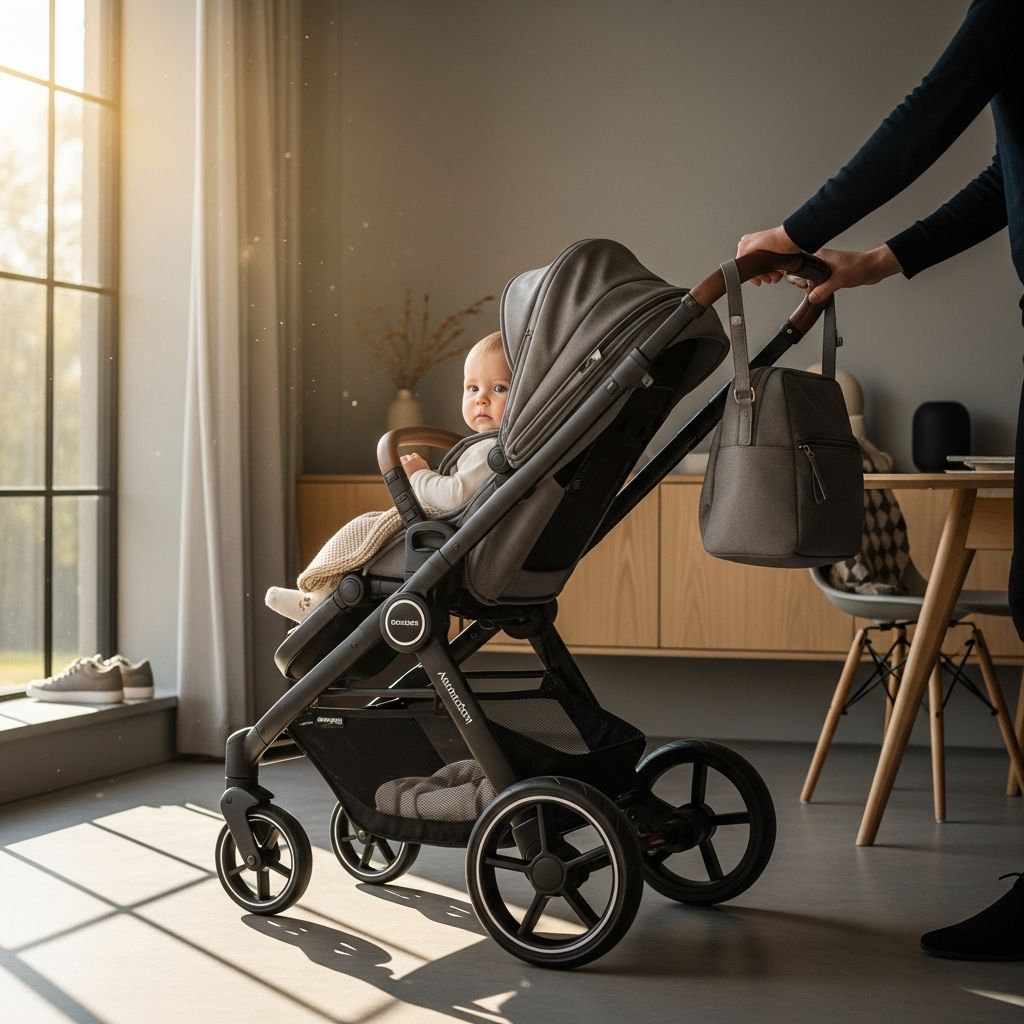
Picking a stroller is one of the biggest gear decisions new parents make. A good stroller helps you get out of the house more easily, supports your baby’s comfort, and fits smoothly into your daily life instead of fighting against it.
Start With Your Lifestyle, Not the Stroller Label
Before diving into brands and technical features, step back and think about how you actually live. The same stroller that works for a city-based family who walks everywhere may be completely wrong for a suburban family who mostly drives and needs something that folds quickly into a trunk.
Ask yourself where, how often, and with whom you will use the stroller. A stroller that matches your real routines will feel lighter, even if it is physically heavier.
Key Lifestyle Questions to Ask
- Do you primarily walk, drive, or use public transit to get around?
- Will you use the stroller multiple times a day, or only on weekends and trips?
- Do you expect your family to grow soon, or are you planning on one child?
- How much storage space do you have at home, in your car, or by your front door?
- What is your climate like: lots of rain, snow, heat, or uneven sidewalks?
Your answers will guide you toward the most suitable stroller category, rather than chasing the latest trend that may not match your daily needs.
Understanding the Main Types of Strollers
Modern stroller options can feel overwhelming, but most models fall into a few core categories. Knowing what each type is designed to do helps you quickly narrow your choices.
| Stroller Type | Best For | Typical Pros | Typical Cons |
|---|---|---|---|
| Full-size everyday stroller | Daily use from newborn to toddler | Comfortable seat, good storage, sturdy frame | Heavier, bulkier fold, higher price |
| Lightweight / travel stroller | City errands, flights, quick trips | Compact, easy to carry, fast folding | Less suspension, smaller wheels, less cushioned ride |
| Jogging / all-terrain stroller | Running, trails, rough sidewalks | Great suspension, large wheels, stable frame | Bulky, wide, often heavy and not ideal for tiny spaces |
| Travel system (stroller + car seat) | Newborns and frequent car use | Click-in infant seat, seamless car-to-stroller transfers | Can be heavier and more expensive as a bundle |
| Double / convertible stroller | Two children of similar or different ages | Transports multiple kids, long-term flexibility | Wider or longer, trickier to maneuver in tight spaces |
| Umbrella / basic stroller | Older toddlers and quick errands | Very lightweight, often budget-friendly | Limited recline, less storage, minimal suspension |
Many parents find that one stroller cannot do everything perfectly. It is common to have a primary full-size stroller and a secondary lightweight or travel model once your baby is older.
Essential Features That Actually Matter
Advertised features can blur together, so focus on the ones that make a practical difference for comfort, safety, and ease of use. Prioritizing these will help you avoid paying extra for flashy add-ons you rarely use.
Core Comfort and Usability Features
- Seat recline range: A deep or near-flat recline is extremely helpful for newborns (when used with proper support or a compatible bassinet) and for on-the-go naps.
- Adjustable handlebar: A handle that moves up or down is kinder on the backs of caregivers of different heights.
- Canopy coverage: A large, UPF-rated canopy helps protect from sun and light rain, making longer walks more comfortable.
- Harness system: A 5-point harness keeps your baby more secure, especially as they become more active and curious.
- Storage basket: A roomy, easy-access basket under the seat can dramatically reduce the need for extra bags.
Convenience Details That Make Daily Life Easier
- One-hand fold: This is valuable when you are carrying a baby, diaper bag, or car seat and need to collapse the stroller quickly.
- Self-standing fold: A stroller that stands upright when folded takes up less space and stays cleaner.
- Reversible seat: The option to face your baby toward you or out toward the world can extend the stroller’s usefulness through different stages.
- Car seat compatibility: If you are using an infant car seat, check whether it clicks directly into the frame or requires adapters.
- Easy-to-clean fabrics: Removable, wipeable, or machine-washable fabrics save time when spills and diaper leaks inevitably happen.
Safety Basics Every Parent Should Check
Most strollers must meet baseline safety standards, but there are still key details worth reviewing. A quick checklist can give extra peace of mind before you commit to a particular model.
Stroller Safety Checklist
- Look for a sturdy frame with no obvious sharp edges, pinch points, or weak joints.
- Check that the brakes are easy to engage and release while wearing typical shoes, and that they lock both rear wheels.
- Ensure the harness is a 5-point system and that the buckle is secure but still manageable for caregivers.
- Confirm that the stroller does not tip easily when you lightly push down on the handle or add weight to the storage basket.
- Review the weight and age guidelines and follow them; avoid using a stroller for running unless it is specifically designed for jogging.
Even a safe stroller can pose risks if used incorrectly, so always read the manufacturer’s instructions, especially for newborn use, car seat attachment, and jogging recommendations.
Matching Stroller Types to Real-Life Scenarios
Once you understand the main stroller categories, it helps to see how they play out in common scenarios. Thinking through your most frequent outings will clarify which trade-offs make sense for your family.
If You Live in a Walkable City
Families in dense, walkable neighborhoods often benefit from a solid full-size stroller with good suspension, a large canopy, and a generous storage basket. You might be walking over cracked sidewalks, curbs, and crowded streets daily, so smooth steering and durability matter more than ultra-compact folding.
Pairing a robust everyday stroller with public-transit-friendly features, like a relatively narrow frame and a quick, one-step brake, can make urban errands much easier.
If You Drive Everywhere
If most outings involve loading the stroller in and out of a car, folding size and weight become your top considerations. A travel system or lightweight stroller that can be collapsed with one hand and lifted without strain will save your back.
A slightly smaller basket or more basic suspension may be acceptable trade-offs if the stroller fits cleanly into your trunk and can be stored without disassembling parts.
If You Plan to Run or Go Off-Road
Parents who run or tackle gravel paths and trails will appreciate the stability and comfort of a jogging or all-terrain stroller. These models typically have three large wheels, better suspension, and a locking front wheel for improved control at higher speeds.
Because jogging strollers tend to be bulkier, some families use them primarily for exercise and outdoor adventures while keeping a lighter stroller for errands and travel.
If You Have (or Expect) Multiple Kids
When planning for more than one child, a convertible stroller that can adapt from single to double may be worth the initial investment. These strollers allow you to add a second seat, bassinet, or ride-on board as your family grows.
Think about whether your kids are likely to be close in age or spaced further apart, as this affects whether a side-by-side double, tandem seats, or a standing board will work best.
Budget, Value, and When to Spend More
Stroller prices range from very affordable to truly premium. More expensive does not always mean better for your family, but certain upgrades can be worth paying for if they align with how often and where you use the stroller.
What You Get as Prices Go Up
- Higher-end models often offer smoother suspension, better maneuverability, and more robust frames designed to last through multiple children.
- Premium strollers may have upgraded fabrics, adjustable handlebars, extended canopies, and more intuitive folding mechanisms.
- Mid-range options can provide an excellent balance of comfort and cost, especially for families who use a stroller daily but do not need every luxury feature.
Money-Saving Tips That Still Prioritize Safety
- Consider buying the main stroller new for safety and warranty coverage, then look for lightly used accessories such as snack trays or extra seat liners.
- Check if a mid-range stroller plus a separate lightweight travel model ultimately costs less and fits your lifestyle better than one premium, do-it-all stroller.
- Resist paying extra for aesthetics alone; focus instead on features that measurably improve comfort, storage, and usability.
Practical In-Store and At-Home Tests
Whenever possible, spending a little time actually handling a stroller can reveal more than any spec sheet. Even if you plan to buy online, testing a similar model in person is extremely helpful.
What to Try Before You Buy
- Fold and unfold the stroller several times to see if the mechanism feels natural and manageable with one hand.
- Push the stroller with some weight in it, turn corners, go through narrow spaces, and see whether it pulls to one side or feels wobbly.
- Adjust the handlebar height and check if you or your partner kick the back of the stroller while walking.
- Test the brakes and confirm you can operate them while wearing your normal shoes or sandals.
- Practice lifting the folded stroller to simulate putting it into a car trunk or carrying it up a flight of stairs.
Small annoyances you notice during a short test often become major frustrations when repeated daily with a fussy baby and a full diaper bag.
Common Stroller Add-Ons and Whether You Need Them
Accessories can make your stroller more convenient, but they can also quickly add to the total cost. Knowing which extras are truly useful helps you spend wisely.
Popular Accessories That Add Real Value
- Rain cover: Especially helpful in climates with frequent showers, keeping your baby dry while still allowing airflow.
- Footmuff or stroller blanket: Provides extra warmth without loose blankets that might fall or drag on the ground.
- Cup holder or parent console: Gives easy access to drinks, keys, and a phone without digging into a bag.
- Snack tray or bumper bar: Offers a place for snacks and toys, and sometimes makes toddlers more willing to sit.
- Ride-on board: A great option for older siblings who sometimes want to ride but do not need a full seat.
Nice-to-Have, Not Always Essential
- Coordinating diaper bags or organizers can look nice but are not necessary if you already have a bag that works.
- Specialty storage hooks are useful, but overloading them can make the stroller tip, so use them cautiously.
- High-tech features, like built-in speakers or lights, may be fun but are rarely essential for everyday use.
FAQs About Choosing and Using a Stroller
When can my baby start using a stroller?
Newborns can ride in a stroller if the setup fully supports their head and neck, such as with a compatible infant car seat, bassinet, or seat designed for newborns with proper recline and harness guidelines. Always follow the manufacturer’s age and weight recommendations.
Do I really need more than one stroller?
Some families manage fine with a single, versatile stroller, especially if they mostly use it in one way, such as neighborhood walks. Others find that a main full-size stroller plus a compact travel or umbrella stroller gives them more flexibility with car trips, flights, and tight spaces.
How long will my child use a stroller?
Many children regularly use strollers from infancy through age three, and sometimes beyond for long outings or travel. Stroller weight limits often extend into the preschool years, but each child’s walking stamina and family habits vary.
Is a jogging stroller okay as my only stroller?
A jogging stroller can be a primary stroller if you have space to store it and if you are comfortable with the larger size day-to-day. However, the bulk and width may feel inconvenient in tight shops, small trunks, or crowded public transit, so some parents prefer a second, smaller stroller for errands.
What should I prioritize if my budget is limited?
If you need to keep costs down, prioritize safety, a sturdy frame, and a comfortable ride for your baby over luxury fabrics or brand prestige. Look for a model that folds reliably, fits your trunk or home storage, and provides enough storage for essentials like a diaper bag and small groceries.
Bringing It All Together
Choosing a stroller becomes far easier when you break the decision into clear steps: understand your lifestyle, learn the main stroller types, focus on the most important features, and test how a stroller feels to use. The right choice is not the fanciest model, but the one that supports your everyday routines and keeps your baby comfortable and safe.
With a bit of planning and realistic expectations, your stroller becomes more than just baby gear; it turns into a reliable tool that helps your family explore parks, neighborhoods, and new places together with less stress and more enjoyment.