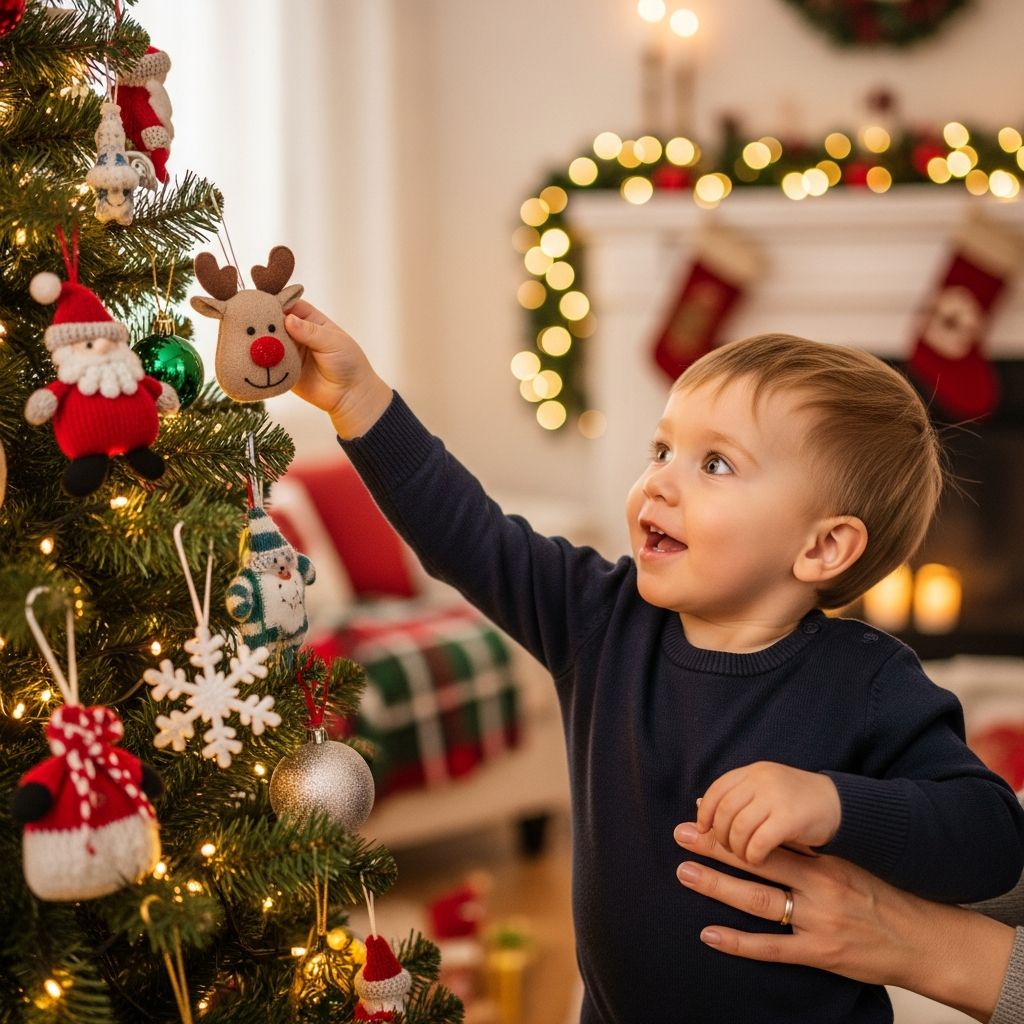
The first year your child is old enough to notice twinkling lights, rip wrapping paper, and shriek with delight at a new toy feels like a turning point in family life. It is exciting, emotional, and, if you are not careful, exhausting. This guide shows you how to build a warm, memorable Christmas for your toddler that feels magical for them and manageable for you.
Rethinking “Perfect” Christmas with a Toddler
Many parents approach this season with a mental list: matching pajamas, elaborate crafts, ten different outings, and a pile of picture-worthy presents. That kind of holiday looks impressive on social media, but it can be overwhelming for a small child and emotionally draining for adults. Toddlers do not need an extravagant schedule to feel the magic; they need a few simple, predictable moments repeated with love.
Instead of chasing a perfect day, decide on a few core experiences that matter most to your family. These can be as small as a special breakfast, a walk to see lights, or a favorite book reread in the glow of the tree. When parents are calmer and more present, toddlers feel safer and more joyful—which is far more memorable than any staged photo.
What Toddlers Actually Remember and Notice
Most toddlers will not recall specific details years from now, but they do form emotional memories: the feeling of being held while watching lights, the excitement of tearing paper, the comfort of a familiar song. Their attention span is short, their senses are easily overloaded, and transitions can be hard. Planning with this in mind helps you avoid meltdowns and disappointment.
- Keep activities short; 10–20 minutes of focused fun often beats an hour-long event.
- Repeat simple rituals across several days (same song, same book, same snack) so your toddler recognizes and anticipates them.
- Watch for signs of sensory overload—ear-covering, zoning out, clinginess—and be ready to step back and take a break.
Choosing a Simple Seasonal Theme for Your Family
A helpful way to avoid overcommitting is to pick a theme or guiding idea for the season. This is not about decorations; it is about purpose. Knowing your “why” makes it easier to say yes and no to invitations and expectations.
Examples of simple themes include focusing on connection, kindness, calm, or creativity. Once you choose a guiding idea, you can filter your plans through it and gently let go of extras that do not fit.
| Theme | Example Traditions |
|---|---|
| Connection |
|
| Kindness |
|
| Calm |
|
| Creativity |
|
Designing One Special Daily Ritual
When everything feels busy, one small but consistent ritual can anchor your toddler’s day. It acts like a “home base” in the middle of holiday chaos. This ritual does not have to be fancy or time-consuming; what matters is repetition.
- Morning joy moment: Open the curtains together and say “Good morning, lights!” if you can see decorations outside.
- Afternoon reset: Share a holiday snack—like sliced apples with cinnamon—at the same time each day.
- Evening wind-down: Read the same simple seasonal book each night in the days leading up to Christmas.
Age-Appropriate Holiday Activities for Toddlers
Toddlers thrive on sensory exploration, movement, and repetition. When choosing activities, aim for things they can touch, carry, stack, or shake rather than tasks that require careful precision or long stretches of sitting. Also, choose materials that are safe to mouth and hard to break.
- Offer soft, non-breakable ornaments or large wooden beads for supervised play instead of fragile decorations.
- Use big crayons, stickers, or chunky stamps instead of tiny craft pieces.
- Keep any event—like a lights walk or a visit to see decorations—short and flexible with an easy exit plan.
Easy, Low-Mess Toddler Crafts
Crafts can be meaningful keepsakes and fun sensory experiences, but they do not have to involve glitter explosions. Focus on process over product; the keepsake is the memory of sticky fingers and Proud Parent faces more than a perfect end result.
- Sticker “cards”: Fold colored paper and let your toddler cover it with stickers. Add your own message later.
- Finger painting on cardboard: Use washable paints and cut the dried art into simple shapes (trees, stars) to hang.
- Paper chain practice: Pre-tape paper circles so your toddler can practice linking and unlinking them without scissors or glue.
Creating a Calm, Toddler-Friendly Home Environment
Decorations that feel cozy to adults can be overwhelming to a small child if they blink, flash, and play music all at once. A toddler-friendly space balances festivity and calm. Choose a few key decorative areas rather than filling every corner.
- Use warm, steady lights instead of intense flashing ones where your toddler spends most of their time.
- Reserve fragile or sentimental items for higher shelves, keeping the lower level stocked with soft, “yes” items they can handle.
- Designate one basket or shelf for seasonal books and toys so your child can revisit them all month.
Wrapping and Gifts: Less, But Thoughtful
Toddlers often enjoy unwrapping as much as the present itself. A giant mountain of gifts is not necessary. A handful of thoughtful items that align with their interests and developmental stage can be more engaging than dozens of random toys.
- Practical plus playful: Combine cozy pajamas, books, and one or two open-ended toys (blocks, play food, dolls, cars).
- Experience-based gifts: Wrap a homemade “ticket” to a family outing, like a visit to a children’s museum later in the winter.
- Simple wrapping: Use tissue paper or gift bags so tiny hands can open them with minimal help.
Gift Ideas That Grow with Your Toddler
Choosing items that last beyond the holiday helps avoid clutter and extends the joy. Look for toys and tools that invite imagination, movement, and problem-solving rather than single-use novelties.
| Type of Gift | Examples | Why It Works |
|---|---|---|
| Open-ended toy | Wooden blocks, nesting cups, chunky animals | Supports creativity and can be used in many ways as your child grows. |
| Movement toy | Ride-on toy, toddler-safe ball, balance board | Encourages gross motor skills and burns off holiday energy. |
| Creative set | Washable crayons, large paper roll, toddler-safe dough | Invites artistic expression and sensory play. |
| Comfort item | Blanket, soft toy, special pillow | Provides security at bedtime and during busy family gatherings. |
| Book | Board books with simple stories or interactive flaps | Builds language and becomes a predictable, soothing ritual. |
Navigating Family Expectations and Traditions
The first truly interactive Christmas with a toddler often collides with longstanding family traditions. Relatives may expect your child to attend late dinners, sit on Santa’s lap, or participate in noisy games. It is okay to adapt or decline traditions that no longer fit your family’s stage of life.
- Communicate early about nap times, bedtime, and noise sensitivity so relatives know what to expect.
- Offer alternatives, like arranging a quiet morning visit instead of a crowded evening party.
- Remember that protecting your toddler’s well-being is not rude; it is part of being their advocate.
Building Gentle Traditions for Years to Come
Traditions do not need to start big. In fact, the easiest ones to maintain are usually small and flexible. Start with one or two customs that feel meaningful this year and allow them to evolve as your child grows and your family changes.
- Take the same simple photo each year (for example, in front of the tree or by the same window).
- Choose one “signature” food that appears every year, like a special breakfast muffin or hot chocolate after a walk.
- Save one or two pieces of your child’s seasonal art each year and store them in a labeled folder or box.
Sample Calm Christmas Day with a Toddler
Every family has unique schedules and obligations, but seeing a gentle structure can help you adapt your own plans. The goal is to alternate excitement and rest so your toddler does not feel constantly overstimulated.
- Morning: Simple breakfast, opening one or two gifts, relaxed play with new toys.
- Midday: Nap or quiet time, short walk or backyard play if possible.
- Afternoon: Short visit with relatives or friends, with an agreed-upon end time.
- Evening: Light dinner, bath, and a familiar bedtime routine with one special seasonal twist (like a favorite holiday story).
Managing Meltdowns and Overstimulation
Even with the best planning, there will be moments of tears, resistance, or frantic energy. This is normal. Holidays break routines, introduce new people, and change environments—everything that tends to challenge toddlers.
- Have a “calm kit” ready: a favorite blanket, stuffed animal, quiet book, and a snack or water.
- Plan for at least one quiet, screen-free pocket each day where you simply sit with your child and reconnect.
- Give yourself permission to leave early, skip an activity, or take a drive around the block if everyone needs a reset.
Including Toddlers in Acts of Kindness
Even very young children can participate in simple gestures of generosity. They will not fully understand the concept of charity yet, but they can begin to associate the season with sharing and thoughtfulness, not just receiving.
- Let your toddler drop canned goods into a donation bin or place toys in a collection box.
- Invite them to help carry a small bag of cookies to a neighbor’s door.
- Encourage them to choose one gently used toy to pass along when new items arrive.
Capturing Memories Without Missing the Moment
Photos and videos are powerful triggers for your own memories, but they can also pull you out of the moment. Strive for a balance: capture a few authentic snapshots, then put the device away and fully engage with your child.
- Decide in advance on two or three moments you definitely want to photograph, such as opening the first present or looking at lights.
- Embrace imperfect photos—messy hair, pajamas, crumbs and all—as true reflections of this stage of life.
- Write a few sentences after the holiday about something funny your toddler said or did; these notes will mean as much as the images later.
Frequently Asked Questions About Toddlers and Christmas
How many presents does a toddler really need?
There is no magic number, but many families find that three to six thoughtful gifts are plenty for a toddler. Beyond that point, children often lose interest or become overwhelmed. Consider focusing on variety—something to wear, something to read, something to play with—rather than quantity.
Should I wake my toddler up early on Christmas morning?
It is usually better to let your child wake naturally, even if that means other family members wait a bit. A well-rested toddler is more likely to enjoy the day, handle surprises, and cope with visitors. Sleep is one of the most powerful ingredients in a peaceful holiday.
What if my toddler is scared of Santa or certain decorations?
Fear around new characters, costumes, and giant inflatables is very common at this age. Do not force contact or photos if your child is uncomfortable. Show pictures from a distance, explain in simple language, and allow them to observe without participating until (and unless) they are ready.
How do I balance both sides of the family with nap schedules?
Start by protecting sleep as much as possible, then build visits around that. You might invite one side for a morning brunch and the other for an afternoon walk, or alternate which family you see on different days. Communicate clearly that you are working around a small child’s needs, not showing favoritism.
Is it okay if this Christmas is quiet or low-key?
Absolutely. A calm, small-scale celebration can be just as meaningful—often more so—than a large gathering. Toddlers do not measure holidays in crowd size; they measure them in cuddles, consistency, and small wonders like twinkling lights and crinkly paper.
Final Thoughts: Focus on the Feel, Not the Photo
A memorable toddler Christmas is less about big gestures and more about the emotional tone you set: warm, responsive, and unhurried. If you choose a few simple traditions, protect your child’s need for rest, and let go of perfection, your family will remember this season for its connection, not its checklist.
Years from now, your child may not recall which toy they received, but they will carry a deep, quiet sense of what it felt like to be cherished in your home at Christmastime—and that is the real magic you are building.