Toddler balance boards have quietly become one of the most useful, long-lasting toys in modern homes. With a single curved board, your child can rock, slide, climb, and pretend, all while building balance, strength, and confidence.
This guide walks you through what balance boards actually do for toddlers, how to use them safely, what to look for when buying, and creative ways to make the most of this simple but powerful toy.
What Is a Toddler Balance Board?
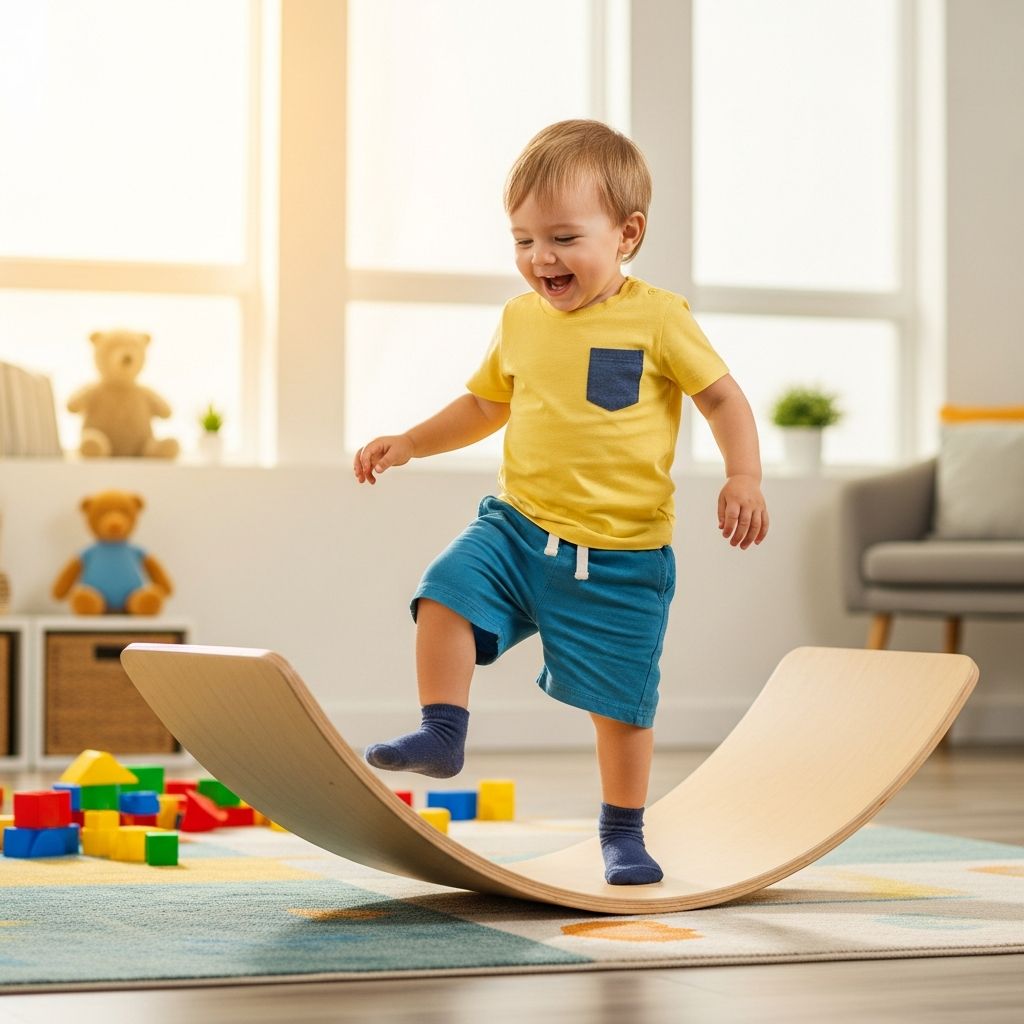
A toddler balance board is a sturdy, curved platform that rocks gently when your child stands, sits, or kneels on it. Some are shaped like a simple arc, while others have a more defined wobble base or slight flex.
Unlike many baby gadgets that last a few months, balance boards can be used from the toddler years well into the early school years as your child’s play and abilities evolve.
Why Balance Matters in Early Childhood
Balance is more than just learning not to fall. It is a foundation skill for almost every movement your child will learn, from running and jumping to riding a bike or sitting upright at a desk.
When toddlers challenge their balance in safe ways, they refine coordination, body awareness, and the ability to adjust quickly when surfaces or directions change.
Key Developmental Benefits
When used regularly and safely, a balance board can support multiple areas of development at the same time.
- Core strength: Staying stable on a moving surface forces deep tummy and back muscles to work steadily.
- Balance and coordination: Small adjustments in the feet, ankles, and hips train the body to react smoothly to changes.
- Posture: Stronger core and back muscles help toddlers sit more upright during meals, crafts, and later in the classroom.
- Body awareness: Rocking and shifting weight help children understand where their body is in space.
- Confidence: Mastering a tricky physical challenge gives many toddlers a visible boost in self-esteem.
Sensory and Emotional Benefits
Beyond visible movement skills, balance boards also offer important sensory and emotional support, especially for very active kids.
- Gentle vestibular input: Rocking motions feed the inner ear system that helps with balance and motion sensitivity.
- Calming movement: Slow back-and-forth motion can feel soothing to children who crave movement or feel restless.
- Focus support: Some children concentrate better on stories, music, or instructions when their body is allowed subtle movement.
Types of Balance Boards for Toddlers
Not all balance boards are built the same way. Understanding the main types can help you choose one that fits your child’s age, space, and play style.
| Type | Shape & Movement | Best For | Typical Age Range |
|---|---|---|---|
| Curved wooden board | Gentle rocking arc, can flip for bridge/tunnel play | Open-ended play, Montessori-style homes, multiple kids | Approx. 18 months to 7+ years |
| Wobble disc or dome | Central pivot, smaller rocking area | Older toddlers, preschool balance games | Approx. 3 to 8 years |
| Plastic wobble board | Lightweight, may have textured top | Indoor/outdoor use, easy cleaning | Varies, often 2 to 6 years |
| Balance rocker with handles | Curved base with side grips | Young toddlers who still need something to hold | Approx. 18 months to 4 years |
How to Choose the Right Board
The best balance board is the one that suits your child’s age, temperament, and your home environment. Before you buy, consider a few key points.
- Age and size: Check weight limits and recommended ages, but also think about how long you want the board to last.
- Material: Solid wood feels stable, looks beautiful, and usually supports more weight. Quality plastic can be lighter and easier to move.
- Surface texture: A grippy top helps tiny feet stay in place, especially if your child plays barefoot.
- Space: Curved boards need a clear zone around them, while small wobble discs can be used in tighter rooms.
- Noise: Thicker, heavier boards tend to be quieter on hard floors than thin, hollow plastic.
Safety Guidelines for Toddler Use
Balance boards are generally safe when introduced thoughtfully and supervised. A few precautions go a long way toward preventing bumps and spills.
- Always introduce the board when an adult is nearby and focused.
- Use the board on a flat surface with a soft layer underneath, such as a rug or play mat.
- Clear the area of hard toys, furniture edges, and clutter.
- Remind your child to step off the board, not jump off, especially on hard floors.
- For under-3s, hold their hands or stand close enough to offer support as needed.
Getting Started: First Activities
Some toddlers hop on immediately; others need time to feel confident. Simple, low-risk activities help them learn how the board moves.
- Two-hand support: Place the board near a low couch or sturdy table so your child can hold on with both hands while standing on it.
- Seated rocking: Have your toddler sit in the middle of the board and gently rock from front to back.
- Side-by-side rocking: Stand on the board together, holding hands, counting slow rocks out loud.
Ideas for Everyday Play
Once your toddler understands the feel of the board, it quickly becomes more than just a standing toy. It can turn into part of pretend play, building challenges, and movement breaks.
- Bridge and tunnel: Flip the board over to make a bridge for cars or a tunnel for trains and animals.
- Step challenge: Place the board flat-side down and practice stepping up and down while counting or naming colors.
- Boat game: Pretend the board is a boat on the sea; sing or tell a story while rocking side to side.
- Balance freeze: Play music and have your child rock; when the music stops, they freeze in place.
Supporting Active or Sensory-Seeking Kids
For toddlers who always seem to be climbing, spinning, or bouncing, a balance board can offer a safer, more contained way to meet those movement needs indoors.
Consistency helps: a few short sessions sprinkled through the day can give their body the movement it craves, making calmer moments like reading or meals easier to manage.
Using a Balance Board Indoors All Year
On rainy, hot, or freezing days, toddlers still need chances to move their whole bodies. A balance board is compact enough to stay out without overtaking the room, yet active enough to keep kids engaged.
Combine it with other simple items—like pillows, painter’s tape, or a low step—to turn a small living room into a mini obstacle path without installing permanent equipment.
Balancing Play and Safety Rules
Clear, consistent rules help toddlers enjoy the board without turning it into a source of power struggles. Keeping the rules simple and repeated often works best.
- “The board stays on the floor” – no placing it on the couch or bed.
- “One person on at a time” – unless an adult is sharing on purpose.
- “Bare feet or grippy socks” – avoid slippery socks on smooth surfaces.
How Balance Boards Grow with Your Child
A good balance board is not a baby gadget you store away after six months. It evolves as your child’s interests and abilities change.
- Toddlers: simple rocking, sitting, crawling under, and basic pretend play.
- Preschoolers: obstacle courses, more daring balancing, and structured games.
- Early school age: core exercises, stretching routines, and quiet movement while listening to audiobooks or homework instructions.
Maintenance and Care Tips
To keep your balance board safe and looking good for years, treat it like a piece of furniture as well as a toy.
- Wipe wooden boards with a slightly damp cloth; avoid soaking or harsh cleaners.
- Check edges regularly for chips or splinters, especially if the board is shared between multiple children.
- Store flat or leaning securely against a wall where it will not be stepped on or tripped over.
Sample Daily Balance Board Routine
You do not need a strict program, but a loose rhythm can help you remember to offer the board regularly. Think of it as one tool in your movement toolkit.
- Morning: 5 minutes of gentle rocking or “boat rides” after breakfast.
- Afternoon: Include the board in a simple obstacle course before screen time or quiet time.
- Evening: Seated rocking or stretching on the board during story time, keeping movements slow and calm.
Frequently Asked Questions
What age can my toddler start using a balance board?
Many families introduce a stable, curved board around 18 months, starting with seated play and hand-held support. Always follow the manufacturer’s age and weight recommendations and adjust to your child’s readiness.
Is a balance board safe for my very active child?
Active children often enjoy balance boards, but supervision and clear rules are essential. Using it on a padded surface, in a decluttered area, and limiting it to one child at a time can greatly reduce the chance of falls.
Do I need a special type of balance board for toddlers?
Look for boards that mention suitability for toddlers or young children and offer a generous, stable surface. A simple curved wooden board or rocker with handles tends to feel more secure for beginners than a small, high-tilt disc.
Can balance boards replace outdoor play?
Balance boards are a helpful indoor option, but they do not replace running, exploring different surfaces, and free outdoor movement. Think of them as a supplement for days when you cannot get outside as much as you would like.
Will my child get bored quickly?
Many children come back to the board in new ways as they grow, especially if you occasionally add fresh ideas like new games, props, or simple challenges. Because it is open-ended, its use evolves with your child’s imagination and abilities.