Ticks are common in many outdoor areas where kids love to play, and most tick bites are harmless. But because some ticks can spread infections such as Lyme disease and Rocky Mountain spotted fever, it is important for parents and caregivers to know how to prevent bites, remove ticks safely, and recognize early warning signs of illness.
Understanding Ticks and Tick Bites
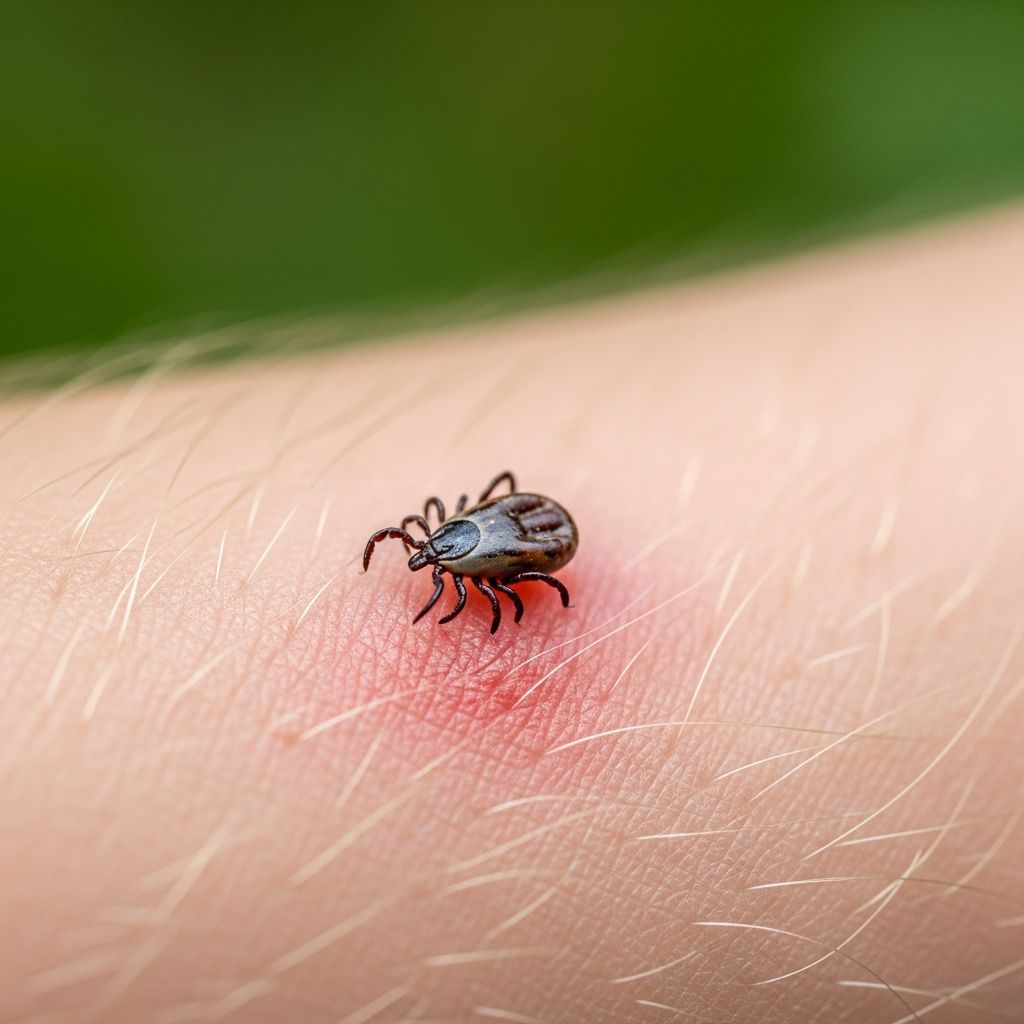
Ticks are tiny, spider-like parasites that feed on the blood of people and animals. They live in grassy, brushy, or wooded areas, and they often wait on tall grass or leaves for a passing host (a person or animal) to brush by. When given the chance, they will climb onto skin or clothing and attach to feed.
A tick bite often does not hurt at the moment it occurs. Many children and adults never feel the tick attach and only notice it when the tick has already been feeding for some time.
Common Places Ticks Live
- Wooded trails and forest edges
- High grass and brushy fields
- Leaf piles and low shrubs
- Yards with tall grass, leaf litter, or stone walls
- On pets that go outdoors
Where Ticks Often Attach on Kids
Ticks like warm, hidden spots on the body. When examining your child, pay special attention to:
- Scalp and hairline
- Behind the ears
- Neck and along the collar line
- Under the arms
- Inside the belly button
- Around the waistline and under clothing bands
- Behind the knees
- Between the legs and in the groin area
First Steps When You Find a Tick on Your Child
Finding a tick on your child can be alarming, but quick, calm action helps reduce the risk of infection. The main goal is to remove the tick as soon as possible using a safe method.
Before You Start
- Stay calm so your child remains calm.
- Move to a well-lit area and, if needed, use a magnifying glass.
- Wash your hands with soap and water before and after you handle the tick.
- If you can, have another adult help steady younger children.
How to Remove a Tick Safely
Health agencies recommend using fine-tipped tweezers to remove ticks. This approach helps pull the tick out in one piece without squeezing its body. Avoid home remedies such as petroleum jelly, heat, or chemicals; they do not reliably work and can increase the chance of infection.
Step-by-Step Tick Removal
- Grasp the tick close to the skin.
Use fine-tipped tweezers to hold the tick as close as possible to where it enters the skin, ideally around its head or mouthparts. - Pull upward with steady, even pressure.
Slowly pull straight up without twisting, jerking, or rocking side to side. Twisting can cause the mouthparts to break off and stay in the skin. - Do not crush the tick’s body.
Squeezing the tick may force its contents into the bite, potentially increasing the risk of disease transmission. - If parts remain in the skin:
Try to remove visible mouthparts with clean tweezers. If you cannot easily remove them, leave them alone; the skin will usually push them out over time, or your child’s healthcare provider can safely remove them. - Clean the skin and your hands.
After the tick is removed, wash the bite area and your hands with soap and water. You can also use rubbing alcohol on the bite site to disinfect the skin.
How to Dispose of the Tick
- Place the tick in a sealed plastic bag or small container if your doctor recommends saving it.
- Otherwise, you can flush it down the toilet or wrap it tightly with tape and put it in the trash.
- Never crush a tick with bare fingers.
What Not to Do
Experts advise against the following methods, which are unreliable and potentially harmful:
- Coating the tick with petroleum jelly or nail polish
- Touching the tick with a hot match or other heated object
- Using essential oils, gasoline, or other chemicals to make the tick “back out”
- Scraping at the tick with fingernails or a sharp object like a knife
Monitoring Your Child After a Tick Bite
Once the tick is removed, most children stay completely well. However, because some ticks carry germs, continue to watch your child and the bite area for several weeks. Many infections respond best to treatment when recognized and managed early.
Local Reactions at the Bite Site
It is common to see mild skin changes where the tick was attached. These may include:
- A small red bump where the tick bit the skin
- Mild swelling or tenderness that improves over a few days
- Itching at the bite site
These minor reactions are usually not a sign of serious infection and often go away on their own.
Possible Signs of Tick-Borne Illness
During the 30 days after a tick bite, check your child for any new rash or illness. Contact your child’s healthcare provider if you notice:
- Fever or chills
- Headache or neck stiffness
- Unusual tiredness or weakness
- Muscle or joint pain, or swollen joints
- Upset stomach, vomiting, or poor appetite
- A spreading red rash, especially one that expands outward or clears in the center (a bull’s-eye pattern)
- Red spots or dots on the wrists, ankles, or other body areas
| Possible Illness | Typical Early Signs | When to Call the Doctor |
|---|---|---|
| Lyme disease | Expanding red rash (often bull’s-eye), fever, fatigue, headache, muscle and joint pain | If rash appears or if your child develops flu-like symptoms after a tick bite, especially in areas where Lyme disease is common |
| Rocky Mountain spotted fever | Fever, headache, stomach pain, vomiting, and a rash that often starts on wrists and ankles | If your child has fever and rash after a tick bite, seek care promptly—this illness can become serious quickly |
| Other tick-borne infections | Fever, fatigue, body aches, or changes in behavior | Any unexplained illness within a month of a tick bite should be discussed with a healthcare provider |
When to Call the Doctor or Seek Urgent Care
Call your child’s healthcare provider for guidance if:
- You are not sure how long the tick was attached.
- The tick looks very swollen or engorged with blood.
- Part of the tick remains in the skin and you cannot remove it easily.
- Your child develops a rash, fever, or flu-like symptoms after the bite.
- The bite area becomes more painful, warm, red, or begins to drain pus, suggesting a skin infection.
Seek emergency care or call your local emergency number if your child shows signs of a severe allergic or systemic reaction, such as:
- Difficulty breathing or shortness of breath
- Swelling of the lips, tongue, or throat
- Widespread hives or severe itching
- Confusion, fainting, or extreme lethargy
How Doctors Evaluate Tick Bites
In many cases, doctors can give advice by phone or during a routine visit. Evaluation often depends on:
- Where you live or where the bite occurred (some areas have higher rates of Lyme disease and other tick-borne illnesses).
- How long the tick was likely attached (ticks often need many hours of feeding to transmit some infections, including Lyme disease).
- The type of tick, if known (for example, blacklegged or deer ticks spread Lyme disease in many parts of North America).
- Whether your child is showing any symptoms.
Preventive Antibiotics After a Tick Bite
In some situations, a doctor may recommend a single preventive dose of antibiotics for children who have had a high-risk tick bite. This is usually considered when:
- The tick is identified as a blacklegged (deer) tick.
- The tick was attached for at least about 36 hours.
- The antibiotic can be started within about 72 hours after the tick is removed.
- The bite occurred in an area where Lyme disease is common.
This approach does not replace careful monitoring for symptoms, and it is not used for every tick bite. Your child’s clinician will weigh the benefits and possible side effects before prescribing preventive medicine.
Preventing Tick Bites in Children
Prevention is one of the most effective tools against tick-borne diseases. Combining protective clothing, repellents, and daily checks greatly lowers the risk that a tick will attach and stay long enough to transmit infection.
Protective Clothing and Outdoor Habits
- Dress children in long sleeves and long pants when they play in wooded or grassy areas.
- Tuck pant legs into socks to help prevent ticks from reaching bare skin.
- Choose light-colored clothing to make it easier to spot crawling ticks.
- Keep to the center of trails and avoid brushing against tall grass or shrubs when hiking.
- After outdoor play, have kids change clothes and shower as soon as practical.
Using Insect Repellents Safely
Tick repellents can add an important layer of protection when used properly:
- Use products registered for use on skin that contain ingredients such as DEET, following age and label instructions carefully.
- Apply the repellent to your own hands first, then rub it onto your child’s exposed skin, avoiding eyes, mouth, and hands.
- Do not apply repellent to cuts, open wounds, or irritated skin.
- Once your child comes indoors, wash treated skin with soap and water.
- Consider treating clothing, shoes, and outdoor gear with permethrin products specifically labeled for fabrics; do not apply permethrin directly to skin.
Tick Checks After Outdoor Activities
Daily tick checks are simple and highly effective. Ticks often need several hours or more before they can transmit certain infections, so finding and removing them early is key.
- Check your child’s entire body after outdoor play, especially in and around the scalp, ears, armpits, waist, and groin.
- Use your hands to feel through the hair and along the hairline.
- Ask older children to report any new bumps or itching.
- Look over clothing and backpacks; tumble clothes in a dryer on high heat to help kill ticks that may be hiding in fabric.
Making Your Yard Less Friendly to Ticks
Simple steps around your home can reduce ticks where your child plays:
- Keep grass mowed and remove leaf litter.
- Trim bushes and remove brush from play areas.
- Create a barrier of wood chips or gravel between lawns and wooded sections.
- Discourage deer and rodents that may carry ticks by removing food sources and securing trash.
Frequently Asked Questions About Tick Bites
Q: How long does a tick need to be attached to spread Lyme disease?
A: In many cases of Lyme disease, the tick has fed for at least 24–36 hours before transmitting the bacteria. Removing ticks as soon as you notice them greatly lowers the risk of infection, but you should still watch for symptoms for several weeks after any bite.
Q: Should every tick bite be treated with antibiotics?
A: No. Most tick bites do not lead to illness, and antibiotics are not routinely recommended for every bite. Doctors may offer a single preventive dose of antibiotics after certain high-risk bites, but this decision depends on tick type, how long it was attached, and local infection rates.
Q: Do I need to have the tick tested?
A: Some clinics or public health departments offer tick identification or testing, but medical decisions are usually based on your child’s symptoms, the length of attachment, and the likelihood of disease in your area, rather than on tick testing alone.
Q: What if the tick’s head is still stuck in the skin?
A: If small mouthparts remain after removal, they usually do not increase the risk of disease, because the main body has been removed. You can try to gently remove visible parts with tweezers, but if that is difficult or your child is uncomfortable, leave them alone and ask your child’s doctor for advice.
Q: Can my child still play outside if ticks are common where we live?
A: Yes. Outdoor play is very important for children’s health. Using a combination of preventive steps—protective clothing, repellents, tick checks, and yard care—allows kids to enjoy nature while keeping the risk of tick-borne disease as low as possible.
References
- Tick Bite: What to Do — U.S. Centers for Disease Control and Prevention (CDC). 2021-11-03. https://www.cdc.gov/ticks/pdfs/FS_TickBite-508.pdf
- Lyme Disease: Symptoms, Treatment, Tick Removal and Prevention — Nationwide Children’s Hospital. 2022-06-01 (reviewed). https://www.nationwidechildrens.org/conditions/lyme-disease
- Tick Bites in Children — Children’s National Hospital Health Library. 2022-05-10 (reviewed). https://www.childrensnational.org/get-care/health-library/tick-bites
- What to Do If Your Child is Bitten by a Tick — Mass General for Children. 2023-05-15. https://www.massgeneral.org/children/lyme-disease/what-to-do-if-your-child-is-bitten-by-a-tick
- Tick Bites: Causes, Symptoms, Treatment & Prevention — Cleveland Clinic. 2023-04-01 (reviewed). https://my.clevelandclinic.org/health/diseases/7234-tick-bites