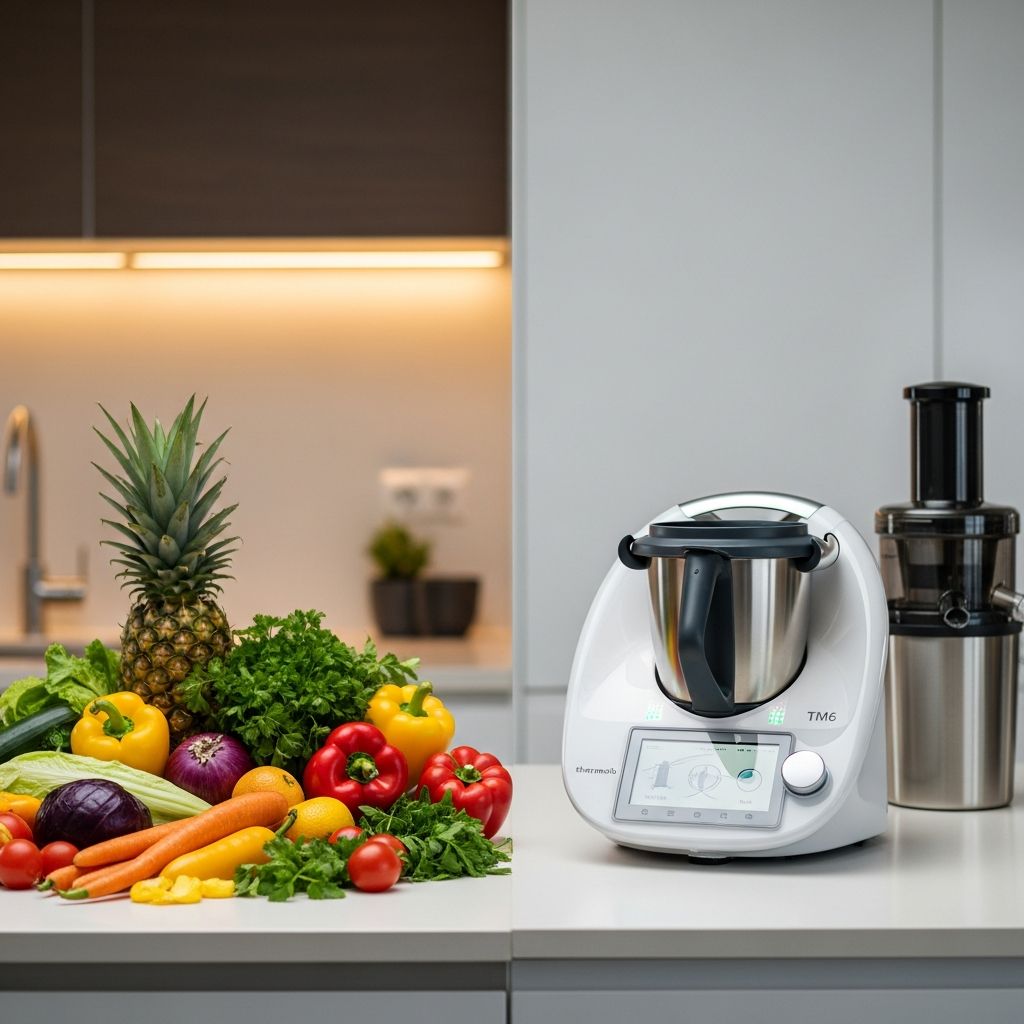
The Thermomix has sparked endless debates among home cooks: can one machine truly revolutionize meal prep by combining the roles of multiple appliances? This all-in-one kitchen powerhouse promises to blend, chop, heat, and more, potentially freeing up counter space and simplifying routines for busy households. Drawing from extensive user experiences and expert tests, we’ll evaluate its real-world performance to help you decide if it’s a smart buy.
Understanding the Thermomix Phenomenon
At its core, the Thermomix—particularly models like the TM6 and the newer TM7—is an integrated food processor that goes far beyond basic blending. Equipped with a powerful motor, precise temperature controls, and a vibrant touchscreen interface, it handles tasks from kneading dough to slow-cooking stews. Unlike standalone devices, it integrates weighing scales directly into the bowl, allowing seamless transitions between measuring ingredients and processing them without dirtying extra tools.
Its appeal lies in consolidation: imagine ditching your blender, food processor, stand mixer, and slow cooker for a single unit. For families juggling work, kids, and meals, this streamlined approach can reduce clutter and decision fatigue. However, with prices starting around $1,500 for the TM6 and climbing higher for the TM7, the question remains whether its versatility justifies the premium cost.
Core Features That Set It Apart
The Thermomix shines through its 20+ automated cooking modes, accessible via an intuitive touchscreen. Key capabilities include:
- High-Precision Heating: Reaches up to 160°C for caramelizing sugars or achieving hard-crack stages in confections like toffee, a feat previous models couldn’t match without crystallizing.
- Guided Cooking via Cookidoo: A subscription-based library (around $50/year) offers step-by-step video recipes that control speed, time, and temperature automatically, ideal for beginners.
- Multi-Tasking Mastery: Simultaneously heats and mixes for flawless custards, soups, or sauces—functions no single traditional appliance replicates efficiently.
- Sous-Vide and Fermentation: Vacuum-seals and cooks proteins tenderly or cultures yogurt overnight with minimal oversight.
Recent upgrades in the TM7 enhance performance further, with improved blade designs for tougher tasks and quieter operation during blending, though it retains the bowl’s 2.2-liter capacity suited for 4-6 servings.
Performance in Everyday Scenarios
In practical tests, the Thermomix excels at liquid-heavy dishes. Soups simmer without scorching thanks to constant blade stirring and precise temp sensors, often finishing in under 30 minutes. Dough kneading produces bakery-quality bread with less effort than a stand mixer, and batters for pancakes or cakes mix evenly without overworking.
For family meals, it shines in batch cooking: rice cooks perfectly alongside steaming veggies, while sauces develop deep flavors via slow-cook modes. One user noted tender chicken from sous-vide settings paired with a rich peanut sauce, though multi-component recipes can feel fragmented compared to stovetop methods. Noise levels during high-speed blending rival a food processor, which might disrupt quiet mornings, but self-cleaning cycles (hot water and soap whirl) save post-meal scrubbing.
| Task | Thermomix Time | Traditional Method Time | Outcome Quality |
|---|---|---|---|
| Soup (4 servings) | 25 min | 45 min | Superior (no burnt bottom) |
| Bread Dough | 3 min knead | 10 min manual | Professional texture |
| Yogurt (1L) | 8 hours ferment | 8 hours + monitoring | Consistent creaminess |
| Blending Nuts | 10 sec | 1 min | Smoother paste |
This table highlights efficiency gains, based on aggregated user reports and lab-style comparisons.
Space and Workflow Transformation
Kitchen real estate is precious, especially in compact homes. Owners report reclaiming counter space by retiring multiple gadgets: blenders, juicers, and soup makers gather dust once the Thermomix arrives. The unit’s compact footprint (about the size of a large blender) belies its power, and its upright storage minimizes visual clutter.
Workflow improves dramatically for repetitive tasks. Weighing ingredients in the bowl eliminates scale transfers, reducing mess by 50% in guided recipes. For parents, hands-free modes allow supervising kids while dinner simmers safely—no risk of boil-overs. Drawbacks include the fixed bowl size, limiting mega-batches, and occasional recipe tweaks for larger families.
Financial Breakdown: Cost vs. Long-Term Value
Upfront expense is the biggest hurdle: TM6 retails near $1,500, TM7 pushes $2,000+, excluding Cookidoo subscriptions. Amortized over 10+ years (common lifespan with servicing), it equates to $150 annually—less than replacing cheaper appliances every 2-3 years.
Compare to equivalents:
- High-end blender + food processor + slow cooker: $800+, yet lacking integration.
- Stand mixer alone: $400, but no heating.
Resale value holds strong (80-90% after years), and warranty-backed durability outpaces competitors. For gadget minimalists, savings compound; frequent cooks offset via time efficiencies (e.g., 20 min saved per meal adds up weekly).
Potential Drawbacks and Realistic Expectations
Not flawless: the motor’s hum at top speeds can drown conversations, and blade design suits softer foods better than ice-crushing in some rivals. Cookidoo dependency frustrates non-subscribers, as free recipes require manual input. Safety concerns in older tests prompted CHOICE’s caution on TM6, though TM7 addresses some via refined sensors.
It’s no stovetop replacement for stir-fries needing constant attention, and large-scale entertaining demands backups. Upgrading from TM6? Marginal unless high-heat precision matters.
Who Benefits Most from a Thermomix?
- Busy Parents: Set-it-and-forget-it modes align with chaotic schedules.
- Space-Constrained Cooks: Replaces 5-10 gadgets effortlessly.
- Recipe Novices: Guided steps build confidence.
- Health Enthusiasts: Custom purees, ferments promote fresh eating.
Less ideal for minimalists with few appliances or those preferring tactile cooking.
Frequently Asked Questions
Can the Thermomix replace my entire kitchen setup?
It handles 80-90% of tasks for small households but won’t fully substitute ovens or grills for roasting.
Is the Cookidoo subscription necessary?
Not essential—free recipes abound online—but it unlocks 70,000+ guided options for ease.
How durable is it long-term?
Users report 10+ years with servicing; build quality rivals pro appliances.
What’s the learning curve like?
Straightforward for basics; mastery comes in weeks via demos or apps.
Is it worth upgrading from TM6 to TM7?
Only for high-heat needs or quieter operation; TM6 suffices for most.
Final Verdict: Make It Work for You
The Thermomix transforms kitchens into efficient hubs for those valuing convenience over cost. If space, time, or gadget overload plagues you, its multifunctional prowess delivers unmatched ROI. Test via demos before committing—personal fit trumps specs.
References
- Thermomix TM6 Review: Can it replace all your kitchen gadgets — Gluten Free Cuppa Tea. 2019-11-16. https://glutenfreecuppatea.co.uk/2019/11/16/thermomix-tm6-review/
- Thermomix TM6 Review — Bec’s Table. N/A. https://becs-table.com.au/thermomix-tm6-review/
- Thermomix Review – A Man’s Perspective — Outback Joe. N/A. https://outbackjoe.com/macho-divertissement/australian-places-and-general-travel/thermomix-review-a-mans-perspective/
- Thermomix TM7 Review — TechRadar. N/A. https://www.techradar.com/home/multi-cookers/thermomix-tm7-review
- Should you buy the Thermomix TM7? — CHOICE. N/A. https://www.choice.com.au/home-and-living/kitchen/all-in-one-kitchen-machines/articles/is-a-thermomix-really-worth-it