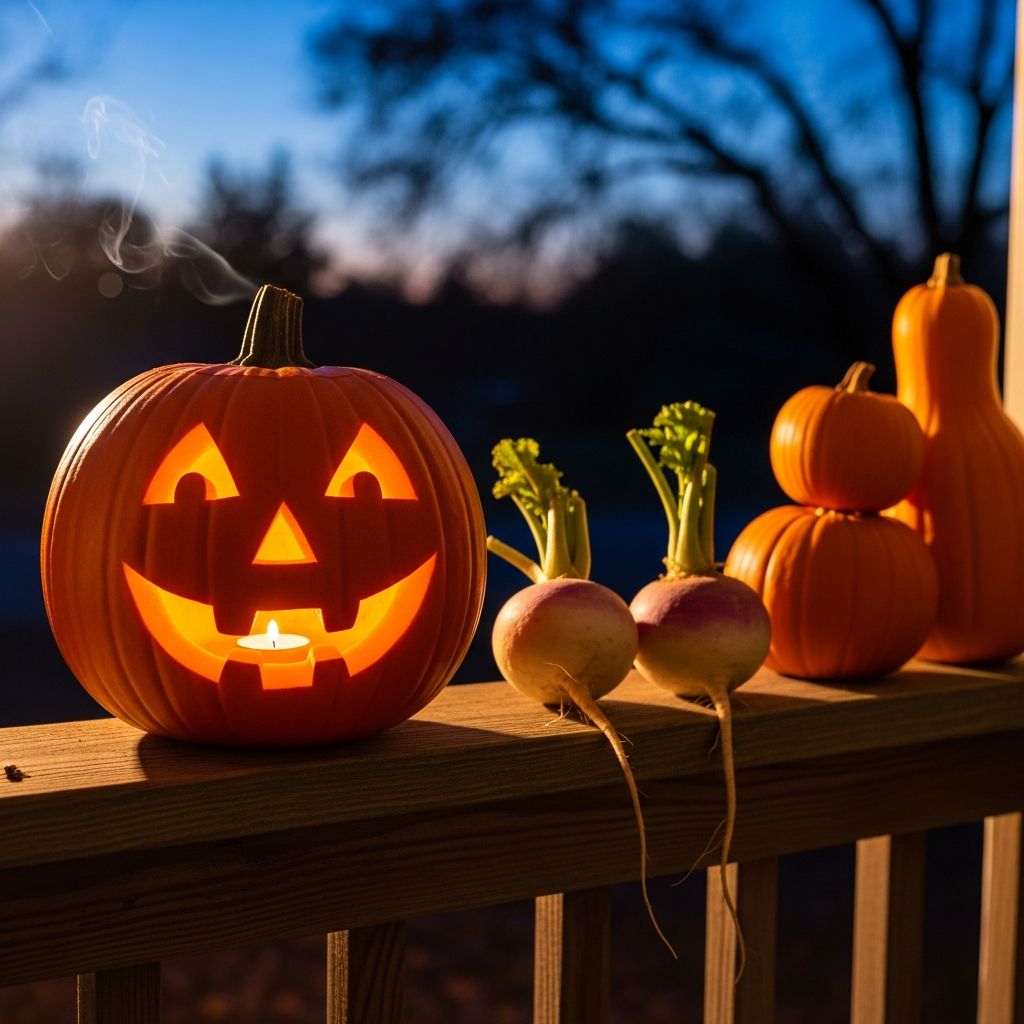
Every October, glowing orange faces appear on porches, windowsills, and front steps, silently announcing that Halloween has arrived. Yet the classic pumpkin jack-o’-lantern is the result of centuries of folklore, migration, and practical problem-solving that began not with pumpkins at all, but with small, knobbly root vegetables.
Why Jack-O’-Lanterns Matter Today
Modern families carve pumpkins for fun, but this simple tradition connects directly to older beliefs about the changing seasons and the mystery of the dark. A lit jack-o’-lantern still symbolizes both protection and play, blending ancient fears with modern celebration in a single glowing grin.
- They offer a kid-friendly way to talk about history, folklore, and seasonal change.
- They create a shared ritual that can anchor family memories year after year.
- They remain one of the most recognizable signs that Halloween night is near.
Roots in the Dark: Celtic Lantern Lore
Long before anyone hollowed out a pumpkin, people in parts of Ireland and Britain carved lanterns from hardy root vegetables like turnips, potatoes, and beets. These small lanterns were associated with autumn festivals when the harvest ended and nights grew noticeably longer.
In these communities, the border between the living and the dead was imagined as thinnest around the end of October. Carved, grimacing vegetable faces with candles inside were set in windows or along paths, where they served as both light sources and symbolic guardians.
- Turnips and similar vegetables were used because they stored well and were readily available after harvest.
- Faces were exaggerated on purpose to look unsettling and discourage wandering spirits.
- Lanterns often stood near doorways, marking the boundary between the home and the night outside.
The Legend Behind the Name “Jack-O’-Lantern”
The term “jack-o’-lantern” is linked in many retellings to a folkloric character often nicknamed “Stingy Jack,” a trickster who outsmarted supernatural forces but paid a price for his cleverness. In these stories, Jack is denied a peaceful rest and condemned to roam endlessly with only a hollowed vegetable and a small ember or coal to guide his path.
Over time, storytellers used Jack’s wandering light as a way to explain eerie, flickering glows seen on dark nights. The carved lanterns that households displayed became associated with “Jack’s” own guiding lamp, and the name “jack-o’-lantern” shifted from describing a mysterious light in the distance to describing the carved object itself.
From Turnip Fields to Pumpkin Patches
As people from Celtic regions migrated to North America in the nineteenth century, they brought their seasonal customs with them, including the practice of carving lanterns for late-October celebrations. When they encountered pumpkins—native to the Americas and widely grown—they discovered that these large gourds were far more practical for carving than dense turnips.
Pumpkins offered several advantages: they were bigger, easier to hollow out, and visually striking with their rich orange color. Families realized that one pumpkin could replace several small root vegetables, making the carving process faster and the final display more eye-catching.
- Pumpkin walls are relatively soft, allowing for more detailed designs.
- The hollow interior naturally accommodates a candle or light source.
- The leftover seeds could be roasted, turning waste into a seasonal snack.
How Pumpkins Took Over Halloween
By the late nineteenth and early twentieth centuries, carved pumpkins had become closely tied to autumn festivities in North America. As Halloween gradually shifted from a primarily adult and sometimes rowdy event to a family-centered celebration, pumpkin carving fit perfectly as a wholesome, creative activity that children could enjoy with adult supervision.
Printed guides, community contests, and eventually television specials helped standardize the image of the pumpkin jack-o’-lantern as Halloween’s unofficial mascot. What began as a protective talisman transformed into a playful symbol, still tinged with spookiness but firmly rooted in crafts, community, and seasonal décor.
Turnips vs. Pumpkins: A Quick Comparison
Although pumpkins dominate Halloween displays today, traditionalists and history enthusiasts sometimes return to the original carved turnip lantern. Each option offers a different aesthetic and experience.
| Feature | Turnip Lantern | Pumpkin Jack-O’-Lantern |
|---|---|---|
| Difficulty | Dense flesh makes carving slow and labor-intensive; better for adults. | Softer flesh allows easier, kid-friendly carving with supervision. |
| Size | Small, hand-sized; more intimate but less visible from a distance. | Large and bold; highly visible on porches and walkways. |
| Look | Gnarled and eerie, often much more unsettling than pumpkins. | Classic “cartoon spooky,” with friendly or scary expressions. |
| Tradition | Closer to older Celtic practices with carved root vegetables. | Represents the North American evolution of the custom. |
| Practicality | Yields less edible material; limited space for a candle. | Provides many seeds for roasting and plenty of room for lighting. |
Design Ideas Beyond the Typical Grin
While the classic triangle-eyed face is timeless, varying designs can keep the tradition fresh, especially for children who carve pumpkins year after year. Simple adjustments in shape and arrangement can dramatically change the mood of a jack-o’-lantern.
- Storybook characters: Use basic shapes to hint at favorite heroes or creatures without needing advanced carving skills.
- Patterns and symbols: Stars, moons, spirals, and geometric cutouts are easy to carve and look striking when lit.
- Mixed media: Add natural elements like leaves, twigs, or small gourds to turn the pumpkin into a miniature scene.
- Multiple expressions: Carve a row of smaller pumpkins or turnips, each with a different mood—joyful, worried, sleepy, and so on.
- Back-lit silhouettes: Instead of cutting all the way through, scrape the inner wall thinner in specific areas for a softer, glowing effect.
Step-By-Step: Carving a Safe, Family-Friendly Lantern
Carving becomes more enjoyable when the process is broken into clear, manageable stages. The key is planning ahead so children can participate safely at each step.
- Choose the right pumpkin. Look for one with a flat base so it sits securely, and inspect for soft spots that could shorten its life.
- Prepare a covered workspace. Lay down newspaper or a washable tablecloth, and gather tools before starting.
- Cut the opening. An adult should handle the top or bottom cut, angling the knife slightly to create a lid that will not fall through.
- Clean out the interior. Use a sturdy spoon or scoop to remove seeds and stringy pulp, scraping the sides until they are about the thickness of a finger.
- Draw the design. Have children sketch the face or pattern with a marker; this gives them ownership of the final result.
- Carve with care. Adults or older teens can cut along the lines slowly, supporting the pumpkin from the opposite side to avoid cracks.
- Light it safely. Choose a flameless LED candle or light to reduce fire risk, especially if costumes or decorations will brush past.
- Display securely. Place the finished lantern on a stable surface, away from walkways where people might trip.
Keeping Jack-O’-Lanterns Fresh Longer
Carved pumpkins begin to deteriorate as soon as their interior is exposed to air, moisture, and microbes. A few simple habits can extend the life of a jack-o’-lantern long enough to enjoy it through the main Halloween festivities.
- Wait to carve until closer to Halloween if your climate is warm or humid.
- Keep pumpkins in a cool, shaded spot during the day to slow drying and mold growth.
- Consider bringing carved lanterns indoors on unseasonably hot days.
- Handle the carved edges gently, since cracks often begin where the wall is already thin.
Eco-Friendly Afterlives for Your Lanterns
Once Halloween passes, carved pumpkins and turnips do not have to head straight to the trash. Treating them as part of the seasonal cycle reinforces the idea that traditions can be festive and environmentally aware at the same time.
- Composting: If free of paint or glitter, lantern pieces can go into a backyard compost pile to break down naturally.
- Wildlife snacks: In appropriate areas away from roads and homes, small portions may be left for wildlife, checking first for local guidelines.
- Seed roasting: Uncarved seeds saved before carving can be washed, seasoned, and roasted into a simple autumn snack.
Revisiting the Turnip: A Historical Craft Project
Curious families can try carving a turnip or beet alongside a pumpkin to experience a version of what earlier lantern-makers faced. This hands-on activity highlights how much effort went into the original tradition and why pumpkins were such a welcome upgrade.
- Use sturdy tools and reserve this project for teens and adults, since the dense texture requires more force.
- Carve small, simple shapes to avoid cracking or splitting the vegetable.
- Place a small tea light or LED inside, then compare the glow to a pumpkin carved the same evening.
Family Conversation Starters While You Carve
Pumpkin carving naturally invites storytelling and questions, making it a good moment to talk about both history and feelings in a relaxed way. Turning the activity into an informal conversation can deepen its meaning for children and adults alike.
- Ask what kind of story the lantern’s face might tell—silly, spooky, brave, or mysterious.
- Invite older relatives to share their own memories of Halloween and how celebrations have changed.
- Discuss how people in the past might have felt looking out at the dark with only a small lantern for company.
Frequently Asked Questions About Jack-O’-Lanterns
Are pumpkins the original jack-o’-lantern vegetable?
No. Earlier lanterns in Celtic regions were commonly carved from root vegetables like turnips and beets, which were available at harvest time and stored well into late autumn.
Why do people associate jack-o’-lanterns with wandering spirits?
Older stories told of strange lights seen at night and linked them to restless figures like “Stingy Jack,” whose lonely lantern became a symbol for mysterious glows and the idea of spirits between worlds.
Is it safer to use candles or electric lights?
For most households, especially those with children, pets, or flowing costumes, small battery-powered lights or LED candles are safer than open flames inside a carved lantern.
How early can a pumpkin be carved before Halloween?
Conditions vary by climate, but many families aim for within a week of Halloween to balance excitement with freshness, particularly in warmer or wetter regions where pumpkins soften quickly.
Can uncarved pumpkins still be part of the tradition?
Yes. Families often decorate uncarved pumpkins with paint, markers, or accessories, saving carving for a special night while still enjoying the look of stacked gourds and autumn displays.
Bringing the Past to Your Front Step
Whether using a huge pumpkin or a humble turnip, lighting a jack-o’-lantern links the warmth of a household to older hopes for safety and guidance in the dark. Each carved face—goofy, macabre, or gentle—adds a personal twist to a tradition that has crossed oceans and centuries.
By experimenting with new designs, telling old stories, and treating leftover lanterns responsibly, today’s families can keep the jack-o’-lantern glowing not just as a decoration, but as a living piece of shared cultural history.