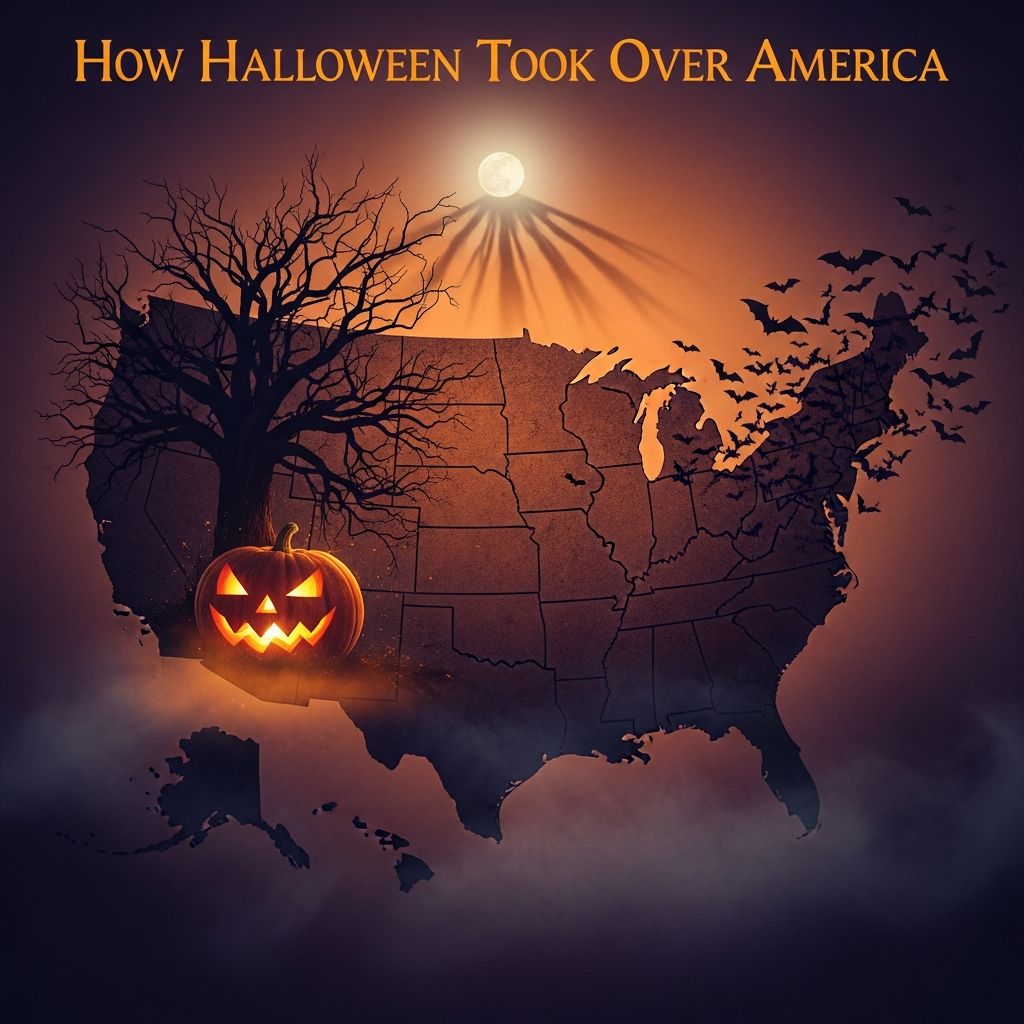
Halloween in the United States is a patchwork of ancient European beliefs, Catholic feast days, immigrant customs, urban mischief, and 20th-century marketing. Today it stands alongside the Fourth of July and Thanksgiving as one of the most visible American celebrations, but the path from Celtic bonfires to plastic pumpkins was anything but straightforward.
Understanding how Halloween took root and transformed in the U.S. reveals not just the story of a holiday, but a deeper story about immigration, religion, commercialization, and the changing nature of American childhood.
From Samhain to All Hallows: The Deep Roots of Halloween
Long before Americans carved pumpkins, people in ancient Ireland and parts of Britain marked the end of harvest with **Samhain**, a Gaelic festival that symbolized the transition from the light half of the year to the dark half.
- Samhain beliefs: The boundary between the living and the dead was thought to thin, allowing spirits to roam.
- Protective rituals: Communities lit bonfires, wore disguises, and offered food to placate or confuse wandering spirits.
- Agricultural timing: The festival coincided with the late harvest, reinforcing themes of death, storage, and survival through winter.
Centuries later, the Christian church overlaid these practices with **All Saints’ Day** (November 1) and **All Souls’ Day** (November 2), creating a three-day observance known as Allhallowtide. The evening before All Saints’ Day became **All Hallows’ Eve**, eventually shortened to Halloween.
Why Colonial America Largely Ignored Halloween
While All Hallows’ customs survived in parts of Europe, colonial North America did not quickly embrace the holiday. Religious and regional differences played a major role.
| Region | Religious Character | Attitude Toward Halloween |
|---|---|---|
| New England | Heavily Puritan | Suspicious of church feast days and folk customs; Halloween largely absent. |
| Middle & Southern Colonies | Anglican, Catholic, and mixed | Some recognition of All Hallows’ Eve in church calendars and local customs. |
In rural areas, autumn gatherings focused more on harvest festivals, storytelling, and community events than on a distinct Halloween observance. These early “play parties”—featuring dances, ghost stories, and games—hinted at what Halloween could become without yet being a national holiday.
Immigrants, Urbanization, and the Birth of an American Halloween
Modern American Halloween truly begins in the 19th century, when large waves of **Irish and Scottish immigrants** arrived, many fleeing famine and poverty. They brought with them:
- Guising and mumming: Visiting homes in disguise to perform verses or songs in exchange for food.
- Turnip lanterns: Carved root vegetables used as makeshift lamps and spirit-deterrents, an ancestor of the American jack-o’-lantern.
- Folk tales and ghost lore: Stories of restless spirits that blended easily with American frontier superstitions.
As the 19th century progressed, cities grew rapidly. Tenements, factories, and crowded streets changed how people experienced community life. Autumn celebrations that had once been rural, intimate, and tied to local harvests were now reimagined as urban neighborhood events. It is in these crowded environments that mischief and pranking start to loom larger.
From Mischief to Mayhem: The Problem of Halloween Pranks
By the early 20th century, Halloween in many American towns had a rough edge. Youthful pranking—once tolerated as a seasonal outlet for misrule—sometimes escalated into vandalism, damaged property, and clashes with police.
Common mischief included:
- Soaping windows and defacing storefronts
- Moving outhouses or outdoor furniture as a prank
- Breaking fences, pulling gates off hinges, or toppling garden fixtures
These acts were often justified as a tradition of “Mischief Night” or “Devil’s Night” in the nights surrounding Halloween. As cities expanded and property damage increased, local authorities and civic leaders sought ways to channel youthful energy into safer, supervised activities.
How Trick-or-Treating Became the Solution
Organized **trick-or-treating** emerged in the early-to-mid 20th century as a strategic answer to Halloween vandalism and unregulated roaming. The concept drew from several older European and Christian practices:
- Souling: In parts of medieval Europe, the poor went door to door for “soul cakes” in exchange for prayers for the dead.
- Guising: Costumed visitors performed songs or recited verses for food or coins in Ireland and Scotland.
- Appeasing spirits: Offering food to wandering spirits—or to people dressed as them—during Samhain.
American communities reframed these ideas into a family-friendly slogan: open your door, hand out treats, and the neighborhood stays peaceful. Schools, churches, and civic groups promoted the practice as a way to “buy” safety with candy rather than repair bills.
By the 1950s, as suburban neighborhoods spread and the baby boom filled streets with children, going house-to-house for sweets became a defining feature of American Halloween. Driveways, sidewalks, and cul-de-sacs created a perfect geography for mass participation.
Candy, Commerce, and the Rise of the Halloween Industry
Once children were expected to knock on dozens of doors in a single night, the economics of Halloween changed dramatically. Homemade treats and fruit gave way to factory-made candy, which was cheap, portable, and—crucially—individually wrapped.
By the mid-20th century:
- Candy manufacturers began releasing Halloween-specific packaging and flavors, pushing chocolate bars and candy corn as seasonal essentials.
- Marketing campaigns linked candy to safe, community-oriented trick-or-treating.
- Household expectations shifted, with many adults feeling obligated to stock large bowls of treats for visiting children.
In recent decades, Halloween spending in the United States has grown into a multi-billion-dollar business that includes not just candy but costumes, yard decorations, party supplies, and theme-park events. The holiday’s visual flair and flexible themes make it especially easy to commercialize.
The Jack-O’-Lantern: From Folklore to Front Porch Icon
One of the most visible symbols of the American Halloween is the **jack-o’-lantern**, glowing on porches and in windows. Its roots stretch back to Irish folklore about a character often called “Stingy Jack,” doomed to wander the earth with a lantern after tricking the devil.
Key stages in its evolution include:
- European origins: Carved turnips or beets were used as eerie lanterns or to ward off spirits.
- American adaptation: In North America, the pumpkin—larger, softer, and plentiful in fall—quickly replaced turnips as the preferred carving vegetable.
- Modern creativity: Designs expanded from simple faces to elaborate scenes, pop-culture references, and professionally carved displays.
Today, pumpkin carving is a central family ritual, often accompanied by contests, community displays, and agricultural festivals built around pumpkin patches and corn mazes.
Haunted Houses, Theme Parks, and the Thrill Industry
As Halloween shifted from unsupervised mischief to structured entertainment, another uniquely American invention flourished: the commercial **haunted house**. While people have long told ghost stories and staged spooky performances, purpose-built haunted attractions took off in the United States in the mid-20th century.
Several trends fueled this rise:
- Nonprofit fundraisers: Local charities and youth groups built simple haunted basements or “spook walks” to raise money.
- Theme park attractions: By the late 1960s and 1970s, major parks introduced elaborate haunted rides and nighttime Halloween events that popularized immersive horror experiences.
- Professionalization: Dedicated haunted attractions emerged as seasonal businesses, using special effects, actors, and detailed sets.
Today, thousands of haunted attractions—from small-town charity haunts to massive theme-park productions—operate across the country each October, forming a specialized sector of the Halloween economy.
Costumes and Identity Play in American Culture
Costumes have always been part of Halloween, but how Americans dress up—and what that means—has shifted over time.
Historically, disguises served to confuse or imitate spirits during Samhain, allowing wearers to blend into the supernatural world and avoid harm. In the U.S., costumes gradually detached from overt religious or supernatural meanings and became broader tools for play and identity exploration.
Key developments include:
- Early homemade disguises: Simple masks and sheets used by children and adults at local parties.
- Mass-produced costumes: By the mid-20th century, store-bought outfits featuring cartoon characters, superheroes, and movie monsters became widely available.
- Adult-centered celebrations: In the late 20th century, Halloween expanded into bars, workplace events, and large urban parades, giving adults a socially sanctioned occasion for playful self-reinvention.
This emphasis on costuming reflects broader American themes: experimentation with identity, pop culture fandom, and the blurring of childhood and adult leisure.
Neighborhood Rituals, Safety Fears, and Changing Norms
Because Halloween unfolds largely in public and semi-public spaces—sidewalks, porches, school halls—it often becomes a mirror for American anxieties and neighborhood norms.
Over the last several decades, communities have grappled with:
- Stranger danger narratives: Media stories about tainted candy or dangerous strangers, despite extremely limited evidence, have influenced how and where children are allowed to trick-or-treat.
- Organized alternatives: Events like “trunk-or-treat” in parking lots, mall trick-or-treating, and school-based parties designed to offer controlled environments.
- Inclusive practices: Teal pumpkins to signal allergen-free treats, sensory-friendly events, and awareness of cultural or religious concerns about participation.
These adjustments show how communities continually renegotiate the balance between freedom, fear, and festivity on Halloween night.
Halloween as a Window into American Society
Viewed across time, the American story of Halloween highlights several recurring patterns:
- Adaptation of old to new: Ancient Celtic rituals, medieval Christian practices, and European folk customs were repeatedly reshaped to fit new social and economic realities.
- From rowdiness to regulation: What began as a season of sanctioned misrule gradually moved toward organized, family-friendly events as cities and suburbs sought order.
- Commercial escalation: Businesses transformed a modest seasonal observance into a major retail event centered on candy, costumes, and experiences.
- Identity and community: Costumes and neighborhood rituals let people experiment with who they are while marking belonging to a local community.
In that sense, Halloween is not just a night of ghosts and goblins. It is a living record of how Americans manage fear and fun, the past and the present, individual expression and social control.
Frequently Asked Questions About Halloween in the U.S.
When did Halloween become widely celebrated in the United States?
While some All Hallows’ customs existed earlier, Halloween did not become a major American holiday until the late 19th and early 20th centuries, when Irish and Scottish immigration, urban growth, and organized community events brought the celebration into the mainstream.
Is trick-or-treating an ancient tradition?
Modern American trick-or-treating is relatively recent. It draws inspiration from older practices like souling, guising, and leaving food for spirits, but the door-to-door candy custom emerged mainly in the 20th century as a structured, child-centered activity.
Why do Americans carve pumpkins instead of turnips?
Immigrants from Ireland and other parts of Europe traditionally carved turnips or similar vegetables. In North America, pumpkins were more abundant, larger, and easier to carve, so they quickly became the standard for jack-o’-lanterns.
Is Halloween originally a Christian or pagan holiday?
Halloween blends elements from both. It has roots in the pre-Christian Celtic festival of Samhain and was later reshaped by Christian observances of All Saints’ Day and All Souls’ Day. Over time, it evolved again into a largely secular, community-focused celebration in the United States.
Why is Halloween so commercialized in the U.S.?
The combination of child-focused traditions like trick-or-treating, visually striking symbols (pumpkins, costumes, decorations), and the growth of suburban neighborhoods created ideal conditions for businesses to market candy, costumes, and themed experiences. As consumer culture expanded in the 20th century, Halloween naturally became a major seasonal retail event.
References
- Halloween: Origins and Current Traditions — International Students Office, Massachusetts Institute of Technology. 2020-10-28. https://iso.mit.edu/americanisms/halloween-origins-and-current-traditions/
- Halloween — Library of Congress, Headlines & Heroes Blog. 2021-10-28. https://blogs.loc.gov/headlinesandheroes/2021/10/the-origins-of-halloween-traditions/
- Halloween — Encyclopedic overview drawing on academic and primary sources (canonical record). 2024-10-23. https://en.wikipedia.org/wiki/Halloween
- The History of Halloween in the United States — GourmetGiftBaskets.com Blog (historical survey referencing standard scholarship). 2020-10-01. https://www.gourmetgiftbaskets.com/Blog/post/history-halloween-united-states.aspx