Lois Lowry’s The Giver looks like a slim middle-grade novel, but it carries the emotional weight of a philosophy seminar disguised as bedtime reading. For many parents, it is the first time their children confront a world where safety is purchased at the price of feeling, freedom, and memory.
The World Of Perfect Calm And Hidden Cost
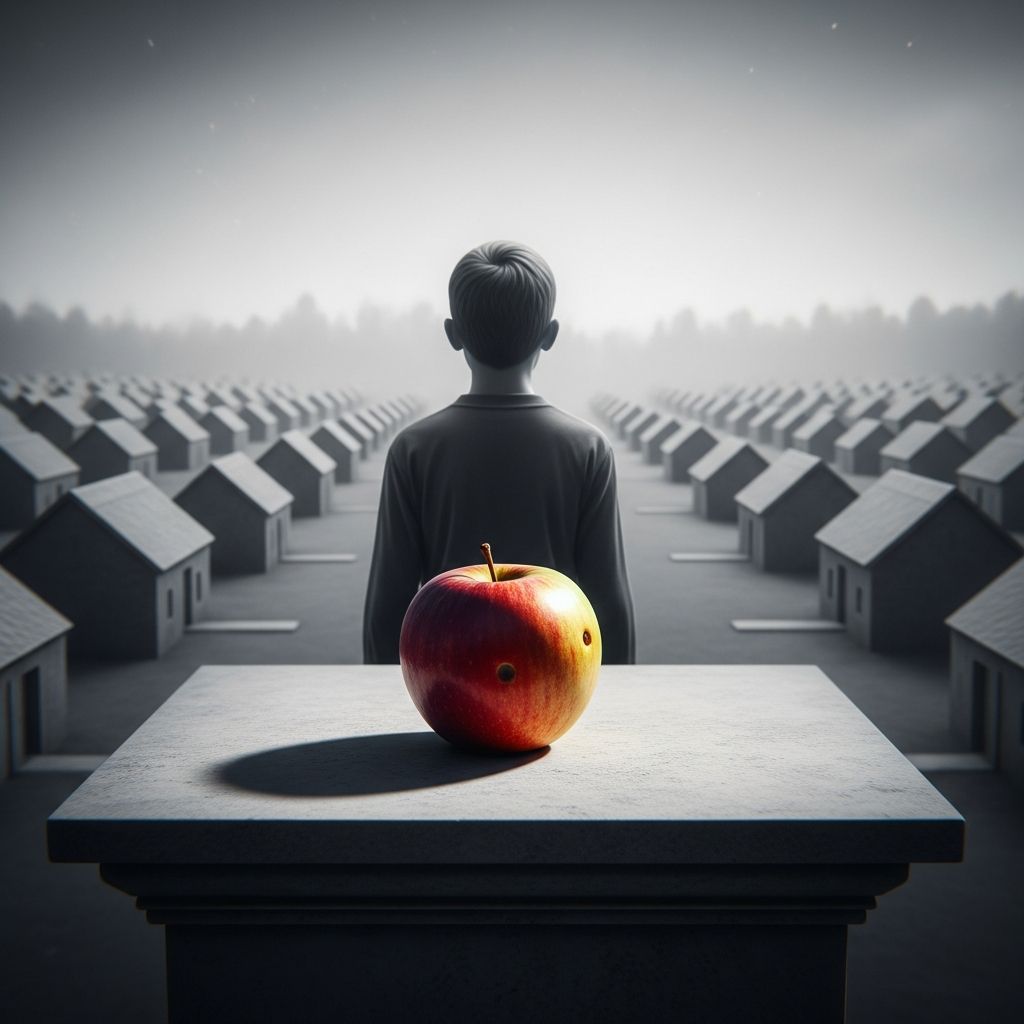
The community in The Giver is a place without war, hunger, or obvious cruelty, where every life path is decided, every family unit is planned, and every day proceeds according to carefully managed routines. On the surface, it looks like the fantasy of exhausted parents who dream of order, predictability, and a permanent end to childhood anxiety.
Yet this calm depends on a brutal trade: the citizens have surrendered real emotion, deep attachment, and the memory of human suffering to a single keeper of the past. People no longer know color, music, or spontaneous love; they know only regulated contentment and the approved language of their leaders.
- No war or crime, but no authentic joy.
- No inequality, but also no genuine choice about work, family, or future.
- No grief, but a chilling ignorance about what a human life is worth.
Jonas’s Awakening And The Shock To Young Readers
At the center of the novel is Jonas, a boy chosen to inherit the role of Receiver of Memory, the only person allowed to remember what the world was like before his community erased pain and difference. As Jonas receives memories of snow, music, love, and warfare, he experiences more emotion in a short span than his peers will feel in a lifetime.
For many young readers, this is the first story in which the protagonist’s problem is not a villain but the entire structure of ordinary life. Jonas’s dawning terror when he learns what “release” really means – the community’s euphemism for killing inconvenient people – can be a seismic moment for kids used to stories with neat moral labels.
| Aspect | Before Training | After Training |
|---|---|---|
| Understanding of feelings | Uses precise, shallow words taught by adults. | Experiences grief, love, fear, and wonder in full force. |
| View of community | Believes it is wise, fair, and safe by design. | Sees it as emotionally stunted and morally compromised. |
| Sense of self | Accepts assigned role and identity. | Craves autonomy and the chance to choose his own life. |
What The Book Says About Control And Convenience
The great horror of the novel is not that the leaders are cartoonishly evil but that their system is disturbingly reasonable on the surface. By eliminating painful memories and strong emotions, they also eliminate risk, conflict, and the messy unpredictability that makes genuine relationships possible.
This raises uncomfortable questions for modern families trying to keep kids safe, scheduled, and emotionally even. The community’s tightly arranged childhoods echo the instinct to curate every experience, shield children from distressing news, and micromanage social lives in the name of protection.
Parental Instincts In A Dystopian Mirror
Parents reading alongside their kids often recognize their own desires twisted into something unrecognizable: the wish for no bullying, no heartbreak, no failure, and no danger. The Giver exposes how a world that eliminates hurt also erases the conditions under which courage, empathy, and resilience can grow.
- The community chooses sameness over diversity of temperament or ability.
- Leaders remove difficult people instead of making room for difference.
- Citizens trade decision-making for the comfort of being guided.
Memory As Burden, Gift, And Family Practice
Memory in the novel functions like a dangerous medicine that only one person is allowed to handle. Jonas discovers that remembering war and loss is agonizing, yet those same memories give depth to joy, beauty, and love.
Families reading the book together often find themselves talking about what they choose to pass on to their children: stories of hardship, migration, illness, or injustice that might feel too heavy but also form the backbone of family identity. The novel suggests that sheltering children from every painful truth is its own kind of erasure, turning them into citizens who cannot understand what their comfort costs.
Practical Ways To Share Real Memories
Rather than placing all difficult knowledge on a single family “keeper,” parents can share age-appropriate stories that highlight both suffering and strength. This keeps the past alive without overwhelming kids, offering them a sense of rootedness instead of curated amnesia.
- Tell children family stories that include struggle and recovery, not only achievement.
- Connect historical events to personal experiences, such as how grandparents lived through major social changes.
- Invite kids to ask questions rather than presenting a finished, airbrushed narrative.
Why The Ending Still Divides Readers
The final scenes of The Giver leave Jonas and an infant he is trying to save heading toward an uncertain elsewhere, blurring the line between possible rescue and desperate hallucination. Later companion books clarify their fate, but for many readers, the power of the original ending lies in its refusal to offer guarantees.
Parents often come away with different interpretations than their children do: adults may read the ending as a commentary on moral risk, while kids experience it as a test of their capacity for hope. This difference can spark rich conversations about what it means to act ethically when success is not assured.
| Reader Perspective | How They Tend To Read It |
|---|---|
| Middle-grade readers | Often see a hopeful escape into a warmer, freer world. |
| Teen readers | May read it as ambiguous, focusing on sacrifice and uncertainty. |
| Adult readers | Are more likely to view it as a moral parable about costly choices. |
How The Book Speaks To Today’s Kids
Children growing up amid digital tracking, algorithmic recommendations, and constant guidance from institutions may see eerie parallels in the community’s all-encompassing oversight. The book’s obsession with rule-following, public apologies, and data-like precision in language feels strangely current in an era of behavior charts and online profiles.
At the same time, Jonas’s discovery of color, music, and unscripted emotion resonates in an age where kids document rather than simply experience their lives. His journey invites young readers to notice what can’t be measured or optimized: wonder, loyalty, and the thrill of doing something unpredictable because it feels right.
- The community’s surveillance echoes modern data collection and constant feedback systems.
- The strict management of childhood recalls heavily scheduled, achievement-focused upbringing.
- The erasure of deep feeling mirrors cultural discomfort with visible sadness, anger, or grief.
Reading The Giver As A Family Conversation Starter
For parents, the novel works best not as a moral manual but as a springboard for open-ended questions. Its power lies in showing kids a world where every adult decision seems rational until you zoom out far enough to see the absence of humanity.
Reading the book together invites families to define what they are unwilling to sacrifice in exchange for safety or success: the right to make mistakes, to feel deeply, to remember painful stories, and to stand out instead of blending in. It encourages parents to admit that some discomfort is not a sign of failure but a sign that their children are fully alive.
Questions Parents Can Ask Their Kids
- Would you want to live in Jonas’s community if you did not know what he learns? Why or why not?
- Is it better to be safe and numb, or to risk pain for the chance to feel real joy?
- What kinds of rules protect people, and which ones might start to control them too much?
- Who in our world carries painful memories so that others can live more freely, and how should they be treated?
Frequently Asked Questions About The Giver For Parents
Is The Giver too dark for my child?
The book includes unsettling ideas such as state-controlled killing, emotional suppression, and a child risking everything to escape his society, which can be intense for sensitive readers. Many educators recommend it for upper elementary or middle school students, but the right age depends on a child’s maturity and on whether an adult is available to discuss the difficult parts.
How can I prepare my child before they read it?
Parents can frame the story as a thought experiment about what might happen if people tried to remove all pain from life, and ask children what they think might be lost along the way. Setting this expectation turns shocking moments into invitations for conversation instead of isolated shocks.
Does the book offer any hope?
Even though much of the story is bleak, Jonas’s awakening shows that one person’s refusal to accept a dehumanizing system can matter, even if the outcomes are uncertain. His choice to leave rather than participate in the community’s lies suggests that recognizing the truth and acting from compassion are meaningful victories in themselves.
How does The Giver compare to other dystopian books my child might read later?
Unlike many young-adult dystopias that emphasize romantic plots or violent rebellions, The Giver focuses on interior change, moral awakening, and the quiet horror of a world that believes it has solved human problems. This makes it a gentler entry point into the genre while still raising sophisticated questions about power, conformity, and the price of utopian dreams.