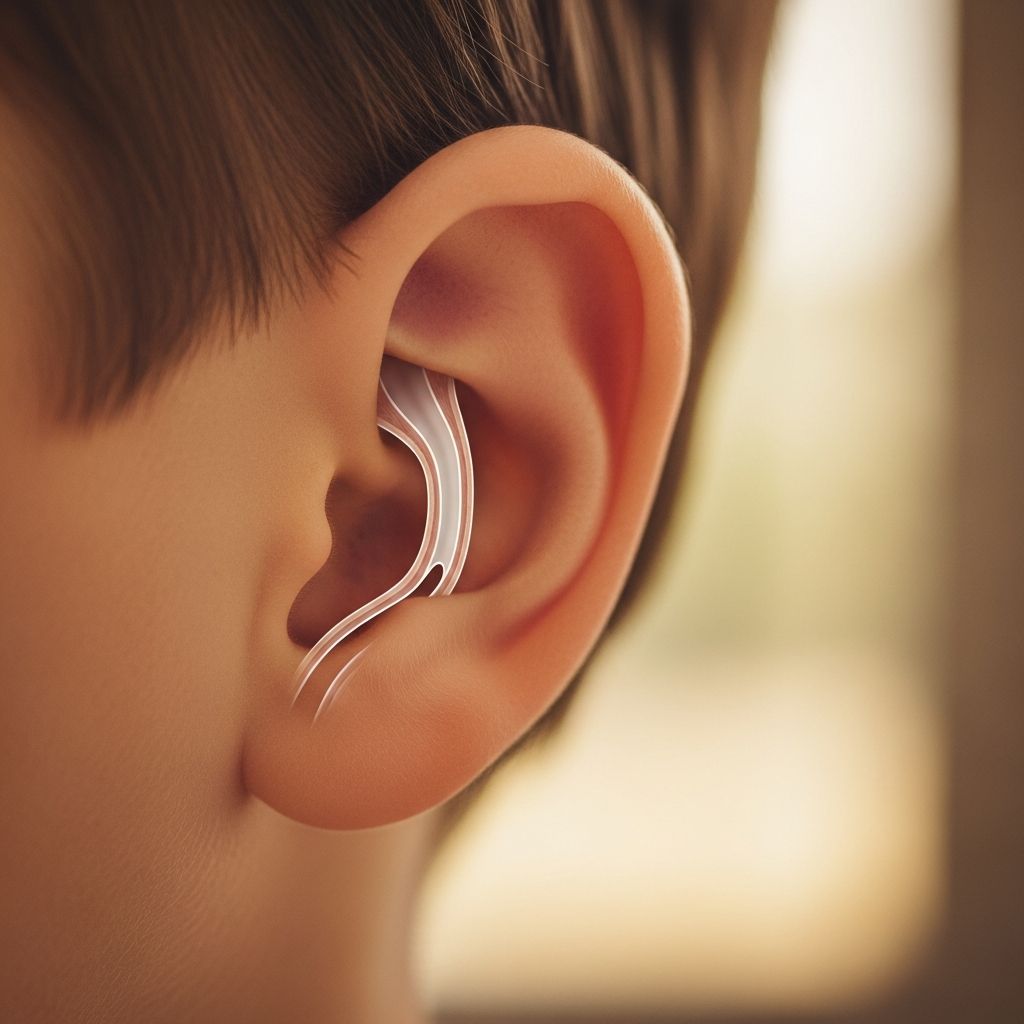
When a child has a narrow ear canal, it can affect how sound travels to the eardrum and sometimes make them more likely to get ear infections. Understanding this condition helps families make informed decisions about tests, treatments, and everyday care.
What Is Ear Canal Narrowing?
The ear canal is the small tunnel that runs from the outside of the ear to the eardrum. In some children, this tunnel is tighter than usual, either in one ear or both. Doctors often call this ear canal stenosis, which simply means a narrowing of the passage.
This narrowing can be present from birth or develop later. Some children have mild narrowing and hear well, while others have significant blockage that interferes with how sound reaches the middle and inner ear.
Basic Ear Anatomy for Parents
Knowing a few simple parts of the ear makes it easier to understand how narrowing causes problems. The ear can be divided into three main sections:
- Outer ear: Includes the visible part of the ear and the ear canal.
- Middle ear: Contains the eardrum and three tiny hearing bones.
- Inner ear: Sends sound signals to the brain.
When the canal is too tight, sound waves may be partially blocked before they even reach the eardrum. This can lead to conductive hearing loss, which means sound is not conducted efficiently through the outer and middle ear.
Why Some Children Have Narrow Ear Canals
There are several reasons a child might have a narrow ear canal. Some are related to how the ear formed before birth, while others occur later because of changes in the skin, bone, or soft tissue around the ear.
- Present from birth (congenital): The ear canal may have developed smaller than usual or partly closed during fetal development.
- Associated conditions: Narrow canals may appear with other ear or facial differences that develop in the womb.
- Changes over time: Irritation, infection, or trauma to the ear canal later in life can sometimes lead to scarring and narrowing.
In many children, the condition is discovered when hearing is checked, or when repeated ear problems draw attention to the ear’s structure.
Possible Risk Factors
Parents often want to know if they “caused” the problem. In most cases, they did not. Still, a few factors are sometimes linked to ear canal narrowing:
- Family history of ear canal abnormalities or birth differences affecting the ears.
- Other congenital ear or craniofacial conditions diagnosed by the pediatrician.
- Prior ear surgery, injury, or significant infection that affected the canal’s lining or bone.
These factors do not guarantee that a child will have narrowing, but they can help doctors decide which children need closer monitoring.
Common Signs and Symptoms
Some children with mild narrowing have no obvious symptoms and only show changes on hearing tests. Others may have noticeable issues that parents or caregivers observe at home.
- Hearing concerns
- Frequently saying “What?” or asking for repetition.
- Turning one ear toward sounds or the television.
- Preferring higher volume on electronic devices.
- Ear-related symptoms
- Ear fullness or pressure that the child may describe as “plugged ears.”
- Recurrent ear infections or drainage from the ear.
- Occasional discomfort, especially during infections.
- Speech and school issues
- Delayed speech or unclear pronunciation in younger children.
- Difficulty following directions in noisy classrooms.
- Appearing inattentive when the real issue is that they cannot hear well.
Symptoms can vary widely. Some children are affected in only one ear, which can make the problem harder to notice because the other ear may compensate.
How Doctors Diagnose Ear Canal Narrowing
Evaluation usually starts when a caregiver, teacher, or primary doctor notices hearing or ear concerns. Children are then referred to an ear, nose, and throat specialist (ENT) or pediatric otolaryngologist.
The evaluation may include several steps:
- Medical history: Questions about infections, birth history, development, and family history of ear problems.
- Physical ear exam: The doctor looks inside the ear canal with a lighted instrument to check the canal’s size, shape, and any blockage such as skin, wax, or tissue.
- Hearing tests: Age-appropriate hearing tests are done by an audiologist. Younger children may play listening “games,” while older children respond to tones or words.
- Imaging: In some cases, a CT scan of the temporal bones (the skull bones around the ear) may be requested to understand the ear’s structure in more detail, especially before surgery is considered.
The goal of diagnosis is not only to confirm that the canal is narrow, but also to see how much it affects hearing and whether other ear structures are involved.
Degrees of Narrowing and What They Mean
Doctors sometimes describe narrowing by how much of the normal ear canal opening is reduced. This helps guide treatment choices and expectations. While exact measurements vary, the concepts of “mild,” “moderate,” and “severe” narrowing are common.
| Level | Canal Opening | Possible Effects |
|---|---|---|
| Mild | Slightly smaller than usual | Often normal or near-normal hearing; may be found incidentally. |
| Moderate | Noticeably narrowed but still open | Higher chance of earwax buildup, infections, or mild hearing loss. |
| Severe | Very small opening or nearly closed | More significant hearing loss and frequent ear issues; surgery often discussed. |
Parents should remember that this table is a general guide. The exact impact on a particular child depends on many factors, including the health of the eardrum and middle ear.
Treatment Goals
The main goals of treating ear canal narrowing in children are straightforward:
- Protect and support the child’s hearing for normal speech and learning.
- Reduce the risk of repeated ear infections and chronic drainage.
- Provide a comfortable, easy-to-care-for ear canal for the long term.
Not every child needs surgery. The treatment plan depends on how severe the narrowing is and how much it affects daily life.
When Observation Is Enough
For some children, especially those with mild narrowing and normal hearing, the safest “treatment” may be careful monitoring. In these cases, the doctor checks the ears and hearing periodically to ensure the situation is not getting worse.
- Regular hearing tests may be scheduled to catch any subtle changes early.
- Parents are taught signs of hearing trouble, such as new speech delays or difficulty understanding speech in noise.
- Earwax may occasionally need to be removed by a professional, because narrow canals clog more easily.
Observation does not mean ignoring the problem. It is an active choice to watch closely while avoiding unnecessary procedures.
Medical and Supportive Treatments
Even without surgery, some children benefit from medical management and hearing support. These approaches can improve comfort and communication.
- Treating infections: If infections occur, doctors may prescribe ear drops, oral medications, or both. Narrow canals can trap moisture, so treating infections promptly is important.
- Professional ear cleaning: Soft wax and debris can be removed in the clinic with special tools. Parents should avoid inserting cotton swabs or other objects into the ear, as they can push material deeper or injure the canal.
- Hearing devices: If hearing loss is present and surgery is not recommended right away, conventional hearing aids or bone-conduction devices may help the child hear more clearly at home and school.
These strategies are often used along with regular follow-up appointments so that the care team can adjust the plan as the child grows.
Surgical Options for Narrow Ear Canals
When narrowing is severe or causing significant hearing problems, the ENT specialist may suggest surgery to widen the ear canal. The specific technique depends on each child’s anatomy, but common goals are similar.
- Widening the bony or soft tissue canal: The surgeon carefully reshapes or enlarges the canal so that sound can reach the eardrum more easily.
- Addressing other ear problems at the same time: If the eardrum, middle ear bones, or surrounding structures are abnormal, they may be repaired in the same operation when possible.
- Improving access for future care: A wider canal makes it easier to examine, clean, and treat the ear in the long term.
Parents usually have a detailed discussion with the surgical team about the expected benefits, risks, and recovery timeline before making a decision.
After Surgery: Healing and Long-Term Care
Postoperative care is an important part of success. The surgical team gives specific instructions tailored to the child’s procedure, but certain themes are common.
- Protecting the ear: Children may need to keep the ear dry for a period of time and avoid activities that could bump or strain the ear.
- Follow-up visits: The surgeon will check healing, remove any packing or dressings in the canal, and monitor hearing results as the ear recovers.
- Preventing re-narrowing: In some cases, drops, special soft materials, or spacers may be used temporarily in the ear canal to help it maintain its new shape while healing.
Even after recovery, most children continue to see the ENT and audiologist periodically to be sure the canal remains open and hearing stays stable as they grow.
Daily Life and Home Care Tips
Parents can support a child with narrow ear canals through simple habits and awareness. These steps do not replace medical care but can help keep the ears as healthy as possible.
- Avoid home “cleaning” tools: Do not put cotton swabs, hairpins, or other objects into the ear canal. These can push wax deeper or damage the delicate skin.
- Be cautious around water: Ask the ENT if earplugs, swim molds, or a bathing cap are recommended for swimming or showers, especially if the child has frequent infections or recent surgery.
- Watch for changes in hearing: Notice if your child starts turning the TV louder, struggles in noisy places, or seems to miss high-pitched sounds such as birds or certain consonants in speech.
- Partner with school: Let teachers and school staff know about your child’s hearing needs. Simple classroom changes—such as seating the child closer to the teacher—can make a big difference.
Staying observant and communicating regularly with the care team helps catch problems early and maintain the best possible hearing environment for your child.
Emotional and Developmental Considerations
Hearing plays a large role in language, learning, and social connection. When a child has ear canal narrowing, parents often worry about long-term effects on school and friendships.
- Speech and language support: If hearing loss is present, a speech-language pathologist may be involved to support speech clarity and language development.
- Emotional reassurance: Children may feel different if they use hearing devices or have ear surgery. Open conversations, age-appropriate explanations, and reassurance from family can help.
- Coordination of care: Many families find it helpful when their pediatrician, ENT specialist, audiologist, and school work together, so that everyone understands the child’s needs and progress.
With early detection and proper support, children with ear canal narrowing can usually develop speech, language, and social skills on track with their peers.
When to Seek Medical Help
Parents should contact a health professional if they notice any of the following:
- Sudden or worsening hearing difficulties in one or both ears.
- Persistent ear pain, discharge, or a foul smell from the ear.
- Balance problems, dizziness, or frequent falls without a clear cause.
- Significant speech delay compared with children of the same age.
Prompt evaluation allows the care team to determine whether ear canal narrowing or another ear condition is responsible and to start appropriate treatment.
Frequently Asked Questions (FAQs)
Is ear canal narrowing the same as being born without an ear canal?
No. Some children are born with a narrow canal that is still open, while others are born with a completely closed or absent canal. The second situation is usually called atresia, and it often requires more complex evaluation and treatment than a simple narrowing.
Can a child outgrow a narrow ear canal?
As children grow, the structures of the head and ears also change. In some cases, the relative effect of mild narrowing becomes less noticeable with time. However, significant structural narrowing does not usually “go away” completely on its own, which is why regular monitoring by specialists is important.
Will my child always need surgery?
Not necessarily. Many children with mild to moderate narrowing and good hearing do well with observation, hearing checks, and occasional ear care. Surgery is usually considered when the narrowing clearly interferes with hearing, causes repeated infections, or significantly affects daily life.
Are there risks to leaving ear canal narrowing untreated?
Leaving mild, symptom-free narrowing alone is often safe with regular follow-up. However, more serious narrowing that reduces hearing or causes repeated infections can impact speech development, learning, and quality of life if not addressed. Your child’s specialist will help weigh these factors when recommending a plan.
What questions should I ask the specialist?
Helpful questions include:
- How much is my child’s ear canal narrowed, and in which ear(s)?
- How is the narrowing affecting hearing right now?
- What are the non-surgical and surgical options for my child?
- How often should we return for checkups and hearing tests?
- What signs at home should make us call sooner than our scheduled visit?
Keep a written list of questions and bring it to each appointment. This makes it easier to remember important topics and to feel confident about the decisions you make together with the care team.
Key Takeaways for Parents
Ear canal narrowing in children is a structural issue that can range from minor to severe. The most important steps are recognizing possible signs, obtaining a thorough evaluation, and following a personalized care plan that supports your child’s hearing and development.
With modern diagnostic tools, hearing support, and surgical options when needed, most children with this condition can participate fully in family life, school, and play while protecting their long-term hearing health.