Understanding Sports Injuries in Teenage Athletes
Athletic participation offers tremendous benefits for teenagers, including improved cardiovascular health, stronger bones and muscles, enhanced mental well-being, and valuable social connections. However, the intensity and demands of competitive sports also increase the risk of physical injury. Teenage athletes face unique challenges because their bodies are still developing, making them particularly vulnerable to both acute injuries that occur suddenly and overuse injuries that develop gradually over time.
The landscape of youth sports injuries has shifted in recent decades. While acute injuries from collisions or missteps have remained relatively consistent, overuse injuries have become increasingly prevalent among teenagers who specialize in single sports at early ages and compete year-round. Understanding the difference between these injury types and recognizing prevention strategies can help teenagers stay active while minimizing health risks.
Distinguishing Between Acute and Overuse Injuries
Sports injuries generally fall into two distinct categories based on how they develop and their underlying causes.
Acute injuries occur suddenly during physical activity and typically result from a specific traumatic event. These might include a misstep while running, a collision with another player, or a fall during training. Common acute injuries affecting teenagers encompass sprains (stretching or tearing of ligaments that connect bones), strains (injuries to muscles or tendons), contusions (bruises from direct impact), and fractures (broken bones). These injuries often announce themselves immediately with sharp pain, swelling, or visible deformity.
Overuse injuries develop more insidiously through repetitive stress on muscles, tendons, and bones over extended periods. Rather than resulting from a single dramatic event, these injuries accumulate from the cumulative effects of training without adequate recovery time. Conditions like tendinitis, stress fractures, and various forms of inflammation fall into this category. The rising prevalence of overuse injuries among teenagers reflects modern youth sports culture, where many young athletes focus intensively on one or two sports throughout the calendar year rather than participating in seasonal activities with rest periods in between.
Building a Foundation: Preseason Conditioning Strategies
Research consistently demonstrates that proper conditioning before the competitive season begins represents one of the most effective injury prevention approaches available to teenage athletes. Conditioning during the two months leading up to a season should involve progressive exercise most days of the week for up to an hour daily.
Comprehensive preseason conditioning should address multiple physical dimensions:
- Cardiovascular fitness: Building aerobic capacity through sustained activities like running, cycling, or swimming prepares the heart and lungs for intense competition
- Muscular strength: Targeted resistance training develops power in major muscle groups throughout the body
- Flexibility and mobility: Regular stretching and dynamic movement preparation improve range of motion and reduce muscle tightness
- Sport-specific technique: Practicing fundamental movements and skills in your particular sport builds neuromuscular patterns and coordination
- Balance and proprioception: Exercises that challenge stability and body awareness reduce injury risk significantly
A critical principle in preseason preparation involves conditioning the entire body, not merely focusing on muscles that seem most important for your specific sport. Many teenage athletes make the mistake of emphasizing sport-specific movements while neglecting supporting muscle groups. This imbalanced development creates weaknesses and movement compensations that ultimately increase injury vulnerability. Additionally, the body requires recovery periods even during preseason training; incorporating rest days and alternating between more intense and lighter workout sessions promotes physiological adaptation and prevents overtraining.
In-Season Injury Prevention: Maintaining Protection Throughout Competition
While preseason conditioning establishes foundational fitness, the benefits diminish without continued emphasis on injury prevention throughout the competitive season. Research indicates that injury prevention strategies prove most effective when sustained consistently from season start through finish.
Balance and proprioceptive training represents a particularly valuable in-season intervention. Proprioception refers to your body’s ability to sense its position in space and respond automatically to maintain stability. Wobble boards, balance training protocols, and exercises emphasizing single-leg stability enhance proprioceptive awareness and have demonstrated effectiveness in reducing self-reported injuries over time. These exercises need not be time-consuming; even simple daily balance work provides meaningful protection.
Dynamic warm-up protocols prove significantly more effective than traditional static stretching routines. An effective warm-up should include lower limb proprioceptive work, strengthening exercises, and sport-specific agility drills. For example, female soccer players who complete warm-ups emphasizing stretching, strength, plyometrics, and soccer-specific agility experience substantially fewer anterior cruciate ligament (ACL) injuries compared to those using conventional warm-ups. The warm-up also provides an opportunity to reinforce optimal movement patterns and proper alignment, establishing neuromuscular habits that persist throughout practice and competition.
Continued conditioning beyond preseason matters enormously. Rather than assuming athletes maintain fitness from preseason training alone, ongoing conditioning sessions help athletes sustain strength, power, and flexibility levels. This may involve adjusting training volume and intensity strategically, but the principle remains consistent: prevention requires persistent effort throughout the season.
Targeted Strategies for High-Risk Injuries
Certain injuries occur with particular frequency among teenage athletes, and sport-specific prevention approaches have proven highly effective for these conditions.
ACL (anterior cruciate ligament) injuries represent one of the most serious injuries affecting teenage athletes, particularly female athletes in basketball, soccer, volleyball, and other cutting and pivoting sports. Research demonstrates that plyometric and strength training targeting the hips, hamstrings, and core muscles can reduce ACL injury risk by nearly 75%, with especially dramatic protective effects for adolescent girls. These training programs typically involve controlled jumping exercises, landing mechanics training, and dynamic stability work that teaches muscles to protect the knee during high-risk movements.
Shoulder and elbow injuries in baseball players often result from repetitive throwing mechanics and accumulated microtrauma. Prevention emphasizes proper throwing technique, progressive training load management (avoiding excessive throwing volume too quickly), and specific strengthening exercises for rotator cuff muscles that stabilize these joints.
Patellofemoral pain (pain around the kneecap) and similar overuse conditions respond well to interventions addressing movement patterns and muscular imbalances. Orthotics, proper footwear with appropriate arch support, and physical therapy to correct running form or movement inefficiencies often prove valuable for athletes experiencing these conditions.
The Role of Protective Equipment and Other Preventive Measures
Many teenagers and parents assume that protective equipment such as braces, taping, and pads provides substantial injury prevention benefits. However, scientific evidence regarding equipment effectiveness remains inconclusive. While properly fitting helmets, mouth guards, and sport-appropriate gear remain important safety measures, protective devices alone cannot replace conditioning and technique work as primary injury prevention strategies.
Beyond conditioning and technique, several additional preventive measures deserve attention:
- Pre-season physical examination: Medical evaluation before competitive season ensures fitness for your particular sport and identifies potential vulnerabilities
- Appropriate playing surfaces: High-impact sports like basketball and gymnastics should occur on force-absorbing floors, while outdoor fields require proper maintenance
- Adequate hydration and nutrition: Proper fueling supports muscle recovery and reduces fatigue-related injury risk
- Sufficient sleep: Recovery during sleep enables tissue repair and neuromuscular adaptation
- Athletic trainer consultation: Professionals can evaluate individual movement patterns and provide personalized technique correction
First Response: Initial Care for Sports Injuries
Despite best prevention efforts, injuries occasionally occur. Immediate appropriate response can minimize damage and accelerate recovery. The time-honored RICE protocol—rest, ice, compression, and elevation—provides effective initial management for many acute injuries.
In the immediate aftermath of injury, rest the affected area for 24 to 48 hours to minimize further damage. Apply ice for 10 to 20 minutes every hour, continuing this intervention until pain and swelling substantially decrease. Compression through athletic tape, elastic wraps, or specialized sleeves helps control swelling. Elevation above heart level (when possible) also reduces fluid accumulation in injured tissue. Over-the-counter anti-inflammatory medications can complement these measures for pain management, though medical evaluation should determine appropriateness for your specific situation.
Rehabilitation and Return to Activity
Once acute symptoms improve, rehabilitation becomes central to recovery. Physical therapy and manual therapy address the underlying injury, restore function, and prepare tissues for return to sport. Rehabilitation typically progresses through phases, beginning with pain management and gentle mobility work, advancing through strengthening and functional training, and culminating in sport-specific preparation.
Technology such as ultrasound or other modalities may supplement rehabilitation programs in some cases. However, the foundation of recovery involves progressive exercise, proper movement patterns, and graduated return to activity demands.
Return to competition timelines vary considerably based on injury severity. For example, ACL reconstruction typically requires nine to twelve months before safe return to competitive cutting and pivoting sports. Research indicates that athletes returning earlier, around six months post-surgery, experience significantly higher reinjury rates. Medical professionals and athletic trainers can establish appropriate return-to-play progressions based on individual recovery patterns and objective strength measurements.
Managing Pain During Recovery
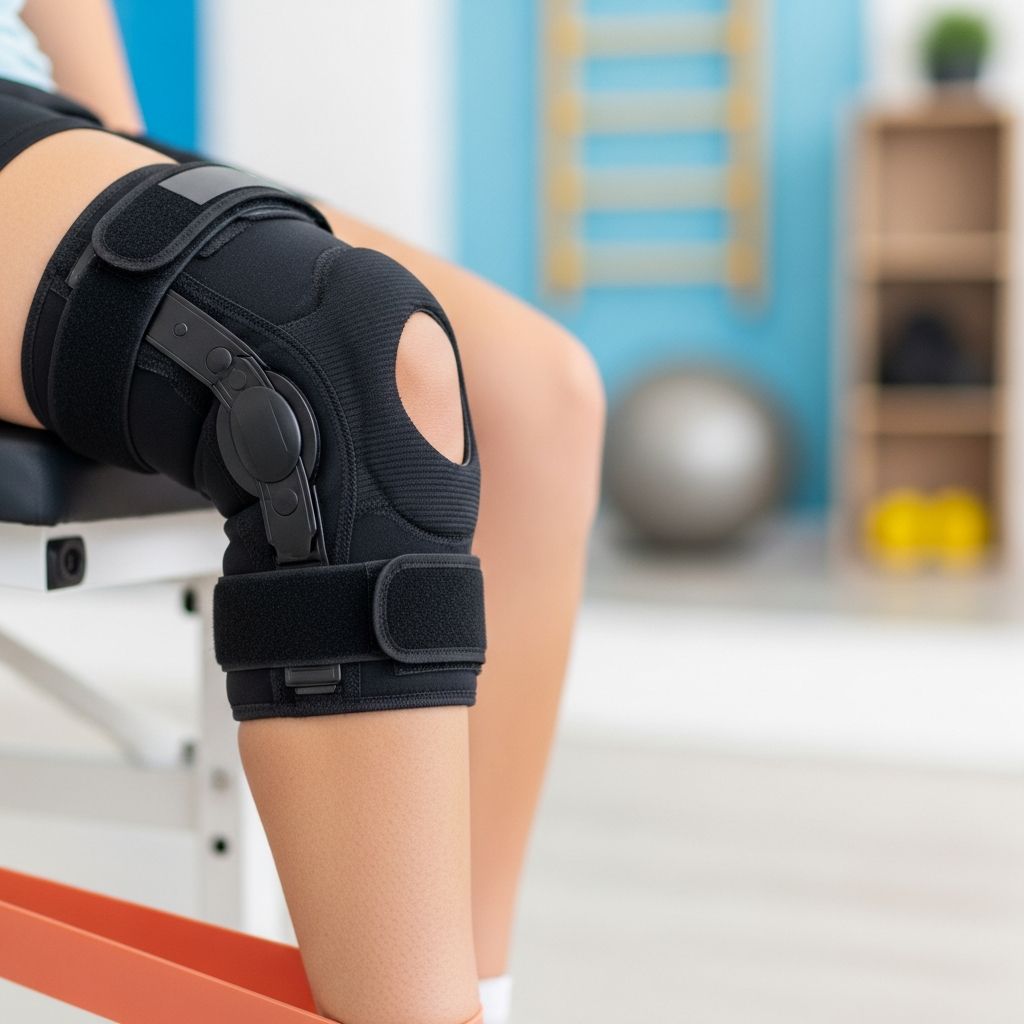
Beyond physical interventions, comprehensive pain management approaches help teenagers cope with injury-related discomfort during rehabilitation. Cognitive behavioral therapy teaches coping strategies for managing pain sensations psychologically. Complementary approaches including meditation, visualization, and other relaxation techniques address the emotional components of injury experience. When advised by medical professionals, compression braces provide joint support and reduce swelling. Specialized devices like transcutaneous electrical nerve stimulation (TENS) units offer additional pain management options for some athletes.
Special Considerations for Young Athletes
Teenage bodies differ meaningfully from adult bodies in ways that affect injury patterns and recovery. Growth plates at the ends of bones remain cartilaginous until late adolescence, making them vulnerable to specific injury types. Conditions like Osgood-Schlatter disease, common in basketball, football, soccer, and dancing participants, reflect this unique adolescent physiology. Recovery from such conditions requires conservative management with activity modification, ice, anti-inflammatory medications, compression stockings, and supportive footwear, coupled with specific stretches and strengthening exercises to optimize movement patterns.
Additionally, overtraining remains a particular concern for teenage athletes. The growth of year-round sports specialization has contributed to rising overuse injury rates among young people. Coaches, parents, and athletes themselves should recognize that adequate rest and cross-training provide benefits exceeding those from continuous sport-specific training. Alternating harder and easier workout days, incorporating rest days, and participating in multiple sports across seasons allow appropriate recovery while maintaining fitness.
Professional Assessment and Individualized Planning
While general principles of injury prevention apply broadly, individual variations in body structure, movement patterns, and sport demands mean that personalized assessment adds tremendous value. Athletic trainers and physical therapists can evaluate movement quality, identify muscular imbalances, assess flexibility restrictions, and design targeted programs addressing individual vulnerabilities. Establishing a baseline through pre-season screening allows detection of changes suggesting emerging problems. This individualized approach optimizes injury prevention effectiveness for each athlete’s unique circumstances.
Frequently Asked Questions
Q: Can I prevent all sports injuries through conditioning?
A: While comprehensive conditioning substantially reduces injury risk, complete prevention remains impossible. However, research shows that well-designed conditioning programs, continued throughout the season, can decrease injury rates by 50-75% for certain injuries like ACL sprains in soccer.
Q: How long should I wait before returning to my sport after an injury?
A: Return timelines vary considerably based on injury type and severity. Minor sprains might require several weeks, while ACL reconstruction typically demands nine to twelve months. Medical professionals and athletic trainers should establish individual return-to-play progressions based on your recovery and objective strength measurements.
Q: Is protective equipment like knee braces necessary for injury prevention?
A: Scientific evidence regarding protective equipment effectiveness remains inconclusive. However, sport-appropriate gear like helmets and mouth guards remains important for safety. Conditioning, proper technique, and balance training provide more substantial injury prevention benefits than equipment alone.
Q: Should I specialize in one sport year-round as a teenager?
A: Research suggests that year-round single-sport specialization increases overuse injury risk among teenagers. Participating in multiple sports across different seasons, incorporating rest periods, and varying training stimuli provide both injury prevention and overall athletic development benefits.
Q: What should I do immediately after suffering a sports injury?
A: Apply the RICE protocol: rest the injured area, apply ice for 10-20 minutes every hour until swelling decreases, use compression wraps, and elevate the injury above heart level when possible. Seek medical evaluation for significant injuries or pain that persists beyond initial treatment.
References
- Strategies to prevent injury in adolescent sport: a systematic review — National Center for Biotechnology Information (NCBI). 2008. https://pmc.ncbi.nlm.nih.gov/articles/PMC2465167/
- 7 common injuries in youth sports and how parents can help prevent them — UC Davis Health. 2023-04. https://health.ucdavis.edu/blog/cultivating-health/7-common-injuries-in-youth-sports-and-how-parents-can-help-prevent-them/2023/04
- Prevention and Treatment for Teen Sports Injuries — Rebound MD. https://www.reboundmd.com/news/prevention-treatment-teen-sports-injuries
- Youth Sports Injuries – Prevention & Treatment — American Society of Anesthesiologists. https://madeforthismoment.asahq.org/pain-management/types-of-pain/youth-sports/
- High School Sports Injuries — American Academy of Orthopaedic Surgeons (AAOS). https://orthoinfo.aaos.org/en/diseases–conditions/high-school-sports-injuries/
- Sports Injuries in Children and Teens — Kaiser Permanente. https://mydoctor.kaiserpermanente.org/ncal/structured-content/sports-injuries-in-children-and-teens-515380
- STOP Sports Injuries — National Council of Youth Sports. https://ncys.org/safety/stop-sports-injuries/