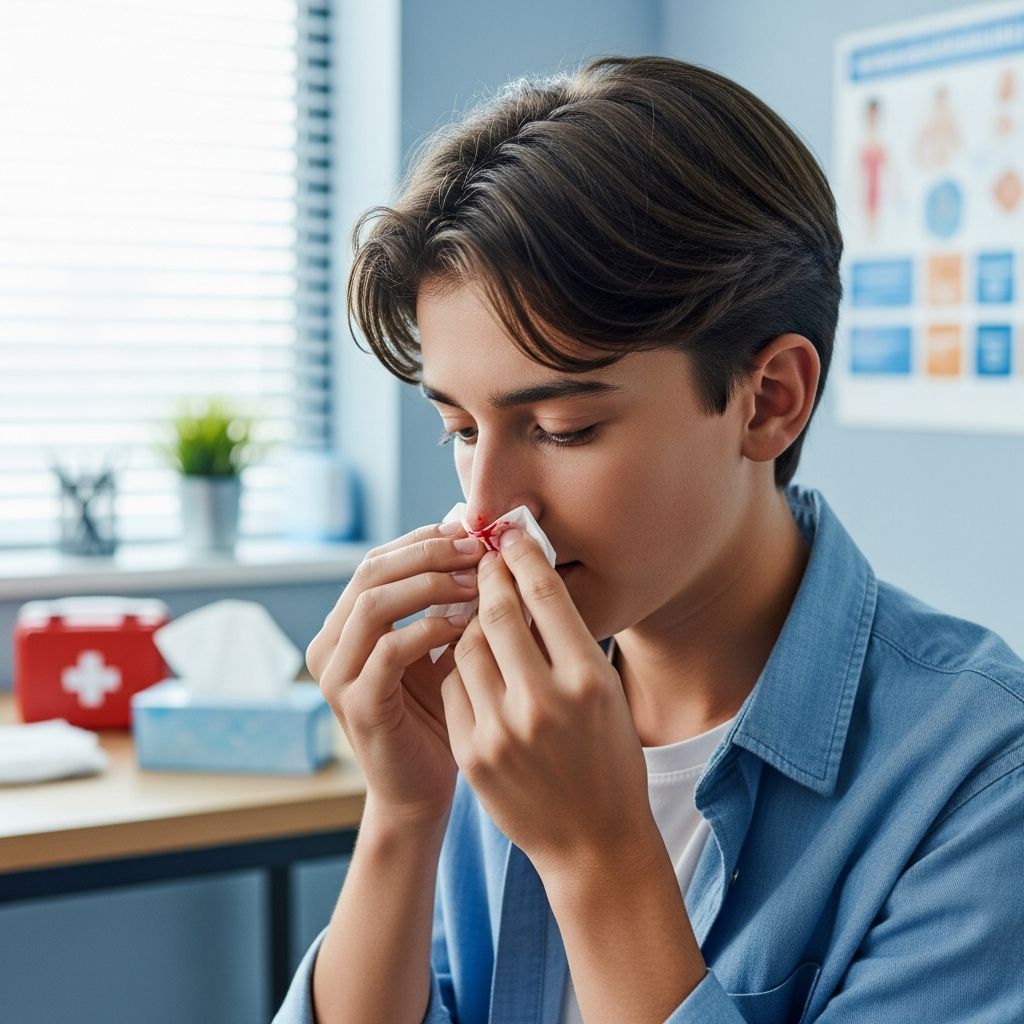
Nosebleeds, medically termed epistaxis, occur when delicate blood vessels in the nasal lining rupture, leading to blood flow from one or both nostrils. They are particularly frequent among teenagers due to active lifestyles, environmental factors, and developmental changes in the nasal structure.
Why Teens Experience Frequent Nosebleeds
The nasal cavity features a rich network of small, fragile blood vessels, especially along the septum—the wall dividing the nostrils. These vessels lie close to the surface, making them prone to breaking from minor irritation. In teens, nosebleeds often stem from everyday habits and conditions that dry out or traumatize this sensitive area.
Most incidents are anterior nosebleeds, originating from the front of the nose near the nostrils, which are easier to manage and less severe. Posterior nosebleeds, from deeper back areas, are rarer in young people but can involve heavier bleeding.
Common Triggers for Nosebleeds
Several factors contribute to nosebleeds in adolescents. Understanding these helps in prevention.
- Dry Air: Indoor heating in winter or arid climates dries nasal membranes, causing cracks and bleeding. This is the leading cause.
- Nose Picking or Rubbing: Habitual digging or frequent touching damages vessels.
- Forceful Nose Blowing: Aggressive clearing during colds exacerbates irritation.
- Allergies and Colds: Inflammation from sinus infections or hay fever weakens the lining.
- Physical Trauma: Sports injuries, falls, or foreign objects inserted into the nose.
Less common triggers include medications like blood thinners or overuse of nasal sprays. Teens in dry environments or with allergies face higher risks.
Step-by-Step Guide to Stopping a Nosebleed
Act promptly to control bleeding, which usually lasts 5-10 minutes. Stay calm, as panic increases blood flow.
- Sit Upright and Lean Forward: Prevent blood from entering the throat, which could cause nausea or vomiting.
- Pinch the Soft Part: Use thumb and index finger to squeeze nostrils together firmly for 10-15 minutes without peeking.
- Apply Cold Compress: Place an ice pack on the nose bridge or back of the neck to constrict vessels.
- Avoid Tilting Head Back: This directs blood downward instead of swallowing it.
After stopping, avoid blowing or picking for 24 hours. If bleeding persists beyond 20 minutes, recurs frequently, or is heavy, seek medical care.
| Type | Location | Symptoms | Treatment Level |
|---|---|---|---|
| Anterior | Front of nose | Bleeding from one nostril, mild | Home first aid |
| Posterior | Back of nose | Heavy flow, both nostrils, throat drip | Emergency care |
Everyday Prevention Strategies
Proactive measures reduce occurrences significantly.
- Humidify indoor air with a cool-mist humidifier, aiming for 30-50% humidity.
- Apply petroleum jelly inside nostrils with a cotton swab daily.
- Stay hydrated and use saline nasal sprays to moisturize membranes.
- Trim nails short to discourage picking; teach gentle nose blowing.
- Treat allergies with antihistamines or nasal corticosteroids as advised by a doctor.
During winter, avoid overheating rooms. Athletes should wear protective gear.
Recognizing When Nosebleeds Signal Bigger Issues
While most are benign, persistent or severe cases warrant attention. Frequent episodes (more than once a week) may indicate underlying problems.
- Bleeding Disorders: Conditions like hemophilia cause easy bruising alongside nosebleeds.
- Nasal Growths: Polyps or, rarely in teen boys, juvenile angiofibroma—a benign tumor causing recurrent heavy bleeds, nasal obstruction, and headaches.
- Sinus Problems: Chronic sinusitis or deviated septum.
See a doctor if: bleeding follows injury, lasts over 30 minutes, occurs after minimal trauma, or accompanies dizziness, pallor, or bruising.
Lifestyle Adjustments for Long-Term Control
Teens can minimize risks through habits. Avoid irritants like smoke or chemicals. Over-the-counter remedies like oxymetazoline sprays offer short-term relief but shouldn’t be overused to prevent rebound congestion.
For chronic cases, doctors may cauterize vessels with silver nitrate or use nasal packing. In rare tumors, surgery removes growths. Most teens outgrow frequent nosebleeds by late adolescence as nasal tissues strengthen.
FAQs About Nosebleeds in Teens
Can nosebleeds happen from high blood pressure?
No, they are not typically caused by hypertension; dry air and trauma are far more common.
Is it normal to swallow blood during a nosebleed?
Avoid it by leaning forward; swallowing can upset the stomach.
How often is too often for nosebleeds?
More than a few times weekly or those hard to stop need evaluation.
Do allergies directly cause nosebleeds?
They inflame the nose, increasing fragility, especially with rubbing.
Should I worry about a single heavy nosebleed?
If it stops with pressure and no other symptoms, likely not; monitor for repeats.
Expert Insights on Managing Recurrent Episodes
Pediatric ENT specialists emphasize early intervention. For instance, at centers like University of Michigan Health, recurrent cases in boys prompt checks for angiofibroma, though rare. Mayo Clinic notes avoiding aspirin, which thins blood.
Parental guidance: Track episodes, note triggers, and maintain a humid environment. Education empowers teens to handle independently.
In summary, nosebleeds alarm but rarely endanger. Knowledge equips teens for confident management.
References
- Juvenile angiofibroma: MedlinePlus Medical Encyclopedia — MedlinePlus (National Library of Medicine). 2023-10-15. https://medlineplus.gov/ency/article/001572.htm
- Nosebleeds (Epistaxis): Causes, Prevention and How to Treat — Nationwide Children’s Hospital. 2024-05-20. https://www.nationwidechildrens.org/conditions/nosebleeds
- Nosebleeds – symptoms, causes and management — Better Health Channel (State of Victoria). 2023-11-01. https://www.betterhealth.vic.gov.au/health/conditionsandtreatments/nosebleeds
- What causes nosebleeds in children? — Michigan Medicine (University of Michigan Health). 2024-02-12. https://www.michiganmedicine.org/health-lab/what-causes-nosebleeds-children
- Nosebleeds Causes — Mayo Clinic. 2025-01-10. https://www.mayoclinic.org/symptoms/nosebleeds/basics/causes/sym-20050914
- Nosebleeds (Epistaxis) — Children’s Hospital of Philadelphia. 2024-08-05. https://www.chop.edu/conditions-diseases/nosebleeds-epistaxis
- Nosebleeds (Epistaxis): Causes, Treatment & Prevention — Cleveland Clinic. 2025-03-18. https://my.clevelandclinic.org/health/diseases/13464-nosebleed-epistaxis