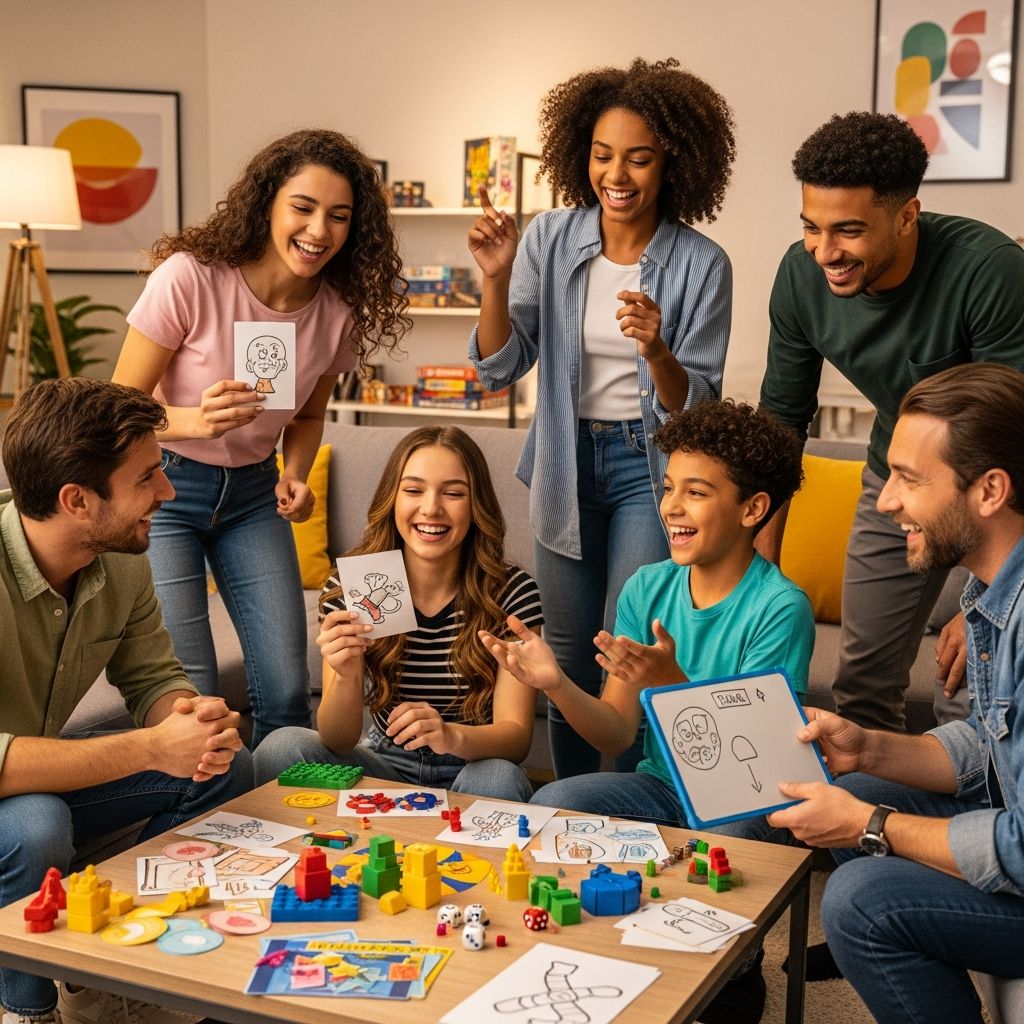
Family game time with teenagers can be tricky: they are busy, picky, and quick to call anything “lame.” Yet a thoughtful mix of games, the right atmosphere, and a little flexibility can turn game night into a tradition they actually look forward to rather than endure.
Why Game Nights Still Matter for Teens
Teenagers are pulled in many directions—school, friends, sports, jobs, screens—and family game time offers a rare, low-pressure way to reconnect. Games create a structured space where everyone has a role, but conversation and humor can flow naturally in the background.
Unlike serious “family meetings,” games remove the pressure to talk about big topics and instead build trust through inside jokes, shared memories, and playful competition. Over time, these light moments become an emotional safety net that helps teens feel grounded at home.
Setting the Stage for a Teen-Approved Game Night
The success of any family game night with teenagers depends less on the games themselves and more on how the evening feels. When the vibe is relaxed, respectful, and just a little silly, teens are far more likely to participate willingly.
- Keep it optional but attractive: Frame game night as an invitation, not a mandatory activity, and sweeten the offer with snacks, their favorite music, or a later curfew that day.
- Allow tech to exist: Instead of banning phones outright, build them into certain games or agree on quick “check breaks” so teens don’t feel cut off from their social world.
- Rotate decision power: Let a different family member choose the game each time; teens are more invested when they helped design the fun.
- Short and flexible: Start with 30–45 minutes and let people peel off if needed; the goal is quality connection, not enforced marathon sessions.
Types of Games That Work Well with Teenagers
Different teens enjoy different styles of play, so it helps to think in categories rather than just single game titles. Mix and match from these styles to match your teen’s personality, energy level, and attention span on any given night.
| Game Style | Best For | Typical Duration | Equipment Needed |
|---|---|---|---|
| Fast party games | High energy, lots of laughter, bigger groups | 5–20 minutes per round | Cards, prompts, phone timers |
| Strategy games | Teens who enjoy planning and competition | 30–90 minutes | Board games, score sheets |
| Creative & drawing games | Artistic or goofy teens; mixed ages | 15–40 minutes | Paper, markers, or drawing apps |
| Conversation & storytelling | Building connection and understanding | 10–30 minutes | Prompts, cards, or just questions |
| Digital party games | Screen-loving teens; remote relatives | 10–60 minutes | TV or laptop, smartphones or tablets |
Screen-Free Party Games Teens Won’t Hate
While many teens live on their phones, there is still plenty of appetite for screen-free fun when the games feel modern, fast, and not overly childish. The key is to keep rules simple and rounds short so there is constant movement and a sense of progress.
1. “Ridiculous Rankings” Challenge
This game leans into strong opinions, which most teens have in abundance. All you need is paper, pens, and a willingness to argue about meaningless things in a fun way.
- Each round, one person announces a category, such as “Best road trip snacks” or “Worst chores of all time.”
- Everyone privately writes a ranked top three list for that category.
- Lists are revealed, and the group debates until a “family master ranking” is agreed on.
- Give one point to each player whose top choice ends up in the number one spot.
Teens enjoy the chance to defend their choices and good-naturedly roast each other’s opinions. You can even save the final rankings as a running family document to laugh about later.
2. Speed Charades Remix
Classic charades can feel slow, so this version focuses on speed and chaos. It works especially well when your teen has friends over and you want something that gets everyone moving.
- Split into two teams and set a timer for 60 seconds per turn.
- One player acts out as many prompts as possible while their team guesses.
- Instead of pre-written cards, let players write their own silly ideas before the game starts.
- After each turn, tally the correct guesses and switch teams.
To keep things fair and modern, encourage prompts like memes, current shows, or made-up phrases your family finds funny. Teens appreciate being allowed to reference their own culture instead of only adult-centric ideas.
3. The “One-Minute Master” Challenge
This rapid-fire game turns random household skills into a playful competition. It is especially good for mixed ages because younger siblings and adults can both shine.
- Make a list of silly challenges like folding a fitted sheet, stacking coins, or balancing books on your head.
- Draw one challenge at a time and give everyone exactly one minute to complete it.
- At the end of each round, award points for performance, effort, or creativity.
- Let teens design some of the challenges so they feel like co-hosts, not guests.
The game naturally creates funny moments and short video-worthy clips, which teens may enjoy sharing with friends if everyone is comfortable with it.
Low-Pressure Strategy and Board Games
For teenagers who prefer thinking to shouting, strategy-style games can be a better fit than high-energy party games. These are especially nice on quieter evenings or when only one or two teens are present.
4. “Build & Break Alliances” Style Games
Many modern board games revolve around forming temporary alliances, negotiating trades, and reading other players. Teens often enjoy this social strategy because it lets them feel clever and in control.
- Look for games where players collect resources, build something on a shared board, and subtly compete for territory or points.
- Choose games where everyone stays involved until the end rather than getting knocked out early.
- Make a family rule that “trash talk” must stay playful and never personal, so the atmosphere remains fun.
5. Cooperative Problem-Solving Games
Not every teen enjoys competition, especially if they feel self-conscious about losing in front of siblings. Cooperative games flip the script: everyone either wins together or loses together.
- Choose games where the family works to solve a mystery, save a fictional world, or complete a mission before time runs out.
- Give your teen a “special role” within the group, such as strategist, timekeeper, or rules expert.
- After each round, briefly debrief what worked and what did not, emphasizing teamwork rather than blame.
These games can be surprisingly bonding, especially for families who tend to argue during competitive activities.
Creative Games for Artistic and Dramatic Teens
Many teenagers express themselves best through creativity rather than direct conversation. Games that involve drawing, acting, or storytelling can help them open up while still feeling safe behind a layer of play.
6. “Misleading Masterpieces” Drawing Game
This is a drawing-and-guessing game where accuracy matters less than clever misdirection. It works equally well with paper or drawing apps on tablets.
- One player secretly chooses a simple object (like “umbrella” or “pizza”) and starts drawing it.
- Halfway through, the artist must add extra details that lead others toward the wrong guess without completely hiding the real answer.
- Players shout out guesses; the first correct guess earns a point, and the artist gets a point if at least one person was fooled by the misleading details.
- Rotate artists every round to give everyone a chance to deceive and deduce.
7. The “Scene Switch” Improv Game
For drama-loving teens, improv-style games can be a highlight of game night. This one works best with three or more players and a willingness to be a little ridiculous.
- Two players start acting out a simple scene, such as ordering food or studying for a test.
- A third player acts as the director and occasionally calls out a new genre or mood: “horror,” “sports documentary,” “musical,” “whispered secrets,” and so on.
- The actors must instantly continue the same scene but in the new style.
- Rotate the director so everyone gets a chance to shape the chaos.
This game works well because there is no scoring, just laughter, which can be a relief for teens who feel pressure to perform in other areas of life.
Using Phones in Smart Ways: Digital-Friendly Family Games
Instead of fighting your teen’s attachment to screens, consider channeling it into shared experiences. With the right setup, digital party games can bring multiple generations together using devices everyone already owns.
- Use devices as controllers: Many party-style video games allow each player to join with a phone, using it to enter answers, draw, or vote.
- Cast to a big screen: Connect a laptop or console to the TV so the whole family can see prompts, drawings, and scores without crowding around a small screen.
- Set content boundaries together: Before starting, agree on which settings (like family-friendly filters) everyone is comfortable with, so parents and teens feel safe participating fully.
Digital party games are especially helpful for including relatives who live elsewhere; remote players can join via video chat and use their phones to participate as if they were in the room.
Micro-Games for Busy Weeknights
Not every connection moment has to be a formal “game night.” Micro-games that last ten minutes or less can fit into everyday life, like after dinner or while waiting for a ride.
8. “Two-Word Stories” Around the Table
This lightning-fast storytelling game requires no prep and can be played while eating or cleaning up. The challenge is to stay focused and keep the story coherent—or at least entertaining.
- One person starts a story using only two words, such as “Yesterday, zombies.”
- Each person around the table adds exactly two words at a time as the story travels in a circle.
- Keep going for two or three laps, then declare the story finished and start a new one if people are still laughing.
- Optional: Record audio of the best stories to listen to later; this can become a fun family archive.
9. “Spot the Lie” Text Edition
This quick honesty-and-humor game works particularly well with teens who communicate more by text than by talking. It can be played in person or even when someone is out of the house.
- One person sends a group text (or says aloud) three short statements about their day.
- Two statements must be true and one must be a lie.
- The others guess which statement is the lie and explain why they chose it.
- Rotate the storyteller so everyone gets a turn, keeping rounds short to maintain interest.
This light format gives teens a way to share bits of their lives without feeling like they are being interrogated.
Making Game Night a Habit, Not a Battle
The first few attempts at family game time with teenagers may feel awkward or forced, especially if it has been a while since you played together. The goal is not perfection but consistency and responsiveness to what your teen actually enjoys.
- Ask for feedback: After a game, simply ask, “What should we keep, change, or ditch next time?” and genuinely use their suggestions.
- Celebrate small wins: If your teen stays at the table for one round or laughs once, count it as progress rather than focusing on what did not happen.
- Stay flexible: Some weeks may work better with digital games, others with quiet strategy, and others with fast party chaos. Let the format shift as your family does.
Frequently Asked Questions About Games with Teenagers
How do I get a reluctant teen to join game night?
Start by inviting them to choose the game, the snack, or the playlist so they feel some ownership over the experience. Offer a short, clearly defined time commitment and respect it, proving that you value their schedule as much as your own.
What if my teens only want to play video games?
Instead of banning video games, try joining them in a title that allows group play or cooperative missions. From there, occasionally suggest short, non-digital games as a warm-up or cooldown rather than as a full replacement.
How can I include friends or extended family?
Choose games that scale easily to larger groups, such as party-style prompts, quick rounds, or digital games that accept multiple players using their phones. Set expectations ahead of time so guests know the plan and feel comfortable jumping in.
What about big age gaps between siblings?
Look for cooperative games or creative storytelling activities where different ages can contribute at their own level. When possible, run two simultaneous short games—one more complex and one simpler—and let players move between them as attention naturally shifts.
How often should we schedule game night?
There is no perfect frequency; weekly, biweekly, or even monthly can work depending on your family’s schedule. What matters most is that you treat it as a consistent, positive ritual rather than another obligation on an already full calendar.