Getting a license is exciting, but driving also comes with serious responsibility. Motor vehicle crashes are one of the leading causes of death for teenagers, and new drivers are at higher risk of being involved in serious collisions than any other age group. This guide explains the biggest dangers teens face behind the wheel and offers practical steps you and your family can take to stay safer on every trip.
Why Teen Driving Is High-Risk
Teen drivers are still learning how to handle complex traffic situations, control a vehicle at different speeds, and spot danger early. Because of this, teens ages 16–19 have a significantly higher rate of fatal crashes per mile driven than older drivers.
According to federal and national safety data:
- Teen drivers account for a disproportionate share of crashes and fatal crashes compared with their share of licensed drivers.
- Per mile driven, crash rates for drivers 16–19 are nearly four times those of drivers 20 and older.
- In recent years, thousands of young drivers, their passengers, and people in other vehicles have died each year in crashes involving teen drivers.
These numbers are not meant to scare you away from driving. Instead, they show why it is so important to respect the risks, follow the rules, and build strong safety habits from the start.
Major Risk Factors for Teen Drivers
Not all crashes are “accidents.” Many are the result of common, preventable behaviors. Understanding what raises your risk can help you avoid dangerous situations.
1. Inexperience
New drivers are still gaining:
- Judgment about when to slow down or change lanes
- Awareness of how weather, traffic, and road conditions affect control
- Confidence in handling emergencies, like sudden braking
Because of this learning curve, the first 12–24 months of driving on your own are the most dangerous. The good news: crash risk drops as you log more supervised, distraction-free miles with an adult and follow your graduated licensing rules.
2. Speeding
Speeding greatly increases both the chance of crashing and the severity of injuries if a crash happens. Research shows that teens are more likely than older drivers to be involved in speeding-related fatal crashes, and a large share of teen driver deaths involve excessive speed.
Why speeding is especially risky for teens:
- Less time to react to sudden hazards
- Longer stopping distances
- Greater loss of control on curves or when swerving
- More severe injuries in a crash
3. Distraction and Phone Use
Anything that takes your eyes, hands, or mind away from driving is a distraction. Phones are a major problem for all drivers, but especially teens. National data show that distraction contributes to a significant portion of fatal auto crashes each year, and phone use behind the wheel is common among young drivers.
High-risk distractions include:
- Texting, snapping photos, or recording videos
- Checking notifications or social media
- Typing addresses into navigation while moving
- Eating, grooming, or reaching for items in the car
- Talking with or reacting to passengers
Even a few seconds of looking away at highway speeds is enough to travel the length of a football field without truly seeing the road.
4. Not Wearing Seatbelts
Seatbelts are one of the simplest and most effective safety devices in any vehicle. Yet teens and young adults have some of the lowest rates of consistent seatbelt use, especially as passengers.
Seatbelts matter because they:
- Keep you from being ejected from the vehicle during a crash
- Help your body ride down the crash with the vehicle instead of hitting hard surfaces
- Work together with airbags (airbags alone are not enough)
5. Nighttime and Weekend Driving
Driving after dark is harder for everyone due to limited visibility, fatigue, and a higher chance of encountering impaired or speeding drivers. Teen crash and fatal crash rates are especially high at night and on weekends when recreational driving is more common.
Common challenges at night include:
- Reduced ability to see pedestrians, cyclists, and road hazards
- Glare from oncoming headlights
- More drowsy or impaired drivers on the road
- Social events that may encourage risky behavior
6. Passengers
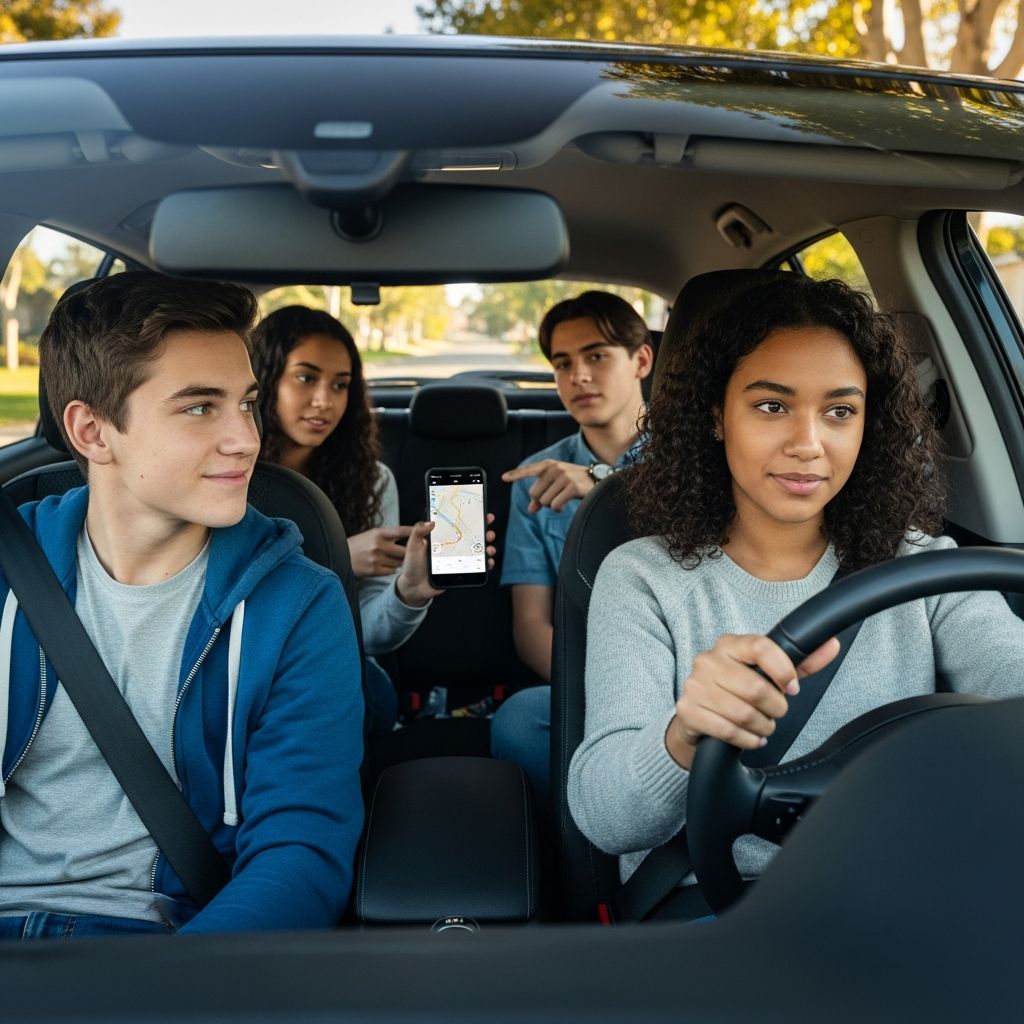
Friends in the car can be a major source of distraction and risk. Studies show that adding teen passengers to a teen driver’s car increases the chance of a crash, especially when there are multiple peers and no adults present.
Peer passengers may:
- Encourage speeding or risky decisions
- Distract the driver with conversation, music, or behavior
- Make it harder for the driver to focus on the road
7. Alcohol, Drugs, and Impairment
Any amount of alcohol or drug use increases crash risk. For teens, this is especially dangerous because they already have less driving experience. Many states have zero-tolerance laws for alcohol in drivers under 21, and penalties can be severe.
Impairment is not only about illegal substances. It can also include:
- Certain prescription or over-the-counter medications that cause drowsiness
- Extreme fatigue from lack of sleep
- Riding with someone else who is impaired
8. Vehicle Type and Condition
The kind of vehicle you drive matters. Research has found that teens driving older vehicles, especially those lacking modern safety features, face a higher risk of death in fatal crashes compared with teens driving newer vehicles.[10]
Higher-risk vehicle situations include:
- Very old cars without side airbags or electronic stability control
- Cars with worn tires or poor brakes
- High-performance vehicles that accelerate quickly and encourage speeding
Core Safety Habits Every Teen Driver Needs
While some risks are outside your control, many of the most important safety steps are in your hands. These habits can greatly reduce your chance of being in a serious crash.
Buckle Up Every Time
- Wear your seatbelt on every trip, no matter how short.
- Ask every passenger to buckle up before you start driving.
- Refuse to move the vehicle until everyone is buckled.
Consistent seatbelt use is one of the strongest predictors of whether you walk away from a crash or suffer severe injury.
Make Your Phone Off-Limits While Driving
- Turn on “Do Not Disturb While Driving” or similar features.
- Place your phone in the glove box, bag, or back seat before you start the car.
- Set navigation and music before you shift into drive.
- If you must use your phone, pull over in a safe, legal place first.
Obey Speed Limits and Adjust for Conditions
- Follow posted limits; they are set based on road design and crash data.
- Slow down further in rain, snow, ice, fog, or heavy traffic.
- Leave extra following distance—at least three seconds in good conditions, more in bad weather.
Limit Night Driving and Passengers
Graduated licensing systems exist because limiting exposure to higher-risk situations saves lives.
- Follow your state’s rules on nighttime driving and passenger limits.
- Even if the law allows more passengers, consider stricter family rules.
- Plan ahead so you are not pressured into driving late, long distances, or with a packed car.
Never Drive Impaired or Ride With an Impaired Driver
- Do not drive after using alcohol, marijuana, or other drugs.
- Avoid driving when extremely tired—fatigue can feel like impairment.
- Have a backup plan (trusted adult, rideshare, or agreed-on pick-up system) before going out.
- If your driver has been drinking or using drugs, choose safety over embarrassment and call for help.
Choose a Safer Vehicle and Maintain It
- When possible, drive a vehicle with modern safety features (airbags, electronic stability control, good crash-test ratings).[10]
- Check tires regularly for wear and proper pressure.
- Keep up with oil changes, brake service, and other recommended maintenance.
- Clear all windows, mirrors, and lights before driving, especially in winter.
Teen & Parent Driving Agreement
Creating a written driving agreement with your parents or caregivers can help everyone share expectations and understand consequences. It also supports the goals of graduated driver licensing by making rules clear at home.
| Topic | Teen Responsibilities | Parent Responsibilities |
|---|---|---|
| Seatbelts | Always buckle up and require all passengers to do the same. | Model seatbelt use every time you drive and back up the rule with consequences. |
| Phone Use | No texting, calling, or scrolling while the vehicle is in gear. | Do not call or text your teen when you know they are driving unless it is an emergency. |
| Night Driving | Follow legal curfews and family-set earlier limits when required. | Provide rides or adjust schedules so your teen does not feel pressured to break curfews. |
| Passengers | Limit peer passengers according to the law and family rules. | Support your teen in saying no to giving rides when it violates the agreement. |
| Substances | Never drive after drinking or using drugs; never ride with an impaired driver. | Offer a no-questions-asked safe ride policy so your teen can always choose safety. |
What to Practice During the Learning Phase
While you still have a learner’s permit, take advantage of supervised driving to experience many different conditions.
- Drive in daylight and at night (within legal hours).
- Practice in light, moderate, and heavier traffic as skills grow.
- Experience driving on highways, rural roads, and in residential areas.
- Learn how your car feels when braking hard on dry and wet roads in a safe location.
- Go over what to do if you are pulled over or if a crash happens.
Handling Common Challenging Situations
Bad Weather
Rain, snow, fog, and ice require extra caution.
- Slow down well below the speed limit when traction is reduced.
- Turn on headlights in rain and low visibility (not just daytime running lights).
- Leave extra space between you and the vehicle ahead.
- Avoid sudden steering, acceleration, or braking on slick surfaces.
If Friends Are Pressuring You
- Set expectations before the ride: explain that your focus is on safety.
- Blame your parents or the law if needed: “I could lose my license if I do that.”
- If the car becomes too chaotic, pull over in a safe place and calmly say you will not drive until it is quiet.
When You Feel Angry, Upset, or Tired
- Strong emotions and fatigue can slow reaction time and cloud judgment.
- Delay driving or ask someone else to drive if you are extremely upset or exhausted.
- If emotions rise while driving, take deep breaths, increase following distance, and consider pulling over to reset.
Frequently Asked Questions (FAQs)
Why are teens more likely to crash than older drivers?
Teens have less experience, are still developing judgment, and are more likely to engage in risky behaviors like speeding, driving at night with friends, and using phones while driving. Federal health and traffic safety data consistently show higher crash and fatal crash rates for drivers ages 16–19 compared with older drivers.
Is it really that dangerous to glance at my phone for a few seconds?
Yes. At highway speeds, even a 3–5 second glance means you travel the length of a football field without fully watching the road. Distraction is a documented factor in many serious crashes, and teens are frequently involved in phone-related distracted driving incidents.
I’m a good driver. Do I still need strict rules about passengers and nighttime driving?
Even confident drivers need boundaries. Statistics show that teen crash risk rises sharply at night and when teen passengers are present. Graduated licensing rules that limit these situations are based on large amounts of real-world crash data and have been shown to reduce injuries and deaths.
Do safety features really make a difference for teens?
Yes. Vehicles with modern safety technology—such as multiple airbags, electronic stability control, and strong crash-test ratings—provide better protection in crashes. Studies indicate that teens driving older vehicles without these features face a higher risk of death in serious crashes compared with those in newer, safer models.[10]
How can parents actually help their teens drive more safely?
Parents help most by modeling safe driving, setting clear rules, enforcing consequences, and providing plenty of supervised practice in varied conditions. National safety organizations encourage families to use written driving agreements and to treat driving privileges as something that can expand or shrink based on behavior, not just age.
References
- Risk Factors for Teen Drivers — Centers for Disease Control and Prevention (CDC). 2023-10-05. https://www.cdc.gov/teen-drivers/risk-factors/index.html
- Teen Drivers — Injury Facts, National Safety Council. 2024-04-01. https://injuryfacts.nsc.org/motor-vehicle/road-users/teen-drivers/
- Teenage Drivers — Insurance Institute for Highway Safety (IIHS). 2024-05-15. https://www.iihs.org/research-areas/teenagers
- Teens and Speeding: Breaking the Deadly Cycle — Governors Highway Safety Association (GHSA). 2020-01-01. https://www.ghsa.org/resource-hub/teens-and-speeding-breaking-deadly-cycle
- Risk Factors for Teen Drivers: Data and Statistics — CDC WISQARS and Teen Driver pages (supporting crash burden statements). 2023-10-05. https://www.cdc.gov/teen-drivers
- Teen Driving Statistics 2025 — ConsumerAffairs analysis of federal data. 2025-01-10. https://www.consumeraffairs.com/insurance/teen-driving-statistics.html
- Study Finds Teens Driving Older Vehicles Have Increased Risk for Fatal Crashes — Nationwide Children’s Hospital. 2025-05-14. https://www.nationwidechildrens.org/newsroom/news-releases/2025/05/cirp_vehicleage_safety