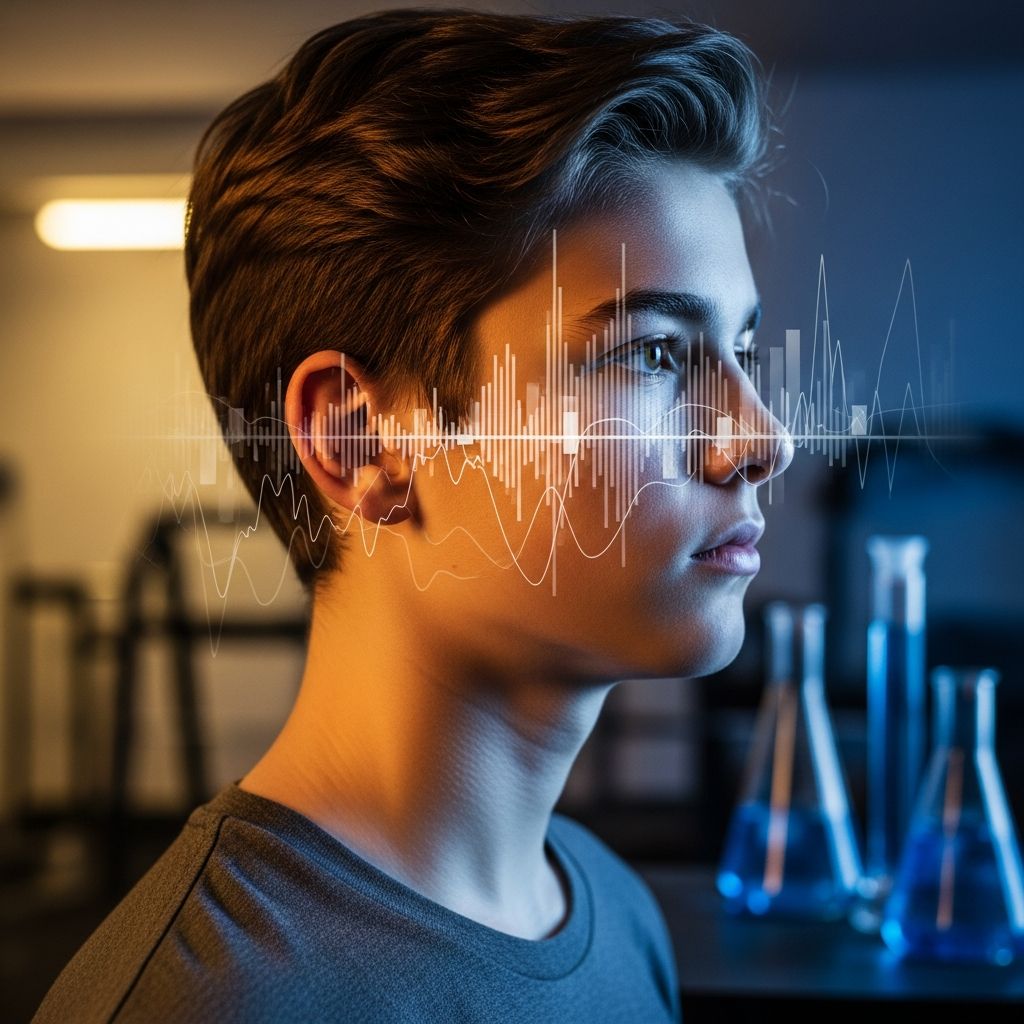
Teenage boys are increasingly drawn to practices aimed at boosting their testosterone levels, a phenomenon fueled by social media influencers and cultural pressures around masculinity. This trend, often called testosterone optimization or ‘T-maxxing,’ promises enhanced strength, energy, and confidence but carries substantial health risks for developing adolescents.
The Surge of Testosterone-Focused Trends Among Youth
Social platforms like TikTok and YouTube have popularized videos under hashtags such as #testosteronemaxxing, amassing millions of views. These clips promote extreme diets, intense workouts, supplements, and even synthetic hormones to elevate testosterone, framing it as a shortcut to peak physical and mental performance.
Influencers, including podcasters with large young male followings, endorse these methods as antidotes to perceived weaknesses like low energy or insufficient muscle growth. This taps into natural adolescent insecurities during puberty, when hormone levels naturally surge up to 30-fold, driving changes in voice, muscle, and body hair.
- Videos often highlight ‘natural’ boosters: high-fat diets, cold exposure, and heavy lifting.
- Others veer into unverified supplements or illegal hormone acquisition via black markets.
- The appeal lies in quick fixes for body image concerns, mirroring trends like ‘looksmaxxing.’
Understanding Testosterone’s Role in Adolescent Development
Testosterone, the primary male sex hormone, peaks during puberty to orchestrate physical maturation. Healthy levels fluctuate daily and lifetime, influenced by sleep, diet, stress, and exercise. For most teens, no intervention is needed as the body self-regulates effectively.
Low testosterone, or hypogonadism, affects about 1 in 200 men, more common in older adults, diabetics, or obese individuals. Symptoms include fatigue, reduced muscle, low libido, and mood issues. Diagnosis requires blood tests; self-diagnosis via social media ‘signs’ like slow gains is unreliable and promotes unnecessary alarm.
| Normal Pubertal Changes | Signs of True Low T (Hypogonadism) |
|---|---|
| Increased muscle mass and strength | Persistent fatigue and weakness |
| Deepening voice, facial hair growth | Low libido, erectile issues |
| Height spurt, bone density rise | Increased body fat, anemia |
| Daily fluctuations (highest mornings) | Diagnosed via blood test only |
This table contrasts expected puberty milestones with clinical low T indicators, emphasizing that social media often blurs these lines.
Why Teens Are Vulnerable to These Influences
Adolescence coincides with a testosterone surge that heightens reward sensitivity in brain areas like the striatum, fostering impulsivity and preference for immediate gains over delayed rewards. Studies show boys aged 11-14 with higher testosterone choose sooner-smaller rewards in 66% of tasks, linking to riskier behaviors.
Social media amplifies this by equating high T with masculinity, status, and success. Family dynamics during this ‘sensitive period’ also shape adult hormone baselines, underscoring the role of supportive parenting in countering external pressures.
Young men, facing body image anxieties and peer comparisons, delay professional help until crises emerge, making them prime targets for unregulated clinics or online sellers pushing ‘optimization’ packages.
Health Risks of Unsupervised Testosterone Boosting
For healthy teens, artificially elevating testosterone disrupts the hypothalamic-pituitary-gonadal axis, halting natural production. Recovery can be slow or incomplete, risking permanent fertility issues, hormonal imbalances, and stunted growth.
- Physical side effects: Acne, balding, high red blood cell count (polycythemia), elevated fracture risk from bone changes.
- Reproductive harm: Reduced sperm production, infertility; critical during puberty.
- Cardiovascular dangers: Black-market products linked to heart attacks, strokes via contaminants or overdosing.
- Mental health: Dependency, aggression spikes, depression upon cessation.
Legal testosterone requires prescriptions for confirmed hypogonadism under supervision. Illicit sources—gyms, encrypted apps—offer contaminated or counterfeit goods, heightening infection, organ damage, or toxicity risks.
Safe, Evidence-Based Ways to Support Healthy Testosterone
Parents and teens should prioritize lifestyle over hacks. Optimal habits naturally optimize hormones without risks.
- Sleep: 8-10 hours nightly; poor sleep tanks T levels.
- Nutrition: Balanced fats, proteins, zinc-rich foods like nuts, meats; avoid extreme diets.
- Exercise:
- Stress management: Mindfulness reduces cortisol, which antagonizes testosterone.
- Medical check: Consult doctors for bloodwork if symptoms persist.
Resistance training and HIIT boost T sustainably; overtraining backfires.
Research affirms these yield 15-20% T increases in deficient youth, far safer than synthetics.
The Role of Parents and Educators in Countering Trends
Guardians must monitor online habits, foster open talks on body image, and model balanced self-improvement. Schools can integrate media literacy to debunk myths, recognizing impulsivity as developmental while teaching delayed gratification.
Harm reduction involves non-judgmental education: Acknowledge self-betterment drives but highlight evidence-based paths. Early intervention prevents escalation to dangerous experimentation.
Expert Insights on Long-Term Implications
Public health experts warn of a ‘manufactured low T panic’ exploiting youth vulnerabilities, surging supplement sales and rogue TRT clinics. Pubertal hormone tweaks may alter brain reward circuits long-term, amplifying addiction risks or impatience into adulthood.
Intergenerational patterns emerge: Stressful family environments correlate with dysregulated adult T, stressing positive home influences.
Frequently Asked Questions (FAQs)
Is testosterone maxxing safe for healthy teen boys?
No. It disrupts natural hormone balance, risking infertility, heart problems, and growth issues. Stick to doctor-approved checks.
What are normal testosterone levels for teens?
Pubertal boys: 300-1000 ng/dL, varying by age/stage. Blood tests confirm; don’t trust online quizzes.
Can diet and exercise really boost testosterone?
Yes, moderately in healthy individuals via nutrient-dense foods and strength training, without side effects.
How can parents spot if their teen is T-maxxing?
Watch for extreme supplements, secrecy about sources, rapid mood/body changes, or social media obsession with influencers.
When should a teen see a doctor about low energy?
If persistent with muscle loss, fatigue, or mood dips despite good habits—prompt bloodwork rules out issues.
This comprehensive guide equips families to navigate testosterone trends wisely, prioritizing science over hype for lasting health.
References
- Why are young men ‘T maxxing’ testosterone? Do they need it? And what are the risks? — UNSW Sydney Newsroom. 2025-08-20. https://www.unsw.edu.au/newsroom/news/2025/08/young-men-t-maxxing-testosterone-need-vs-risks
- Testosterone Boost TikTok Trend – Dangers Explained by Experts — FUH Care Updates. 2025 (accessed 2026). https://www.fuh.care/updates/testosterone-maxxing-tiktok-trend
- Adolescent impatience increases as testosterone levels rise — Max Planck Institute for Human Development. 2023 (recently cited). https://www.mpg.de/11294919/adolescent-impatience-increases-as-testosterone-levels-rise
- The dangers of testosterone maxing on social media | 7NEWS — 7NEWS Australia (YouTube). 2025-08-20. https://www.youtube.com/watch?v=mB7qA5FDwyw
- Pubertal testosterone correlates with adolescent impatience and … — PMC (NCBI). 2020-05-26. https://pmc.ncbi.nlm.nih.gov/articles/PMC7242510/
- Evidence for an adolescent sensitive period to family experiences … — PNAS. 2022. https://www.pnas.org/doi/10.1073/pnas.2202874119