Bullying affects millions of children, causing emotional distress, reduced academic performance, and long-term mental health challenges. Parents and educators can equip kids with verbal responses, confidence techniques, and systemic prevention to counter it effectively. This guide offers original strategies inspired by evidence-based practices to help children respond assertively and create bully-free zones.
Understanding Bullying Dynamics
Bullying involves repeated aggressive behavior intended to harm, often exploiting power imbalances, leading to physical, psychological, or educational damage. It manifests verbally, physically, relationally, or cyber-wise, with bystanders witnessing most incidents without intervening. Recognizing patterns—name-calling, exclusion, rumors—enables timely responses. According to CDC data, targeted skill-building reduces occurrences by fostering empathy and conflict resolution.
Children bully due to insecurity, poor emotional regulation, or social pressures; victims often feel isolated. Addressing root causes through open dialogue prevents escalation.
Building a Foundation: Prevention at Home and School
Prevention starts with proactive measures. Parents should discuss bullying’s harms regularly, modeling respect and empathy to strengthen emotional resilience. Schools benefit from multi-tiered systems: universal programs for all students, targeted interventions for at-risk youth, and intensive support for involved parties.
- Daily Check-Ins: Ask open questions like “How did friends treat you today?” to normalize reporting.
- Role-Playing Scenarios: Practice responses in safe settings to build automatic confidence.
- Emotional Skill Lessons: Teach identifying feelings and healthy outlets like deep breathing.
Evidence from NIH reviews shows parent training and classroom rules significantly decrease victimization. Virginia’s education department emphasizes clear behavioral expectations and supervised high-risk areas like playgrounds.
Clever Verbal Comebacks for Different Ages
Age-appropriate retorts disarm bullies without escalating conflict. Focus on calm delivery, eye contact, and walking away. These empower kids to reclaim control verbally.
For Younger Kids (Ages 5-8): Simple and Playful
Young children respond best to light, deflecting phrases that avoid engagement.
| Situation | Comeback | Why It Works |
|---|---|---|
| Name-calling (“You’re stupid!”) | “Sticks and stones may break my bones, but words can’t hurt me.” | Classic rhyme diffuses tension, teaches ignoring insults. |
| Teasing clothes/toys | “I like it this way! Your turn to show yours.” | Shifts focus back, promotes positivity. |
| Exclusion from play | “Can I join? I’ll bring fun too!” | Invites inclusion assertively without begging. |
Practice these with mirrors or family to boost delivery confidence.
For Tweens (Ages 9-12): Witty and Confident
Tweens handle sarcasm; responses highlight absurdity.
- “If brains were dynamite, you wouldn’t have enough to blow your nose.” – Counters insults with humor.
- “Cool story, bro. Needs more dragons.” – Dismisses boasts lightly.
- “I’m busy being awesome right now. Talk later.” – Asserts self-worth.
Elite DNA stresses empowering bystanders here; teach kids to say “That’s not cool—stop it” collectively.
For Teens (Ages 13+): Sharp and Boundary-Setting
Teens need comebacks addressing relational aggression or cyberbullying.
| Type | Comeback | Follow-Up Action |
|---|---|---|
| Verbal Jab (“Loser!”) | “Says the expert on losing friends.” | Walk away, report if repeated. |
| Social Media Slams | “Jealous much? Block and move on.” | Screenshot, tell adult. |
| Group Mockery | “Your group’s vibe is weak. I’m out.” | Seek positive peers. |
Mass.gov recommends normalizing help-seeking; teens should connect with counselors.
Non-Verbal Power Moves: Body Language and Actions
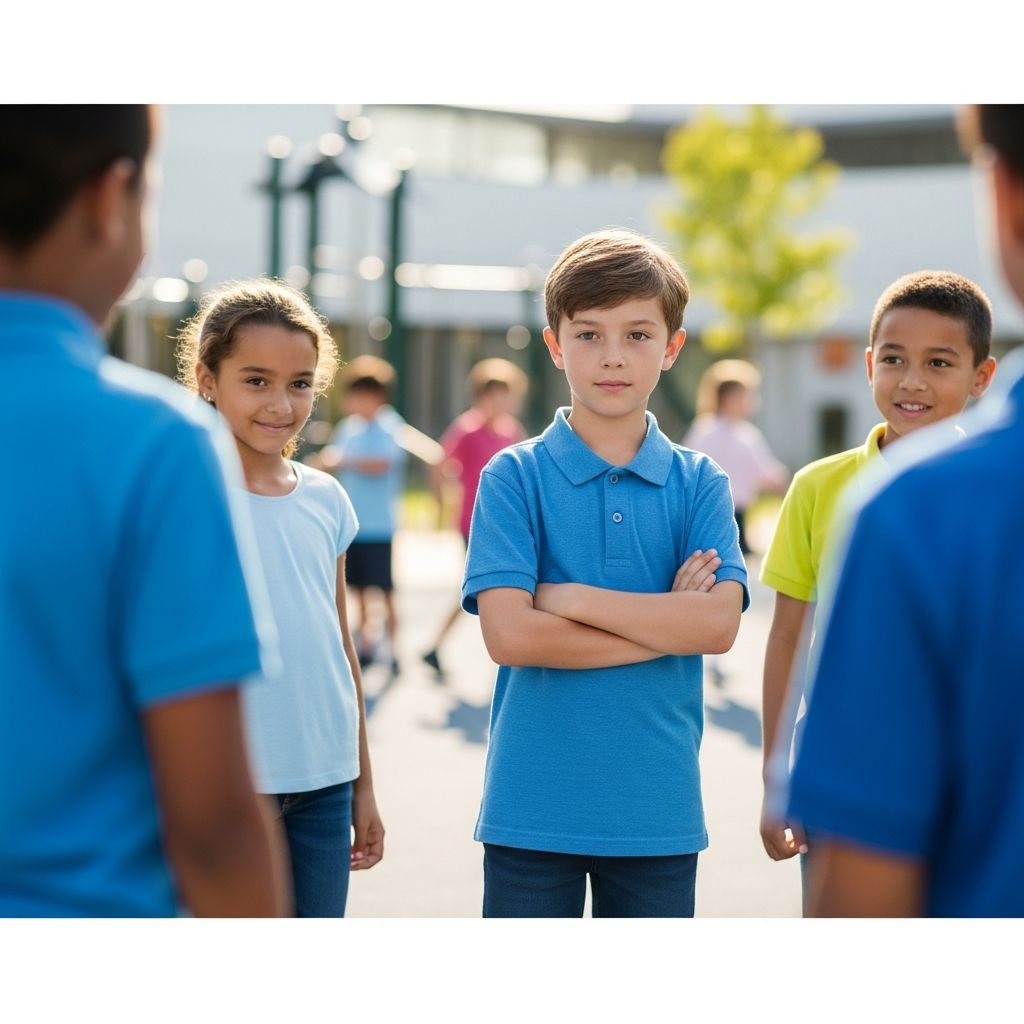
Words alone aren’t enough; confident posture amplifies impact. Stand tall, shoulders back, direct gaze—signals unshakeable self-assurance. After responding, exit gracefully: “Not worth my time,” then leave.
Teach “ignore and thrive”: Pretend indifference, focus on strengths like hobbies. CDC’s Good Behavior Game rewards positive classroom interactions, reducing bullying. PBIS integrates explicit anti-bullying instruction into routines.
Turning Bystanders into Allies
Most bullying occurs with audiences; empower them. Train kids to intervene safely: Distract (“Hey, let’s play over here”), Delegate (“Teacher, check this out”), or Directly support (“Want to team up?”). Nebraska’s strategies include bystander protocols in school plans.
Communities see drops when bystanders report 80% more incidents. Role-play group scenarios at home.
School and Community Prevention Frameworks
Effective programs blend universal (all students), selective (at-risk), and indicated (high-risk) tiers. Examples:
- Universal: Social-emotional curricula teaching empathy.
- Selective: Anger management for bullies.
- Indicated: Counseling for victims.
Supervise hotspots: Cafeterias, halls. Clear policies with consistent consequences deter repeat offenses. Parent volunteers amplify efforts.
Long-Term Resilience: Beyond the Moment
One-off responses build toward enduring strength. Encourage sports, arts for confidence; surround with supportive friends. Monitor mental health—bullying links to anxiety, depression. Intervene early with professionals.
NIH meta-analyses confirm multi-component programs (parent training + supervision) cut bullying 20-25%. Foster growth mindset: “Challenges make me stronger.”
Frequently Asked Questions (FAQs)
What if comebacks escalate the situation?
Prioritize safety: If risk of harm, walk away and tell an adult immediately. Practice de-escalation like calm voice and ignoring.
How do I talk to my shy child about this?
Use non-judgmental chats during calm times. Role-play gently, praise efforts. Build from small wins.
Does ignoring bullies really work?
Yes, for attention-seeking types, as bullies crave reactions. Combine with reporting for persistence.
What about cyberbullying comebacks?
Don’t engage online: “Not interested,” block, report platform/school. Save evidence.
How can schools measure prevention success?
Track reports, surveys, incident data annually. Adjust via PBIS frameworks.
Implementing these strategies creates resilient kids ready for life’s challenges. Consistent home-school alignment yields safest environments.
References
- Bullying Prevention Tips — Massachusetts Government. 2023. https://www.mass.gov/info-details/bullying-prevention-tips
- Building a Safe Space: Strategies for Bullying Prevention Year-Round — Elite DNA Behavioral Health. 2023. https://elitedna.com/building-a-safe-space-strategies-for-bullying-prevention-year-round/
- About Bullying — Centers for Disease Control and Prevention (CDC). 2024-01-29. https://www.cdc.gov/youth-violence/about/about-bullying.html
- Preventive Interventions – Preventing Bullying Through Science, Policy, and Practice — National Center for Biotechnology Information (NCBI/NIH). 2016. https://www.ncbi.nlm.nih.gov/books/NBK390407/
- Bullying Prevention — Virginia Department of Education. 2023. https://www.doe.virginia.gov/programs-services/student-services/prevention-strategies-programs/bullying-prevention
- Bullying Prevention and Intervention Strategies — Nebraska Department of Education. 2023. https://www.education.ne.gov/safety/bullying-cyberbullying/bullying-prevention-and-intervention-strategies/
- Bullying Prevention — Positive Behavioral Interventions & Supports (PBIS). 2024. https://www.pbis.org/topics/bullying-prevention