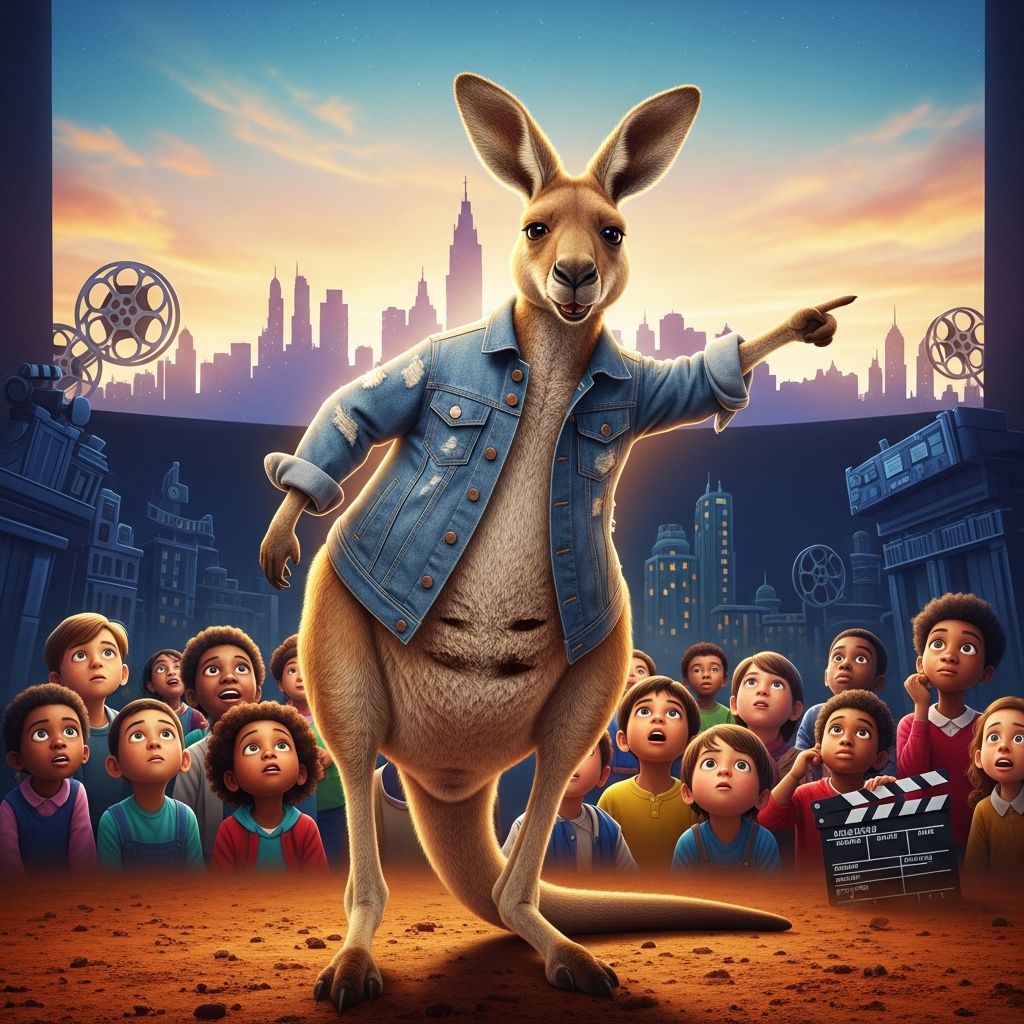
In 2003, Kangaroo Jack arrived in theaters looking, at first glance, like harmless fun: a wisecracking CGI kangaroo, slapstick hijinks in the Australian outback, and bright, cartoonish marketing aimed squarely at children. But behind the scenes, the movie began as a raunchy, R-rated crime comedy for adults and was later edited down into a PG-rated “family” film. That bizarre transformation turned Kangaroo Jack into a case study in how Hollywood marketing, the ratings system, and parental expectations can collide in uncomfortable ways.
This article uses Kangaroo Jack as a springboard to explore how an adult project became a kids’ release, why the rating system did not fully reflect parents’ concerns, and how caregivers today can better navigate trailers, age ratings, and streaming platforms when choosing movies for children.
From Raunchy Crime Comedy to PG Family Film
Long before it became a children’s punchline, Kangaroo Jack started life as a very different script. The original concept, under a working title often reported as a more explicit adult comedy, focused on two American screw-ups entangled with mob money in Australia. The kangaroo—who would later dominate the marketing—was initially just one chaotic element in a story built around crime, crude humor, and adult-targeted jokes.
Test screenings reportedly revealed a major problem: audiences disliked much of the movie, but they responded positively to the kangaroo and the absurd premise of money hopping away across the desert. In an effort to salvage the project, the studio tried a radical fix:
- Cut down profanity, sexual content, and more graphic elements to move the rating from R to PG.
- Emphasize the CGI kangaroo in trailers and posters, despite the character having very limited dialogue or personality in the actual film.
- Shift the entire advertising strategy toward children and families, including heavy promotion on kids’ television blocks.
The result was a movie that sat uncomfortably between two audiences: still filled with innuendo and violence for kids, but too silly and thinly plotted for adults.
Why Parents Felt Misled
Many parents at the time emerged from theaters frustrated, feeling they had been sold a very different film from the one they watched. Major newspapers documented complaints that the PG-rated movie was loaded with sexual innuendo, crude jokes, and a level of violence that felt far from the carefree animal adventure the ads promised.
Key points of frustration included:
- Trailers that over-promised talking animal comedy. The kangaroo appears to talk in only a small portion of the film, but the marketing made him look like the main comic star.
- Advertising placed in young children’s programming. Spots on kids’ channels and family blocks signaled that the film was tame enough for early elementary audiences, even though many critics considered it unsuitable for that age group.
- A PG rating that didn’t match parental expectations. Parents described being surprised by sexual jokes and body-focused gags that had not been obvious from the trailers or posters.
The controversy around Kangaroo Jack highlighted a larger problem: families often treat a PG rating and kid-focused marketing as a guarantee of appropriateness, even though the rating itself is only an advisory category with wide flexibility.
Understanding the PG Rating: Wide Room for Interpretation
The U.S. film rating system is overseen by the Classification and Rating Administration (CARA), operating under the Motion Picture Association (MPA). Ratings like G, PG, PG-13, R, and NC-17 are intended as descriptive guidance, not enforceable age limits, and are based on the judgment of a board representing parents.
According to the MPA, a PG rating signals that some material may not be suitable for children and that parental guidance is suggested. The rating can still include:
- Mild to moderate violence
- Some crude humor or innuendo
- Occasional strong language, depending on context
However, critics and scholars have long noted that the ratings system can be inconsistent or opaque. Investigations into the ratings board have argued that similar content can receive different ratings at different times, and that there is limited transparency in how decisions are made. In the case of Kangaroo Jack, parents who wrote to news outlets questioned how a film with its particular mix of innuendo and rough slapstick still landed a PG instead of PG-13.
Content Ratings vs. Family Expectations
One of the core problems exposed by the Kangaroo Jack debate is the gap between what the PG label allows and what many parents consider appropriate. Research in media effects and child development has found that exposure to on-screen violence and sexual content can influence children’s attitudes and behavior, especially when it is presented as humorous or consequence-free.
Parents often assume that if a movie is marketed as a “kids’ film,” any problematic content will be toned down or framed in an obviously unrealistic way. Kangaroo Jack challenged that assumption: the rating board allowed certain jokes and visuals that critics called out as too suggestive for young children, and the marketing treated the movie as a safe family choice.
Marketing vs. Reality: The Bait-and-Switch Problem
Kangaroo Jack is now regularly cited as a classic example of a “bait-and-switch” marketing campaign in film history. The film’s advertising leaned heavily on elements that were not representative of the viewing experience:
- Posters and trailers featuring the kangaroo wearing sunglasses, dancing, and apparently rapping.
- Only brief scenes in the finished film where the kangaroo appears to talk at all.
- Very little hint in promotional materials of the mob plot, violence, or sexualized humor.
This mismatch between promotion and content has raised broader concerns about truth in film advertising. In recent years, studios have even faced lawsuits claiming trailers were misleading when actors heavily featured in marketing barely appeared in the final cut. While such cases remain rare, they underline that there is growing public awareness of how aggressively trailers can shape expectations.
| What Marketing Suggested | What the Movie Delivered |
|---|---|
| A talking, rapping kangaroo as the main star | A mostly silent kangaroo, with brief fantasy dialogue scenes |
| Lighthearted animal comedy for kids | Crime plot with mob money, chases, and slapstick violence |
| Gentle family humor | Frequent innuendo, body jokes, and suggestive imagery |
| Classic feel-good adventure | A re-edited adult comedy awkwardly reshaped for children |
What Kangaroo Jack Reveals About Hollywood Strategy
At a business level, the handling of Kangaroo Jack demonstrates several industry realities that remain relevant in the streaming era:
- Family titles are valuable release slots. A calendar weekend with few kid-friendly releases can motivate studios to reshape content to grab that audience, even if the material was not developed for children.
- Marketing often chases the broadest possible demographic. Emphasizing cute CG animals and slapstick humor is a way to draw both children and parents, even if other aspects of the film skew older.
- Test screenings can reshape an entire film. Negative audience feedback about adult content led to edits and cuts, but the underlying structure and tone of the original concept still showed through in the PG version.
For parents, the key takeaway is that a film’s final rating and marketing image may reflect commercial strategy as much as creative intent.
How Parents Can Better Judge If a Movie Is Kid-Appropriate
The Kangaroo Jack controversy may be two decades old, but the core challenge—evaluating content beyond the rating—has only grown more urgent as streaming platforms and on-demand rentals put thousands of titles within a few clicks of a child’s hands.
Practical Steps Before Hitting Play
To reduce the risk of Kangaroo Jack-style surprises, parents can combine ratings with a few extra checks:
- Read detailed content summaries. Nonprofit organizations and review sites that break down violence, language, sexual content, and substance use offer far more nuance than a single letter rating.
- Watch the full trailer critically. Look for hints of tone—guns, suggestive clothing, close-ups played for laughs—that might indicate older-skewing material even in a so-called kids’ film.
- Check multiple reviews. Professional critics and parent reviewers often flag if a family-targeted movie feels uncomfortably mature for young children.
- Know your child’s sensitivities. A PG film that one 10-year-old finds silly may be overwhelming for a 6-year-old, especially if it includes intense chases or sexualized jokes.
- When in doubt, pre-screen. If you have time, watching a movie yourself first—or at least the first 20 minutes—can quickly reveal whether the tone matches your expectations.
Teaching Kids Media Literacy Through “Bad” Kids’ Movies
Ironically, a mismatched film like Kangaroo Jack can become a useful teaching tool about how media works. As children grow older, parents can use such examples to introduce basic media literacy concepts:
- Trailers are advertisements. Explain that trailers are designed to sell a movie, not fully describe it. They highlight the most marketable moments, which may not represent the whole story.
- Ratings are guidelines, not guarantees. Discuss how a PG label covers a wide range of content, and that different families have different comfort levels.
- Studios make business decisions. Age-appropriate versions of the truth—like “the studio changed the movie to make more money”—help kids understand why content and marketing might not match.
- It’s okay to turn something off. Normalizing the idea that a family can stop a movie if it feels wrong teaches children they can set boundaries with media.
Organizations focused on children and media have long emphasized that active mediation—talking about what kids watch and how it is made—is more protective than simply banning certain titles. Frustrating experiences can become opportunities to sharpen critical thinking.
Where Kangaroo Jack Sits in Pop Culture Now
Today, Kangaroo Jack is less a beloved classic than a cult oddity—often remembered in think pieces and video essays as one of the strangest wide-release “kids’ movies” of its era. Critics still point to it when discussing:
- Films that were drastically reshaped in the editing room after poor test screenings.
- Cases where studio marketing arguably misled families about tone and content.
- The ongoing debate over whether the PG and PG-13 labels adequately separate children’s entertainment from more mature fare.
The movie’s reputation has even intersected with wider critiques of the ratings system. Commentators argue that decisions like granting Kangaroo Jack a PG while other, more thoughtful films for young people have been rated R or PG-13 reflect a system more sensitive to language and certain taboos than to overall themes or context.
Key Takeaways for Modern Parents
Although Kangaroo Jack is a product of the early 2000s, its story carries enduring lessons for families navigating today’s sea of streaming content:
- Never rely on marketing alone. Posters, thumbnails, and trailers are designed to attract attention, not warn about content.
- Treat ratings as a starting point. Use G/PG/PG-13 as coarse filters, then consult more detailed content information.
- Remember that “family film” is a marketing label. It does not mean every moment in the movie is designed for young children.
- Talk openly with kids about surprises. If a movie feels rougher than expected, discuss why it bothered you and what you all prefer instead.
- Support transparency. Seeking out and rewarding films and platforms that provide clear content descriptions helps push the industry toward more honest labeling.
Ultimately, the saga of Kangaroo Jack underscores a simple truth: parents and caregivers remain the final line of defense when it comes to what children watch. With a bit of skepticism, a few extra clicks of research, and ongoing conversations at home, families can avoid the worst bait-and-switch experiences—and even turn the occasional misfire into a valuable learning moment.
Frequently Asked Questions (FAQs)
Q: Is Kangaroo Jack appropriate for young children today?
Most critics and many parents at the time argued that Kangaroo Jack was too heavy on innuendo, crude humor, and slapstick violence for younger children, even though it carries a PG rating. Older kids and teens may find it more suitable, but caregivers should review content details first.
Q: How did Kangaroo Jack get a PG rating instead of PG-13?
Reports from the period describe how the film was edited repeatedly to remove or soften explicit language and sexual content to obtain a PG rating. Critics argued that what remained still felt out of step with many parents’ expectations for a PG family movie, raising concerns about the consistency of the rating system.
Q: Are there other examples of misleading movie marketing like this?
Yes. Media outlets have documented multiple films where trailers emphasized humor, romance, or certain actors while downplaying darker or more adult elements, leading some viewers to feel misled. Kangaroo Jack is often singled out because it was sold as a kids’ animal comedy despite having adult comedy roots.
Q: What should I look for beyond the rating when choosing a movie for my child?
Consider checking detailed content breakdowns from trusted review organizations, scanning multiple reviews, and watching the trailer with a critical eye for hints of mature themes. When possible, pre-screening or watching together with your child makes it easier to pause and talk if something feels off.
Q: Has the movie ratings system changed since Kangaroo Jack?
The basic G–NC-17 framework has remained, but public pressure and ongoing criticism have encouraged more descriptive rating labels and some additional guidance. However, many researchers and advocacy groups still call for greater transparency and consistency in how ratings are assigned.
References
- 20 Years Ago, One Bizarre Kids’ Movie Pulled Off a Shameless Bait-and-Switch — Fatherly. 2023-01-17. https://www.fatherly.com/entertainment/kangaroo-jack-streaming-kids-movie-inappropriate
- How ‘Jack’ hopped away with a PG rating — Los Angeles Times. 2003-01-28. https://www.latimes.com/archives/la-xpm-2003-jan-28-et-gold28-story.html
- How Studios Forced an R-Rated Kangaroo Comedy Into a PG Kids Movie — MovieWeb. 2022-01-17. https://movieweb.com/kangaroo-jack-originally-r-rated/
- Policy Statement: Children, Adolescents, and the Media — American Academy of Pediatrics. 2013-11-01. https://publications.aap.org/pediatrics/article/132/5/958/31291/Children-Adolescents-and-the-Media
- 10 Times Studios Lied To Get You To Watch Movies — Screen Rant. 2021-06-06. https://screenrant.com/movie-studio-lies-movies/
- Media and Young Minds — American Academy of Pediatrics. 2016-11-01. https://publications.aap.org/pediatrics/article/138/5/e20162591/60639/Media-and-Young-Minds
- Critics Say ‘Kangaroo Jack’ Is No Kids’ Movie — NPR/WEKU. 2003-01-29. https://www.weku.org/2003-01-29/critics-say-kangaroo-jack-is-no-kids-movie