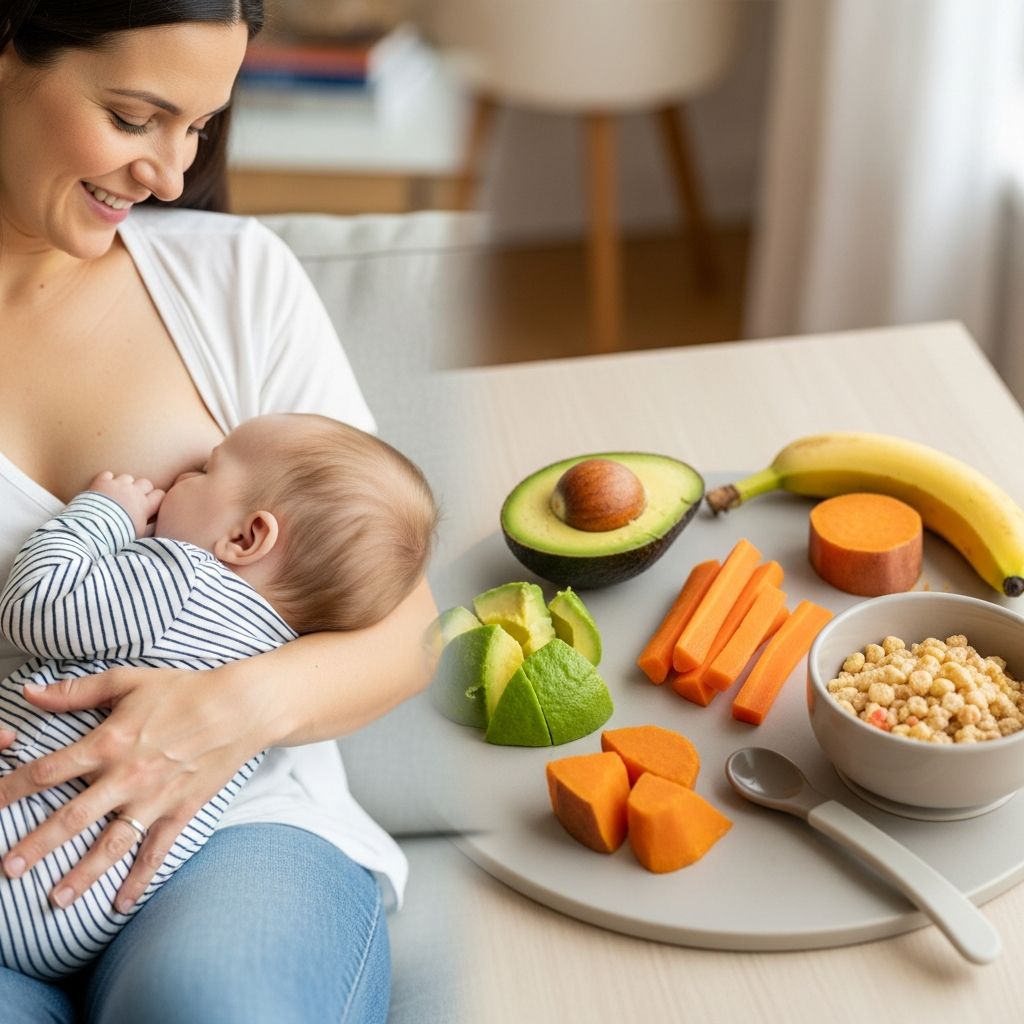
Transitioning from exclusive breastfeeding to including solid foods marks a key milestone in your baby’s nutritional journey. Breast milk remains the cornerstone of their diet even as solids are added, providing essential nutrients, antibodies, and comfort. This guide explores readiness cues, initial food choices, practical feeding methods, and long-term strategies to foster healthy eating habits while sustaining breastfeeding benefits.
Understanding Your Baby’s Nutritional Needs
During the first six months, breast milk or formula supplies all necessary calories, fluids, vitamins, and minerals for growth. The American Academy of Pediatrics and CDC recommend exclusive breastfeeding for about the first 6 months, delaying solids before 4 months to allow digestive and immune systems to mature.
After 6 months, babies need iron-rich solids to complement breast milk, as stores from birth deplete. Vitamin D supplementation (400 IU daily) is crucial for breastfed infants to support bone health via calcium absorption. Continue breastfeeding on demand—aim for 24-32 ounces daily alongside solids—as it offers immune protection and adapts to nutritional gaps.
Signs Your Baby Is Ready for Solids
Look for developmental milestones indicating readiness, typically between 4-6 months, confirmed by your pediatrician:
- Strong head and neck control: Baby holds head steady while sitting supported.
- Sitting with minimal support: Can sit in a high chair without slumping.
- Diminished tongue-thrust reflex: No longer pushes food out with tongue.
- Interest in food: Watches you eat, reaches for utensils or food.
- Doubled birth weight: Around 13 pounds or more.
If these signs appear before 4 months or are absent by 7 months, consult a healthcare provider to rule out delays. Premature babies may need adjusted timelines.
Preparing for the First Solid Foods
Start when baby is content, alert, and slightly hungry—mid-morning after a breastfeed works well. Use a high chair for safety, bibs for mess, and soft spoons. Begin with 1-2 teaspoons, increasing gradually as tolerated. Always nurse before or after solids to maintain milk supply and supply primary nutrition.
Position baby upright to prevent choking. Have a small amount of breast milk ready if frustration arises. Talk encouragingly: “Yummy peas for baby!” Patience is key; initial feeds may involve more play than eating.
Choosing and Introducing First Foods
Prioritize iron-fortified, single-ingredient foods to monitor allergies. Mix cereals with breast milk for familiarity. Introduce one new food every 3-5 days, watching for rash, diarrhea, or vomiting.
| Food Group | Examples (Pureed/Soft) | Iron/Zinc Content | Introduction Tips |
|---|---|---|---|
| Grains | Iron-fortified oatmeal, barley (avoid single rice due to arsenic) | High iron | Mix 1 tbsp cereal with 4-5 tbsp breast milk; thicken gradually |
| Vegetables | Carrots, sweet potatoes, peas, green beans | Moderate | Steam and puree smooth; no salt/sugar |
| Fruits | Apples, pears, bananas, peaches | Low | Cook if needed; mash ripe ones |
| Proteins | Meat purees (chicken, beef), tofu | High iron/zinc | Introduce early for nutrition |
Progress from runny purees to thicker mashes by 7-8 months, then soft finger foods like ripe banana pieces or avocado by 8-10 months. Variety exposes baby to flavors, reducing pickiness later.
Allergy Prevention and Common Allergens
Introduce potential allergens (peanut, egg, dairy, wheat, soy, fish, shellfish, tree nuts) one at a time around 6 months if no high-risk family history. Guidelines from health authorities now support early exposure to lower allergy risk.
- Peanut: Thinned butter or puree.
- Egg: Well-cooked yolk mashed.
- No whole nuts until age 4 due to choking.
Consult pediatrician for eczema or allergy family history. Stop and seek advice if severe reaction occurs.
Sample Feeding Schedules by Age
Adjust based on baby’s cues; solids supplement, don’t replace, breast milk.
| Age | Feeds/Day | Sample Day |
|---|---|---|
| 6 Months | 1-2 solids | Breastfeed on demand; 1 midday puree (2-4 tsp) |
| 7-8 Months | 2-3 solids | Morning cereal, afternoon veggie, evening fruit; nurse frequently |
| 9-11 Months | 3 meals + 1-2 snacks | Include finger foods; 24-32 oz breast milk |
By 12 months, most babies take 3 meals, 2 snacks, and reduced milk feeds.
Overcoming Common Challenges
- Refusal: Skip a day, try different textures/flavors; don’t force.
- Gagging/Choking: Normal learning; keep pieces tiny, supervise.
- Constipation: Offer prunes/pears; ensure hydration via breast milk.
- Messy eating: Embrace it—builds motor skills.
- Milk supply dip: Nurse first, pump if needed.
Teething or illness? Revert to liquids temporarily.
Long-Term Nutrition and Weaning
Aim for balanced plates: half fruits/veggies, quarter grains, quarter proteins by 12 months. Limit juice; no cow’s milk before 12 months. Breastfeeding can continue up to 2 years or beyond for benefits.
Wean gradually when baby shows less interest and solids dominate (often 12-24 months). Maintain family meals to model healthy eating.
Frequently Asked Questions
How often should I breastfeed once solids start?
Continue on demand, typically 4-6 times daily plus nights, reducing naturally as solids increase.
Can I mix foods or stick to singles?
Start singles for allergy watch, then combine for variety after 3-5 days.
What if my baby rejects solids?
Persist gently over weeks; offer breast milk first to avoid hunger frustration.
Is rice cereal safe as first food?
Limit due to arsenic; opt for oat/barley iron-fortified alternatives.
When to worry about growth or allergies?
Track weight with pediatrician; mild rashes may pass, but hives/vomiting need immediate check.
References
- The ABCs of Infant Nutrition, From Breastfeeding to Introducing Solids — Capital Area Pediatrics. 2023. https://www.capitalareapediatrics.com/blog/the-abcs-of-infant-nutrition-from-breastfeeding-to-introducing-solids
- Solid foods: How to get your baby started — Mayo Clinic. 2024-01-15. https://www.mayoclinic.org/healthy-lifestyle/infant-and-toddler-health/in-depth/healthy-baby/art-20046200
- A guide to starting solids — Gerber Medical Hub. 2023. https://medical.gerber.com/sites/default/files/flmngr/pdf/guide-to-starting-solids.pdf
- Starting Solid Foods — American Academy of Pediatrics (HealthyChildren.org). 2024-06-01. https://www.healthychildren.org/English/ages-stages/baby/feeding-nutrition/Pages/Starting-Solid-Foods.aspx
- Starting Solid Food — La Leche League GB. 2024. https://laleche.org.uk/starting-solid-food/
- When, What, and How to Introduce Solid Foods — Centers for Disease Control and Prevention (CDC). 2024-09-10. https://www.cdc.gov/infant-toddler-nutrition/foods-and-drinks/when-what-and-how-to-introduce-solid-foods.html