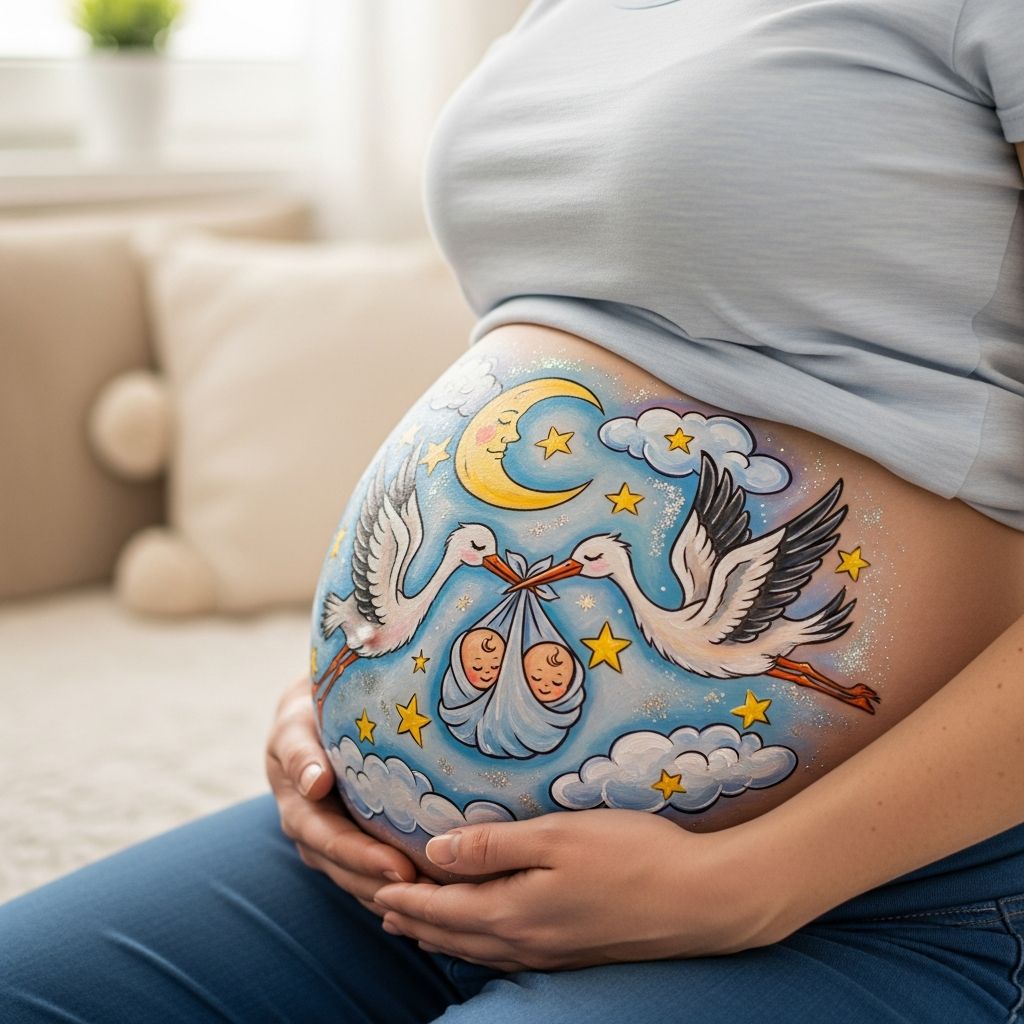
Transforming a baby bump into a colorful canvas has become a joyful way for many parents-to-be to celebrate pregnancy. Belly painting blends creativity, connection, and memory-making into one playful activity that can be done at home, at a baby shower, or as part of a maternity photo session.
This guide walks you through how to enjoy belly art safely, choose designs that feel right for you, and capture the experience in photos you will love for years to come.
Why Paint Your Pregnant Belly?
Belly art is more than just a cute trend. It can support emotional connection with your baby and your changing body during pregnancy, a time that is often filled with mixed feelings.
- Celebrate your changing body: Many pregnant people experience body image shifts. Adding art can help them see their belly as something beautiful and powerful.
- Create a memory: Photos of the artwork become a playful time capsule of that specific moment in pregnancy.
- Bond with loved ones: Partners, kids, and friends can join in the painting, turning it into a relaxed, screen-free shared activity.
- Ease photo anxiety: For those who feel shy in front of the camera, focusing attention on the painted bump instead of the whole body can make photo shoots more comfortable.
Is Belly Painting Safe During Pregnancy?
When you choose products designed for skin and follow basic precautions, belly painting can be a safe and low-risk activity. Professional guidance on chemicals and cosmetics in pregnancy consistently emphasizes avoiding unnecessary exposure to solvents and harsh ingredients.
| Safe Choices | Avoid or Use With Caution |
|---|---|
| Water-based, skin-safe face and body paints | Acrylic paints, oil-based paints, craft paints |
| Products labeled non-toxic and cosmetic-grade | Spray paints, solvent-based markers or inks |
| Hypoallergenic, fragrance-free options | Strongly scented, perfumed products that may irritate skin |
Key safety tips to keep in mind:
- Use cosmetic-grade products: Choose paints specifically marketed for face or body painting. They are designed to sit on the skin surface, not to be absorbed deeply.
- Check ingredients: Look for water-based formulas and avoid products containing solvents such as toluene or xylene, which health agencies recommend limiting in pregnancy.
- Do a patch test: Apply a small amount to your inner arm, wait 24 hours, and check for redness, itching, or swelling before painting the whole belly.
- Ventilate the room: Good airflow reduces any irritation from mild odors, as recommended for most cosmetic and cleaning product use in pregnancy.
- Listen to your body: If you feel itchy, hot, short of breath, or uncomfortable, wash the paint off and take a break.
When Is the Best Time to Paint Your Belly?
Many families gravitate toward belly art in the later second or early third trimester, often between about 28 and 34 weeks. At this point, the belly is usually round and prominent, but you may still have enough energy to sit for painting and photos.
- Earlier painting (20–27 weeks): Good if you are carrying small, expecting preterm delivery, or simply excited to start celebrating.
- Later painting (35+ weeks): Can work well if you feel comfortable sitting or reclining, but allow for more breaks and flexible timing in case labor starts early.
There is no single correct week. The right time is when you feel up to it, can stay in one position for a short while, and have the energy to enjoy the experience.
Choosing Safe Products and Simple Tools
You do not need professional-grade gear to enjoy belly art, but you do want your supplies to be gentle on sensitive pregnant skin.
Recommended Supplies
- Water-based face or body paint palettes
- Soft brushes in 2–3 sizes (thin for details, thicker for filling shapes)
- Makeup sponges for smooth backgrounds and blending
- A cup or bowl of clean water and paper towels
- A mirror for checking the overall look
- Optional: cosmetic glitter labeled safe for face and body (never craft glitter, which can be sharp)
What to Avoid
- Household acrylic or wall paint
- Permanent markers or ink pens
- Oil-based theater paints that are difficult to remove
- Glues or adhesives not intended for skin
Preparing Your Belly for Painting
Proper preparation helps the paint go on smoothly and makes the experience more comfortable.
- Clean gently: Wash your belly with mild soap and water and pat dry. Avoid heavy oils or thick creams immediately before painting; they can prevent colors from adhering well.
- Moisturize lightly: If your skin is dry or itchy, use a small amount of pregnancy-safe moisturizer and allow it to absorb fully before painting.
- Choose a comfortable position: Many people prefer sitting slightly reclined with good back support and a pillow under the knees.
- Protect clothing and furniture: Place a towel or old sheet across your lap and over the seat.
- Keep snacks and water nearby: Staying hydrated and nourished can help you feel better during the session, consistent with general pregnancy care guidance.
Creative Design Ideas for Belly Art
Your belly art can be as simple or elaborate as you like. The goal is meaning, not perfection. Even basic shapes can become beautiful in photos.
Themes Inspired by Your Story
- Nature themes: Flowers, trees, moons, suns, or waves can symbolize growth, cycles, and new beginnings.
- Seasonal designs: Pumpkins for fall, snowflakes for winter, blossoms for spring, or beach scenes for summer.
- Baby symbols: Tiny footprints, a stork, a nest with eggs, or a baby carriage silhouette.
- Personal favorites: A tribute to a favorite book, gentle animals, or a meaningful place.
- Abstract art: Colorful swirls, patterns, or mandalas if you prefer something non-figurative.
Painting Placement Options
Thinking about how the design sits on your belly can make a big difference to the final look.
- Centered circle: A round design that follows the curve of your bump for a classic look.
- Full coverage: The artwork wraps across the whole front of your belly, ideal for bold, statement photos.
- Off-center or diagonal: A design that leans to one side or rises diagonally can feel dynamic and unique.
- Around the belly button: Turn the belly button into part of the design (for example, the center of a flower or a small planet).
- Continuing upward: For more advanced or professional sessions, the art can extend toward the chest for a more dramatic composition.
Step-by-Step: Simple DIY Belly Painting
You do not need to be an artist to enjoy painting your bump. Here is a basic process that works for most designs.
- Plan your design: Sketch your idea on paper or look up a simple outline online for reference.
- Lightly outline on the skin: With a cosmetic pencil or very watered-down paint in a pale color, draw the main shapes.
- Block in large areas of color: Use a sponge or wide brush to fill the biggest shapes first. Let each layer dry briefly.
- Add medium details: Leaves, stars, simple patterns, or shading can be added with a mid-sized brush.
- Finish with fine lines: Use a thin brush for outlines, small dots, or lettering such as the baby’s nickname.
- Allow to dry: Sit back and rest for several minutes so the paint sets before you move around too much.
- Take photos: Capture close-ups of the design and wider shots that include your face or family.
Tips for Comfortable and Flattering Photos
You do not need professional photography equipment to get images you love. A smartphone and good light are often enough.
- Use natural light: Stand near a window or go outside in shade for even, soft lighting that flatters skin.
- Avoid overhead lights: Strong ceiling lights can cast harsh shadows and emphasize texture in paint or skin.
- Try different angles: Photograph the belly straight-on, from a slight side view, and from above while reclining.
- Include loved ones: Have your partner or older children gently touch or kiss the painted bump.
- Capture behind-the-scenes: Photos of someone painting your belly or you laughing during the process tell the full story.
Involving Partners, Siblings, and Friends
Inviting others to join the painting can turn this into a playful group activity.
- Partners: A partner painting the design can be a sweet bonding moment and helps them feel actively involved in the pregnancy.
- Older children: Kids can add simple shapes, handprints, or dots while an adult handles the more detailed elements.
- Friends or shower guests: At a baby shower, guests can contribute to one large design or sign their names around the edges.
Research on family adjustment to a new baby highlights the value of inclusive rituals and shared preparation in supporting attachment and emotional adjustment.
Removing Belly Paint Gently
When the photos are done and you are ready to clean up, a gentle removal routine protects your skin.
- Loosen the paint: Apply a small amount of pregnancy-safe oil or rich moisturizer to the painted area and massage it in.
- Wash with mild soap: Use warm (not hot) water and a soft cloth or your hands to wash away the softened pigment.
- Pat, don’t scrub: Pat dry with a towel. Avoid vigorous rubbing, especially if your skin is already stretched or sensitive.
- Re-moisturize: Apply a gentle lotion or oil afterward to soothe the skin.
Frequently Asked Questions (FAQs)
Q1: Is belly painting safe for every pregnancy?
If you use cosmetic-grade, water-based paints and your skin is healthy, belly painting is generally considered low risk. However, if you have a history of severe allergies, eczema, or pregnancy-related skin conditions, it is wise to speak with your healthcare provider first, which aligns with general prenatal care recommendations.
Q2: Can the baby feel the brush or sponge?
Your baby is well cushioned inside the uterus and amniotic fluid. Light pressure on the outer belly during everyday activities, including gentle painting, is not known to harm the baby, according to standard obstetric guidance. Still, avoid pressing hard or poking the belly.
Q3: How long can I safely keep the paint on?
Most people enjoy their design for a couple of hours, enough for relaxation and photos. Leaving it on for an extended time is not usually necessary; washing off after your session helps minimize the chance of irritation, consistent with general cosmetic use recommendations.
Q4: What if I have stretch marks on my belly?
Stretch marks are extremely common in pregnancy and do not prevent painting. Many people use design elements, such as flowers or soft backgrounds, to blend or partially cover them, but there is no need to hide them if you do not want to. If the skin feels itchy or fragile, choose very soft brushes and minimal pressure.
Q5: Do I need a professional artist?
No. A professional can create highly detailed designs and manage complex compositions, but simple, meaningful art created by loved ones can be just as special. The value lies in the experience and the memory, not only in technical perfection.
References
- Household & Environmental Hazards During Pregnancy — MotherToBaby (Organization of Teratology Information Specialists). 2023-06-01. https://mothertobaby.org/fact-sheets/household-activities-during-pregnancy/
- Safe Use of Cosmetics During Pregnancy — American College of Obstetricians and Gynecologists. 2020-01-01. https://www.acog.org/womens-health/faqs/safe-use-of-cosmetics-personal-care-products-during-pregnancy
- Pregnancy FAQs: Diet, Exercise & Self-Care — Mayo Clinic. 2023-02-01. https://www.mayoclinic.org/healthy-lifestyle/pregnancy-week-by-week/in-depth/pregnancy/art-20046089
- Transition to Parenthood — American Psychological Association. 2019-05-01. https://www.apa.org/topics/parenting/transition-parenthood