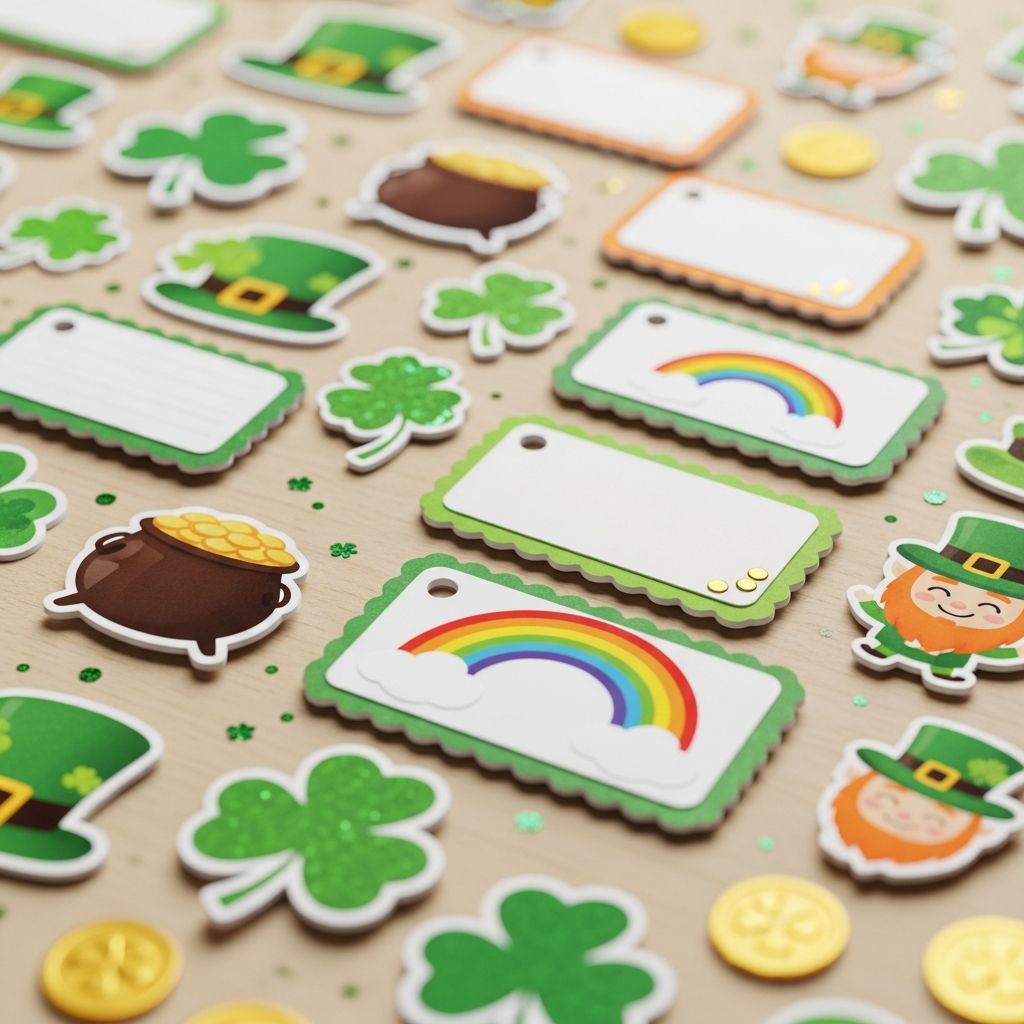
Bringing Luck and Laughter with St. Patrick’s Day Stickers
St. Patrick’s Day is more than just green clothes and shamrock hats—it’s a chance to spark creativity and joy in children through simple, hands-on projects. One of the most delightful ways to celebrate is by making custom stickers and tags that kids can use for gifts, cards, or classroom fun. These small, colorful creations are perfect for building fine motor skills, encouraging artistic expression, and adding a personal touch to the holiday.
Why Stickers and Tags Are Perfect for Kids
Stickers and tags are ideal for young children because they combine art, play, and practical use in one small package. Unlike large crafts that can feel overwhelming, stickers and tags are quick to make and easy to customize. They also give kids a sense of ownership and pride when they see their designs being used.
- Builds fine motor skills: Cutting shapes, peeling stickers, and writing names all help strengthen little hands.
- Encourages creativity: Kids can choose colors, shapes, and themes that reflect their personality.
- Supports early learning: Matching, sorting, and labeling activities can be built around sticker and tag projects.
- Great for sharing: Kids love giving handmade stickers and tags to friends, teachers, and family members.
Simple Supplies for a Lucky Craft Session
You don’t need a craft store full of supplies to make festive St. Patrick’s Day stickers and tags. Most of what you need can be found at home or picked up at a dollar store. Here’s a basic list to get started:
- White or colored sticker paper (peel-and-stick sheets)
- Cardstock or heavy paper for tags
- Scissors (child-safe for little ones)
- Markers, crayons, or colored pencils
- Green, gold, and rainbow-colored paper
- Glue sticks or liquid glue
- Washable paint and paintbrushes
- Stickers, glitter, and foam shapes (optional)
- Hole punch and ribbon or string (for tags)
Having a few themed items like shamrock stickers, gold coins, or rainbow washi tape can add extra fun, but they’re not required. The goal is to keep it simple and accessible so that every family can join in the celebration.
Designing St. Patrick’s Day Stickers with Kids
Stickers are a fantastic way to let kids explore shapes, colors, and symbols associated with the holiday. The process can be as simple or as detailed as your child’s age and interest level allows.
Step-by-Step Sticker Making
- Choose a base: Use sticker paper or make your own by gluing small shapes onto a backing sheet and adding a layer of clear contact paper.
- Draw or trace shapes: Shamrocks, rainbows, pots of gold, leprechaun hats, and four-leaf clovers are all classic choices. Let kids draw freehand or use templates.
- Add details: Use markers or crayons to add faces, patterns, or words like “Lucky,” “Happy St. Patrick’s Day,” or the child’s name.
- Cut out shapes: Cut around each design carefully. For younger kids, adults can do the cutting while the child focuses on decorating.
- Peel and play: Once the stickers are ready, let kids use them on cards, notebooks, lunchboxes, or even as name tags.
Fun Sticker Themes for the Holiday
- Lucky symbols: Shamrocks, horseshoes, and four-leaf clovers.
- Rainbow fun: Rainbows with clouds, pots of gold, and colorful arcs.
- Leprechaun life: Hats, boots, beards, and tiny shoes.
- Irish words: Simple words like “luck,” “green,” “rainbow,” or “gold.”
- Personal touches: Name stickers with a shamrock border or a rainbow background.
Creating Festive Tags for Gifts and Treats
Tags are a slightly more structured craft that can be used in many ways during the holiday. They’re perfect for attaching to small gifts, treat bags, or classroom goodie boxes.
Basic Tag-Making Process
- Cut tag shapes: Use cardstock to cut rectangles, circles, or shamrock shapes. Rounded corners are safer and look more polished.
- Decorate the front: Let kids paint, color, or glue on shapes. They can draw a rainbow, a pot of gold, or a smiling leprechaun.
- Add a message: Write “To:” and “From:” lines, or let kids write their own short note like “Happy St. Paddy’s Day!” or “For You, Lucky Friend!”
- Punch a hole and add ribbon: Use a hole punch at the top and thread a piece of green or gold ribbon through it.
- Attach to gifts: Tie tags onto small bags of chocolate coins, green cupcakes, or handmade cards.
Ideas for St. Patrick’s Day Tag Uses
- Classroom goodie tags: Attach to treat bags for classmates.
- Family gift tags: Use on small presents for siblings or parents.
- Party favor tags: Personalize each favor with a child’s name and a lucky symbol.
- Door or bag tags: Hang on backpacks, lunchboxes, or bedroom doors for a festive touch.
Adapting Projects for Different Ages
One of the best things about sticker and tag crafts is that they can be easily adjusted for toddlers, preschoolers, and early elementary kids. Here’s how to tailor the activities to different age groups:
For Toddlers (Ages 2–3)
- Use large, simple shapes like big shamrocks or circles.
- Focus on coloring and sticking pre-cut shapes onto tags or sticker sheets.
- Let them use large crayons or washable markers to make marks.
- Adults can handle cutting and hole punching.
For Preschoolers (Ages 3–5)
- Introduce tracing and simple cutting with safety scissors.
- Encourage them to draw basic symbols and write their names.
- Use stickers and foam shapes to build scenes on tags.
- Practice matching colors and shapes (e.g., “Put a green shamrock on this tag”).
For Early Elementary (Ages 6–8)
- Let them design their own templates and write short messages.
- Introduce more detail in drawings and use of patterns (stripes, dots, zigzags).
- Challenge them to make a set of matching stickers or a themed tag series.
- Encourage creativity with mixed media like paint, glitter, and collage.
Learning Opportunities Hidden in the Fun
While sticker and tag crafts are primarily about fun, they also support important early learning skills. By framing the activity with a few simple goals, parents and caregivers can turn a craft session into a mini learning adventure.
Math and Sorting Skills
- Sort stickers by color, shape, or size.
- Count how many shamrocks or rainbows they make.
- Practice one-to-one correspondence by matching stickers to a number line or chart.
Language and Literacy Skills
- Label stickers with words like “green,” “gold,” “rainbow,” and “lucky.”
- Practice writing names on personal stickers or tags.
- Dictate short messages for adults to write on tags, then read them together.
Fine Motor and Coordination
- Using scissors to cut shapes.
- Peeling and placing small stickers.
- Gluing small items like foam shapes or sequins.
- Writing with crayons, markers, or pencils.
Ways to Use Stickers and Tags Beyond the Craft Table
Once the stickers and tags are made, there are so many ways to keep the fun going. These small creations can be woven into games, classroom activities, and family traditions.
Sticker Games and Activities
- Sticker storyboards: Create a simple scene (like a rainbow or a leprechaun’s house) and let kids add stickers to tell a story.
- Matching games: Make pairs of identical stickers and play a memory-style matching game.
- Sticker charts: Use shamrock stickers as rewards for completing tasks or chores.
- Scavenger hunt clues: Hide stickers around the house and give clues to find them.
Tag-Based Games and Uses
- Name tags: Turn tags into wearable name tags for a St. Patrick’s Day party.
- Gift exchange tags: Use them in a classroom or family gift swap.
- Decorative chains: Connect tags with ribbon or string to make a festive garland.
- Message tags: Write kind messages and hang them on doors or mirrors for a surprise.
Keeping the Craft Safe and Stress-Free
While crafting is fun, it’s important to keep the environment safe and calm, especially with younger children. A few simple tips can help prevent frustration and accidents.
Safety Tips
- Use child-safe scissors and supervise cutting closely.
- Choose non-toxic, washable materials that are easy to clean up.
- Keep small items like sequins and beads away from toddlers who might put them in their mouths.
- Work in a well-lit, uncluttered space with easy access to supplies.
Stress-Reducing Strategies
- Prepare materials ahead of time so kids can focus on creating, not waiting.
- Keep expectations low—messy, imperfect crafts are still wonderful.
- Let kids work at their own pace; some may want to make one perfect sticker, others may want to make ten quick ones.
- Have a cleanup routine ready, like a wipeable tablecloth and a bin for scraps.
Extending the Celebration with Simple Traditions
St. Patrick’s Day stickers and tags can become part of a larger family tradition. By repeating certain activities each year, you create lasting memories and a sense of anticipation.
- Make a “lucky sticker book” each year with a collection of that year’s designs.
- Create a family “pot of gold” tag that gets passed around or displayed.
- Use the same tag design for classroom treats every year, with just the names changing.
- Take a photo of the finished crafts and add it to a holiday scrapbook or digital album.
Frequently Asked Questions
Q: What kind of paper works best for homemade stickers?
A: Peel-and-stick sticker paper from a craft or office supply store is ideal. For a DIY version, glue shapes onto cardstock and cover them with clear contact paper, then cut them out.
Q: How can I make stickers last longer?
A: Use thicker paper, avoid very wet paints, and let everything dry completely before peeling. Laminating or using clear tape over the sticker can also help protect it.
Q: Are there non-messy alternatives to paint for tags?
A: Yes! Crayons, markers, colored pencils, and pre-cut foam shapes are all great low-mess options. Stickers and washi tape also add color without any mess.
Q: Can these crafts be used in a classroom setting?
A: Absolutely. Stickers and tags are perfect for classrooms because they’re easy to prep in bulk, support learning goals, and make great take-home items for families.
Q: How can I involve multiple kids without chaos?
A: Set up a simple station with all supplies in labeled containers, use aprons or smocks, and consider doing one step at a time (e.g., “Everyone color now, then we’ll cut together”).
References
- Early Childhood Development: The Role of Play and Creative Activities — National Association for the Education of Young Children (NAEYC). 2023. https://www.naeyc.org/resources/topics/play
- Developmental Milestones for Children Ages 2–8 — Centers for Disease Control and Prevention (CDC). 2024. https://www.cdc.gov/ncbddd/actearly/milestones/index.html
- Safe Craft Practices for Children — American Academy of Pediatrics (AAP). 2023. https://www.healthychildren.org/English/safety-prevention/at-home/Pages/Craft-Safety.aspx