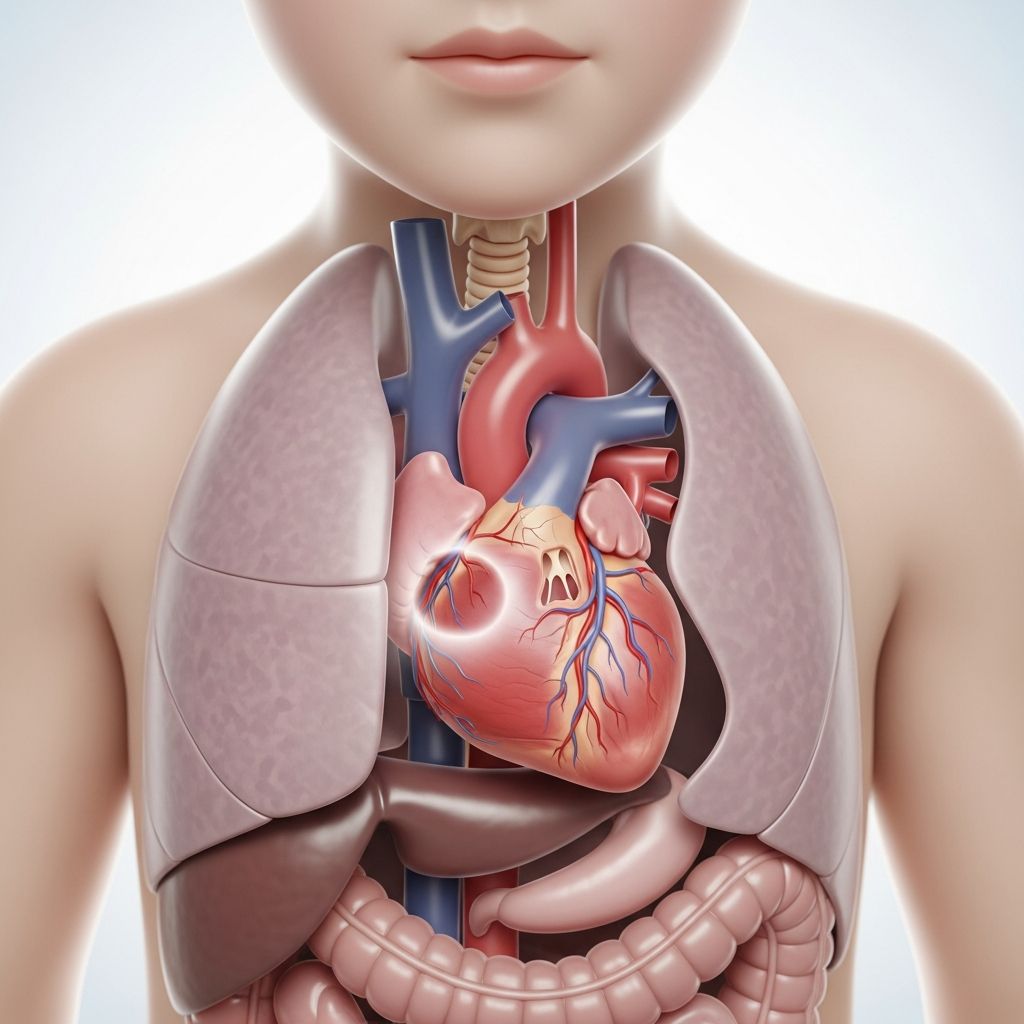
Pulmonary stenosis is a congenital heart defect where the pulmonary valve narrows, restricting blood flow from the right ventricle to the lungs. This condition affects many children and is often detected early through routine checkups.
Understanding the Heart’s Pulmonary Valve
The heart’s right ventricle pumps oxygen-poor blood through the pulmonary valve into the pulmonary artery, which leads to the lungs for oxygenation. In pulmonary stenosis, this valve is abnormally narrow, forcing the heart to work harder.
This narrowing can occur at the valve (valvular), below it (subvalvular), or above it (supravalvular). Valvular stenosis is the most prevalent, comprising 80-90% of cases.
Why Does Pulmonary Stenosis Develop?
Most cases are congenital, forming during fetal development in the first eight weeks of pregnancy when the valve fails to form properly. The exact cause is often unknown, but genetic factors may contribute.
Rarer acquired forms can stem from rheumatic heart disease, infections like endocarditis, tumors, or prior surgeries. It sometimes accompanies other heart defects like atrial septal defects.
Recognizing Symptoms in Your Child
Mild cases may show no symptoms and are found via heart murmurs during exams. Moderate to severe stenosis presents:
- Shortness of breath, especially during activity
- Fatigue or easy tiring
- Chest pain
- Fainting spells
- Cyanosis (bluish skin tint)
- Poor weight gain or failure to thrive in infants
- Abdominal swelling
- Heart murmurs
Symptoms intensify with exercise or over time as the right ventricle thickens (hypertrophy).
How Doctors Diagnose Pulmonary Stenosis
Diagnosis starts with a physical exam detecting a heart murmur. Key tests include:
| Test | Purpose |
|---|---|
| Echocardiogram (TTE) | Visualizes valve narrowing and blood flow |
| Electrocardiogram (ECG) | Checks for right ventricle strain |
| Cardiac MRI | Details heart structure and function |
| Cardiac Catheterization | Measures pressures and severity |
Severity is graded by pressure differences: mild (<40 mmHg), moderate (40-60 mmHg), severe (>60 mmHg).
Treatment Options for Affected Children
Mild cases require monitoring with regular echoes. Interventions for moderate/severe:
- Balloon Valvuloplasty: Minimally invasive catheter widens the valve; first-line for most.
- Surgical Valvotomy: Opens fused leaflets if balloon fails.
- Valve Replacement: Rare, for complex cases.
Post-treatment, the right ventricle often recovers, preventing failure.
Potential Complications to Watch For
Untreated severe stenosis risks:
- Right ventricular hypertrophy
- Heart failure
- Arrhythmias
- Endocarditis
- Pregnancy issues later
Regular follow-ups mitigate these.
Living with Pulmonary Stenosis: Daily Management
Children can lead active lives post-treatment. Tips include:
- Antibiotic prophylaxis for endocarditis before dental work
- Balanced diet and exercise
- Avoiding strenuous activities if severe
- Yearly cardiology visits
Most outgrow symptoms, with excellent prognosis.
Prevention and Early Detection Strategies
Prenatal ultrasounds rarely detect it. Routine newborn checks catch many via murmurs. Genetic counseling helps families with history.
Supporting Your Child Emotionally
Diagnosis can worry parents. Explain simply, involve child in care, connect with support groups for coping.
Frequently Asked Questions (FAQs)
Is pulmonary stenosis curable?
Yes, treatments like balloon valvuloplasty often resolve it effectively, especially in children.
Can my child play sports with pulmonary stenosis?
Depends on severity; mild cases allow normal activity post-monitoring.
Long-Term Outlook and Prognosis
With timely intervention, children thrive. Mild cases may need no treatment; severe ones improve post-procedure. Lifelong monitoring ensures health.
References
- Pulmonic valve stenosis — FloridaHealthFinder. 2023. https://quality.healthfinder.fl.gov/health-encyclopedia/HIE/1/001096
- Pulmonary Stenosis — Yale Medicine. 2023-10-01. https://www.yalemedicine.org/conditions/pulmonary-stenosis
- Pulmonary Valve Stenosis — Penn Medicine. 2024. https://www.pennmedicine.org/conditions/pulmonary-valve-stenosis
- Pulmonary valve stenosis – Symptoms & causes — Mayo Clinic. 2023-12-15. https://www.mayoclinic.org/diseases-conditions/pulmonary-valve-stenosis/symptoms-causes/syc-20377034
- Pulmonary Stenosis — St. Louis Children’s Hospital. 2024. https://www.stlouischildrens.org/conditions-treatments/pulmonary-stenosis
- Pulmonary Stenosis — Columbia University Irving Medical Center. 2023. https://www.congenitalheart.cuimc.columbia.edu/conditions-we-treat/pulmonary-stenosis