Spider bites affect children more noticeably due to their smaller size and sensitive skin, but most resolve with simple home care. Parents play a crucial role in early detection and response to minimize discomfort and complications.
Understanding Common Spiders That Bite Children
While thousands of spider species exist, only a few in North America pose significant risks to kids. Familiarity with their appearances helps in quick identification after a bite.
- Black Widow Spiders: These shiny black spiders, about the size of a quarter, feature a distinctive red or orange hourglass mark on their abdomen. Females are primarily responsible for bites, often occurring in woodpiles, garages, or outdoor toys.
- Brown Recluse Spiders: Light to dark brown with a violin-shaped marking on the back, these spiders prefer dark, undisturbed areas like closets, attics, or shoes. They bite defensively when disturbed.
- Other Spiders: House spiders or wolf spiders cause mild reactions similar to bee stings, without systemic effects.
Teaching children to avoid reaching into hidden spots reduces encounter risks.
Recognizing Symptoms of Spider Bites
Symptoms vary by spider type and child’s reaction. Monitor closely for the first 24-48 hours.
Mild Bites (Most Common)
Resembling insect stings, these present with:
- Localized pain, redness, and swelling
- Mild itching or bump formation
- Resolution within 1-2 days
Black Widow Bite Symptoms
Bites start with sharp pain and two tiny fang marks. Within hours:
| Symptom | Onset | Details |
|---|---|---|
| Intense muscle cramps | 1-6 hours | Especially abdomen, back, chest; lasts 24-48 hours |
| Systemic effects | Variable | Nausea, vomiting, sweating, headache, anxiety |
| Other | Immediate | Swelling, redness at site; rarely life-threatening in kids |
Brown Recluse Bite Symptoms
Initially painless, symptoms develop slowly:
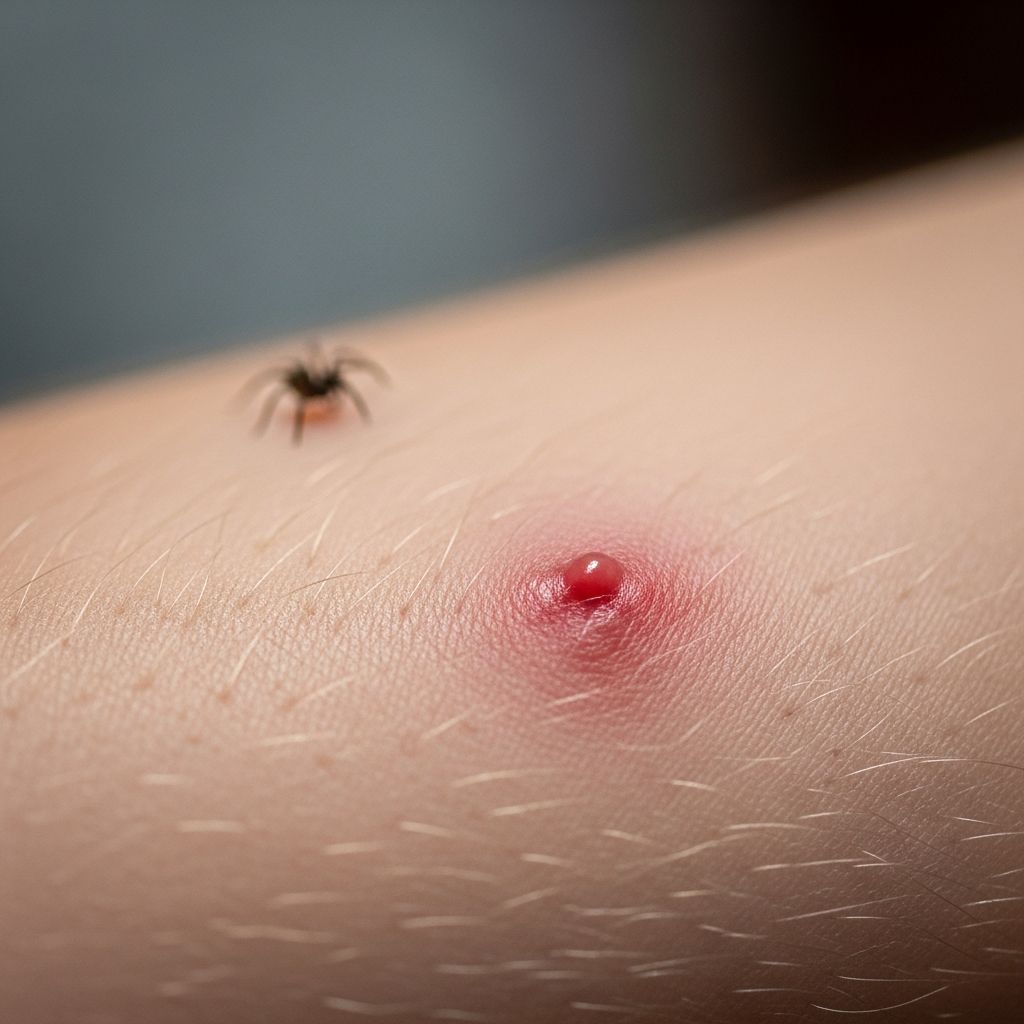
- Burning, itching, or blister at site
- Bull’s-eye lesion: white ring around blue/purple center
- Necrotic ulcer in severe cases (10% need grafting); fever, rash possible
Children may not report bites promptly, so check skin regularly during play.
Immediate First Aid Steps for Spider Bites
Act swiftly to limit venom spread and prevent infection. These steps apply to all bites.
- Wash Thoroughly: Use soap and water to clean the area, removing any debris.
- Cool the Area: Apply ice pack wrapped in cloth for 20 minutes hourly to reduce swelling and pain.
- Elevate and Immobilize: Raise limb above heart level; keep still.
- Pain Relief: Administer age-appropriate acetaminophen or ibuprofen.
- Prevent Infection: Apply antibiotic ointment; cover loosely.
- Capture Specimen: Trap the spider in a jar for identification without squishing.
For itching, use 1% hydrocortisone or oral antihistamine. Ensure tetanus vaccination is current.
When to Seek Urgent Medical Help
Not all bites need doctors, but err on caution with children.
- Emergency (ER Immediately): Suspected black widow/brown recluse; severe cramps, breathing issues, widespread symptoms.
- Call Doctor If: Pain >2 hours post-medicine; infection signs (pus, fever >100.4°F); ulcer/blister; symptoms worsen after 24 hours.
- Poison Control: Call 800-222-1222 for guidance.
Hospital care may include antivenom (black widow), muscle relaxants, or wound debridement.
Medical Treatments for Serious Bites
Providers tailor care based on symptoms:
- Black Widow: Pain meds, muscle relaxants; antivenom for high-risk kids.
- Brown Recluse: Wound care, antibiotics if infected; surgery for necrosis.
- Observation: Hospital monitoring for systemic effects.
Most children recover fully with prompt intervention.
Preventing Spider Bites at Home and Outdoors
Proactive steps safeguard families.
Home Prevention
- Seal cracks, use screens; reduce clutter in garages/closets.
- Shake out shoes, clothes, bedding before use.
- Store toys in sealed bins; wear gloves in woodpiles.
Outdoor Precautions
- Dress kids in long sleeves/pants during yard work.
- Inspect play areas; avoid tall grass at dusk.
- Use insect repellent (DEET-based) on clothing.
Educate children: “Don’t touch spiders; tell an adult if seen.” Regular pest control helps.
Frequently Asked Questions (FAQs)
Can all spider bites be treated at home?
Yes, mild ones like most house spider bites resolve with cleaning, ice, and pain relief within days. Seek help for severe symptoms.
How do I tell if it’s a dangerous bite?
Look for escalating pain, cramps, or skin changes beyond initial redness. Fang marks or spider ID confirm risks.
Is antivenom always needed for black widow bites?
No, only for severe cases or children with health issues; supportive care suffices often.
What if my child develops a blister?
Monitor for infection; don’t pop it. See a doctor if it enlarges or ulcerates, possible brown recluse sign.
How long do symptoms last?
Mild: 1-2 days; black widow cramps: 24-48 hours; brown recluse wounds: weeks, needing follow-up.
Long-Term Care and Recovery Tips
After initial treatment:
- Watch for infection: increasing redness, warmth, pus.
- Keep wounds clean/dry; follow-up as advised.
- Manage scars with silicone gels if needed post-healing.
- Reassure kids; most heal without lasting effects.
Boost immunity with balanced nutrition; stay vigilant in spider-prone seasons (summer/fall).
References
- Treating Spider Bites in Kids — Little Spurs Pediatrics. 2023. https://littlespurspedi.com/blog/spider-bites/
- Spider Bite — St. Louis Children’s Hospital. 2024-01-15. https://www.stlouischildrens.org/health-resources/symptom-checker/spider-bite
- Spider Bites — Nemours KidsHealth. 2023-05-10. https://kidshealth.org/en/parents/spider-bites.html
- Brown Recluse and Black Widow Spider Bites in Children — Nationwide Children’s Hospital. 2024. https://www.nationwidechildrens.org/conditions/health-library/brown-recluse-and-black-widow-spider-bites-in-children
- Spider Bites – Diagnosis & Treatment — Mayo Clinic. 2025-08-20. https://www.mayoclinic.org/diseases-conditions/spider-bites/diagnosis-treatment/drc-20352377