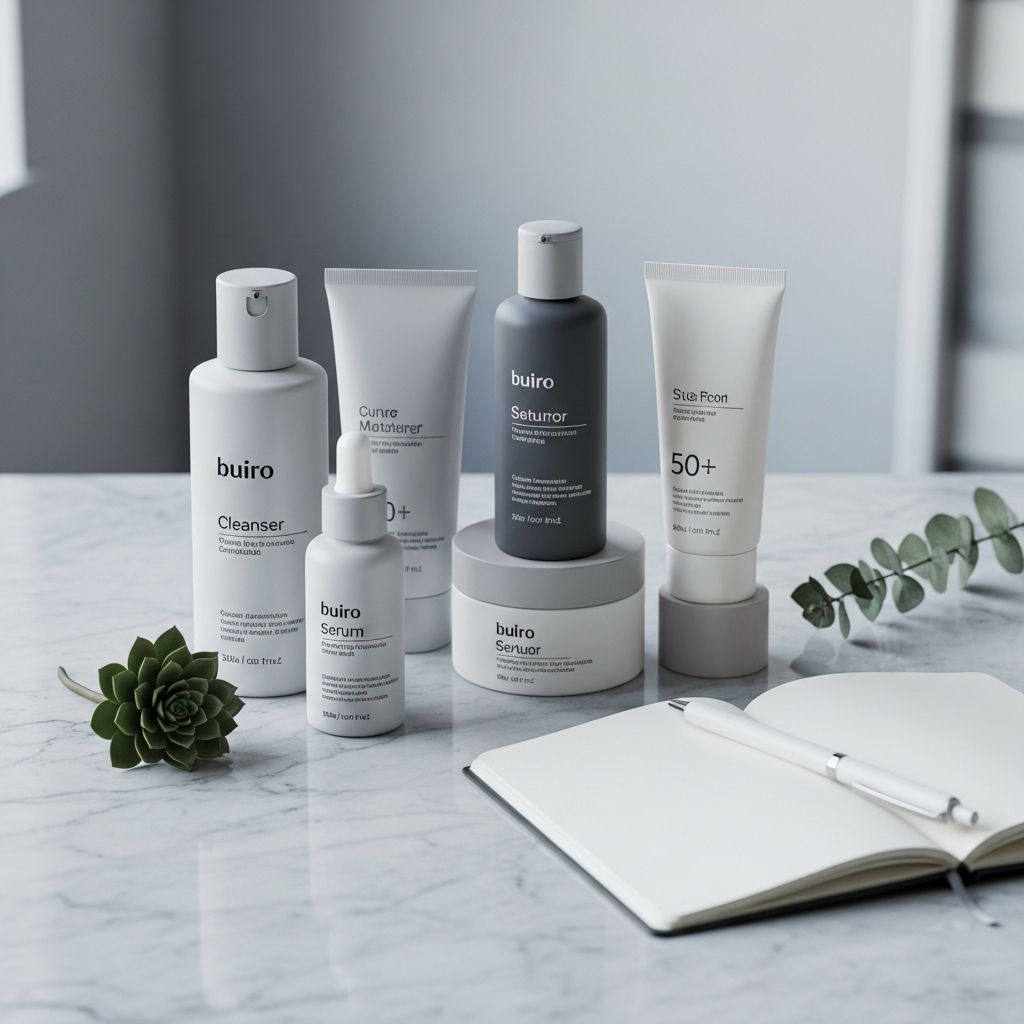
Skincare used to be a bar of soap, a splash of cold water, and maybe the lotion your mom bought at the drugstore. Now it sometimes feels like you’re one serum away from a moral crisis, a financial collapse, or accidentally inventing a home chemistry experiment in your bathroom sink.
This guide is for the person who wants healthy, comfortable, decent-looking skin—but also has a life, a budget, and a functioning sense of humor. You will not find miracle cures, terrifying before-and-afters, or 12-step routines here. You will find straightforward advice, realistic expectations, and permission to opt out of nonsense.
Why Skincare Feels So Overwhelming (And Why It Doesn’t Have To)
Modern skincare marketing thrives on two emotions: fear and hope. Fear that you are aging wrong, cleansing wrong, sleeping wrong, and existing wrong—and hope that one bottle will fix everything. That combination is very good for sales and very bad for sanity.
Underneath the hype, almost all sensible skincare comes back to three boring principles: keep your skin clean (not stripped), keep it hydrated, and protect it from unnecessary damage. Everything else is optional, negotiable, or situational.
- Your face is not a science project. You do not need to test every trend to be a functioning adult.
- More steps do not automatically mean better skin; they often only mean more chances to irritate it.
- Perfect skin is not a real thing. Comfortable, healthier, calmer skin is.
The Only Three Things Most People Actually Need
If the entire beauty industry vanished tomorrow and you were left with a half-stocked drugstore, three categories would still cover most of what your skin needs: cleanser, moisturizer, and sunscreen. Everything else is optional or targeted.
| Step | What It Does | How Often | What To Look For |
|---|---|---|---|
| Cleanser | Removes sweat, oil, dirt, and sunscreen so your skin can function normally. | Once or twice daily depending on your skin and lifestyle. | Non-stripping, fragrance low or free if sensitive, no harsh scrubbing beads. |
| Moisturizer | Supports the skin barrier and keeps water from evaporating too quickly. | At least once daily; usually morning and night for dry or sensitive skin. | Cream or lotion that doesn’t burn, itch, or feel suffocating after a few minutes. |
| Sunscreen | Protects against UV damage that contributes to wrinkles, spots, and skin cancer. | Every morning, especially when you’ll be outside more than a few minutes. | Broad-spectrum, SPF 30 or higher, and a texture you will actually tolerate. |
That’s the core. If you are new, overwhelmed, or on a budget, staying consistent with these three beats an elaborate routine you abandon after six days.
Know Your Skin Like You Know Your Coffee Order
Before buying anything fancy, figure out what kind of skin you actually have—not the one you wish you had, or the one a 30-second online quiz told you about. You don’t need a microscope; you just need observation and honesty.
Common Skin Types (In Plain Language)
- Dry: Feels tight, flaky, or rough; makeup clings to dry patches; often drinks moisturizer like water.
- Oily: Shiny a few hours after washing; makeup tends to slide off; frequent clogged pores or blackheads.
- Combination: Oily in some spots (often the T-zone) and dry or normal in others.
- Normal: Rarely feels too oily or too dry; maybe the least dramatic of all skin categories.
- Sensitive: Easily reddened, stings with many products, overreacts to fragrance or harsh actives.
You can be both oily and sensitive, dry and acne-prone, or combination and easily irritated. Your skin does not have to fit neatly into one internet-approved box, and it may change with seasons, hormones, stress, or medications.
Building a Simple Morning Routine
The morning routine exists for two purposes: protection and comfort. You’re getting your skin ready for light, pollution, weather, and whatever else your day throws at it—not prepping for a red-carpet close-up.
Sample Morning Routine (3–4 Steps)
- Gentle cleanse (optional for some): If you wake up oily or sticky, use a mild cleanser. If you’re dry or very sensitive, splashing with lukewarm water might be enough.
- Light hydration: This could be a simple moisturizer, a hydrating serum plus moisturizer, or a gel-cream if you’re oily.
- Sunscreen: The non-negotiable. Apply generously to face, neck, and any regularly exposed areas.
- Makeup if desired: Treat this as decoration, not as a substitute for skincare.
That’s it. If you want to add a vitamin C serum for antioxidant support or brightening, you can, but it belongs somewhere between cleansing and moisturizing—not as the foundation of your self-worth.
Nighttime: Where Repair Actually Happens
Night is when your skin can focus on maintenance instead of defense. Makeup, sunscreen, and daily grime need to leave the building; then you give your skin a little help and let sleep do the rest.
Sample Night Routine
- Remove sunscreen and makeup: Use a cleansing balm, oil, or gentle makeup remover. Massage, emulsify with water, and rinse thoroughly.
- Second cleanse (if needed): Use a gentle water-based cleanser to remove any residue without stripping your skin.
- Treatment step (optional): This is where retinoids, exfoliating acids, or targeted serums live. If you’re a beginner or sensitive, limit this to a few nights per week.
- Moisturizer: Use a cream that leaves your skin feeling comfortable, not greasy, after 10–15 minutes.
If your life is chaotic, you can reduce all of that to a single step: cleanse well and apply moisturizer. That is still better than doing nothing and far better than doing everything once a month.
Actives, Acids, and Other Intimidating Words
This is the point where many routines go from helpful to hazardous. “Actives” are ingredients that do more than just sit on the surface; they trigger changes in how your skin behaves. That can be great—or it can be a fast track to redness and peeling if you pile them on without a plan.
Popular Active Ingredients and What They Actually Do
| Ingredient | Main Purpose | Best For | Beginner Tip |
|---|---|---|---|
| Retinoids (retinol, etc.) | Support cell turnover, soften fine lines, help unclog pores, improve texture. | Aging concerns, uneven texture, some types of acne. | Start 1–2 nights a week with a low strength and buffer with moisturizer. |
| AHAs (glycolic, lactic) | Exfoliate the surface, brighten dullness, smooth rough patches. | Normal to dry skin, sunspots, mild texture issues. | Use no more than a few times per week; avoid combining with many other actives. |
| BHAs (salicylic acid) | Penetrate into pores to dissolve oil and debris. | Oily, acne-prone, blackheads. | Spot-treat or use low strength first to see how your skin reacts. |
| Niacinamide | Helps with redness, oil regulation, and barrier support. | Most skin types, especially combination or sensitive. | Often tolerant at moderate strengths; patch test if you’re easily irritated. |
| Vitamin C (ascorbic acid forms) | Antioxidant protection and gradual brightening. | Sun-exposed skin, dullness, uneven tone. | Introduce in the morning under sunscreen; choose a stable formula you’ll actually use. |
The golden rule: introduce one active at a time and give it several weeks before deciding whether it’s helping or harming. Your skin is slow, not a same-day delivery service.
Common Skincare Myths That Need to Retire
Skincare myths spread quickly because they sound dramatic and decisive. They also provide very clear villains and heroes: this ingredient is toxic, that product is magic, and if you use the wrong one your face will fall off by Thursday.
- Myth: If it burns, it’s working. Reality: If it stings or burns, it is often irritating your skin. A mild tingle with some products can be normal, but outright pain is not a badge of honor.
- Myth: You must double-cleanse every night. Reality: Double cleansing is useful if you wear heavy makeup or water-resistant sunscreen, but it is not mandatory for everyone.
- Myth: Pores can be “opened” and “closed.” Reality: Pores don’t have little doors. Heat can soften debris, and cold can temporarily reduce the appearance of swelling, but you are not operating a garage.
- Myth: Natural automatically means safer. Reality: Poison ivy is natural. Many lab-made ingredients are actually formulated to be gentler and more stable than their natural counterparts.
- Myth: More products = more results. Reality: Your skin has a saturation point. Piling on layers often ends with irritation, not enlightenment.
How to Read a Skincare Label Without Going Cross-Eyed
Ingredient lists can look like the periodic table and a word scramble had a baby. You don’t need to decode every line, but learning a few basics can save you money and prevent unpleasant surprises.
Label-Watching Tips
- Ignore the front first: Marketing claims (“brightening,” “detox,” “anti-age”) are not regulated the way ingredients are.
- Check the top half of the ingredient list: That’s where the highest concentration ingredients live; hero actives near the bottom are often more of a supporting role.
- Know your personal triggers: If fragrance, drying alcohols, or certain essential oils bother you, scan for those specifically.
- Beware of miracle language: Any product promising to “erase,” “reverse,” or “cure” is overpromising. Skincare improves; it does not time travel.
Budget, Guilt, and the Pressure to Be a Walking Product Review
You do not owe any brand your paycheck, your loyalty, or your emotional stability. A $15 moisturizer that works on your face is superior to a $150 cream that works on your shelf. Luxury packaging does not guarantee luxury results.
Smart Skincare Spending
- Spend a bit more, if you can, on sunscreen and treatment products where texture, stability, and testing matter.
- Save on basic cleansers and moisturizers; many affordable formulas are excellent.
- Avoid buying entire ranges at once. Start with one or two products so you can tell what’s actually helping.
- Use what you already have before chasing the next big thing—unless it is clearly irritating you.
Skincare should feel like self-maintenance, not a performance review. No one is grading your shelf.
When Your Skin Throws a Tantrum
At some point, your face will rebel: redness, bumps, stinginess, or a general feeling that your reflection is personally offended by you. This is not a moral failing; it is often a sign that your routine needs a time-out.
Emergency Reset Plan
- Stop all non-essential products: no acids, no retinoids, no strong vitamin C, no scrubs.
- Use a very gentle cleanser and a simple, fragrance-light moisturizer for at least a week.
- Skip makeup if you can, or choose minimal, non-irritating formulas.
- Once things calm down, reintroduce one active at a time, slowly.
If you suspect an allergic reaction, infection, or anything painful or strange that doesn’t improve, see a dermatologist or medical professional. The internet is not a replacement for actual healthcare.
Skincare, Aging, and the Pressure to Stay 25 Forever
Aging is not a disease to be cured; it is literally what happens when the alternative is not aging at all. Skincare can help your skin age more comfortably and more gracefully, but it cannot freeze you in one decade like a paused video.
- Fine lines are normal. Expression lines mean your face has been used as intended.
- Sun protection is still the best long-term “anti-aging” step you can take.
- Hydration, a decent diet, consistent sleep, and not smoking will do more than hunting for the one perfect serum.
It is okay to want fewer wrinkles or firmer skin; it is also okay to opt out of chasing every possible intervention. You are not required to fight your own timeline as a full-time job.
Frequently Asked Questions
Do I really need sunscreen every day?
If the sun is up, your skin is being exposed to some level of UV light—even through windows and on cloudy days. Daily sunscreen helps prevent long-term damage like wrinkles, spots, and an increased risk of skin cancer, so it is one of the few non-negotiables in a routine.
Is double cleansing necessary?
Double cleansing is very helpful if you wear long-wear makeup, heavy sunscreen, or work in environments with a lot of dirt or pollution. If your lifestyle is lower-key and your skin feels clean and comfortable with one gentle cleanse, you do not have to add a second step.
How long before I see results from a new product?
Instant effects like hydration can show up the same day, but most meaningful changes—like smoother texture or fewer breakouts—take at least four to six weeks of consistent use. Think in terms of skin cycles, not single nights.
Can I use retinoids and acids together?
It is technically possible, but not always wise, especially if you are sensitive or just starting out. Combining strong actives can dramatically increase irritation, so it is usually safer to alternate nights or keep one of them very gentle.
What if I hate the feeling of products on my face?
Look for lightweight gels, fluids, or milky lotions instead of heavy creams and oils. You can still have a complete routine using sheer, fast-absorbing formulas that don’t leave a noticeable layer behind once they dry down.
Putting It All Together Without Losing Your Mind
Skincare is maintenance, not a personality. You are allowed to care about it, enjoy it, ignore trends, or keep it minimal. You are allowed to own three products or thirty, as long as your choices are intentional and not just a reaction to fear-based marketing.
If you remember nothing else, remember this: be gentle, be consistent, and be skeptical of anything that sounds like magic. Your skin is an organ, not a makeover show, and it deserves steady care more than it deserves drama.