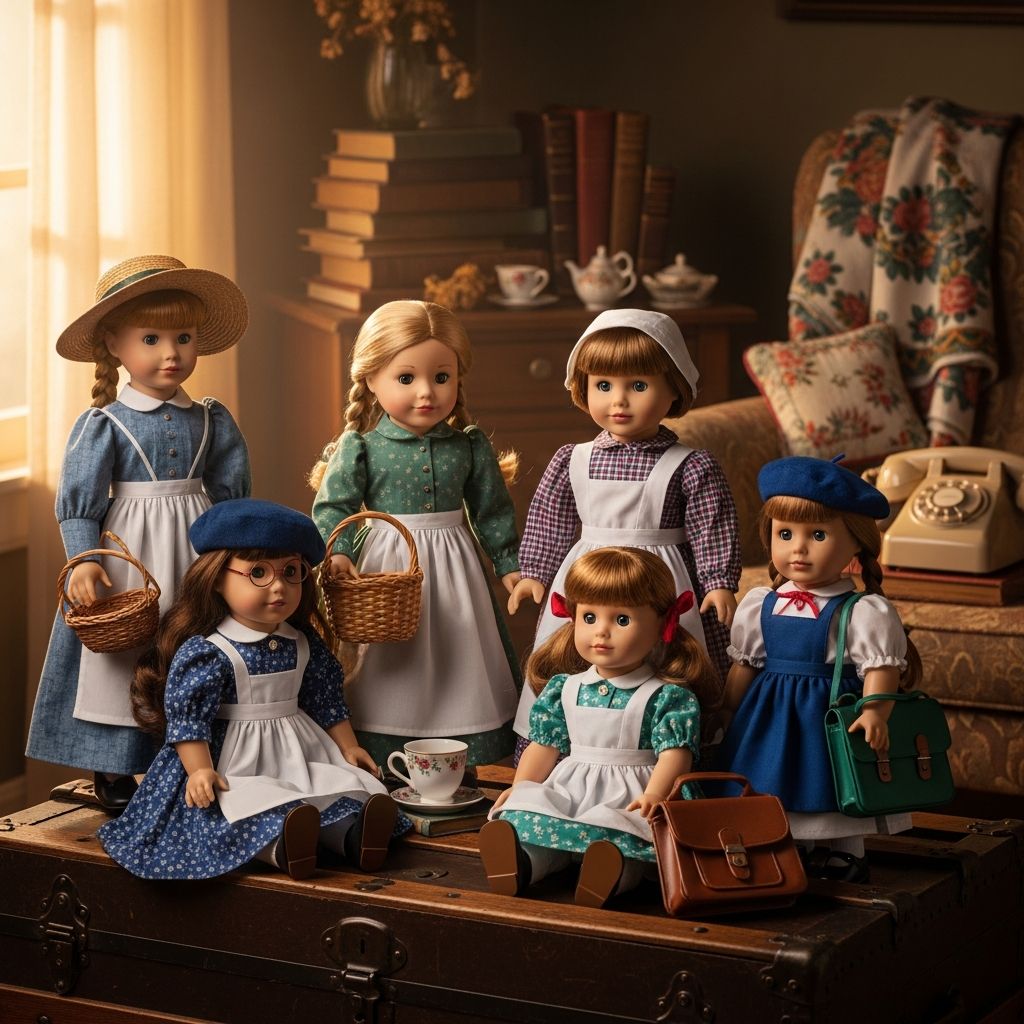
American Girl dolls from the 1990s captured the hearts of young girls with their richly detailed stories rooted in American history, offering more than just playthings—they were portals to the past. These 18-inch companions, launched by the Pleasant Company, combined high-quality craftsmanship with educational books, making learning fun and immersive.
Birth of a Toy Legacy in the Mid-1980s
The journey began in 1986 when Pleasant Rowland, a former teacher inspired by a trip to Colonial Williamsburg, founded the company in Wisconsin. She envisioned dolls that would teach children about pivotal moments in U.S. history through engaging narratives. The first trio—Kirsten Larson (1854 pioneer), Samantha Parkington (1904 orphan), and Molly McIntire (1944 WWII era)—debuted that year, each accompanied by six-book series detailing their adventures.
By the early 1990s, the brand had exploded in popularity, generating millions in sales through catalog orders alone. Parents appreciated how these dolls fostered empathy and historical awareness, turning playtime into meaningful discussions about immigration, social change, and resilience.
Expansion and Innovation Through the Decade
The 1990s marked rapid growth for American Girl. In 1991, Felicity Merriman joined as the Revolutionary War-era doll from 1774, introducing skin-tone matching bodies—a shift from earlier white muslin designs to enhance realism, especially for colonial low-neckline outfits.
- 1993: Addy Walker, the first doll of color, represented 1864, focusing on escaping slavery and navigating freedom’s challenges. Her story collaborated with historical advisors for accuracy.
- 1995: Josefina Montoya, the inaugural Latina character from 1824 New Mexico, highlighted Hispanic heritage and family traditions.
- 1997: The ‘American Girl of Today’ line launched, allowing customization to match a child’s features, bridging historical tales with contemporary play.
This era saw diversification, with new face molds, outfits, and accessories like trunks, beds, and seasonal attire expanding collections.
Iconic 90s Dolls: Stories That Shaped Generations
| Doll Name | Era | Key Themes | Release Year |
|---|---|---|---|
| Kirsten Larson | 1854 | Immigration, pioneer life | 1986 |
| Felicity Merriman | 1774 | Revolutionary War, independence | 1991 |
| Addy Walker | 1864 | Slavery, Civil War, resilience | 1993 |
| Josefina Montoya | 1824 | Hispanic culture, family bonds | 1995 |
Each doll’s narrative was meticulously crafted. Kirsten’s immigration from Sweden to Minnesota taught about frontier hardships. Felicity’s spunky personality embodied colonial spirit. Addy’s brave escape underscored abolitionist struggles, while Josefina wove in Indigenous and Mexican influences.
Accessories amplified immersion: meet outfits, holiday dresses, school uniforms, and furniture sets like canopy beds encouraged role-playing historical scenarios.
Cultural Impact and Parental Connections
For many parents today, spotting these dolls in resale shops or their children’s hands triggers vivid memories of 90s childhoods. Originally sold via catalogs with mail-order forms, they felt exclusive and special. The 1998 Chicago store opening, followed by New York’s in 2003, transformed the brand into an experiential destination with cafes and ‘doll hospitals’.
Mattel’s 1998 acquisition for $700 million propelled further expansion, yet the core educational mission endured. Publications like American Girl Magazine (debut 1992) and spin-offs—trading cards, puzzles, even ‘Dress Like Your Doll’ clothing—broadened appeal.
Evolution Beyond the 90s: A Full Circle
The 2000s introduced ‘Girl of the Year’ (2001) for modern tales and Kaya (2002), the Native American doll from 1764. Rebrands like BeForever (2014) refreshed historical lines, while Truly Me (2015 rename) emphasized personalization.
Recent releases nod to origins: Courtney Moore (2020) set in 1986, the brand’s birth year, with 80s flair; 2021’s 35th anniversary reissues; and sister dolls Corinne and Gwynn (2022). These updates keep the spirit alive, blending nostalgia with inclusivity.
Why 90s Dolls Resonate Today
These dolls transcended toys, promoting values like courage and diversity. Parents report mixed emotions—joy at sharing heirlooms, wistfulness over aging. Modern lines reflect societal shifts, with dolls featuring disabilities (MaryEllen, 2015) and broader representation.
Collecting remains popular; vintage 90s dolls fetch high prices online, their vinyl faces and yarn hair holding up remarkably.
Tips for Collecting 90s American Girl Dolls
- Inspect for original tags and boxes to preserve value.
- Prioritize complete sets with books for authenticity.
- Clean gently with mild soap; avoid heat on hair.
- Join collector communities for rare finds like early Addy molds.
- Compare conditions: mint dolls command premiums.
Frequently Asked Questions
What made 90s American Girl dolls unique?
They paired high-quality dolls with historical books, teaching real events through relatable girl protagonists.
Are original 90s dolls still available?
Many are retired but found in resale markets; American Girl reissues select originals periodically.
How did American Girl promote diversity in the 90s?
By introducing Addy (1993) and Josefina (1995), expanding beyond the initial European-focused characters.
What’s the value of a 90s Kirsten doll today?
Mint condition with books can range from $100-$300, depending on accessories.
Did Mattel change the dolls after buying the brand?
Expansion focused on stores and lines, but historical integrity remained central.
Preserving Nostalgia for New Generations
Passing down 90s American Girl dolls bridges eras, letting today’s kids explore the same stories that shaped their parents. The brand’s evolution—from catalog curiosity to global phenomenon—mirrors cultural progress toward inclusivity and education. Whether through play or display, these dolls remind us of timeless lessons in empathy and perseverance.
Modern parents might feel ‘ancient’ unboxing a Felicity, but that’s the magic: toys that endure, sparking conversations across time.
References
- American Girl History and How Its Dolls Have Changed Through the Years — Business Insider. 2020-01-22. https://www.businessinsider.com/american-girl-dolls-history-evolution-brand-2020-1
- Timeline of American Girl — American Girl Doll News. N/A. https://www.americangirldollnews.com/post/timeline-of-american-girl
- The Evolution of American Girl Dolls — YouTube (American Girl Doll content). N/A. https://www.youtube.com/watch?v=ohbJzCBaho4
- The History of American Girl Dolls — Main Street Magazine. N/A. https://mainstreetmag.com/the-history-of-american-girl-dolls/
- Historical Characters — American Girl Wiki. N/A. https://americangirl.fandom.com/wiki/Historical_Characters
- A Girl’s Window into History — USPTO. N/A. https://www.uspto.gov/learning-and-resources/journeys-innovation/field-stories/girls-window-history