Life with a 13-month-old can feel like living with a tiny explorer. Your child may be taking wobbly steps, insisting on doing things “alone,” and surprising you daily with new sounds and gestures. This guide explains what many children do around this age, how you can support their development, and when it is wise to talk with your child’s health care provider.
Remember that every child grows at a unique pace. Milestones are general guides, not strict deadlines, and a range of development is considered healthy.
Physical Growth and Body Changes
After the first birthday, growth continues but usually slows compared with infancy. Many parents notice that clothes and shoes still need regular updates, but the dramatic month-to-month changes of the first year may ease.
- Height and weight often continue to follow your child’s existing growth curve on the pediatric growth charts.
- Head size increases more slowly as brain growth begins to plateau compared with earlier months.
- Body shape gradually shifts from round and baby-like to leaner as muscles strengthen and activity increases.
Pediatricians use standardized growth charts from the World Health Organization (WHO) and the Centers for Disease Control and Prevention (CDC) to track patterns over time, looking for sudden changes rather than focusing on a single number.
Big Movement: Gross Motor Skills
Around 13 months, many toddlers are on the move. Some are still crawling, some cruise along furniture, and others may already be confident walkers. All of these can be typical, as some children do not walk independently until 15–18 months.
| Common Skill | What You Might See Around 13 Months | How You Can Help |
|---|---|---|
| Standing | Stands alone briefly, may squat to pick up a toy, then stand again. | Place toys on the floor so your child practices squatting and standing. |
| Walking | Walks with help or independently; may walk on flat feet with a wide stance. | Offer a safe, open space indoors and outdoors for practice; avoid walkers with wheels and instead use push toys that are stable. |
| Climbing | Attempts to climb onto low furniture or step over small obstacles. | Supervise closely and secure furniture to walls to prevent tipping. |
| Carrying | Enjoys carrying light objects or toys from place to place. | Provide soft, light items to carry, like stuffed animals or small blocks. |
Fine Motor Skills and Hand Use
Hand and finger control improves rapidly in the second year of life.
- Uses a pincer grasp (thumb and index finger) to pick up small pieces of food.
- Turns pages in a board book, often several at a time.
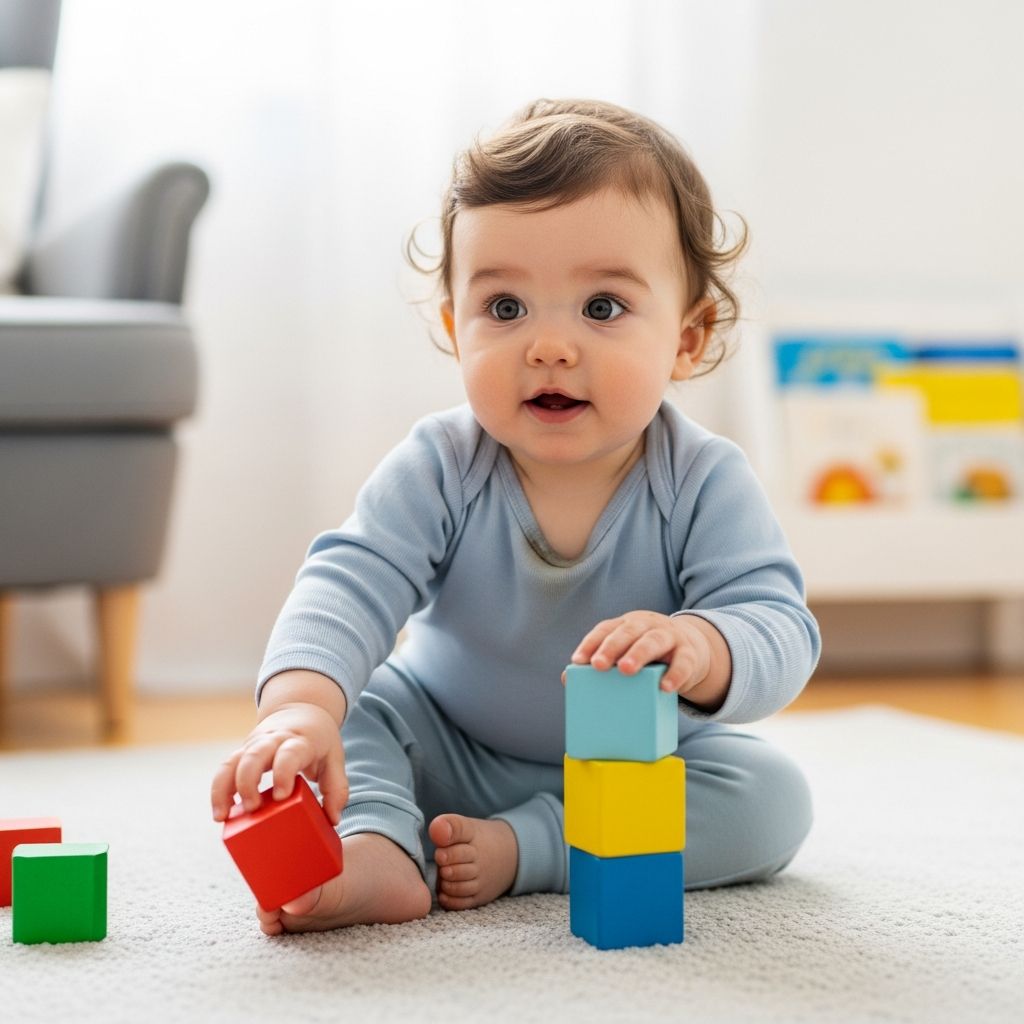
- Stacks two blocks or rings, or enjoys knocking them down.
- Holds a crayon and makes random scribbles after watching an adult.
- Attempts to feed themselves with a spoon while still using fingers for most meals.
Offer safe objects of different sizes and textures for your child to grasp, explore, stack, and drop. This type of play strengthens hand muscles and coordination.
Thinking, Learning, and Problem-Solving
Cognitive skills in the early toddler period focus on exploring cause and effect, understanding simple instructions, and remembering where things are.
- Cause and effect: Your child may repeatedly drop, dump, and pour items just to see what happens.
- Object permanence: Looks for toys you hide and enjoys simple hiding games.
- Everyday understanding: Begins to use objects in familiar ways, like holding a toy phone to the ear or pretending to drink from a cup.
- Following directions: May follow a simple one-step request, such as “Give me the ball” or “Come here,” especially when paired with gestures.
Reading, singing, naming objects, and giving simple choices (for example, “Do you want the ball or the car?”) all support early thinking skills.
Communication and Early Language
Language grows dramatically between the first and second birthday. Around 13 months, understanding (receptive language) is usually ahead of speaking (expressive language).
What Many Toddlers Do Around This Age
- Babbles frequently with speech-like sounds and changing tones.
- Uses gestures such as pointing, waving, and reaching to communicate wants and interests.
- Understands simple words like “no,” “bye-bye,” or names of familiar people and objects.
- Says a few clear words (often 1–3), such as “mama,” “dada,” or a favorite object, though the exact number can vary widely.
- Imitates sounds and words that adults say, even if they are not pronounced perfectly.
To encourage language:
- Talk throughout the day about what you and your child are doing.
- Use simple, clear sentences and repeat key words.
- Read books with large pictures and label what you see.
- Give your child time to respond with a sound, look, or gesture.
Emotions, Personality, and Social Skills
Toddlers around 13 months are developing a stronger sense of self and attachment to caregivers. This can look like clinginess one moment and bold independence the next.
- Attachment: Looks back to check that you are nearby while exploring, and may become upset if you leave the room.
- Stranger wariness: May cling tightly or hide face when unfamiliar people approach.
- Affection: Offers hugs, kisses, or cuddles to loved ones.
- Frustration and tantrums: Emotional outbursts may occur when your child is tired, hungry, or cannot communicate what they want.
- Early play: Enjoys interactive games like peek-a-boo, rolling a ball back and forth, or copying your actions.
Staying calm, naming feelings (“You are mad because playtime is over”), and offering comfort help your toddler learn to manage big emotions over time.
Eating, Drinking, and Nutrition
At 13 months, your child is becoming more independent with eating. Appetite can change from day to day, which is usually normal as growth slows in the second year.
Typical Eating Patterns
- Often eats three meals and two or three snacks per day, though amounts vary.
- Uses fingers to self-feed small pieces of soft foods.
- Begins to use a spoon with help while still relying on fingers for much of the meal.
- Drinks from an open cup or sippy cup; many children transition away from bottles around this time.
Healthy Food Choices
Most toddlers can eat many of the same healthy foods as the rest of the family, with texture and size modified for safety. Offer a variety of:
- Fruits and vegetables in soft, bite-sized pieces.
- Whole grains such as oatmeal, whole-grain bread, and pasta.
- Protein-rich foods like beans, eggs, soft meats, poultry, and yogurt.
- Dairy, typically whole milk and yogurt, unless your pediatrician recommends otherwise.
Avoid whole nuts, hard raw vegetables, popcorn, whole grapes, and other choking hazards; cut food into small, manageable pieces and supervise all meals.
Sleep at 13 Months
Many 13-month-olds sleep around 10–12 hours at night and take one or two daytime naps, though patterns differ among children.
- Some toddlers still take two shorter naps, while others have shifted to one longer nap in the afternoon.
- Night waking may still occur, especially during teething, illness, or developmental leaps.
- A consistent bedtime routine—such as bath, quiet play, reading, then bed—helps signal that it is time to sleep.
If you have concerns about your child’s sleep (for example, loud snoring, breathing pauses, or very frequent night waking), discuss them with your health care provider.
Safety Tips for an Active 13-Month-Old
As mobility increases, safety becomes more important than ever. Injury prevention recommendations for young children are emphasized by pediatric and public health organizations.
- Childproof your home: Use safety gates on stairs, lock cabinets with cleaners or medicines, and secure heavy furniture and TVs to the wall.
- Prevent falls: Supervise near stairs, windows, and furniture your child might climb.
- Avoid choking hazards: Keep small objects and certain foods out of reach and make sure toys are age-appropriate.
- Water safety: Never leave your child unattended near bathtubs, pools, or buckets of water, even for a moment.
- Burns and scalds: Keep hot drinks and pans away from edges, and set your water heater to a safe temperature following local guidelines.
- Car seats: Use a properly installed, rear-facing car seat according to current safety recommendations.
Health Visits and Immunizations
Your child’s pediatrician will usually schedule regular well-child visits throughout the second year of life. At these appointments, the clinician:
- Measures your child’s height, weight, and head circumference.
- Reviews developmental milestones using checklists or screening tools.
- Discusses nutrition, sleep, behavior, and safety.
- Gives recommended vaccines according to the national immunization schedule to protect against serious diseases.
The exact timing of visits may vary by country and clinic, but most children are seen multiple times between 12 and 18 months to monitor rapid changes.
When to Contact the Doctor
Development is highly variable, but certain signs warrant a conversation with your child’s health care provider. According to pediatric developmental guidelines, you should seek advice if your 13-month-old:
- Is not showing any interest in standing or bearing weight on the legs when supported.
- Cannot crawl or move around the room in some way.
- Does not babble, use gestures (like pointing or waving), or respond to sounds.
- Shows no response to their name or familiar voices.
- Does not make eye contact or engage with caregivers during play.
- Has lost skills they previously had, such as saying a word or pulling to stand.
Trust your instincts—if something about your child’s development concerns you, it is always appropriate to ask for a professional opinion. Early evaluation allows access to services that can support your child’s growth when needed.
Supporting Your 13-Month-Old Day by Day
Small, everyday interactions are powerful for development. You do not need special equipment or complex activities; your time, attention, and a safe space to explore are most important.
- Play on the floor with blocks, balls, and simple containers to fill and dump.
- Talk and sing during routine tasks like diaper changes, meals, and walks.
- Offer choices (“Do you want the red shirt or the blue shirt?”) to support communication and a sense of control.
- Set gentle limits with consistent rules—for example, “We sit when we eat” or “We use gentle hands.”
- Notice and praise positive behaviors, such as sharing, helping, or trying something new.
Frequently Asked Questions (FAQs)
Is it normal if my 13-month-old is not walking yet?
Yes. Many children walk sometime between 12 and 18 months. Some toddlers focus more on talking or fine motor skills first. If your child is not walking by 18 months, or shows no interest in standing or cruising, talk with your health care provider.
How many words should a 13-month-old say?
Some 13-month-olds say one or a few clear words, others say more, and some mostly use babbling and gestures. Understanding words and following simple directions are as important as spoken words at this age.
My toddler is suddenly picky with food. Should I worry?
Picky eating is very common in the second year because growth slows and toddlers want more control. Offer regular meals and snacks with a variety of healthy foods, let your child decide how much to eat, and avoid forcing bites. If you notice poor weight gain, ongoing vomiting, or difficulty swallowing, discuss this with your pediatrician.
How can I handle tantrums at this age?
Stay calm, ensure your child is safe, and keep your responses predictable. Tantrums often signal tiredness, hunger, or frustration. Keeping routines, offering limited choices, and teaching simple words or signs can reduce some outbursts over time.
When should I schedule the next well-child visit?
Most pediatric schedules include checkups several times between 12 and 18 months—for example, around 12, 15, and 18 months—though timing can vary by practice and country. Ask your child’s health care provider which schedule they recommend for ongoing vaccines and developmental monitoring.
References
- Learn the Signs. Act Early. Developmental Milestones — Centers for Disease Control and Prevention (CDC). 2022-03-31. https://www.cdc.gov/act-early/milestones/index.html
- Milestones by 15 Months — Centers for Disease Control and Prevention (CDC). 2022-03-31. https://www.cdc.gov/act-early/milestones/15-months.html
- 12–15 months: toddler development — Raising Children Network (Australian Government–funded). 2023-06-01. https://raisingchildren.net.au/toddlers/development/development-tracker-1-3-years/12-15-months
- Developmental Milestones: 12 to 18 Months — Nationwide Children’s Hospital. 2022-10-10. https://www.nationwidechildrens.org/family-resources-education/health-wellness-and-safety-resources/helping-hands/developmental-milestones-12-to-18-months
- Milestones: Thirteen to Eighteen Months — Emory University School of Medicine, Department of Pediatrics. 2021-05-01. https://med.emory.edu/departments/pediatrics/divisions/neonatology/dpc/13-18-months.html
- Toddler Milestones: Your Baby’s Development at 1 Year — CHOC (Children’s Hospital of Orange County). 2022-01-15. https://choc.org/ages-stages/1-year/
- Developmental Milestones – 13 through 18 Months — Nebraska Department of Education. 2020-09-01. https://edn.ne.gov/cms/developmental-milestones-13-through-18-months