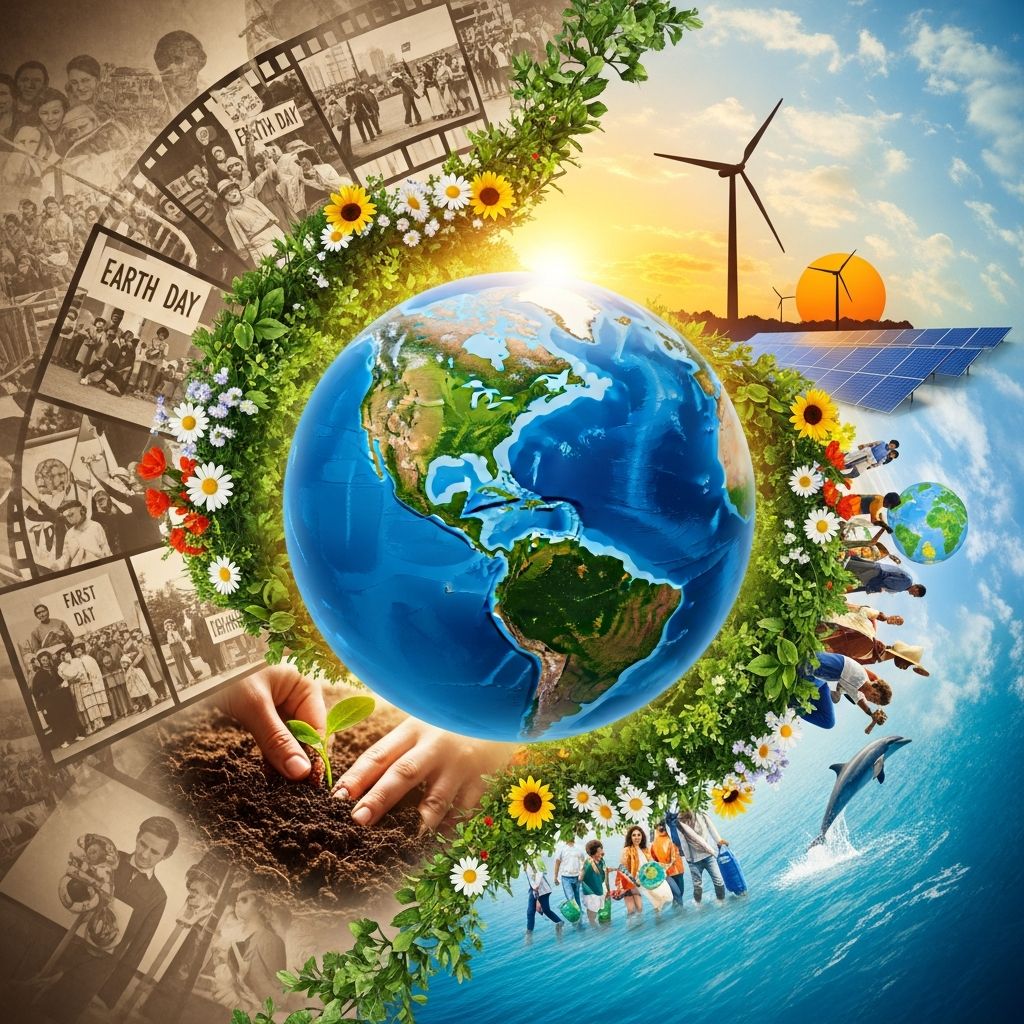
Earth Day, celebrated annually on April 22, stands as a cornerstone of modern environmental activism. Launched in 1970, it mobilized millions and sparked reforms that reshaped environmental policy in the United States and beyond. This article delves into its origins, transformative effects, and continued relevance in addressing pressing issues like pollution and climate change.
Origins of a Global Movement
The concept of dedicating a day to Earth’s protection emerged amid growing ecological concerns in the late 1960s. Environmental disasters, such as the 1969 Santa Barbara oil spill and the Cuyahoga River fire in Cleveland, highlighted industrial negligence and galvanized public outrage. These events, combined with Rachel Carson’s influential 1962 book Silent Spring, which exposed pesticide dangers, awakened a collective call for change.
In 1969, at a UNESCO conference in San Francisco, peace activist John McConnell proposed an Earth Day on March 21, the spring equinox, to honor peace and nature. This idea gained UN support through Secretary-General U Thant. However, the April 22 observance took precedence, spearheaded by U.S. Senator Gaylord Nelson of Wisconsin.
Nelson, a conservationist and former governor, drew inspiration from anti-Vietnam War teach-ins. He envisioned environmental teach-ins on campuses to channel student energy toward pollution and degradation. He recruited Denis Hayes as national coordinator, who expanded the initiative nationwide. The date April 22 was strategically chosen to avoid exams, spring breaks, and religious holidays, ensuring maximum participation.
The Landmark First Celebration in 1970
On April 22, 1970, the inaugural Earth Day drew an estimated 20 million participants across the U.S.—the largest grassroots mobilization in the nation’s history at the time. Events spanned schools, universities, communities, and cities, featuring rallies, marches, and educational sessions on air and water pollution.
Participants included students, laborers, farmers, and politicians, united in demanding cleaner environments. This unprecedented turnout pressured lawmakers, proving public sentiment could drive policy. Hayes and his team transformed Nelson’s campus-focused idea into a coast-to-coast phenomenon, coining “Earth Day” with help from ad executive Julian Koenig.
- Key inspirations: Santa Barbara oil spill (3 million gallons), Cuyahoga River fire, and Silent Spring.
- Participation scale: 20 million at 10,000+ sites.
- Format: Teach-ins modeled on anti-war protests.
Immediate Policy Transformations
Earth Day’s momentum led to swift governmental responses. In July 1970, President Nixon established the Environmental Protection Agency (EPA) to safeguard air, water, and land, fulfilling public demands for healthier surroundings.
Over the following decade, landmark legislation followed:
| Legislation | Year | Key Provisions |
|---|---|---|
| Clean Air Act | 1970 | Regulated air pollutants, set emission standards. |
| Clean Water Act | 1972 | Controlled water pollution discharges. |
| Endangered Species Act | 1973 | Protected threatened wildlife and habitats. |
| Surface Mining Control and Reclamation Act | 1977 | Mandated land restoration post-mining. |
These laws marked a shift from tolerance of pollution to proactive regulation, with the EPA enforcing over 90% cleaner diesel engines by the early 2000s.
Expansion to International Observance
By 1990, Earth Day went global, engaging 200 million people in 141 countries. This expansion paved the way for the 1992 UN Earth Summit in Rio, where world leaders addressed sustainability. Denis Hayes coordinated the international push, amplifying U.S. success abroad.
In 2000, the focus shifted to climate change and clean energy, involving 5,000 organizations in 184 countries and reaching hundreds of millions. Today, over one billion participate annually, underscoring its enduring appeal.
Recognition came in 1995 when President Clinton awarded Nelson the Presidential Medal of Freedom for his foundational role. Nelson passed in 2005, leaving a legacy of activism.
Evolving Priorities Over Decades
Earth Day has adapted to emerging threats. Early efforts targeted visible pollution; later ones confronted climate change. The 50th anniversary in 2020 emphasized digital engagement amid pandemics, while recent events push for policy signaling on global warming.
Educational impacts include new environmental studies programs, dedicated media coverage, and a boom in eco-literature. It fostered the largest U.S. grassroots environmental network.
- 1970s: Pollution control and agency creation.
- 1990s: Global outreach and summits.
- 2000s: Climate focus and energy innovation.
- Today: Billion-person advocacy for policy change.
Earth Day Activities for Families
Families can engage through simple, meaningful actions. Organize park cleanups, plant native trees, or host recycling workshops. Educational crafts like seed bombs teach sustainability playfully.
Community events often include hikes, workshops on composting, and pledges for reduced plastic use. Virtual options, like online pledges or webinars, make participation accessible.
- Tree Planting: Boost biodiversity; one tree absorbs 48 lbs of CO2 yearly.
- Beach Cleanups: Remove plastics harming marine life.
- Home Audits: Assess energy use and switch to LEDs.
- Eco-Pledges: Commit to meatless days or public transit.
Modern Challenges and Future Directions
Climate change dominates current Earth Day agendas, urging emission cuts and renewable energy. Events signal voter priorities to policymakers, vital for legislation. Challenges include plastic oceans, deforestation, and biodiversity loss.
Future efforts may integrate AI for monitoring and youth-led initiatives like Fridays for Future. Earth Day remains a platform for education, urging collective action.
Frequently Asked Questions
What started Earth Day?
Senator Gaylord Nelson launched it in 1970, inspired by oil spills and pollution crises, organizing nationwide teach-ins.
Why April 22?
The date maximized campus turnout, avoiding holidays and exams for optimal weather and participation.
How did Earth Day create the EPA?
Its massive protests prompted Nixon to form the EPA in 1970 for environmental protection.
Is Earth Day still relevant?
Yes, with over a billion participants yearly, it drives climate policy and awareness.
How can kids get involved?
Through school cleanups, planting projects, and learning about recycling via fun activities.
Conclusion: Sustaining the Legacy
Earth Day’s journey from a U.S. teach-in to a global force exemplifies citizen power. By honoring its history, we recommit to planetary stewardship amid ongoing crises.
References
- Today in History – April 22 — Library of Congress. 2023-04-22. https://www.loc.gov/item/today-in-history/april-22/
- Earth Day, the Largest Environmental Movement in History — Florida Wildlife Federation. 2024-04-22. https://floridawildlifefederation.org/earth-day-the-largest-environmental-movement-in-history/
- The History of Earth Day — Adirondack Council. 2023-04-20. https://www.adirondackcouncil.org/how-you-can-help/the-history-of-earth-day/
- Earth Day — Wikipedia (primary sources referenced). 2026-01-01. https://en.wikipedia.org/wiki/Earth_Day
- The History of Earth Day — EarthDay.org. 2025-04-22. https://www.earthday.org/history/