Your eyes do an amazing job every second of the day. One of the smallest parts of the eye, the pupil, plays a huge role in helping you see clearly and safely. Even though it looks like just a dark dot, it is actually an opening that controls how much light can get inside your eye.
Meet Your Pupil: The Eye’s Light Door
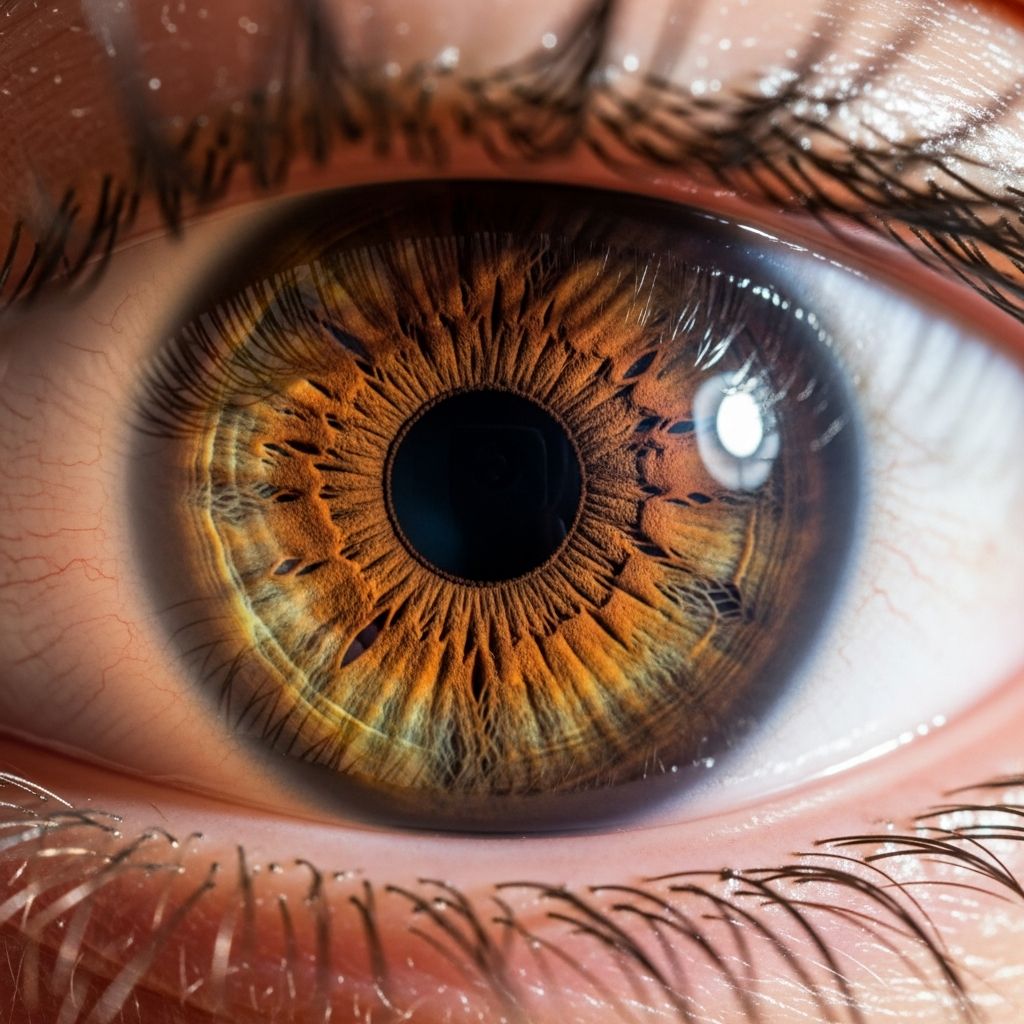
The pupil is the black circle in the center of your eye. It sits right in the middle of the colored part of your eye, which is called the iris. Light from the world around you must pass through the pupil before it can reach the back of your eye.
The pupil is not a solid object. It is a hole or opening that lets light travel deeper into the eye, where special cells in the retina can turn that light into signals for your brain.
Why Does the Pupil Look Black?
- Light that enters the pupil travels to the back of the eye, where most of it is absorbed by the retina instead of bouncing back out.
- Because very little light returns through the opening, the pupil appears dark or black to someone looking at your eyes.
- In photos taken with a flash, light can reflect from inside the eye, which is why your pupils sometimes look red in pictures.
The Iris: Colorful Guard Around the Pupil
The iris is the colored ring that surrounds your pupil. It can be brown, blue, green, hazel, or a mix of colors. The iris acts like a muscle curtain that can get tighter or looser to change the size of the pupil.
Inside the iris are tiny muscles that:
- Squeeze the pupil to make it smaller in bright light
- Stretch the pupil to make it larger in dim light
This teamwork between the iris and the pupil helps protect the eye and keeps your vision clear.
How Pupils Control Light: Like a Camera
The pupil works a lot like the opening on a camera. Cameras have an adjustable part called an aperture that changes size to control how much light gets in. Your eye does something very similar.
| Camera | Your Eye |
|---|---|
| Aperture opening | Pupil opening |
| Metal or plastic blades | Muscles in the iris |
| Aperture widens in low light | Pupil dilates (gets bigger) in dim light |
| Aperture narrows in bright light | Pupil constricts (gets smaller) in strong light |
Bright Light vs. Dim Light
Your pupils are constantly changing size based on how much light is around you. This happens automatically, without you thinking about it.
- In bright sunlight
- The iris muscles tighten.
- The pupil becomes small to reduce the light entering the eye.
- This helps prevent glare and protects the deeper parts of the eye from damage.
- In a dark room
- The iris muscles relax in a different way.
- The pupil becomes large to let in more light.
- This helps you see better when there is not much light available.
What Happens After Light Enters the Pupil?
Once light passes through the pupil, it continues deeper into the eye:
- It first goes through the lens, which bends (refracts) the light so it can be focused.
- The lens directs the light onto the retina, a thin layer of cells at the back of the eye.
- Cells in the retina change light into electrical signals that travel along the optic nerve to your brain.
- Your brain then turns those signals into the images you see.
Without the pupil to control how much light gets in, this whole system would struggle. Too much light could be painful and harmful, and too little light would make it hard to see.
Pupil Size: Big, Small, and In Between
Pupil size is not the same for everyone, and it can change many times each day.
Normal Pupil Ranges
In adults, typical pupil sizes are usually:
- About 2–4 millimeters wide in bright light
- About 4–8 millimeters wide in dim light
Children and teenagers often have slightly larger pupils than older adults.
Other Reasons Pupils Change Size
Light is not the only thing that affects the pupil. Doctors and scientists know that pupils can also change when you:
- Focus on something close to your face – both pupils usually get a bit smaller to help you see nearby objects clearly.
- Feel strong emotions like fear, surprise, or excitement – the pupils may grow larger.
- Take certain medicines or eye drops – some drugs used by eye doctors purposely make the pupil very large or very small for eye exams.
How the Brain Controls Pupil Movements
Even though you cannot control your pupil on purpose, your body controls it very carefully through your nervous system.
- The parasympathetic part of the nervous system helps make the pupil smaller using a ring-shaped muscle in the iris.
- The sympathetic part helps make the pupil larger using a different muscle that pulls the iris open.
- These systems work together, making tiny changes so your eyes always get just the right amount of light.
When bright light hits your eye, special cells in the retina send signals through the brain to these iris muscles. This causes the pupil to shrink in what is called the pupillary light reflex. Doctors can check this reflex with a small light to see how well your eyes and parts of your brain are working.
Different Shapes of Pupils in Animals
Human pupils are usually round, but not all animals have the same shape.
- Cats, some reptiles, and some foxes have vertical slit pupils that can close very tightly in bright light.
- Goats and sheep often have horizontal pupils that help them watch for danger all around them.
- Some fish have even more unusual shapes that help them see well under water.
Each shape fits the animal’s way of life, helping them see their food, friends, and enemies better in their own environment.
Pupils and Eye Health
Because pupils react to light, focus, and other signals from the brain, they are very useful in checking health.
What Doctors Look For
During an eye or health exam, a doctor might:
- Shine a light in each eye to watch how quickly the pupil gets smaller.
- Check if both pupils are about the same size.
- Use special drops to make the pupil larger so they can see more of the inside of your eye, including the retina and optic nerve.
If one pupil is much bigger than the other, or if they do not react to light normally, it can sometimes be a sign of an eye problem or an issue with the nerves that control the eye. That is one reason regular eye checkups are important.
How to Keep Your Pupils and Eyes Safe
- Wear sunglasses that block strong sunlight when you are outdoors, especially near water, snow, or sand.
- Use protective eyewear during sports or when working with tools.
- Avoid pointing bright flashlights or laser pointers into anyone’s eyes.
- Tell an adult if you suddenly see blurry spots, flashing lights, or if bright light suddenly hurts your eyes a lot.
Fun Pupil Experiments You Can Try Safely
You can see your pupils change size with the help of a mirror and a trusted adult.
- Stand in front of a mirror in a room with normal light.
- Look closely at the dark circles in the center of your eyes.
- Have an adult dim the lights (not completely dark) and watch how your pupils slowly get bigger.
- Then turn the lights brighter again and notice how the pupils become smaller.
Always avoid shining strong lights directly into your eyes.
Quick Facts About Pupils
- The pupil is a hole in the center of the iris that lets light into the eye.
- It looks black because light is mostly absorbed inside the eye instead of bouncing back out.
- The iris controls the size of the pupil using tiny muscles.
- Pupils get smaller in bright light and larger in dim light to protect your eyes and help you see.
- Eye doctors often check pupil reactions to learn about your eye and brain health.
Frequently Asked Questions (FAQs)
Is the pupil a real part of the eye or just an empty space?
The pupil is actually an opening or space, not a solid structure. It is the gap in the middle of the iris that light passes through on its way to the retina.
Why do my eyes feel uncomfortable in bright light?
In very strong light, your pupils shrink to protect the inside of your eyes, but if the light is still too bright, it can cause glare and discomfort. Sunglasses or hats with brims can help block extra light and make your eyes more comfortable.
Why does the eye doctor put drops in my eyes that make my pupils huge?
Those drops temporarily dilate (enlarge) your pupils so the doctor can see more of the inside of your eye, including the retina and optic nerve. This helps them check for eye problems and make sure your eyes are healthy.
Do both pupils always have to be the same size?
For most people, the pupils are usually very close to the same size and react similarly to light. A small difference can be normal for some people, but a big change or a new difference should be checked by a doctor.
Can the things I feel, like fear or excitement, change my pupils?
Yes. Strong emotions can activate parts of your nervous system that make the pupils grow larger. This is part of how your body prepares itself to react to what is happening around you.
References
- Pupil – Definition and Detailed Illustration — All About Vision. 2023-05-10. https://www.allaboutvision.com/eye-care/eye-anatomy/eye-structure/pupil/
- Pupil of the Eye and its Function, Size and Testing — Journal of Clinical and Medical Education. 2022-04-18. https://www.jcmedu.org/jcmedu-articles/pupil-of-the-eye-and-its-function-size-and-testing-91662.html
- Pupil: Anatomy, Structure and Function — Kenhub. 2021-11-02. https://www.kenhub.com/en/library/anatomy/pupil
- Structure and Function of the Eyes — Merck Manual Consumer Version. 2023-01-12. https://www.merckmanuals.com/home/eye-disorders/biology-of-the-eyes/structure-and-function-of-the-eyes
- Pupil — Wikipedia (citing primary ophthalmology sources). 2024-07-01. https://en.wikipedia.org/wiki/Pupil
- Eye Anatomy Explained: Parts & How It Works — Glaucoma Research Foundation. 2022-09-20. https://glaucoma.org/articles/eye-anatomy
- Eye Anatomy and Function — MyHealth Alberta. 2021-06-01. https://myhealth.alberta.ca/Health/pages/conditions.aspx?hwid=hw121946