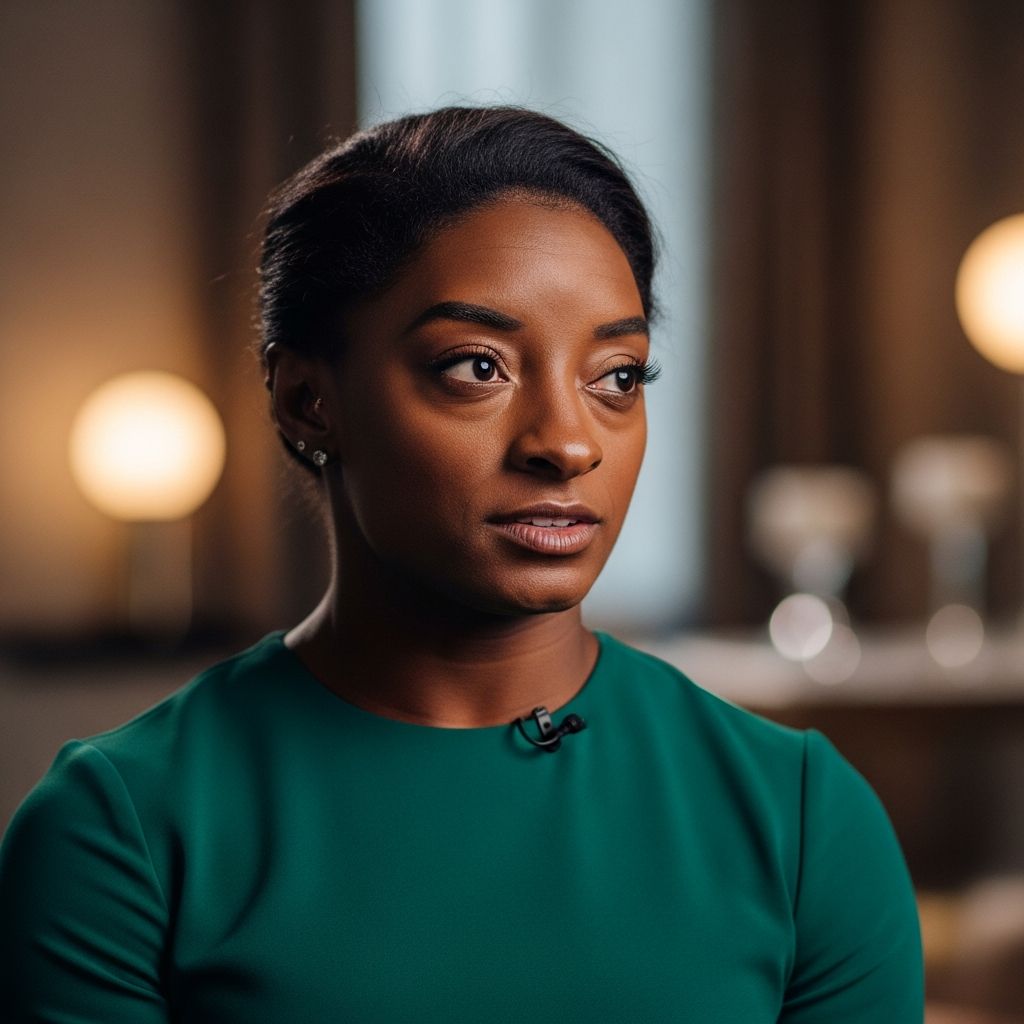
Renowned Olympic gymnast Simone Biles has long been a symbol of resilience, excellence, and unapologetic authenticity. In 2021, she ignited national conversations by publicly declaring her pro-choice position on abortion, intertwining her personal history from the foster care system with a passionate defense of bodily autonomy. This stance, delivered via social media, not only showcased her willingness to embrace controversy but also shed light on deeper societal issues like the inadequacies of child welfare systems and the complexities of reproductive decisions.
From Foster Care to Olympic Glory: Biles’ Formative Years
Simone Biles’ journey began in challenging circumstances. Born in 1997, she and her siblings entered the foster care system due to their biological mother’s struggles with addiction. For much of her early childhood, Biles navigated instability, moving between foster homes until her grandfather, Ron Biles, and his wife, Nellie, adopted her and her sister Adria in 2003. This adoption provided the stability that allowed Biles to channel her extraordinary talents into gymnastics, eventually leading her to become the most decorated gymnast in World Championship history.
Her experiences in foster care profoundly shaped her worldview. Biles has frequently spoken about the emotional toll of the system, describing it as “broken” and particularly harsh on children and young adults who age out without support. These insights inform her advocacy, emphasizing that personal stories like hers reveal systemic failures that cannot be overlooked in discussions about family planning and child welfare.
The Instagram Spark: Declaring ‘Your Body, Your Choice’
The controversy erupted in August 2021, shortly after the Tokyo Olympics where Biles secured bronze and silver medals despite stepping back from events to prioritize her mental health. On Instagram Stories, Biles responded to a fan’s “unpopular opinion” that “abortion is wrong.” Her reply was direct: “I’m very much pro-choice. Your body, your choice.” She elaborated on the foster care system’s flaws, countering common arguments for adoption by noting its expense and the trauma it inflicts, especially for those aging out.
This candid response was vintage Biles—fearless and rooted in lived experience. She anticipated backlash, predicting it might cost her followers, yet stood firm. Her words resonated with supporters who view reproductive rights as fundamental to autonomy, while drawing criticism from pro-life advocates who saw it as a dismissal of alternatives to abortion.
Twitter Clarification: Addressing Misinterpretations
Critics quickly accused Biles of suggesting abortion as preferable to foster care or adoption. She addressed this on Twitter, clarifying: “Do not misconstrue my words. That is not at all what I implied. I did not say I support to abort rather than to put them through the foster care system.” Instead, her core message was about non-interference: “What I did imply is that you should not control someone else’s body/decision. Let’s be real, what you care about is control.”
Biles reaffirmed her lifelong support for foster children, noting her advocacy work which many critics overlooked. As someone who benefited from adoption, she separated her pro-choice views from anti-adoption sentiments, advocating for systemic reforms alongside reproductive freedoms.
Navigating Faith, Fame, and Controversy
Adding layers to the debate is Biles’ Catholic upbringing. Reports confirm her identification with the faith, which traditionally opposes abortion. Yet, Biles has publicly embraced positions diverging from Church doctrine, prioritizing personal conviction over institutional alignment. This tension highlights a broader trend among public figures balancing spirituality, identity, and progressive values.
Pro-life commentators like Lila Rose labeled her stance “incredibly sad and awful,” framing it as a tragic irony given her survival through foster care. Others critiqued it as prioritizing autonomy over life’s sanctity, drawing parallels to cultural shifts toward individualism.
Beyond the Tweets: Implications for Foster Care Reform
Biles’ comments spotlighted foster care’s harsh realities. In the U.S., over 400,000 children are in foster care annually, with about 20,000 aging out each year into often precarious adulthoods—facing higher risks of homelessness, unemployment, and mental health issues. Adoption, while a positive outcome for some like Biles, is protracted and costly, averaging $30,000-$50,000 for private adoptions, deterring many prospective parents.
Her advocacy calls for urgent reforms: better funding for support services, improved training for foster parents, and policies easing adoption barriers. Biles’ platform amplifies these needs, urging society to address root causes rather than relying on imperfect systems.
| Challenge | Impact on Children | Proposed Solutions |
|---|---|---|
| Overcrowding | Instability and trauma | Increase foster parent recruitment and training |
| Aging Out | Higher poverty rates | Extended support programs post-18 |
| Adoption Costs | Fewer placements | Subsidies and streamlined processes |
Reproductive Rights in the Spotlight
Biles’ declaration occurred amid intensifying U.S. debates on abortion, post-Roe v. Wade challenges. Her “your body, your choice” mantra echoes feminist rallying cries, emphasizing consent and self-determination. Critics argue it oversimplifies ethical dimensions, but supporters see it as essential resistance to paternalistic laws.
For parents and potential parents, her views resonate by acknowledging that forced births into flawed systems exacerbate suffering. This perspective encourages holistic approaches: robust reproductive healthcare, comprehensive sex education, and welfare supports to make choice meaningful.
A Champion’s Influence on Public Discourse
At 24 during the controversy (now a seasoned advocate in her late 20s), Biles leveraged her fame—over 7 million Instagram followers—to normalize tough conversations. Her mental health advocacy during Olympics already broke barriers; this extended her impact to social justice, proving athletes can champion causes beyond sports.
Responses were polarized: fans praised her courage, while detractors questioned her consistency. Ultimately, Biles modeled authenticity, refusing to shrink from complexity.
Balancing Advocacy: Foster Support Meets Choice
Importantly, Biles has not abandoned foster care advocacy. She and her family have hosted foster children, and she promotes awareness through foundations. Her pro-choice stance complements this by advocating prevention of unnecessary entries into the system via accessible healthcare.
This dual commitment challenges binaries, suggesting pro-choice and pro-foster reform can coexist. It invites dialogue on empowering women without compromising child welfare.
Broader Cultural Echoes
Biles’ story mirrors celebrity activism trends, from athletes to entertainers weighing in on politics. It underscores how personal narratives humanize abstract debates, fostering empathy amid division. In a post-2022 Roe landscape, her words remain relevant, influencing younger generations on autonomy and justice.
Frequently Asked Questions
What prompted Simone Biles to share her pro-choice views?
She responded to a fan’s Instagram submission calling abortion wrong, using the platform to affirm her beliefs while critiquing foster care.
Did Biles criticize adoption?
No, she highlighted its challenges and costs but clarified her support for foster kids and her own adoptive family.
How does her Catholic faith factor in?
Despite her Catholic background, Biles prioritizes personal autonomy over doctrinal opposition to abortion.
What foster care issues did she address?
She noted the system’s broken nature, trauma for kids, aging-out difficulties, and adoption expenses.
Has Biles continued foster advocacy post-controversy?
Yes, she remains committed, using her story to push for reforms and support.
Lessons for Parents and Policymakers
For parents, Biles’ narrative stresses empathy in reproductive discussions—recognizing no perfect solutions exist amid imperfect systems. Policymakers can draw blueprints from her calls: invest in prevention, streamline adoptions, and protect rights. Her voice proves champions can drive change across arenas.
In sum, Simone Biles’ pro-choice affirmation, forged in foster care fires, enriches ongoing dialogues on choice, care, and compassion. It challenges us to build systems honoring all lives—from womb to world.
References
- Simone Biles Defends Controversial Abortion Stance — Faithwire. 2021-08-11. https://www.faithwire.com/2021/08/11/im-very-much-pro-choice-simone-biles-defends-bold-abortion-stance/
- Catholic gymnast Simone Biles says she is pro-choice in social media post — The Catholic Telegraph. 2021-08-?? (approx). https://www.thecatholictelegraph.com/catholic-gymnast-simone-biles-says-she-is-pro-choice-in-social-media-post/76669
- The Tragic Irony of Simone Biles’ Support for Abortion — Family Research Council. 2021-08-??. https://www.frc.org/blog/2021/08/tragic-irony-simone-biles-support-abortion
- Abortion, Simone Biles, and the Autonomous Self — Human Life Review. 2021-08-??. https://humanlifereview.com/abortion-simone-biles-and-the-autonomous-self/