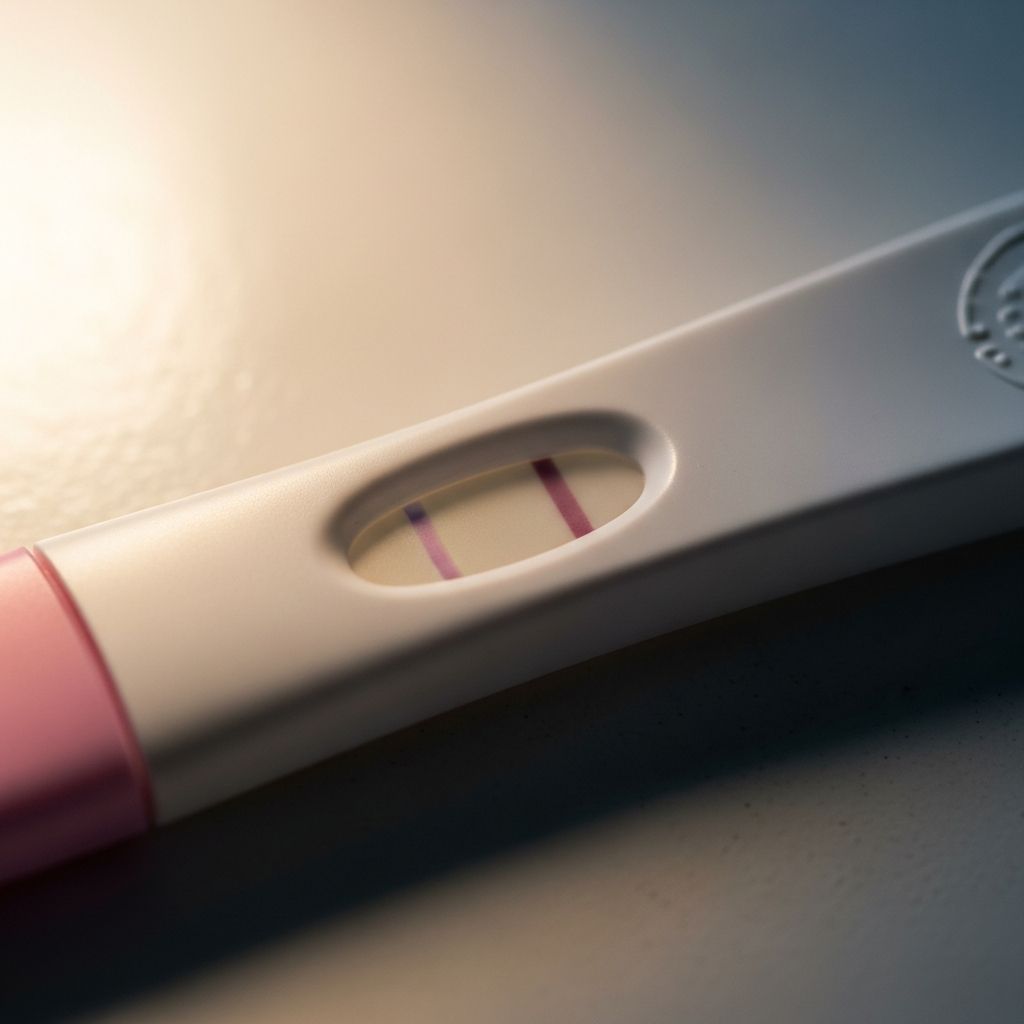
Home pregnancy tests are a common first step for confirming pregnancy, but interpreting results isn’t always straightforward. A second line that appears faintly or only after the recommended reading time can leave you puzzled, wondering if it’s a true positive or something else. This guide breaks down the science, common causes, and practical advice to help you navigate these uncertain moments with confidence.
Understanding How Pregnancy Tests Work
At-home pregnancy tests detect human chorionic gonadotropin (hCG), a hormone produced by the developing placenta after a fertilized egg implants in the uterus. This hormone enters your bloodstream and urine, typically becoming detectable 10-14 days after conception.
- Tests use antibodies that bind to hCG, triggering a color change to form lines indicating positive results.
- Most tests specify a reading window, usually 3-10 minutes, to avoid misleading marks.
- Sensitivity varies: some detect as low as 10 mIU/mL hCG, others need 25 mIU/mL or more.
A **bold control line** confirms the test functioned properly, while the **test line** (second line) signals hCG presence. If this line emerges faintly or late, it could mean low hCG buildup, testing variables, or an artifact.
Key Reasons for a Delayed or Faint Second Line
Several factors can cause a second line to appear delayed. Recognizing these helps distinguish genuine positives from false alarms.
1. Early Testing Before hCG Peaks
hCG doubles every 48-72 hours in early pregnancy, starting low. Testing days before your missed period may yield a faint line as levels are just rising.
- Implantation occurs 6-12 days post-ovulation, delaying detectable hCG.
- Early-detection tests pick up lower levels but often show subtle lines initially.
Retest in 2-3 days for a darker line if pregnant.
2. Diluted Urine Impacting Concentration
Excess fluids dilute hCG in urine, weakening the test line. Morning urine is ideal—concentrated overnight.
| Urine Type | hCG Detection Likelihood | Recommendation |
|---|---|---|
| First morning urine | High (concentrated) | Best time for testing |
| Afternoon/evening urine | Medium (diluted) | May cause faint results; limit fluids beforehand |
| Post-hydration urine | Low | Avoid testing; wait for next concentrated sample |
3. Test Sensitivity and Quality Variations
Not all tests are equal. Ultra-sensitive ones reveal pregnancy earlier, but less sensitive models need higher hCG.
- Check expiration dates—old tests lose accuracy.
- Follow instructions precisely: incorrect dipping or timing invalidates results.
4. Evaporation Lines: The Common Culprit
After the reading window, urine evaporates, leaving a colorless or grayish mark mimicking a positive. These aren’t hCG-related and typically appear post-10 minutes.
- Distinguish by color: true positives are pink/blue; evaporation lines are stark white/gray.
- Thickness matters—evaporation lines are thin; positives bolder.
Discard tests after the time limit to prevent confusion.
Potential Medical Explanations for Ambiguous Results
Beyond user factors, health issues can influence lines.
Chemical Pregnancy and Early Loss
A chemical pregnancy is an early miscarriage before 5 weeks, where implantation occurs but doesn’t progress. hCG rises briefly, causing faint positives, then drops.
- Accounts for 50-75% of miscarriages.
- Follow-up tests may turn negative; monitor symptoms like bleeding.
Ectopic or Abnormal Pregnancies
hCG rises slower in ectopic pregnancies (implantation outside uterus). Faint, slow-darkening lines warrant medical checks.
- Other rarities: molar pregnancies or ovarian cysts elevate hCG falsely.
Medications and Recent Pregnancy Events
Fertility drugs with hCG (e.g., Ovidrel) linger 7-14 days, triggering positives.
- Post-miscarriage/abortion: hCG clears in 4-6 weeks.
- Recent birth: up to 60 days for clearance.
Step-by-Step Guide: Validating Your Test Result
- Retest Strategically: Use first morning urine, 2-3 days later, with the same brand for comparison.
- Track Progression: Darkening lines confirm rising hCG.
- Digital Tests: Say “Pregnant” or “Not Pregnant” to eliminate line-reading doubt.
- Blood Test Confirmation: Quantitative hCG blood draws precisely measure levels; qualitative confirm presence.
If lines persist faintly or symptoms appear (nausea, fatigue, spotting), see a healthcare provider promptly.
FAQ: Common Questions on Delayed Lines
Can a second line appear hours later and be valid?
No—lines post-reading window are likely evaporation. True positives develop within minutes.
Is a faint line the same as a positive?
Yes, if within time frame and colored; any visible test line indicates hCG.
How soon after a faint positive should I retest?
Wait 48 hours for hCG doubling; earlier risks unchanged faintness.
Does drinking water ruin pregnancy tests?
Excess water dilutes urine, potentially fading lines. Hydrate normally but test mornings.
When to worry about persistent faint lines?
If retests stay faint beyond expected period date or with pain/bleeding, seek ectopic screening.
Expert Tips for Reliable Testing
Maximize accuracy:
- Store tests at room temperature; avoid bathrooms’ humidity.
- Use FMU; hold midstream if directed.
- Read in good light; photograph immediately if sharing.
- Combine with ovulation tracking apps for timing.
Emotional rollercoasters are common—support groups or apps like Flo aid logging and community chat.
Navigating Next Steps After Ambiguous Results
A delayed line often heralds early pregnancy, but confirmation brings peace. Schedule prenatal care at 8 weeks for viability checks via ultrasound.
Track cycles meticulously: apps predict fertile windows, test days. Lifestyle supports conception—balanced diet, folic acid (400-800 mcg daily), limit caffeine/alcohol.
If trying 6-12 months without success (depending on age), consult fertility specialists. Patience blends hope with realism.
Empowerment starts with knowledge: most faint lines evolve into joyful announcements, but vigilance ensures health.
References
- Faint line on a pregnancy test — what does it mean? — Flo Health. 2023. https://flo.health/getting-pregnant/trying-to-conceive/pregnancy-tests/faint-line-pregnancy-test
- Faint Line on a Pregnancy Test: What Does It Mean? — Natural Cycles. 2023. https://www.naturalcycles.com/cyclematters/faint-line-on-a-pregnancy-test
- Evaporation Line on Pregnancy Test: Causes, How to Avoid — The Bump. 2023. https://www.thebump.com/a/evaporation-line-on-pregnancy-test
- Can a Second Line Appear Later on a Pregnancy Test? — MomMed. 2023. https://mommed.com/blogs/breastfeeding-pregnancy/can-a-second-line-appear-later-on-a-pregnancy-test
- Decoding Pregnancy Test Results: Evaporation, Indent, and Faint — MiraCare. 2023. https://shop.miracare.com/blogs/resources/evaporation-line-on-a-pregnancy-test-positive-or-negative
- Meaning of Faint Line on a Pregnancy Test — Clearblue. 2023. https://www.clearblue.com/pregnancy-tests/faint-line