Scorpions live in many warm and dry parts of the world, and curious children can sometimes cross paths with them. Most scorpion stings cause intense pain but are not life-threatening. However, some species can deliver venom that affects the nervous system and can quickly become a medical emergency, especially in babies, young children, and older adults.
This guide explains how to recognize a scorpion sting, give safe first aid at home, and know when to seek urgent medical care. It is designed for parents and caregivers who want clear, practical information.
Understanding Scorpion Stings
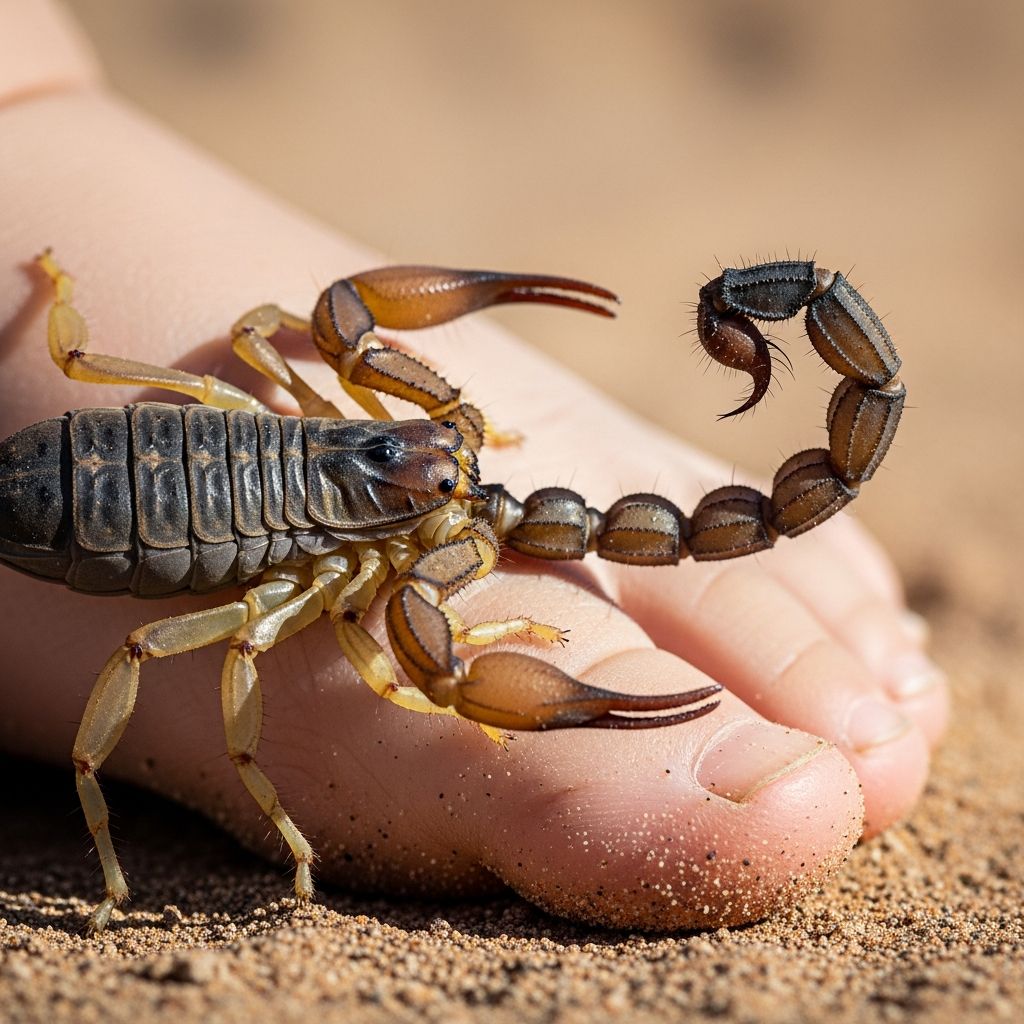
A scorpion uses the curved tip of its tail, called the stinger (or telson), to inject venom into the skin. The venom is a complex mixture of toxins that primarily affects the nervous system and can also irritate local tissues.
How Scorpion Stings Happen
Children are often stung when they:
- Pick up or step on a scorpion that was hiding in shoes, clothing, or bedding
- Reach into dark cracks, boxes, or piles of wood and rocks
- Play outdoors at night or early morning when some scorpions are most active
In many cases, the sting is sudden, and a child may cry out in pain even if the scorpion is not seen.
Venom and the Nervous System
Scorpion venom interferes with nerve signaling, especially at sodium channels in nerve cells. This can cause:
- Severe local pain and tingling at the sting site
- Abnormal muscle movements or shaking
- Autonomic symptoms such as sweating, increased saliva, fast heart rate, or high blood pressure in severe cases
Most stings remain localized, but some species can cause widespread effects, especially in smaller children whose bodies are more sensitive to venom.
Common Symptoms: What You’re Likely to See
Symptoms can range from mild to life-threatening. Most stings cause intense pain at the site, sometimes described as burning or electric-like. Other symptoms depend on the type of scorpion and how much venom entered the body.
Typical Mild Reactions
In many children, only local symptoms develop.
- Immediate, sharp pain where the sting occurred
- Mild swelling or redness around the sting
- Tingling, numbness, or a pins-and-needles feeling near the area
- Increased sensitivity to touch over the sting site
These symptoms can be very uncomfortable but often improve over several hours to a day.
Signs of a More Serious Reaction
Some scorpions produce venom that affects the entire body (systemic envenomation). This is more likely to be dangerous in infants and young children.
Call emergency services right away if your child develops any of the following after a sting:
- Difficulty breathing, fast breathing, or pauses in breathing
- Drooling, trouble swallowing, or slurred speech
- Unusual eye, head, or neck movements
- Muscle twitching, jerking, or thrashing movements
- Weakness or inability to control arms or legs
- Very high fussiness or agitation that cannot be soothed in young children
- Profuse sweating, pale or bluish skin, or extreme restlessness
- Nausea, vomiting, or severe abdominal discomfort
These symptoms can appear quickly—sometimes within minutes of the sting—so careful observation during the first few hours is essential, especially for children.
Immediate First Aid Steps for Parents
If you suspect your child has been stung by a scorpion, staying calm helps you act quickly and clearly. Follow these general first aid steps while you arrange medical advice.
Step-by-Step Home Care
- Move your child to a safe area. Make sure the scorpion is no longer a threat. If it is safe, you may carefully capture or photograph it for identification, but never delay care to look for the animal.
- Wash the sting site. Gently clean with soap and running water to reduce the risk of infection.
- Apply a cool compress. Place a clean, cool cloth or an ice pack wrapped in a thin towel over the sting for 10–15 minutes at a time to ease pain and swelling.
- Keep the limb still and raised. If the sting is on an arm or leg, try to keep it at or slightly above heart level and limit movement.
- Offer pain relief medicine if advised. Over-the-counter pain relievers such as acetaminophen or ibuprofen, used at child-appropriate doses, may help with pain. Always follow dosing instructions or your doctor’s advice.
What Not to Do
Some traditional remedies can be harmful. Health authorities and toxicology experts recommend that you avoid the following:
- Do not cut or slice the skin near the sting.
- Do not suck out the venom with your mouth or any device.
- Do not apply a tourniquet or tightly tie off the limb.
- Do not use electric shocks or heat on the sting.
- Do not give food or drink if your child has trouble swallowing or is very drowsy.
These methods do not remove venom and can lead to additional injury or complications.
When to Call a Doctor vs. Call 911
Because children are more vulnerable to venom effects, health organizations advise that parents always contact a healthcare professional after a suspected scorpion sting in a child, even if symptoms appear mild.
Call Emergency Services (911 or Local Number) Immediately If:
- Your child has trouble breathing or is breathing very fast or very shallow.
- You notice drooling, choking, slurred speech, or difficulty swallowing.
- There are seizures, whole-body shaking, or severe muscle thrashing.
- Your child becomes very drowsy, confused, or unresponsive.
- The lips, face, or fingernails turn bluish or very pale.
Call Your Doctor or Poison Center If:
- Pain is significant but there are no breathing or swallowing problems.
- Tingling or numbness spreads away from the sting site.
- Your child has other medical conditions (such as asthma, heart disease, or a history of severe allergies).
- You live in an area known to have dangerous scorpion species.
In the United States, experts recommend contacting a regional poison center for up-to-date advice on treatment and antivenom availability.
How Doctors Evaluate and Treat Scorpion Stings
In a clinic or emergency department, medical teams focus first on airway, breathing, and circulation. For most stings, supportive care and observation are all that is required.
Medical Evaluation
Healthcare professionals typically:
- Ask when and how the sting occurred and what symptoms have appeared
- Look for redness, swelling, and tenderness at the sting site
- Check breathing, heart rate, blood pressure, and temperature
- Evaluate for abnormal eye movements, muscle twitching, or changes in mental state
For mild stings, no lab tests are usually needed. If more serious venom effects are suspected, blood tests and monitoring may be used to assess organ function.
Hospital Treatment Options
Treatment depends on symptom severity and the type of scorpion:
- Pain control: Oral or intravenous pain medicine may be given in the emergency department.
- Control of agitation or muscle spasms: Sedating medicines, such as benzodiazepines, may be used for severe restlessness or muscle movements.
- Breathing support: Oxygen, breathing treatments, or in rare extreme cases, mechanical ventilation may be needed if breathing is impaired.
- Antivenom: In some regions, specific scorpion antivenoms are available. For example, in the United States, antivenom against Centruroides species is used for children with severe symptoms that do not improve with supportive care.
Antivenom can shorten the duration and intensity of serious neurologic and autonomic symptoms but is usually reserved for moderate to severe envenomation.
Risk Factors and Special Considerations in Children
While most stings are not fatal, certain groups are at higher risk of complications:
- Infants and young children – Their small body size means a relatively larger dose of venom can circulate, and they cannot always describe symptoms clearly.
- Older adults – Pre-existing heart or lung conditions increase the risk of serious complications.
- People with chronic illnesses – Conditions such as asthma, heart disease, or weakened immune systems may worsen outcomes.
In these individuals, experts advise a low threshold for emergency evaluation after a sting, even if symptoms initially appear mild.
Recovery: What to Expect After a Sting
For typical stings that remain localized, pain often improves significantly within a few hours, although residual tingling or sensitivity can last up to a day.
Home Care During Recovery
Once a doctor has evaluated your child and sent them home, you can usually manage recovery by:
- Continuing cool compresses for comfort as needed
- Giving pain medicine only as prescribed or recommended
- Encouraging rest and quiet play until symptoms improve
- Watching carefully for new or worsening symptoms such as vomiting, breathing changes, or unusual behavior
If new symptoms appear or your child seems to get worse after going home, contact your doctor or return to the emergency department.
Preventing Scorpion Stings Around the Home
Good prevention reduces the chance of stings, especially in areas where scorpions are common. Public health agencies recommend basic environmental and safety measures.
Indoor Safety Tips
- Shake out shoes, clothing, and bedding before use, especially if stored on the floor.
- Keep beds away from walls where scorpions might climb.
- Seal gaps under doors, around windows, and where pipes enter the house.
- Use screens on windows and repair any holes.
- Store toys and clutter off the floor when possible.
Outdoor Safety Tips
- Have children wear closed-toe shoes when playing outside.
- Avoid walking barefoot outdoors at night in scorpion-prone areas.
- Keep firewood, rocks, and debris piles away from the house.
- Use gloves when moving rocks, wood, or garden materials.
- Teach children to look before placing hands in holes, cracks, or under objects.
Quick Reference Table: Mild vs. Severe Scorpion Stings
| Feature | Mild (Localized) Sting | Severe (Systemic) Sting |
|---|---|---|
| Primary symptoms | Pain, tingling, mild redness at sting site | Breathing trouble, drooling, abnormal movements, severe agitation |
| Body systems involved | Mainly the skin and nerves near the sting | Nervous system, heart, lungs, and autonomic functions |
| Typical treatment | Home care, pain control, observation | Emergency care, monitoring, possible antivenom and breathing support |
| Common in | Most stings, especially from less toxic species | Mainly small children or stings from highly venomous species |
| Urgency | Call doctor or poison center for advice | Call emergency services immediately |
Frequently Asked Questions (FAQs)
Q: How can I tell if it was a scorpion that stung my child?
A: Many children feel a sudden, sharp, burning pain and may cry out immediately. If you see a scorpion nearby or your child says they saw one, that is a strong clue. However, other insects can cause painful stings as well. If you are unsure, treat it as a possible scorpion sting and call your doctor or poison center for guidance.
Q: How long does the pain from a scorpion sting last?
A: For most mild stings, intense pain is usually worst in the first few hours and then gradually improves. Tingling or sensitivity can sometimes last up to 24 hours. If pain is severe and not improving, or new symptoms appear, your child should be re-evaluated.
Q: Is every scorpion sting dangerous for my child?
A: No. Most scorpion stings are painful but not life-threatening, especially in areas without highly venomous species. However, because children are more vulnerable to venom, it is safer to discuss any sting with a healthcare professional and watch for warning signs such as breathing problems or abnormal movements.
Q: Will my child need antivenom?
A: Antivenom is usually reserved for children with moderate to severe symptoms that involve the nervous system or breathing and do not respond well to supportive treatment. The decision depends on your child’s condition, the scorpion species in your region, and the availability of antivenom at local hospitals.
Q: Can my child go to school the day after a scorpion sting?
A: If your child has only mild local symptoms and feels well enough, they may be able to return to school once a doctor has cleared them. If pain, tingling, or fatigue are still significant, it is often better to let them rest at home and resume normal activities gradually.
Q: Are there long-term effects from a scorpion sting?
A: In most cases, children recover fully without long-term problems once acute symptoms have resolved. Severe stings that affect the heart or lungs are treated aggressively in the hospital to prevent lasting damage. Your child’s doctor will advise follow-up if needed.
References
- Scorpion Toxicity — StatPearls, National Center for Biotechnology Information (NCBI). 2023-07-24. https://www.ncbi.nlm.nih.gov/books/NBK430928/
- Scorpion sting — Merck Manual Professional Edition. 2024-01-01 (accessed online, current version). https://www.merckmanuals.com/professional/injuries-poisoning/bites-and-stings/scorpion-stings
- Scorpion sting: Symptoms and causes — Mayo Clinic. 2023-06-16. https://www.mayoclinic.org/diseases-conditions/scorpion-stings/symptoms-causes/syc-20353859
- Scorpion Bites: Symptoms, Causes, and Treatment — American Red Cross. 2023-08-01. https://www.redcross.org/take-a-class/resources/learn-first-aid/scorpion-bites
- Scorpions — MedlinePlus Medical Encyclopedia, U.S. National Library of Medicine. 2023-09-18. https://medlineplus.gov/ency/article/002850.htm
- Scorpion stings — St. Vincent’s Medical Center Health Library. 2022-05-01. https://stvincents.org/health-wellness/health-resources/health-library/detail?id=tm6501